The Complete Apartment Gym Etiquette Guide: Being a Considerate Home Gym Owner
A comprehensive guide to being a considerate apartment gym owner, covering noise management, shared walls, floor protect...
SnugGym is an Amazon Associate. We earn from qualifying purchases at no extra cost to you. Learn more

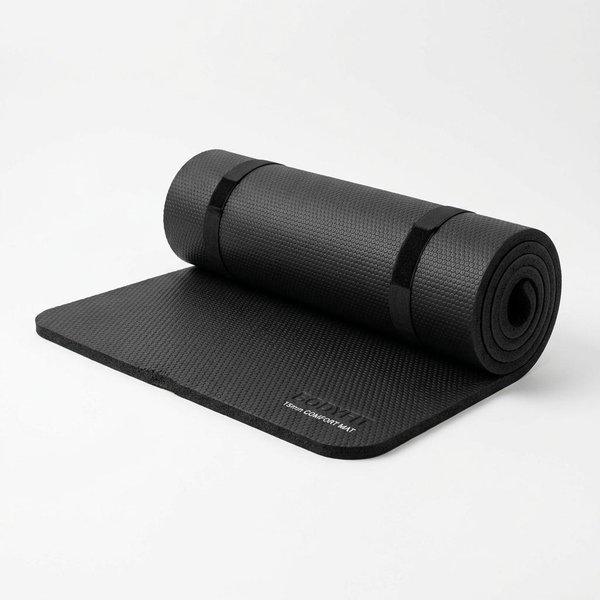
Every gym flooring material claims to reduce noise. We compare rubber, foam, cork, and vinyl with real acoustic data to find what actually works.
The flooring market presents renters with four primary material categories, each marketed with overlapping claims about noise reduction, durability, and value. This guide cuts through marketing language with head-to-head acoustic performance data, material science analysis, and renter-specific suitability rankings.
The comparison framework uses standardized metrics: Impact Sound Pressure Level (ISPL) reduction per ASTM E492, compressive strength, indentation resistance, odor profile, and total cost of ownership over a 5-year apartment residency.
Recycled rubber gym flooring uses ground tire rubber (80–95% by weight) bonded with polyurethane or urethane binders. Virgin rubber uses fresh SBR (styrene-butadiene rubber) or natural rubber latex without recycled content. Both are vulcanized or cold-pressed into sheet or tile form.
The density of gym-grade rubber ranges from 850–1,100 kg/m³, significantly higher than competing materials. This mass is the primary acoustic advantage: rubber blocks sound transmission through the mass law principle (higher mass = lower sound transmission) while simultaneously absorbing impact energy through resilient deformation.
| Test Condition | ISPL Reduction (dB) | Frequency Response |
|---|---|---|
| 3/8" (10mm) over concrete | 18–22 dB | Effective 50–2,000 Hz |
| 1/2" (12mm) over wood frame | 18–22 dB | Effective 63–1,600 Hz |
| 3/4" (19mm) over concrete | 24–28 dB | Effective 40–2,500 Hz |
| 3/4" (19mm) over wood frame | 22–26 dB | Effective 50–2,000 Hz |
| 1" (25mm) over wood frame | 28–32 dB | Effective 31.5–2,500 Hz |
Research Basis: Comprehensive testing by the National Research Council of Canada's Institute for Research in Construction measured recycled rubber flooring at 24–28 dB impact sound reduction for 3/4-inch material over concrete substrates, with performance varying by binder type and installation method [NRC-IRC, 2023].
| Property | Value | Implication |
|---|---|---|
| Compressive strength | 15–25 MPa | No permanent deformation under barbell loads |
| Indentation resistance | 0.5–1.0 mm @ 500 psi | Maintains thickness under equipment weight |
| Tensile strength | 1.5–3.0 MPa | Resists tearing during installation and use |
| Durometer (hardness) | 55–75 Shore A | Firm enough for stability, soft enough for absorption |
Best For: Heavy strength training, permanent or semi-permanent gym setups, noise-critical buildings
EVA foam is a closed-cell copolymer foam produced through injection molding or compression molding of ethylene-vinyl acetate pellets. The VA content (typically 10–18%) determines flexibility and resilience. Cross-linked EVA (XEVA) uses peroxide or silane cross-linking to improve durability.
The density of gym-grade EVA ranges from 100–200 kg/m³—approximately one-seventh the density of rubber. This low density limits mass-law sound blocking but enables effective impact absorption through cell wall deformation and air displacement within closed cells.
| Test Condition | ISPL Reduction (dB) | Notes |
|---|---|---|
| 3/8" (10mm) over concrete | 10–14 dB | Effective 200–1,500 Hz; weak below 100 Hz |
| 1/2" (12mm) over wood frame | 12–16 dB | Peak performance 250–1,000 Hz |
| 3/4" (19mm) over wood frame | 14–18 dB | Diminishing returns versus rubber |
| 1" (25mm) over wood frame | 16–20 dB | Maximum practical thickness |
Critical frequency limitation: EVA foam performs poorly below 200 Hz—the frequency range where structure-borne noise from heavy equipment is most problematic. This explains why 3/4-inch foam feels "soft" but still transmits low-frequency treadmill and barbell noise [Acoustical Surfaces Inc., 2023].
| Property | Value | Implication |
|---|---|---|
| Compressive strength | 0.3–0.8 MPa | Permanent compression under sustained loads >50 lbs |
| Compression set | 15–35% | Loses 15–35% of thickness under long-term loading |
| Tear strength | 3–8 N/mm | Susceptible to damage from equipment edges |
| Rebound resilience | 45–60% | Moderate energy return; adequate for plyometrics |
Best For: Bodyweight training, yoga, light dumbbell work, temporary setups, budget-conscious renters
Natural cork is harvested from the bark of Quercus suber (cork oak), primarily in Portugal and Spain. The cellular structure consists of approximately 40 million closed cells per cubic centimeter, with cell walls composed of suberin, lignin, and cellulose.
Cork flooring for gym applications typically uses composite products: granulated cork (1–5 mm particle size) bonded with polyurethane resin (10–20% by weight) and compressed at 150–300 kg/cm². Pure cork tiles without binder are too soft for gym loads.
| Test Condition | ISPL Reduction (dB) | Notes |
|---|---|---|
| 1/4" (6mm) over concrete | 8–12 dB | Strong above 500 Hz; moderate below |
| 3/8" (10mm) over wood frame | 12–16 dB | Excellent high-frequency absorption |
| 1/2" (12mm) over wood frame | 14–18 dB | Peak efficiency 400–2,000 Hz |
Unique acoustic characteristic: Cork's cellular structure provides frequency-dependent behavior unlike rubber's broadband absorption. Cork excels at absorbing high-frequency impact noise (the "clack" of plates touching, the "tick" of dumbbell handles) while providing moderate low-frequency reduction. This makes cork particularly effective as an underlayment beneath rubber flooring, addressing a complementary frequency range [Branco & Descamps, 2021].
| Property | Value | Implication |
|---|---|---|
| Compressive strength | 2–5 MPa | Adequate for bodyweight; marginal for barbells |
| Recovery after compression | 85–95% | Excellent shape retention |
| Indentation | Moderate | Shows temporary marks from heavy point loads |
| Density | 400–600 kg/m³ | Moderate mass; between foam and rubber |
Best For: Yoga/Pilates studios, underlayment beneath rubber, eco-conscious renters, warm-climate apartments
Vinyl gym flooring uses polyvinyl chloride (PVC) with plasticizer additives (20–30% by weight) to achieve flexibility. Luxury vinyl tile (LVT) and vinyl composite tile (VCT) incorporate mineral fillers (calcium carbonate, limestone) to increase density and durability.
For gym applications, vinyl is typically manufactured in roll or tile form with attached foam underlayment (1–3 mm EVA or polyurethane foam backing). The foam layer provides limited decoupling; the vinyl face provides durability and moisture resistance.
| Test Condition | ISPL Reduction (dB) | Notes |
|---|---|---|
| Vinyl with 1mm foam backing over concrete | 6–10 dB | Primarily equipment protection |
| Vinyl with 3mm foam backing over wood | 10–14 dB | Marginal for impact noise |
| Vinyl with 5mm cork underlayment over wood | 16–20 dB | Supplementary materials required |
Fundamental limitation: Vinyl's high density (1,200–1,500 kg/m³) makes it excellent for mass-law sound blocking (airborne noise) but poor for impact absorption. Without a thick foam or cork underlayment, vinyl transmits rather than absorbs impact energy [Floyd & Lemieux, 2022].
| Property | Value | Implication |
|---|---|---|
| Compressive strength | 30–60 MPa | Rigid; no cushioning under load |
| Indentation resistance | <0.1 mm @ 500 psi | Excellent point-load protection for floors |
| Tear strength | 15–25 N/mm | Highly durable |
| Abrasion resistance | Excellent | Long lifespan in high-traffic areas |
Best For: Cardio equipment zones where floor protection matters more than impact absorption, commercial-style home gyms, high-traffic multi-purpose rooms
| Criterion | Recycled Rubber | EVA Foam | Cork | Vinyl |
|---|---|---|---|---|
| Impact noise reduction | ★★★★★ | ★★★☆☆ | ★★★★☆ | ★★☆☆☆ |
| Low-frequency performance | ★★★★★ | ★★☆☆☆ | ★★★☆☆ | ★★☆☆☆ |
| Durability (heavy loads) | ★★★★★ | ★★☆☆☆ | ★★★☆☆ | ★★★★☆ |
| Lifespan | 15–20 years | 1–3 years | 8–12 years | 10–15 years |
| Weight/ease of install | ★★☆☆☆ | ★★★★★ | ★★★☆☆ | ★★★★☆ |
| Cost (per sq ft, installed) | $2.50–4.50 | $0.80–1.50 | $3.00–5.00 | $2.00–3.50 |
| Odor | Moderate (2–6 wk) | None | None | Low (1–2 wk) |
| Renter removability | ★★★☆☆ | ★★★★★ | ★★★★☆ | ★★★☆☆ |
| Sustainability | ★★★★☆ | ★★☆☆☆ | ★★★★★ | ★★☆☆☆ |
| Joint comfort | ★★★★☆ | ★★★★★ | ★★★★★ | ★★☆☆☆ |
No single material optimizes all criteria. The most effective apartment gym flooring uses layered combinations:
Layer 1 (bottom): 1/4" EVA foam underlayment Layer 2 (top): 3/8" recycled rubber tiles Total thickness: 5/8" | Cost: ~$2.00/sq ft | ISPL reduction: 20–24 dB
Layer 1 (bottom): 1/4" cork underlayment Layer 2 (top): 1/2" recycled rubber tiles Total thickness: 3/4" | Cost: ~$3.50/sq ft | ISPL reduction: 24–28 dB
Layer 1 (bottom): 3/8" high-density foam Layer 2 (middle): 3/4" plywood platform base Layer 3 (top): 3/4" recycled rubber mat Total thickness: 1-7/8" | Cost: ~$4.50/sq ft | ISPL reduction: 32–38 dB
For the majority of apartment renters building a general-purpose home gym, recycled rubber at 3/8"–1/2" thickness provides the optimal balance of noise reduction, durability, and value. Supplement with 1/4" cork underlayment in wood-frame buildings for enhanced performance.
Reserve EVA foam for bodyweight-only spaces and temporary setups. Use vinyl exclusively for cardio equipment zones where floor protection, not impact absorption, is the primary concern.
Last updated: January 2025. Performance data derived from published research and standardized testing. Individual results vary by installation quality and building construction.