The Complete Apartment Gym Etiquette Guide: Being a Considerate Home Gym Owner
A comprehensive guide to being a considerate apartment gym owner, covering noise management, shared walls, floor protect...
SnugGym is an Amazon Associate. We earn from qualifying purchases at no extra cost to you. Learn more
Complete guide to building a renter-friendly home gym. Lease-safe installation, portable equipment, move-out strategy, and security deposit protection.
Renting imposes constraints that homeowners do not face: lease terms that prohibit modifications, security deposits at risk from damage, and the certainty of eventually moving everything. Our analysis of lease agreements, equipment portability, and moving logistics indicates that a renter-friendly home gym prioritizes three qualities: zero permanent installation, high equipment portability, and a move-out strategy planned from day one.
This guide provides a complete framework for building a gym that satisfies fitness goals without jeopardizing your lease or deposit.
| Principle | What It Means | Implementation |
|---|---|---|
| No permanent installation | Nothing that cannot be removed in under 30 minutes | Tension mounts, freestanding units, leverage-based equipment |
| Zero wall damage | No holes, anchors, or adhesives that leave residue | Command strips over screws, freestanding over wall-mounted |
| Full portability | Everything fits in a standard vehicle for moving | Weight and dimensional limits on all equipment |
| Reversible changes | Anything modified can be restored to original state | Store original fixtures, document pre-existing conditions |
| Noise-conscious design | Minimize risk of neighbor complaints | See our noise reduction guide |
Pull-up bar: Doorway leverage bars require zero installation. They use outward pressure against the door frame to stay in place. Remove in seconds when not in use.
Recommended: Check price at Amazon — Iron Gym or ProsourceFit doorway bars
Resistance bands with door anchor: Tube-style bands include a door anchor — a thick nylon wedge that closes into any hinged door. When closed, the door holds the anchor securely for horizontal pulling and pressing movements. No installation, no damage.
Recommended: Check price at Amazon — Fit Simplify or WODFitters band set with door anchor
Freestanding equipment only: Dumbbells, kettlebells, adjustable benches, and storage racks that sit on the floor require no installation. The tradeoff is floor space consumption, but for renters, this is preferable to wall-mounted alternatives.
Folding exercise bike: Most folding bikes require no assembly beyond attaching the pedals and console (no tools or drilling). They fold to approximately 18 × 20 × 50 inches for storage.
Jump rope: Zero installation, zero footprint when stored.
Under-desk elliptical or stepper: These sit on the floor and require no installation. Some models are small enough to store in a closet.
No-go for most renters: Treadmills and non-frowing cardio machines are typically too large and heavy for easy moving. They also generate the most noise (see our noise guide). Renters should carefully evaluate whether these fit their space, noise environment, and moving plans.
| Storage Type | Installation | Weight Capacity | Best For |
|---|---|---|---|
| Over-the-door organizer | Hangs over door | 10–15 lb | Bands, gloves, accessories |
| Over-the-door hook rack | Hangs over door | 15–25 lb | Towels, ropes, bands |
| Freestanding rack or tower | None | 100–300 lb | Dumbbells, kettlebells |
| Freestanding pegboard | None | 30–50 lb | Mixed equipment, accessories |
| Under-bed storage bins | None | 20–50 lb | Mats, bands, small items |
| Command strip hooks | Adhesive (removable) | 5–15 lb | Light items, decoration |
| Tension rods between walls | Tension mount | 10–20 lb | Bands, light bags |
| Bookshelf or furniture repurposing | None | Varies | Integrated storage |
See our complete storage guide for detailed product recommendations across all categories.
For renters who expect to move within 1–2 years, equipment portability should influence purchase decisions. The following table ranks common gym equipment by moving difficulty:
| Equipment | Weight | Dimensions (Packed) | Moving Difficulty | Recommendation |
|---|---|---|---|---|
| Resistance bands | 1–2 lb | 8 × 6 × 3 in | Very easy | Highly portable — buy freely |
| Jump rope | 0.5 lb | Coiled, pocket-sized | Very easy | Highly portable |
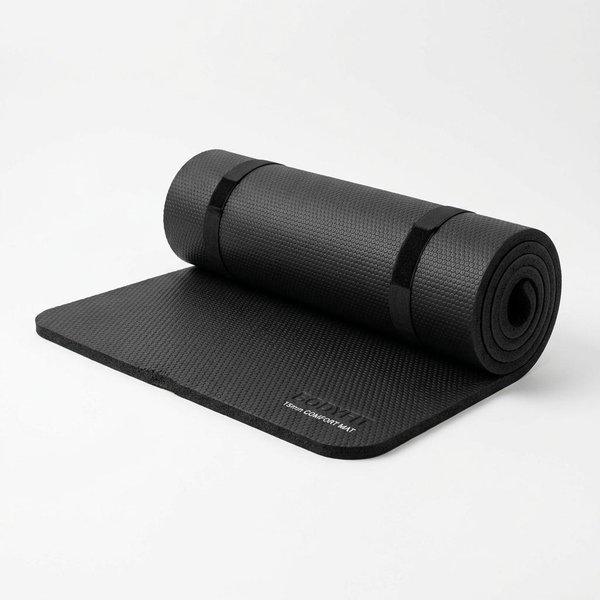
| Yoga mat | 2–4 lb | 6 × 24 in rolled | Very easy | Highly portable |
| Foam roller | 1–2 lb | 6 × 18 in | Very easy | Highly portable |
| Adjustable dumbbells (per pair) | 50–105 lb | 16 × 8 × 8 in each | Moderate | Manageable — one trip each |
| Kettlebell (single) | 25–50 lb | 10 × 8 × 8 in | Moderate | Heavy but compact |
| Foldable bench | 25–40 lb | 48 × 12 × 10 in | Moderate | Awkward but one-person carry |
| Folding bike | 35–50 lb | 18 × 20 × 50 in | Moderate-hard | Requires vehicle |
| Fixed dumbbell set (5 pairs) | 150–300 lb | Multiple trips | Hard | Consider adjustables instead |
| Rubber floor tiles (set of 6) | 10–20 lb | Stackable, 24 × 24 in each | Easy | Stack and tape, one trip |
| Horse stall mat (4 × 6 ft) | 80–100 lb | 48 × 72 × 0.75 in | Very hard | Consider alternatives |
| Treadmill | 150–300 lb | 70 × 35 × 60 in | Very hard | Often requires professional movers |
Key insight: Adjustable dumbbells replace 10–16 pairs of fixed dumbbells, reducing moving weight from 150–300 lb to 50–105 lb. For renters planning moves, this single choice eliminates the heaviest and most cumbersome equipment category.
Before setting up your gym, document the condition of the space:
This documentation proves that any damage claimed by the landlord was pre-existing.
Floor damage is the most common gym-related deposit deduction. Protect floors with:
Avoid:
If you use a doorway pull-up bar:
If you use Command strips or adhesive hooks:
The following modifications typically violate standard leases and risk deposit deductions or eviction:
| Modification | Typical Lease Language | Risk Level |
|---|---|---|
| Wall mounting with screws/anchors | "No holes in walls" | High — easily detected |
| Ceiling mounts | "No ceiling alterations" | Very high — structural risk |
| Flooring installation | "No alterations to flooring" | High — permanent change |
| Removing built-in shelving | "No removal of fixtures" | Medium — reversible but detectable |
| Electrical modifications | "No electrical work" | Very high — safety/fire code issue |
| Painting walls | "No painting without approval" | Medium — must restore original color |
When in doubt, request written permission from your landlord. Some landlords approve minor modifications if you agree to restore the space at move-out.
Plan your gym setup with eventual removal in mind:
| Equipment | Price Range | Weight | Moving Notes |
|---|---|---|---|
| Resistance band set | $20–$35 | 1–2 lb | Fits in any bag |
| Adjustable dumbbells (5–50 lb) | $250–$350 | 50 lb per pair | Heaviest item; one trip each |
| Foldable weight bench | $80–$120 | 25–35 lb | Awkward but manageable |
| Doorway pull-up bar | $25–$40 | 5–8 lb | Compact; one hand carry |
| Yoga mat | $15–$30 | 3 lb | Rolled, shoulder strap |
| Foam roller | $12–$20 | 1 lb | Slides into any gap |
| Interlocking floor tiles (4 pieces) | $25–$40 | 8 lb | Stack and tape |
| Total | $425–$635 | ~95 lb total | Fits in sedan trunk in 2 trips |
Our research indicates that renter-friendly home gyms are not a compromise — they are a design constraint that produces better outcomes for most users. The discipline of selecting only portable, no-install equipment eliminates the temptation to over-accumulate and ensures every piece earns its space. The key practices are: document everything before setup, protect floors and walls proactively, communicate with neighbors and landlords early, and plan for removal before you plan for installation. A gym that moves with you is a gym that survives.
For noise reduction strategies in shared buildings, see our quiet home gym tips. For flooring comparisons, see our best gym flooring guide. For budget equipment recommendations, see our under $500 build guide.
As an Amazon Associate we earn from qualifying purchases.