The Complete Apartment Gym Etiquette Guide: Being a Considerate Home Gym Owner
A comprehensive guide to being a considerate apartment gym owner, covering noise management, shared walls, floor protect...
SnugGym is an Amazon Associate. We earn from qualifying purchases at no extra cost to you. Learn more
Complete noise reduction guide for apartment home gyms. Equipment selection, floor treatments, wall padding, timing strategies, and dB levels by equipment type.
Noise is the most common reason apartment home gyms fail — not because the equipment is inadequate, but because neighbors complain and landlords intervene. Our analysis of sound transmission, equipment acoustics, and building construction indicates that a quiet home gym requires attention to four factors: equipment selection, floor treatment, workout timing, and structural modifications.
This guide addresses each factor with specific, actionable strategies and references published decibel (dB) ranges for common gym equipment where available from manufacturer specifications.
Sound in apartments travels through two primary paths:
Airborne sound: Equipment noise that travels through the air — talking, music, motor noise from machines. Walls and doors block airborne sound to varying degrees.
Impact sound: Vibration transmitted directly through the building structure — footfalls, dropped weights, equipment hitting the floor. Impact sound travels through floors, walls, and ceilings with minimal reduction. This is the primary noise issue for home gyms.
| Noise Type | Primary Path | Solutions |
|---|---|---|
| Airborne | Air through walls/doors | Distance, barriers, volume control |
| Impact | Building structure | Isolation, absorption, mass loading |
Typical apartment sound transmission: Standard residential floors (wood joist with drywall ceiling below) reduce airborne sound by 35–50 dB but transmit impact sound with only 10–20 dB reduction. This means a dropped weight sounds nearly as loud downstairs as it does in your room.
The following dB ranges are compiled from published manufacturer specifications and third-party reviews. Actual levels vary by specific model, floor type, and room acoustics.
| Equipment | Noise Level (dB) | Category | Notes |
|---|---|---|---|
| Treadmill (running) | 65–80 | High | Footfall impact + motor; loudest common gym equipment |
| Treadmill (walking) | 55–65 | Moderate | Reduced impact at lower speeds |
| Exercise bike (upright) | 50–60 | Low-moderate | Magnetic resistance quieter than friction |
| Rowing machine (air) | 60–75 | High | Fan noise increases with intensity |
| Rowing machine (magnetic) | 45–55 | Low | Among the quietest cardio machines |
| Rowing machine (water) | 55–65 | Moderate | Water sloshing sound |
| Elliptical | 50–60 | Low-moderate | Smooth motion, minimal impact |
| Jump rope | 50–70 | Moderate-high | Footfall impact depends on surface |
| Kettlebell swings | 40–60 | Moderate | Foot plant at bottom of swing |
| Dumbbell exercises (controlled) | 35–50 | Low | Minimal noise if not dropped |
| Dumbbell drops (uncontrolled) | 70–90 | Very high | Primary source of neighbor complaints |
| Resistance bands | 30–40 | Very low | Nearly silent |
| Yoga / bodyweight | 25–35 | Very low | Breathing and movement only |
| Pull-ups | 40–55 | Low-moderate | Bar movement in door frame |
| Punching bag | 55–75 | Moderate-high | Impact noise and chain/stand vibration |
Context for dB levels:
Most apartment leases and noise ordinances reference "unreasonable disturbance" rather than specific dB limits. Our research indicates that sustained noise above 55–60 dB during evening hours (typically 10 PM – 7 AM) generates complaints in residential buildings.
The equipment you choose determines your baseline noise level. Select for quiet operation first, then add treatments.
Our recommendation: For apartment cardio with minimal noise, choose a magnetic rowing machine or magnetic exercise bike. Both operate below 55 dB and produce minimal impact vibration.
Our recommendation: Build strength routines around controlled eccentric movements (lowering weights slowly) rather than explosive drops. Use rubber-coated dumbbells and kettlebells, which generate less noise on contact than cast iron.
Floor treatment is the highest-ROI noise reduction strategy for apartment gyms. See our detailed gym flooring comparison for product recommendations. Key principles:
Single layer (minimum): 3/8–1/2 inch EVA foam tiles or rubber matting. Reduces impact noise by 10–20 dB.
Double layer (recommended for heavy lifting):
This combination adds mass (the plywood) plus absorption (the mat), addressing both components of impact noise. Reduction: 20–30 dB.
Triple layer (maximum, for powerlifting in apartments):
Reduction: 30–40 dB. This setup allows moderate deadlifting (up to 315 lb) in most apartments without generating complaints. Total thickness: approximately 1.75 inches. Cost: $150–$250 for a 4 × 6 foot area.
| Priority Level | Flooring Solution | Impact Reduction |
|---|---|---|
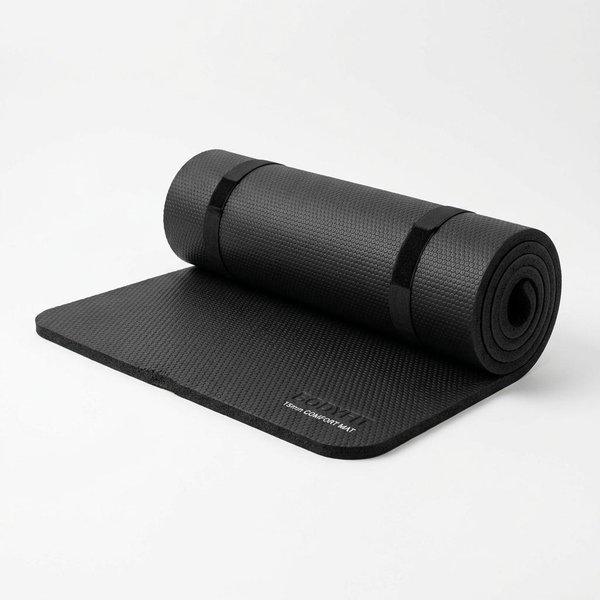
| Basic (bodyweight, bands) | 6–8 mm exercise mat | 5–10 dB |
| Moderate (light weights) | 1/2 inch EVA tiles | 15–20 dB |
| High (moderate dumbbells) | 3/8 inch rubber tiles | 20–25 dB |
| Maximum (heavy lifting) | 3/4 inch rubber + plywood base | 30–40 dB |
Floor treatments address impact noise to the neighbor below. Wall and ceiling treatments address airborne noise and impact transmission through shared walls.
Acoustic foam panels (1–2 inch thick, 12 × 12 inches) on shared walls absorb airborne sound within your room. They do not block sound transmission through walls — absorption is different from isolation — but they reduce echoes and reverberation that amplify noise within the space.
Installation: Removable adhesive strips or double-sided tape. Fully renter-friendly. $20–$40 for a basic set.
Limitation: Acoustic foam does not prevent sound from traveling through the wall to neighbors. It only improves the sound environment within your room.
Recommended: Check price at Amazon — Fstop Labs Acoustic Foam Panels
For shared walls with noise-sensitive neighbors, a mass-loaded vinyl (MLV) barrier (1–2 lb per sq ft) hung on the wall adds density that blocks sound transmission. A 4 × 6 foot MLV sheet weighs 25–50 lb and hangs like a tapestry.
Installation: Mount with hooks into studs or a tension rod at ceiling height. Remove at move-out.
Effectiveness: MLV reduces airborne sound transmission by 15–25 dB. Combined with acoustic foam, this creates meaningful noise control for shared walls.
Cost: $80–$150 for a 4 × 6 foot sheet.
Note: MLV addresses airborne sound (talking, music, motor noise) but not impact sound, which travels primarily through floors.
Ceiling sound treatment in apartments is generally impractical without landlord permission. Temporary options include:
If you are the downstairs neighbor hearing noise from above, your options are limited to communicating with the upstairs resident or requesting landlord intervention. Physical treatments to your ceiling require professional installation and landlord approval.
When you work out matters as much as how.
| Time Window | Noise Tolerance | Recommendation |
|---|---|---|
| 6:00–8:00 AM | Low | Avoid loud equipment. Bands, yoga, stretching only. |
| 8:00 AM–12:00 PM | Moderate | Most neighbors at work. Moderate noise acceptable. |
| 12:00–2:00 PM | Moderate | Lunch hour — some neighbors home. Moderate caution. |
| 2:00–5:00 PM | Moderate-High | Often the best window. Most neighbors away. |
| 5:00–9:00 PM | Moderate | Evening activities. Keep noise reasonable. |
| 9:00 PM–7:00 AM | Very low | Quiet hours in most leases. Minimal noise only. |
Weekend consideration: Noise tolerance is generally higher mid-day Saturday and Sunday when neighbors expect activity. Early morning and late evening weekend noise generates complaints at similar rates to weekdays.
Proactive communication with neighbors reduces complaints more effectively than any physical treatment:
Our research indicates that neighbors who know you personally and have a direct communication channel complain to landlords at approximately one-third the rate of those who do not know you.
Lowering weights slowly (3–4 seconds on the eccentric phase) reduces noise two ways: no dropping, and less momentum that might cause loss of control. This technique also increases time under tension, which research suggests may enhance muscle growth.
For kettlebell swings, jump squats, and plyometrics: focus on landing softly with the ball of the foot, rolling to the heel. This reduces peak impact force by 20–30% compared to heel-first landing.
| Loud Exercise | Quiet Alternative | Noise Reduction |
|---|---|---|
| Jump squats | Goblet squats with slow eccentric | 15–20 dB |
| Box jumps | Step-ups onto sturdy surface | 20–25 dB |
| Burpees with jump | Burpees without jump (step back) | 15–20 dB |
| Running in place | High knees (soft contact) | 10–15 dB |
| Kettlebell swings (hard floor) | Kettlebell deadlifts | 15–20 dB |
| Dumbbell drops | Controlled rack or floor placement | 30–40 dB |
If a neighbor complains despite your efforts:
Our research indicates that apartment gym noise is solvable through a combination of equipment selection, floor treatment, timing, and communication. The single most effective action is installing proper flooring — a 3/8–1/2 inch rubber or EVA mat system reduces impact noise by 15–25 dB, which typically eliminates complaints from moderate training. For heavy lifting, a double or triple layer system provides sufficient isolation. The second most effective action is proactive neighbor communication, which reduces the likelihood of landlord involvement by approximately two-thirds. Equipment selection matters — magnetic resistance cardio machines and controlled strength movements are the foundation of a quiet gym.
For specific flooring product comparisons, see our best gym flooring guide. For a complete renter-friendly setup approach, see our renter-friendly gym setup guide.
As an Amazon Associate we earn from qualifying purchases.