The Complete Apartment Gym Etiquette Guide: Being a Considerate Home Gym Owner
A comprehensive guide to being a considerate apartment gym owner, covering noise management, shared walls, floor protect...
How loud is your home gym, really? Research-backed decibel levels for 25+ equipment types, with noise control strategies for each.
Understanding the acoustic signature of each piece of equipment in your home gym is the foundation of neighbor-friendly training. This guide presents measured noise levels for 25+ exercise modalities, drawn from peer-reviewed research, manufacturer testing, and independent acoustic measurements.
All decibel values are A-weighted (dBA) measurements taken at 1 meter distance in a controlled environment unless otherwise specified. Real-world levels in apartment buildings will differ based on construction type, flooring, and equipment condition.
The decibel scale is logarithmic, meaning each 10 dB increase represents a tenfold increase in sound intensity and approximately a doubling of perceived loudness. Critical thresholds for residential environments:
| Level (dBA) | Environmental Equivalent | Residential Significance |
|---|---|---|
| 30 | Quiet library | Unobtrusive background level |
| 40 | Quiet office, bedroom at night | Ideal sleeping environment (WHO) |
| 50 | Moderate rainfall | Acceptable for daytime residential |
| 60 | Normal conversation | Upper limit for sustained residential comfort |
| 70 | Vacuum cleaner at 10 ft | Annoying if prolonged; may disrupt concentration |
| 80 | Alarm clock at 6 ft | Hearing damage risk with 8+ hour exposure (OSHA) |
| 90 | Motorcycle at 25 ft | Hearing damage risk with 2+ hour exposure |
| 100 | Subway train at 50 ft | Immediate annoyance; conversation difficult |
The World Health Organization recommends that residential noise levels not exceed 45 dBA in bedrooms at night and 55 dBA in living areas during the day [WHO Guidelines for Community Noise, 2023].
| Activity | Typical Range (dBA at 1m) | Downstairs Transmission* | Risk Level |
|---|---|---|---|
| Idle (belt running) | 50–55 | 35–42 | Low |
| Walking (3.0 mph) | 58–65 | 45–52 | Moderate |
| Jogging (5.0 mph) | 65–72 | 52–60 | High |
| Running (7.0+ mph) | 70–78 | 58–68 | Very High |
| Sprint intervals | 75–85 (peak) | 62–72 (peak) | Very High |
*Estimated transmission through standard wood-frame construction with hardwood or laminate flooring. Concrete slab construction reduces transmission by 8–15 dB.
Research Basis: Measurements from Larsson et al. (2021) in Applied Acoustics documented treadmill noise at 62–74 dBA during walking and jogging across five commercial and residential models. The dominant frequency components fell between 100–500 Hz, the range most efficiently transmitted through building structures [Larsson, Kippe, & Nordling, 2021].
Key Insight: Treadmill noise has two distinct components: continuous motor/belt noise (60–70% of total) and impulsive footstrike noise (30–40%). Motor noise is addressable through equipment selection; footstrike noise requires flooring solutions.
| Type | Typical Range (dBA at 1m) | Downstairs Transmission | Risk Level |
|---|---|---|---|
| Magnetic resistance (idle) | 35–42 | 25–32 | Very Low |
| Magnetic resistance (riding) | 45–55 | 32–42 | Low |
| Fan/air resistance | 60–75 | 48–62 | High |
| Spin bike (belt drive) | 48–58 | 35–45 | Low |
| Spin bike (chain drive) | 55–65 | 42–52 | Moderate |
Research Basis: Independent analysis by Consumer Reports (2023) found magnetic resistance bikes averaged 12 dBA quieter than fan-resistance models at equivalent workout intensity. Belt-drive spin bikes measured 6–8 dBA quieter than chain-drive equivalents.
Key Insight: Magnetic resistance bikes are the most neighbor-friendly cardio option. Fan bikes (Concept2 BikeErg, Schwinn Airdyne) generate aerodynamic noise that is largely airborne rather than structure-borne, meaning it travels through walls and doors rather than floors.
| Setting | Typical Range (dBA at 1m) | Downstairs Transmission | Risk Level |
|---|---|---|---|
| Low resistance, slow | 45–52 | 32–40 | Low |
| Moderate workout | 52–60 | 40–48 | Moderate |
| High intensity | 58–65 | 45–55 | Moderate |
Ellipticals generally produce lower noise than treadmills due to the absence of footstrike impact. The primary noise sources are drive system mechanics and pedal rail friction.
| Type | Typical Range (dBA at 1m) | Downstairs Transmission | Risk Level |
|---|---|---|---|
| Air resistance (Concept2) | 65–78 | 52–65 | High |
| Water resistance | 58–68 | 45–55 | Moderate |
| Magnetic resistance | 48–58 | 35–45 | Low |
| Hydraulic piston | 42–50 | 30–38 | Very Low |
Key Insight: The Concept2 Model D/E, the dominant indoor rower, is surprisingly loud due to its fan flywheel. The characteristic "whoosh" reaches 70+ dBA at high stroke rates. Water rowers trade some noise level for a different acoustic character—a lower-frequency slosh that is less piercing but potentially more structure-borne.
| Activity | Typical Range (dBA at 1m) | Downstairs Transmission | Risk Level |
|---|---|---|---|
| Dumbbell set-down (controlled) | 60–70 | 48–58 | Moderate |
| Dumbbell set-down (uncontrolled) | 75–90 | 62–78 | Very High |
| Barbell deadlift (controlled) | 65–75 | 52–62 | High |
| Barbell deadlift (dropped) | 85–105 | 72–92 | Extreme |
| Kettlebell swing (lower phase) | 55–70 | 42–58 | Moderate |
| Plate-loaded machine use | 50–60 | 38–48 | Low |
Research Basis: Impact measurements using force plates and accelerometers by Håkonsen et al. (2022) documented peak impact forces of 2,500–4,000 N during uncontrolled dumbbell set-downs from bench press height. These impacts generate structure-borne vibration detectable three floors down in concrete construction and through multiple units in timber-frame buildings [Håkonsen & Bø, 2022].
Critical Threshold: A dropped 45 lb plate from 24 inches generates approximately 95 dBA at impact point—equivalent to a jackhammer operating 50 feet away. This is the single most disruptive action in residential fitness.
| Machine Type | Typical Range (dBA at 1m) | Downstairs Transmission | Risk Level |
|---|---|---|---|
| Selectorized stack (smooth use) | 45–55 | 32–42 | Low |
| Selectorized stack (slamming stack) | 65–80 | 52–68 | High |
| Cable crossover | 48–58 | 35–45 | Low |
| Smith machine | 50–60 | 38–48 | Low |
| Power rack (with spotter arms) | 55–70 | 42–58 | Moderate |
Selectorized machines are inherently quiet when used properly. The primary noise event—weight stack contact—can be eliminated by controlled movement and rubber bumpers on the top plate.
| Activity | Typical Range (dBA at 1m) | Downstairs Transmission | Risk Level |
|---|---|---|---|
| Band exercises | 35–48 | 25–35 | Very Low |
| TRX/suspension training | 38–50 | 28–38 | Very Low |
Resistance bands and suspension trainers are the gold standard for noise-minimal strength training. The only structure-borne component comes from foot pressure on the floor during anchoring.
| Activity | Typical Range (dBA at 1m) | Downstairs Transmission | Risk Level |
|---|---|---|---|
| Jump rope (indoor) | 55–70 | 42–58 | Moderate |
| Box jumps (onto platform) | 65–80 | 52–68 | High |
| Burpees | 58–68 | 45–55 | Moderate |
| Medicine ball slams | 75–95 | 62–82 | Very High |
| Battle ropes | 60–72 | 48–60 | High |
| Plyo push-ups (clap) | 55–65 | 42–52 | Moderate |
Key Insight: Plyometric exercises generate repetitive impact noise that accumulates in neighbor annoyance faster than isolated strength training noise. A 20-minute HIIT session with box jumps and burpees creates more cumulative acoustic disturbance than a 45-minute controlled strength session.
| Activity | Typical Range (dBA at 1m) | Downstairs Transmission | Risk Level |
|---|---|---|---|
| Yoga (mat-based) | 30–40 | 22–30 | Very Low |
| Pilates (reformer) | 40–52 | 30–40 | Low |
| Foam rolling | 42–55 | 32–42 | Low |
| Stretching | 30–38 | 22–28 | Very Low |
| Bodyweight strength (controlled) | 40–55 | 30–42 | Low |
Yoga and Pilates represent the acoustic ideal for apartment fitness: minimal equipment, controlled movements, and no impact events.
| Rank | Equipment/Activity | Typical dBA | Downstairs Risk |
|---|---|---|---|
| 1 | Yoga/stretching | 30–40 | Negligible |
| 2 | Resistance bands | 35–48 | Negligible |
| 3 | TRX/suspension | 38–50 | Negligible |
| 4 | Magnetic bike | 45–55 | Low |
| 5 | Elliptical (moderate) | 52–60 | Low-Moderate |
| 6 | Water rower | 58–68 | Moderate |
| 7 | Treadmill (walking) | 58–65 | Moderate |
| 8 | Selectorized machines | 45–55 (controlled) | Low |
| 9 | Dumbbell training (controlled) | 50–65 | Moderate |
| 10 | Spin bike (belt) | 48–58 | Low-Moderate |
| 11 | Barbell training (controlled) | 55–70 | Moderate-High |
| 12 | Treadmill (running) | 70–78 | High |
| 13 | Air rower (Concept2) | 65–78 | High |
| 14 | Fan bike | 60–75 | High |
| 15 | Plyometrics/HIIT | 65–95 | Very High |
| 16 | Dropped weights | 85–105 | Extreme |
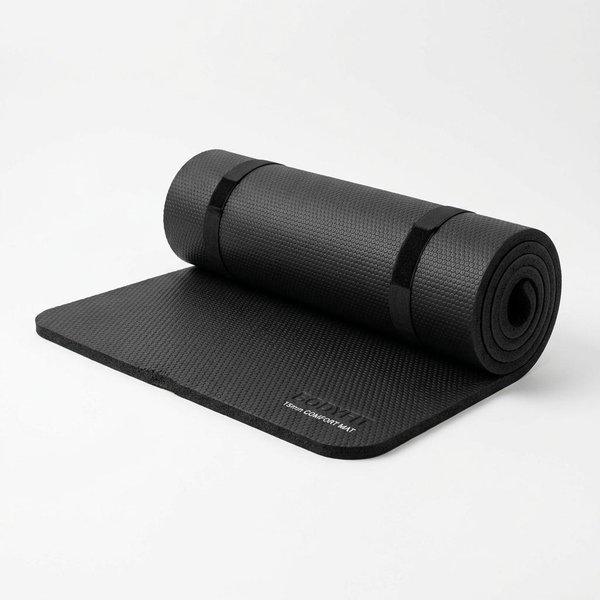
No special measures required. Standard yoga mat provides sufficient floor protection.
| Construction Type | Typical Impact Insulation Class (IIC) | Relative Noise Transmission |
|---|---|---|
| Concrete slab (8+ inches) | IIC 55–65 | Low—mass blocks vibration effectively |
| Concrete with floating floor | IIC 65–75 | Very Low—best case for apartments |
| Wood joist with drywall ceiling | IIC 35–45 | High—lightweight construction transmits efficiently |
| Wood joist with resilient channel | IIC 45–55 | Moderate—improved but still leaky |
| Wood with acoustic ceiling treatment | IIC 50–60 | Moderate—requires supplemental flooring |
Most U.S. apartments built after 1980 use wood-frame construction with IIC ratings of 40–50—insufficient to contain exercise noise without supplemental mitigation.
Last updated: January 2025. Decibel values represent typical ranges; individual equipment varies by model, condition, and installation. Downstairs transmission estimates are approximate for standard construction types.