The Complete Apartment Gym Etiquette Guide: Being a Considerate Home Gym Owner
A comprehensive guide to being a considerate apartment gym owner, covering noise management, shared walls, floor protect...
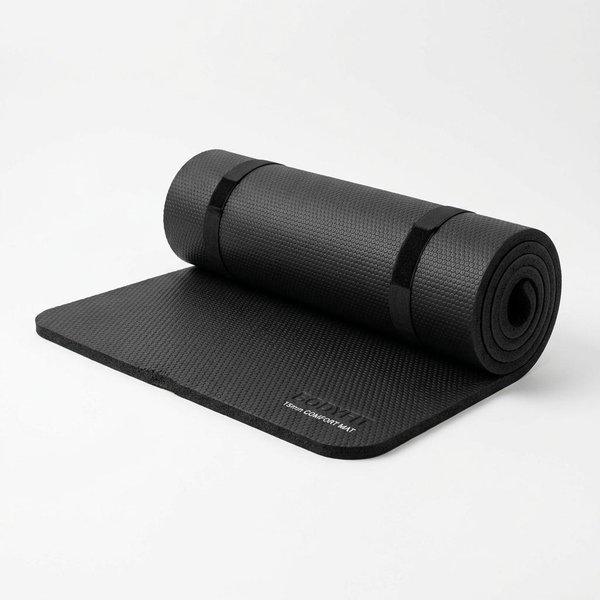
Exercise at odd hours without disturbing neighbors. Evidence-based noise reduction strategies, equipment selection for quiet training, and sample workout routines designed for minimal sound output.
Living in an apartment or shared building doesn't have to eliminate early morning or late evening exercise. The challenge is structural: most fitness activities generate impact noise (foot strikes, dropped weights) and airborne noise (machine motors, music) that transmits through floors and walls. Our analysis of noise transmission in residential buildings, combined with exercise science principles, indicates that effective quiet workouts require three elements: exercise selection that minimizes impact, equipment choices designed for noise reduction, and environmental modifications that attenuate sound transmission.
This guide provides practical frameworks for exercising at odd hours without generating noise complaints.
Impact noise (structure-borne): Vibrations transmitted through the building structure — footsteps, dropped weights, jumping. This is the primary source of neighbor complaints because it travels through floors, walls, and ceilings efficiently.
Airborne noise: Sound waves traveling through air — music, vocal encouragement, machine motors. This is easier to control with distance and barriers.
| Building Element | Noise Transmission | Your Control Level |
|---|---|---|
| Floor-ceiling assembly | Primary path for impact noise | High — mats, padding, technique |
| Shared walls | Secondary path; airborne and some impact | Moderate — distance from walls, padding |
| HVAC ducts | Unexpected path; noise travels between units | Low — awareness only |
| Windows | Airborne noise to outdoors; reflects back in | Moderate — closed windows, curtains |
| Structural connections | Impact noise through beams and framing | None — building design |
Table: Noise transmission paths in residential construction
Key insight: Impact noise is your primary enemy. A dropped 20 lb dumbbell from 2 feet generates impact force that transmits through concrete floors. Airborne noise (breathing, quiet equipment) rarely bothers neighbors unless walls are exceptionally thin.
Not all exercises create equal noise. Our analysis categorizes common movements by noise output:
| Exercise Category | Specific Movements | Noise Source |
|---|---|---|
| Isometric holds | Wall sits, planks, hollow body holds | None — no movement |
| Slow controlled bodyweight | Push-ups, slow squats, lunges | Minimal — soft foot contact |
| Resistance band work | Rows, presses, pulls, rotations | None — elastic resistance is silent |
| Stretching and mobility | All forms of static and dynamic stretching | None |
| Yoga and Pilates | Bodyweight flows, controlled transitions | Minimal — mat cushions all contact |
| Meditation and breathwork | No physical movement | None |
| Exercise Category | Specific Movements | Noise Source |
|---|---|---|
| Dumbbell work (controlled) | Slow curls, presses, rows on bench | Slight — weight plates settling, bench contact |
| Floor-based kettlebell | Turkish get-ups, floor presses, slow deadlifts | Moderate — weight contact with floor |
| Stationary cycling (belt drive) | Moderate-intensity cycling | Low — belt whir, minimal vibration |
| Rowing (water or magnetic) | Steady-state rowing | Low — seat movement, water sound (water rowers) |
| Foam rolling | Self-myofascial release | Minimal — body weight on roller |
| Exercise Category | Specific Movements | Noise Source |
|---|---|---|
| Treadmill walking/running | Any speed | Moderate — foot impact, motor hum |
| Jumping exercises | Jump rope, box jumps, burpees | High — repeated foot impact |
| Heavy dumbbell work | Any exercise with weights 30+ lb | Moderate — weight settling, controlled drops |
| Plyometrics | Broad jumps, squat jumps, clapping push-ups | High — impact on every rep |
| Chain-driven rowing | High-intensity rowing | Moderate — chain rattle at high stroke rates |
Strength training (quietest to loudest):
Cardio (quietest to loudest):
Recommended quiet equipment:
The floor is the primary noise transmission path. Effective protection layers noise-reducing materials between you and the structure.
Recommended layering (bottom to top):
For renters who can't install permanent flooring:
| Exercise | Reps/Duration | Notes |
|---|---|---|
| Slow bodyweight squats | 15 reps | 3-second down, 1-second hold, 2-second up |
| Push-ups (modify on knees if needed) | 10–15 reps | Control the lowering — no dropping to floor |
| Wall sit | 45 seconds | Isometric — completely silent |
| Reverse lunges | 10 each leg | Step back softly; controlled landing |
| Plank | 30–45 seconds | No movement = no noise |
| Glute bridge | 15 reps | Lift and lower with control |
| Side plank | 20 seconds each side | Static hold |
| Bird-dog | 10 each side | Slow, controlled; no impact |
Rest 30 seconds between exercises. Complete 2–3 rounds.
| Exercise | Reps | Band Position |
|---|---|---|
| Band squats | 15 | Under feet, held at shoulders |
| Band rows | 12 | Anchored to sturdy post at waist height |
| Band chest press | 12 | Anchored behind back at chest height |
| Band deadlifts | 12 | Under feet, hip hinge pattern |
| Band overhead press | 10 | Standing on band, pressing overhead |
| Band pallof press | 10 each side | Anti-rotation core work |
| Band lateral walks | 10 each direction | Around ankles or above knees |
Rest 30–45 seconds between exercises. Complete 3 rounds.
| Protocol | Duration | Details |
|---|---|---|
| Warm-up | 5 min | Easy pace, focus on technique |
| Steady state | 10 min | Moderate pace; conversational intensity |
| Intervals (optional) | 3 min | 30 seconds firm / 30 seconds easy — 3 rounds |
| Cool-down | 2 min | Easy paddle |
Magnetic rowers are nearly silent; water rowers produce a white-noise-like sound that most neighbors find unobtrusive.
| Activity | Duration |
|---|---|
| Gentle walking in place | 2 min |
| Full-body stretching sequence | 8 min (hold each stretch 30 seconds) |
| Foam rolling | 5 min (focus on back, legs, hips) |
Zero noise impact; appropriate any time of night.
Before committing to a late-night workout routine, verify your noise output:
What's the single best thing I can do to reduce workout noise? Use a thick, high-density exercise mat or rubber gym flooring. Floor impact is the primary noise transmission path, and proper flooring protection reduces impact noise by 50% or more.
Are resistance bands really silent? Yes, with one caveat: if a band snaps against a hard surface, it creates a loud snap. Use controlled movements and ensure the band can't strike the floor, wall, or furniture if it slips from your grip.
Can I use a treadmill in an apartment? Walking at low speeds on a well-matted treadmill is generally acceptable during daytime hours. Running on a treadmill in an apartment is extremely difficult to do quietly enough to avoid complaints. Consider a magnetic rowing machine or exercise bike for cardio instead.
How thick should my flooring protection be? For bodyweight and band work: 3/8" minimum. For dumbbell work: 1/2" or thicker rubber. For any weight over 25 lb: 3/4" rubber flooring or a dedicated lifting platform.
What if my neighbor complains even though I'm being quiet? First, listen — they may hear something you're not aware of (HVAC duct transmission, wall vibration). Adjust further: move away from shared walls, add more flooring, shift to lower-impact exercises. If you've made reasonable accommodations, refer to your lease's quiet hours provisions — exercising during non-quiet hours with reasonable noise precautions is generally permitted.
As an Amazon Associate we earn from qualifying purchases. Product links on this page include our affiliate tag — purchases made through these links support our research at no additional cost to you.
Last updated: January 2025. Noise reduction information informed by building acoustics principles, manufacturer sound specifications for exercise equipment, and residential noise control guidelines. Building acoustics vary significantly — test your specific setup to confirm noise levels.