The Complete Apartment Gym Etiquette Guide: Being a Considerate Home Gym Owner
A comprehensive guide to being a considerate apartment gym owner, covering noise management, shared walls, floor protect...
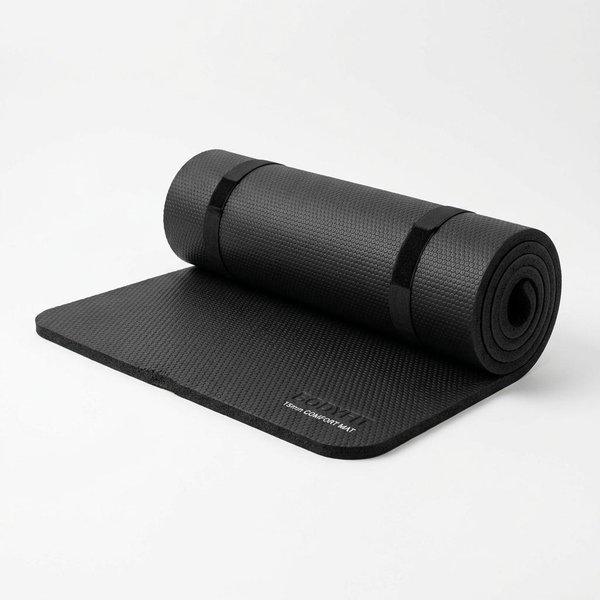
Not all rubber mats are equal. Learn to evaluate density, thickness, composition, and surface texture to find the perfect rubber mat for your apartment gym.
Rubber mats represent the most effective single investment for apartment gym noise control. But the category encompasses enormous variation: recycled versus virgin, porous versus non-porous, 40-durometer versus 70-durometer, smooth versus textured, bonded versus vulcanized.
This guide provides the technical knowledge to evaluate rubber mats beyond marketing claims, with specific selection criteria matched to equipment type, exercise modality, and acoustic requirements.
| Rubber Type | Source | Density | Odor | Durability | Typical Price |
|---|---|---|---|---|---|
| Recycled SBR | Ground tires + binder | 850–1,050 kg/m³ | Moderate (2–6 weeks) | 15–20 years | $2.00–3.50/sq ft |
| Virgin SBR | Fresh petroleum synthesis | 900–1,100 kg/m³ | Low (1–2 weeks) | 15–20 years | $3.50–5.50/sq ft |
| Natural rubber | Latex from rubber trees | 910–930 kg/m³ | Mild rubber scent | 12–15 years | $4.00–6.00/sq ft |
| EPDM | Synthetic (ethylene propylene) | 1,100–1,350 kg/m³ | Minimal | 20+ years | $5.00–8.00/sq ft |
| Nitrile (NBR) | Petroleum-based synthetic | 1,100–1,200 kg/m³ | Mild | 18–22 years | $6.00–10.00/sq ft |
For apartment gym applications, recycled SBR offers optimal value. The odor dissipates within weeks, and the 15–20 year lifespan exceeds most rental tenancies. Virgin SBR justifies its premium only for users with chemical sensitivities or those setting up gyms in poorly ventilated spaces.
Durometer measures rubber hardness on the Shore A scale. For gym flooring:
| Durometer Range | Feel | Best Application | Noise Performance |
|---|---|---|---|
| 40–50 Shore A | Soft, cushioning | Yoga, stretching | Excellent impact absorption; moderate durability |
| 50–65 Shore A | Medium-firm | General fitness, dumbbells | Balanced absorption and stability |
| 65–75 Shore A | Firm | Heavy barbell training | Maximum durability; good impact absorption |
| 75+ Shore A | Very firm | Commercial high-traffic | Longest lifespan; reduced comfort |
Optimal for apartment renters: 55–70 Shore A. This range provides sufficient firmness for heavy lifting stability while maintaining enough compliance for effective noise reduction. Research by the National Research Council found that 60 Shore A rubber provides the highest impact sound reduction-to-stiffness ratio in residential applications [NRC-IRC, 2023].
Density (kg/m³ or lbs/ft³) determines mass-law sound blocking. Higher density = more mass = better low-frequency noise reduction.
| Density Range | Classification | Impact Reduction (3/4") | Typical Source |
|---|---|---|---|
| <800 kg/m³ | Low-density | 18–22 dB | Crumb rubber with high binder ratio |
| 800–1,000 kg/m³ | Medium-density | 22–26 dB | Standard recycled rubber |
| 1,000–1,200 kg/m³ | High-density | 24–28 dB | Premium recycled or virgin SBR |
| >1,200 kg/m³ | Very high-density | 26–30 dB | EPDM, NBR, or heavily compressed |
Practical note: Density and durometer are related but distinct. A high-density, low-durometer rubber (rare but achievable through specific formulations) provides optimal noise reduction with comfortable surface feel.
Commercial-grade rubber should maintain ±5% thickness tolerance. Budget mats may vary ±10% or more, creating:
Verification method: Measure thickness at multiple points using calipers or a ruler. Variation exceeding 1/16 inch across a 4×6 ft mat indicates poor manufacturing quality.
| Texture Type | Grip Level | Cleaning | Best For |
|---|---|---|---|
| Smooth | Moderate | Easiest | General fitness, bodyweight |
| Hammered/pebble | High | Moderate | Heavy lifting, high-traffic |
| Diamond plate | Very high | Moderate | Commercial gyms, plyometrics |
| Coin/grip pattern | High | Easy | Home gyms, multipurpose rooms |
| Textured top/smooth bottom | Moderate | Easy | Installations requiring adhesion (not renter) |
For apartment gyms, coin pattern or smooth surfaces provide the best balance of grip, cleanability, and equipment stability. Aggressive textures can catch on equipment feet and yoga mat surfaces.
What they are: Agricultural-grade rubber mats sold for horse stall flooring, repurposed by gym enthusiasts for decades.
Specifications:
Best source: Tractor Supply Company (in-store: ~$49.99 for 3/4" mat; premium for delivery)
Advantages:
Disadvantages:
Verdict: The default choice for heavy lifting zones. If you deadlift 200+ lbs regularly, stall mats are essential.
Tractor Supply Rubber Stall Mat on Amazon
What they are: Factory-produced rolls specifically manufactured for fitness facility flooring.
Specifications:
Leading manufacturers: American Floor Mats, Rubber Flooring Inc., Greatmats, EZ Flex
Advantages:
Disadvantages:
Verdict: Best for full-room coverage in dedicated gym spaces where appearance matters.
American Floor Mats Rubber Rolls on Amazon
What they are: Precision-cut rubber tiles with puzzle-edge interlocking connections.
Specifications:
Leading manufacturers: IncStores, Rubber Flooring Inc., Greatmats, Husky
Advantages:
Disadvantages:
Verdict: Best for renters who prioritize easy installation and removal. The interlocking format is inherently renter-friendly.
IncStores Rubber Gym Tiles on Amazon
What they are: Pre-sized mats designed for specific equipment footprints.
Common sizes:
Material: Usually recycled rubber, 3/16"–3/8" thickness
Advantages:
Disadvantages:
Verdict: Acceptable for cardio equipment protection but inadequate for acoustic isolation in upstairs units.
Supermats Heavy Duty Equipment Mat on Amazon
Before purchasing any rubber mat, verify:
New rubber mats—especially recycled SBR—emit volatile organic compounds (VOCs) including carbon disulfide, benzothiazole, and trace sulfur compounds. The characteristic "rubber smell" is harmless at typical indoor concentrations but unpleasant.
Odor mitigation timeline:
Accelerated off-gassing protocol:
For chemical-sensitive individuals: Choose virgin SBR or natural rubber products, which off-gas significantly less than recycled alternatives.
Last updated: January 2025. Rubber mat selection should prioritize density, thickness, and durometer over brand recognition. All products should be verified against the quality checklist before purchase.