The Complete Apartment Gym Etiquette Guide: Being a Considerate Home Gym Owner
A comprehensive guide to being a considerate apartment gym owner, covering noise management, shared walls, floor protect...
SnugGym is an Amazon Associate. We earn from qualifying purchases at no extra cost to you. Learn more
Our research-backed comparison of the top interlocking gym floor tiles, evaluating EVA foam, rubber, and hybrid options for home gym noise control and floor protection.
Our independent analysis compares six leading interlocking gym floor tile systems across material quality, noise dampening, durability, installation ease, and value — with special attention to renter-friendly options that protect floors and preserve security deposits.
Interlocking tiles are the most accessible entry point into gym flooring. Unlike rolled rubber requiring precise cutting and potential adhesive application, tiles arrive ready to puzzle-piece together with no tools, no glue, and no permanent commitment. When you move, they disassemble, stack, and travel to your next gym. This flexibility makes them the default choice for renters, beginners testing home gym commitment, and anyone who values modularity over seamless aesthetics.
However, not all interlocking tiles are equal. The market spans $0.50/sq ft EVA foam that compresses to plywood-like hardness under loaded barbells, to $8+/sq ft rubber tiles matching commercial gym quality. Choosing incorrectly means replacing tiles within months, damaging subfloors, or discovering your "gym floor" provides no actual noise reduction.
This guide separates genuine performers from colorful placebos.
| Feature | ProSource Puzzle Exercise Mat | BalanceFrom GoFit All-Purpose | Yes4All Interlocking Rubber | RevTime T-Grade Rubber Tiles | We Sell Mats 3/4" EVA Foam | American Floor Mats 3/8" Rubber |
|---|---|---|---|---|---|---|
| Price Range | $0.80–$1.20/sq ft | $0.90–$1.30/sq ft | $2.50–$3.50/sq ft | $3.50–$4.50/sq ft | $1.00–$1.50/sq ft | $3.00–$4.00/sq ft |
| Material | EVA foam | EVA foam | Recycled rubber | Recycled rubber (T-grade) | EVA foam | Recycled rubber |
| Thickness | 1/2" (12mm) | 3/4" (19mm) | 3/8" (9.5mm) | 3/8" (9.5mm) | 3/4" (19mm) | 3/8" (9.5mm) |
| Density | Low | Low-Medium | High | Very High | Low | High |
| Water Resistance | Water-resistant | Water-resistant | Waterproof | Waterproof | Water-resistant | Waterproof |
| Tile Size | 24" x 24" | 24" x 24" | 24" x 24" | 24" x 24" | 24" x 24" | 24" x 24" |
| Edge Pieces | Included | Included | Included | Included | Included | Included |
| Odor | Minimal | Minimal | Low-Medium | Low | Minimal | Low |
| Best For | Yoga, stretching, light cardio | Budget home gym, floor work | Heavy lifting, durability | Commercial-grade home gym | Temporary/cardio areas | Premium rubber tile option |
Table based on manufacturer specifications and published reviews. Prices reflect typical US retail as of early 2026.
Our assessment prioritizes attributes relevant to home gym use in multi-unit dwellings:
Ethylene-vinyl acetate (EVA) foam is lightweight, inexpensive, and water-resistant. It provides excellent cushioning for floor work, yoga, and bodyweight exercises. However, EVA has fundamental limitations for serious strength training:
Bottom line: EVA foam tiles suit cardio equipment areas, yoga spaces, and temporary or light-duty gyms. They are inappropriate for power racks, heavy deadlift platforms, or Olympic weightlifting areas.
Recycled rubber tiles address EVA's limitations with dramatically better durability and noise performance:
Trade-off: Rubber tiles cost 2-4x more per square foot than EVA and weigh 3-4x as much — a 24x24x3/8-inch rubber tile weighs approximately 16 pounds vs. 2 pounds for equivalent EVA. Shipping costs reflect this difference.
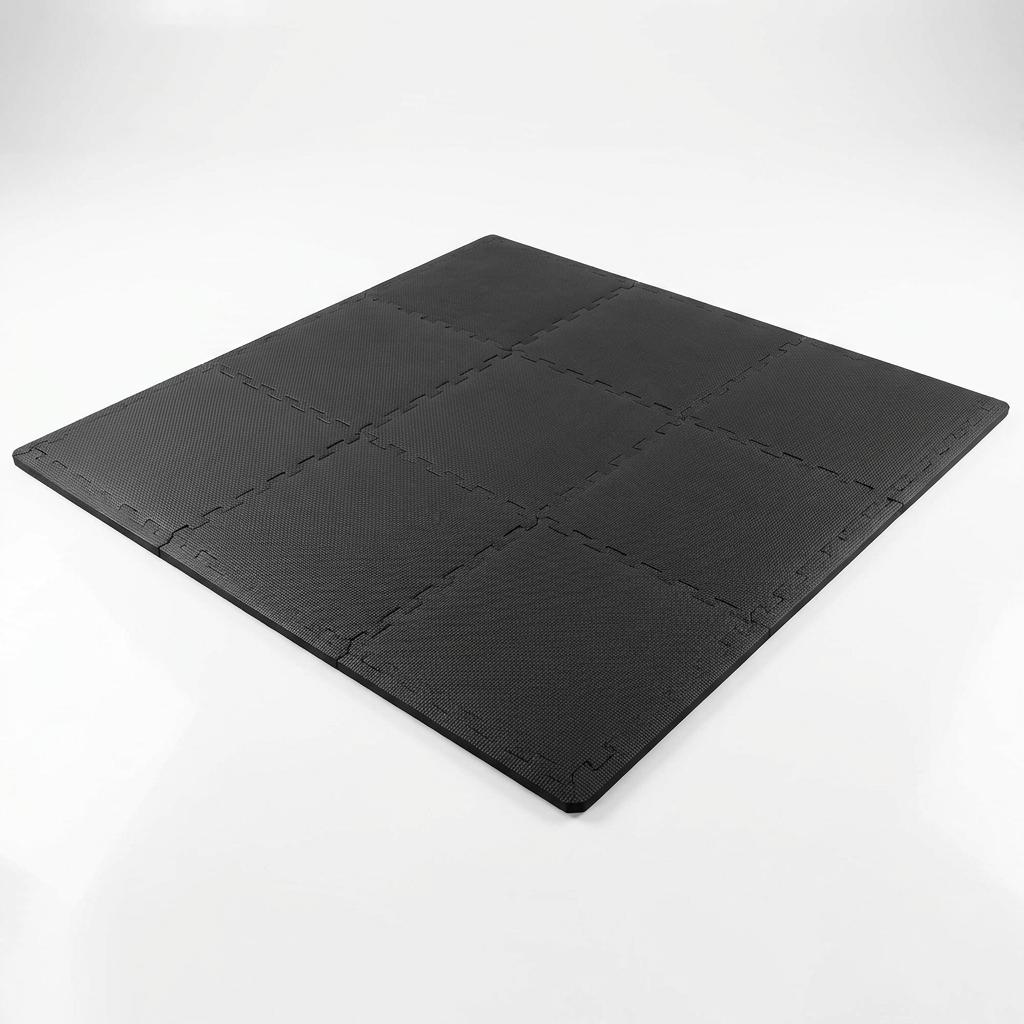
The ProSource puzzle mat is the entry-level standard — the tile system most home gym owners start with. At $0.80-1.20/sq ft, it provides immediate floor protection and exercise cushioning for minimal investment.
Why it works: The 1/2-inch EVA foam provides adequate cushioning for yoga, stretching, bodyweight exercises, and light dumbbell work. The interlocking edges assemble in minutes and stay connected during normal use. Included border edges create clean, trip-free perimeters. The water-resistant surface wipes clean with standard household cleaners.
The six-color options (black, blue, gray, red, wood grain, cork pattern) allow aesthetic matching to room decor — a consideration when your gym shares space with living areas.
Critical limitations: This is not heavy-lifting flooring. A 45-pound plate dropped from hip height can split tiles. Power rack feet will indent permanently within days. The 1/2-inch thickness provides minimal noise reduction for impact activities — downstairs neighbors will hear jump squats and burpees clearly.
Best application: Cardio equipment mat, yoga area, temporary gym testing commitment, or supplement to rubber lifting platforms. Check price on Amazon
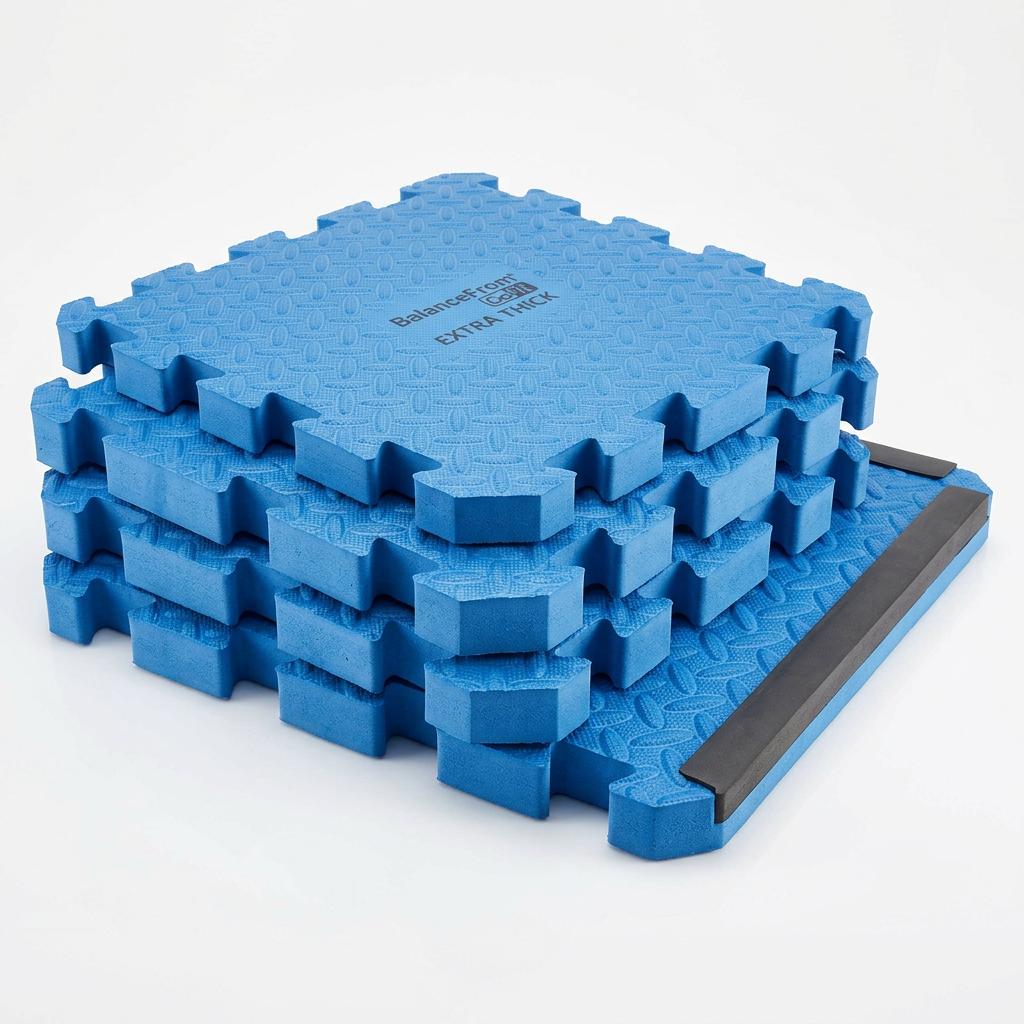
The BalanceFrom GoFit series adds 3/4-inch thickness and slightly higher density EVA, addressing some ProSource limitations while remaining in the budget foam category.
Improvements over standard EVA: The 3/4-inch thickness provides noticeably better impact absorption for plyometrics and light kettlebell work. The marginally higher density reduces compression set under moderate loads — a 150-pound rack will indent but less severely than on 1/2-inch tiles. The double-sided surface texture (wood grain one side, puzzle pattern reverse) provides options.
Still fundamental foam limitations: Heavy equipment still indents. Dropped weights still risk splitting. Noise reduction for structural transmission remains modest. But for bodyweight fitness, yoga, stretching, and light dumbbell work in temporary spaces, the 3/4-inch thickness provides genuine comfort improvement over thinner alternatives.
Our pick for: Temporary apartment gyms where flooring may not travel to the next location, or as a supplement to dedicated lifting platforms.
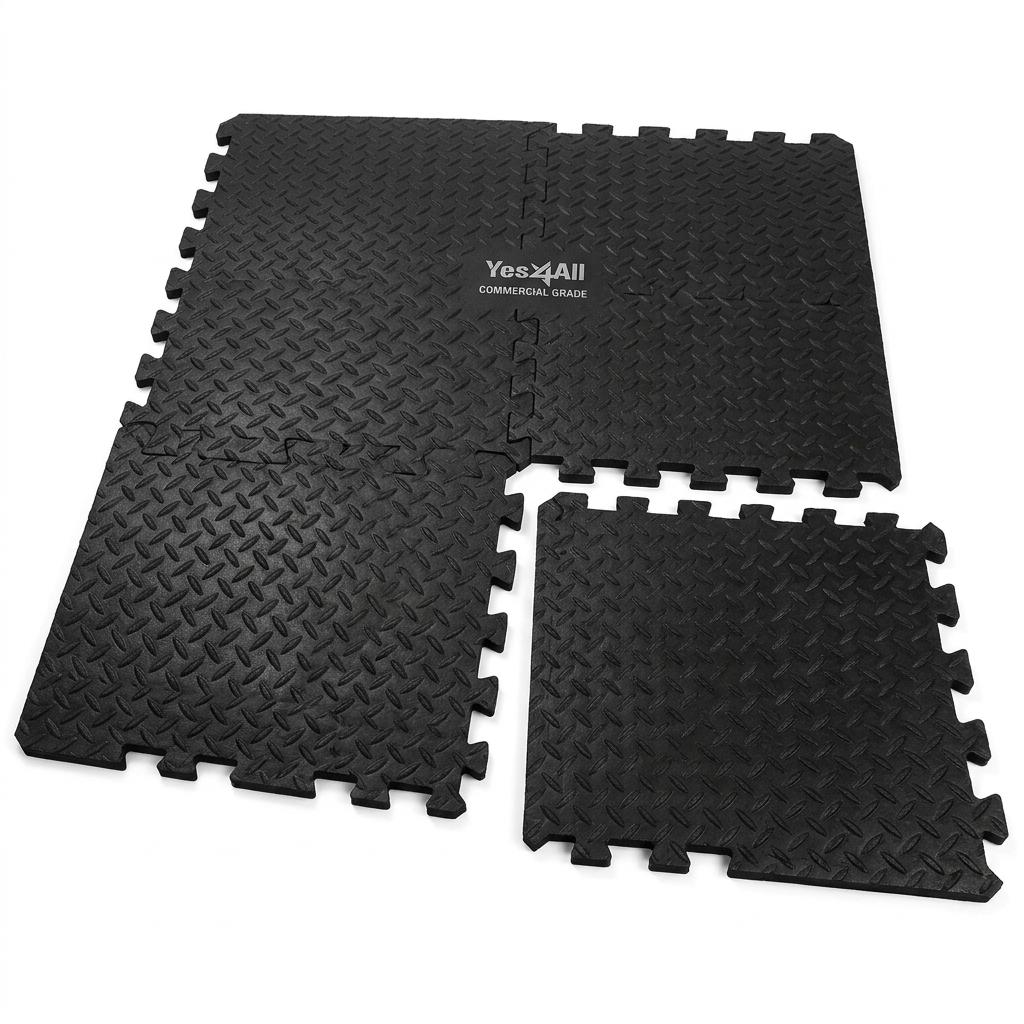
Yes4All's interlocking rubber tiles bridge the gap between foam play mats and premium rubber flooring, delivering genuine recycled rubber performance at approximately half the cost of commercial-grade alternatives.
Why it stands out: At $2.50-3.50/sq ft, these are among the least expensive recycled rubber interlocking tiles from a recognized fitness brand. The 3/8-inch thickness handles deadlifts up to 315 lb on concrete without subfloor damage, and the high-density rubber (75+ pcf) supports loaded power racks without compression.
The interlocking mechanism uses precision-cut dovetail edges that connect firmly without gaping — a common flaw in budget rubber tiles. Included border pieces create finished edges. The surface texture provides grip without being abrasive for floor work.
Odor is moderate initially but dissipates within 1-2 weeks of installation — faster than some competitors using lower-quality binding agents. The recycled rubber construction shows typical color variation that some users find industrial; others appreciate the authentic gym aesthetic.
Limitations: The rubber surface is firmer underfoot than foam — floor work (planks, push-ups) is less comfortable without additional matting. The 24x24-inch tiles create more seams than rolled flooring, potentially accumulating debris if not sealed. Thicker 1/2-inch options would provide better noise reduction for apartment drops above 275 lb. Check price on Amazon
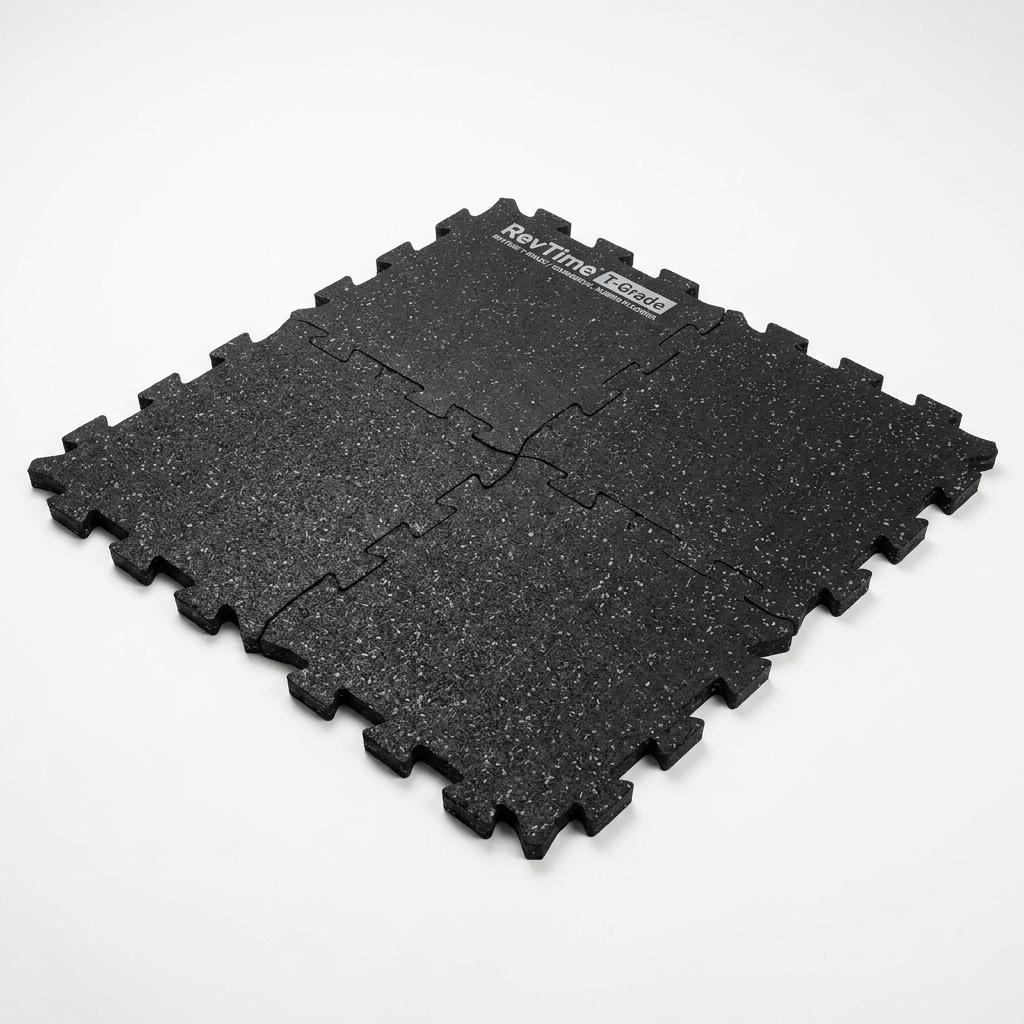
RevTime's T-Grade (tire-grade) rubber tiles use higher-density recycled rubber with enhanced binding agents, producing tiles that approach commercial flooring performance in an interlocking format.
Differentiators: The T-Grade designation indicates 80+ pcf density — comparable to rolled commercial rubber. This density supports any weight a home gym athlete can produce, including repeated Olympic lift drops on concrete. The interlocking edges are precision-cut for tight seams that resist separation under lateral loads.
The surface pattern (coin, diamond plate, or speckled options) provides consistent grip across the tile face. The 3/8-inch thickness hits the sweet spot of protection without excessive height transitions to adjacent flooring.
Where it excels: Home gym owners who want rolled-rubber performance with tile convenience. The T-Grade density genuinely matches 3/8-inch rolled rubber in impact absorption and noise reduction — the difference is seam visibility, not performance.
Considerations: At $3.50-4.50/sq ft, costs approach rolled rubber pricing while maintaining the visual grid pattern of tile installations. The 16-pound per tile weight makes assembly more physically demanding than foam. Odor is low but present for the first week.
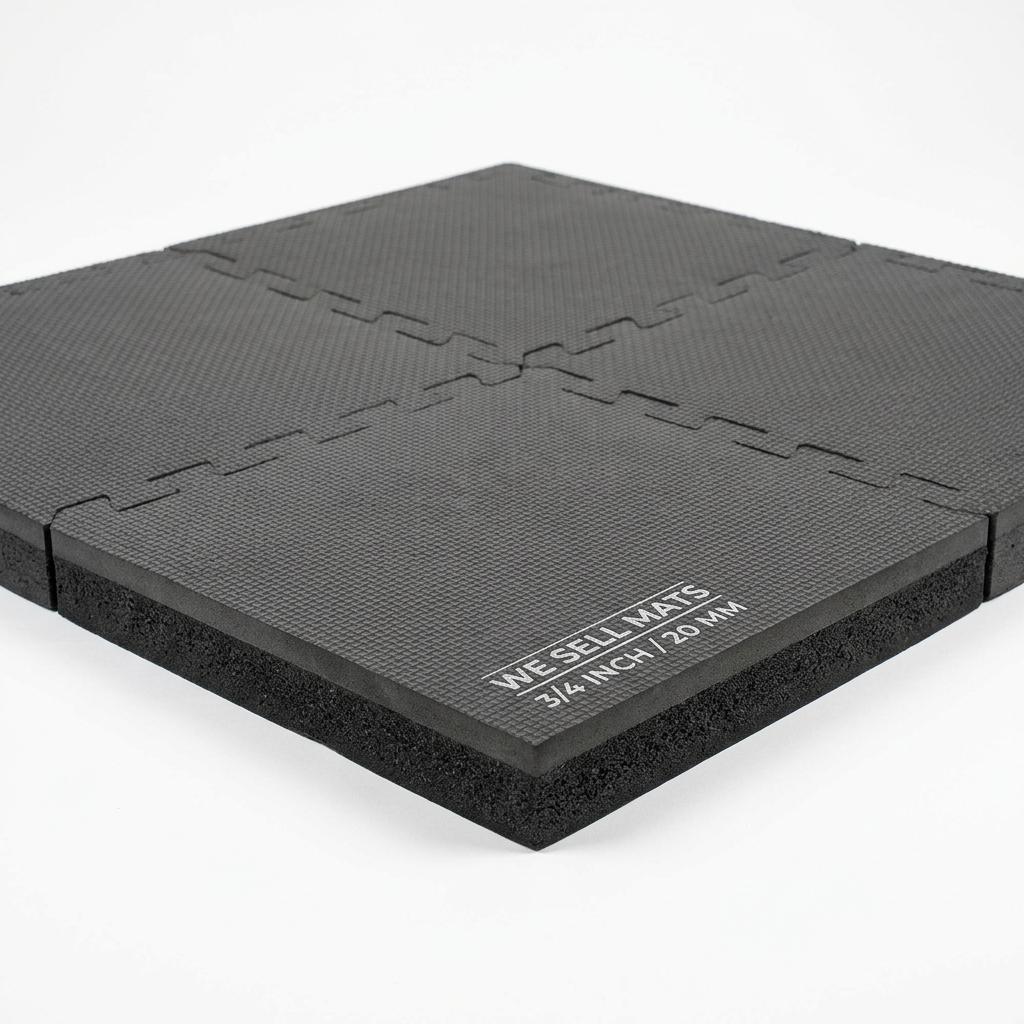
We Sell Mats specializes in EVA foam products for martial arts, gymnastics, and fitness, and their 3/4-inch tile represents the premium end of foam flooring — not rubber, but the best foam available.
Strengths: The 3/4-inch thickness provides excellent cushioning for floor work, HIIT, and bodyweight training. The higher-density EVA (compared to budget puzzle mats) resists compression better than 1/2-inch alternatives — suitable for light dumbbell work and cardio equipment. The non-slip surface texture performs well under sweaty conditions.
Available in multiple colors with border and corner pieces included, the We Sell Mats system creates polished, finished appearances suitable for visible living spaces.
Trade-offs: Still EVA foam with all inherent limitations. Heavy equipment will indent. Noise reduction for structural transmission is inferior to rubber. The premium EVA price ($1.00-1.50/sq ft) approaches budget rubber tile territory where heavier training is anticipated. Check price on Amazon
American Floor Mats translates their rolled rubber expertise into interlocking tiles with consistent quality, low odor, and excellent customer support. These tiles represent the benchmark against which other rubber interlocking tiles are measured.
Why they lead: Material quality is consistent — every tile in an order matches in density, thickness, and appearance. The 3/8-inch recycled rubber (75 pcf) handles heavy home gym loads without compression. The interlocking edges are precisely machined for tight, gap-free seams. The low-odor formulation uses water-based binders rather than solvent-based alternatives.
The speckled color options (10% EPDM flecks in black) provide aesthetic flexibility. Customer service is responsive to questions about installation, material specifications, and order customization.
Where they fit: For home gym owners who want genuine rubber performance in tile format without premium pricing. These tiles deliver 90% of RevTime T-Grade performance at 85% of the cost, with better odor control and customer support.
Limitations: Pricing ($3.00-4.00/sq ft) with shipping costs approaches rolled rubber for large installations, where the tile convenience premium is harder to justify.
Clean thoroughly — even small debris under tiles creates bumps and wear points. Ensure subfloor is dry; trapped moisture breeds mold under impermeable rubber.
Start from the center and work outward, or start from the most visible wall. Measure carefully: rooms are rarely perfectly square, and you'll need to cut edge tiles for most installations.
Always use included border pieces. Exposed puzzle edges are trip hazards and accumulate debris. For transitions to other flooring, use rubber transition ramps.
When moving, tiles lift easily if not adhesive-bonded. Clean both sides, stack flat, and transport in original packaging if available. Rubber tiles are heavy — a 10x10 gym requires approximately 200 pounds of rubber tiles; plan moving logistics accordingly.
In direct comparison, interlocking rubber tiles provide slightly less noise reduction than equivalent-thickness rolled rubber due to seam gaps. However, the difference is marginal (2-5 dB) and both dramatically outperform EVA foam or bare floors. For apartment installations:
| Flooring Type | Impact Noise Reduction | Structural Transmission | Recommendation |
|---|---|---|---|
| Bare floor | None | Maximum | Unacceptable for shared buildings |
| 1/2" EVA foam | Minimal | High | Inadequate for heavy training |
| 3/4" EVA foam | Moderate | Moderate-High | Acceptable for cardio/light work |
| 3/8" rubber tiles | Good | Moderate | Good for most home gym training |
| 1/2"+ rubber tiles | Very Good | Low | Excellent for apartments |
| Rubber tiles + underlayment | Excellent | Very Low | Maximum practical noise control |
Interlocking gym floor tiles solve the primary problem facing renters and commitment-phobic gym builders: how to protect floors and reduce noise without permanent installation. The Yes4All Interlocking Rubber Tiles deliver the best value for genuine rubber performance, while the ProSource Puzzle Mat serves as an acceptable entry point for light training.
Our recommendation: If your training includes any barbell work over 135 pounds, skip EVA foam entirely and invest in rubber tiles. The cost difference ($1.50-2.00/sq ft) is trivial compared to floor repair costs or neighbor complaints. If you exclusively do bodyweight, yoga, and cardio, quality EVA foam provides adequate protection at lower cost and weight.
| Image | Product | Price | Badge | Link |
|---|---|---|---|---|
 |
ProSource Puzzle Exercise Mat | $30-$50 | Best Budget Foam | Check Price |
 |
BalanceFrom GoFit Extra Thick Tiles | $40-$60 | Best Thick Foam | Check Price |
 |
Yes4All Interlocking Rubber Tiles | $80-$120 | Best Rubber Value | Check Price |
 |
RevTime T-Grade Rubber Gym Tiles | $100-$150 | Best Premium | Check Price |
 |
We Sell Mats 3/4 Inch EVA Foam Tiles | $50-$70 | Best for Cardio | Check Price |
An affordable foam tile solution that provides solid noise reduction for cardio and bodyweight exercises.
Extra-thick high-density foam tiles that excel at absorbing impact noise from intense home gym workouts.
Commercial-grade rubber tiles that offer superior durability and shock absorption for serious home gyms.
Professional-grade rubber gym tiles built for commercial environments that offer maximum durability and noise control.
Professional-quality foam tiles with beveled edges perfect for cardio-focused apartment gyms.
The ProSource Puzzle Mat is a budget-friendly way to transform any room into a home gym. Its 1/2 inch EVA foam tiles absorb impact noise from jumping, burpees, and other plyometric exercises, making it an excellent choice for apartment dwellers who want to keep the peace with downstairs neighbors.
Check Price on Amazon
BalanceFrom GoFit's 3/4 inch tiles provide some of the best noise dampening in the foam category. The high-density EVA construction absorbs heavy impacts while maintaining its shape over time. If noise reduction is your top priority for an apartment gym, these thick tiles are an excellent investment.
Check Price on Amazon
Yes4All's rubber tiles bridge the gap between foam mats and professional gym flooring. The durable rubber construction handles heavy weights and dropped dumbbells with ease while providing excellent noise isolation. A great mid-range option for those who've outgrown basic foam tiles.
Check Price on Amazon
RevTime T-Grade tiles are built to commercial gym standards with their heavy-duty SBR and EPDM rubber construction. These tiles provide exceptional vibration dampening and shock absorption, making them the top choice for serious lifters in apartment settings. The interlocking design allows for easy DIY installation in any space.
Check Price on Amazon
We Sell Mats 3/4 inch tiles are purpose-built for high-impact workouts. The thick foam construction absorbs the repeated impact from jump rope, plyometrics, and cardio dance workouts, making them ideal for apartment-friendly fitness spaces. The beveled edges create a seamless transition from gym floor to regular flooring.
Check Price on Amazon