The Complete Apartment Gym Etiquette Guide: Being a Considerate Home Gym Owner
A comprehensive guide to being a considerate apartment gym owner, covering noise management, shared walls, floor protect...
SnugGym is an Amazon Associate. We earn from qualifying purchases at no extra cost to you. Learn more
Research-backed guide to best gym flooring over hardwood for small-space home gyms.
FTC Disclosure: This article contains affiliate links. If you purchase through these links, we may earn a small commission at no extra cost to you. We only recommend products we genuinely believe in.
Hardwood floors and home gyms are a potentially catastrophic combination for renters. A single dropped dumbbell can dent or gouge hardwood that costs $8-15 per square foot to repair professionally. Concentrated equipment loads create permanent compression marks. Sweat and moisture warp and discolor the finish. And when you move out, your landlord can deduct thousands from your security deposit for damage that could have been prevented with proper flooring protection.
This guide provides a comprehensive approach to protecting hardwood floors while creating an effective, safe workout surface. We'll cover flooring material science, protection strategies, product recommendations, installation techniques, and removal considerations specifically for renters who need to preserve their hardwood investment.
Compression damage occurs when concentrated weight crushes wood fibers, creating permanent indentations. Even relatively light loads — a 25 lb dumbbell resting on a small contact area — can exceed the compression strength of softer hardwood species like pine or birch.
Impact damage from dropped weights creates immediate visible wounds: dents, gouges, and splits. A 45 lb plate dropped from waist height generates impact forces exceeding 500 psi at the contact point — more than enough to damage even the hardest oak flooring.
Moisture damage from sweat accumulation penetrates the finish and warps the wood beneath. Unlike tile or concrete, hardwood absorbs moisture readily, causing cupping (edges raising), crowning (center rising), or staining that requires sanding and refinishing to repair.
Surface scratching from equipment movement abrades the protective finish, exposing bare wood to further damage. Rubber equipment feet can surprisingly act as abrasives when loaded and dragged across hardwood.
| Species | Janka Hardness | Gym Risk Level |
|---|---|---|
| Pine | 380 | Very High — dents easily |
| Birch | 1,260 | High — moderate protection needed |
| Red Oak | 1,290 | Moderate — standard protection adequate |
| White Oak | 1,360 | Moderate — standard protection adequate |
| Maple | 1,450 | Lower — but still requires protection |
| Hickory | 1,820 | Lower — minimal protection for light equipment |
| Brazilian Walnut | 3,684 | Lowest — but finish still vulnerable |
Dense rubber flooring (3/8" to 3/4" thick) provides the best all-around protection for hardwood. Quality rubber:
For hardwood protection, virgin rubber outperforms recycled rubber. Recycled rubber can contain contaminants that leach into hardwood finishes over time, creating discoloration that's difficult or impossible to remove. Virgin rubber is chemically inert and won't react with standard floor finishes.
Recommended thickness by equipment type:
| Equipment | Minimum Thickness | Recommended Thickness |
|---|---|---|
| Bodyweight exercises, yoga | 1/4" | 3/8" |
| Stationary bikes, rowers | 3/8" | 1/2" |
| Ellipticals, light dumbbells | 3/8" | 1/2" |
| Treadmills | 1/2" | 3/4" |
| Squat racks, heavy free weights | 3/4" | 3/4"+ with additional protection |
High-density EVA foam tiles (1/2" or thicker) offer a lighter, more affordable alternative to rubber. Foam provides:
However, foam has significant limitations for hardwood protection: it compresses under heavy loads, potentially allowing equipment feet to "bottom out" and contact the floor beneath; it tears more easily than rubber; and it provides less moisture protection due to its absorbent nature.
Foam is appropriate for cardio-focused gyms with light free weights. It's insufficient for powerlifting, CrossFit-style training, or heavy equipment installations.
PVC (polyvinyl chloride) equipment mats offer a middle ground between rubber and foam — more durable than foam, lighter than rubber, and generally less expensive than virgin rubber. Quality PVC mats provide:
PVC mats are ideal for single-equipment protection — under a bike, treadmill, or elliptical. They're less suitable for full-room coverage due to cost and availability in limited sizes.
For maximum hardwood protection, consider adding a felt layer between your hardwood and protective flooring:
These layers serve multiple functions: they add cushioning that further distributes loads, protect against any chemical interaction between rubber and floor finish, and prevent the slight abrasion that occurs when heavy mats shift on hardwood.
For setups including a stationary bike, yoga mat work, light dumbbells (under 25 lbs), and bodyweight exercises:
Adding equipment like an elliptical, rowing machine, adjustable bench, and dumbbells up to 50 lbs:
For serious lifters with power racks, barbells, and plates exceeding 50 lbs:
Critical note for heavy setups: Plywood platforms distribute loads across enormous areas, reducing point pressure to harmless levels. An 8' x 8' x 3/4" plywood sheet with rubber topping provides better hardwood protection than 2" of rubber alone, because the plywood spreads the load across 64 square feet rather than just the equipment footprint.
Sweat is hardwood's silent enemy. A moisture barrier between your protective flooring and hardwood is essential:
Place a waterproof tarp or plastic sheeting (4-6 mil thickness) beneath equipment mats. Cut the sheeting approximately 6 inches larger than your mat on all sides, fold the edges upward, and place the mat on top. This creates a basin that catches any moisture that penetrates the mat.
Use a vapor barrier designed for flooring installations — typically 6 mil polyethylene sheeting available at any hardware store. Lay the sheeting across the entire gym area before installing tiles or mats. Tape seams with waterproof tape.
Paradoxically, quality wool felt provides excellent moisture protection for hardwood. Unlike synthetic materials that trap moisture, wool felt absorbs small amounts of moisture and gradually releases it to the air without ever reaching the wood beneath. A 1/4" wool felt rug pad beneath rubber flooring provides both cushioning and moisture management.
The Shark Tooth mat uses dense recycled rubber (approximately 50A durometer) at 3/8" or 1/2" thickness. The heavy weight (approximately 3 lbs per square foot) ensures the mat stays in place without slipping. Available in 4' x 6' and 4' x 8' sizes suitable for most equipment.
Why for hardwood: The consistent density provides predictable load distribution, and the smooth bottom surface won't trap grit that could scratch floors. The rubber is chemically stable and won't react with standard polyurethane or oil-based floor finishes.
SuperMats' PVC construction creates an impermeable moisture barrier while providing good equipment stability. At 3/16" thick with substantial density, these mats protect without the extreme weight of rubber alternatives. Available in sizes matched to common equipment footprints.
For covering larger areas economically, the ProSource interlocking tiles at 1/2" thickness provide adequate hardwood protection for light-to-moderate gyms. The interlocking design stays put without adhesives, and the high-density EVA provides reasonable load distribution.
1/2" to 3/4" recycled rubber stall mats from Tractor Supply Co. offer the most protection per dollar for serious lifters. At roughly $45-50 for a 4' x 6' mat, they're significantly less expensive than "gym branded" alternatives. The 3/4" version provides excellent protection even for Olympic lifting.
Note: Stall mats have a strong rubber odor initially. Off-gas them in a garage or outdoor space for 1-2 weeks before bringing indoors.
For maximum protection without permanent installation:
Layer 1 (bottom): Moisture barrier (plastic sheeting or felt pad)
Layer 2: Plywood platform (for heavy gyms, optional for light/moderate)
Layer 3: Protective flooring (rubber mat, PVC mat, or foam tiles)
Layer 4 (top): Equipment-specific mats or additional cushioning as needed
Hardwood is smooth, and heavy mats can slide during equipment use or foot traffic:
| Issue | Cause | Solution |
|---|---|---|
| Rubber odor absorbed by floor | Off-gassing from low-quality rubber | Ventilate thoroughly; clean with hardwood-safe degreaser |
| Discoloration under mat | Chemical reaction or moisture | Usually resolves with cleaning; persistent stains may require screening |
| Compression marks | Equipment weight | Often recover over 2-4 weeks without equipment; accelerate with humidifier |
| Surface scratches from mat movement | Grit trapped beneath mat | Minor scratches buff out; deeper ones require touch-up |
Safe for hardwood:
Avoid:
For most renters: A 1/2" virgin rubber equipment mat or 3/4" high-density foam tiles over a moisture barrier provides adequate protection for standard home gym setups. This configuration protects against the most common damage sources while remaining fully removable.
For serious lifters: Add a 3/4" plywood platform beneath your rubber flooring. The load distribution provided by plywood is unmatched by any flooring material alone.
For all renters: Document everything before installation, use moisture barriers religiously, and remove protection periodically to inspect and clean the floor beneath. An hour of preventive care every few months prevents costly damage and security deposit disputes.
Last updated: January 2025. This guide provides general recommendations. Consult a flooring professional for specific hardwood species and finish types.
| Image | Product | Price | Badge | Link |
|---|---|---|---|---|
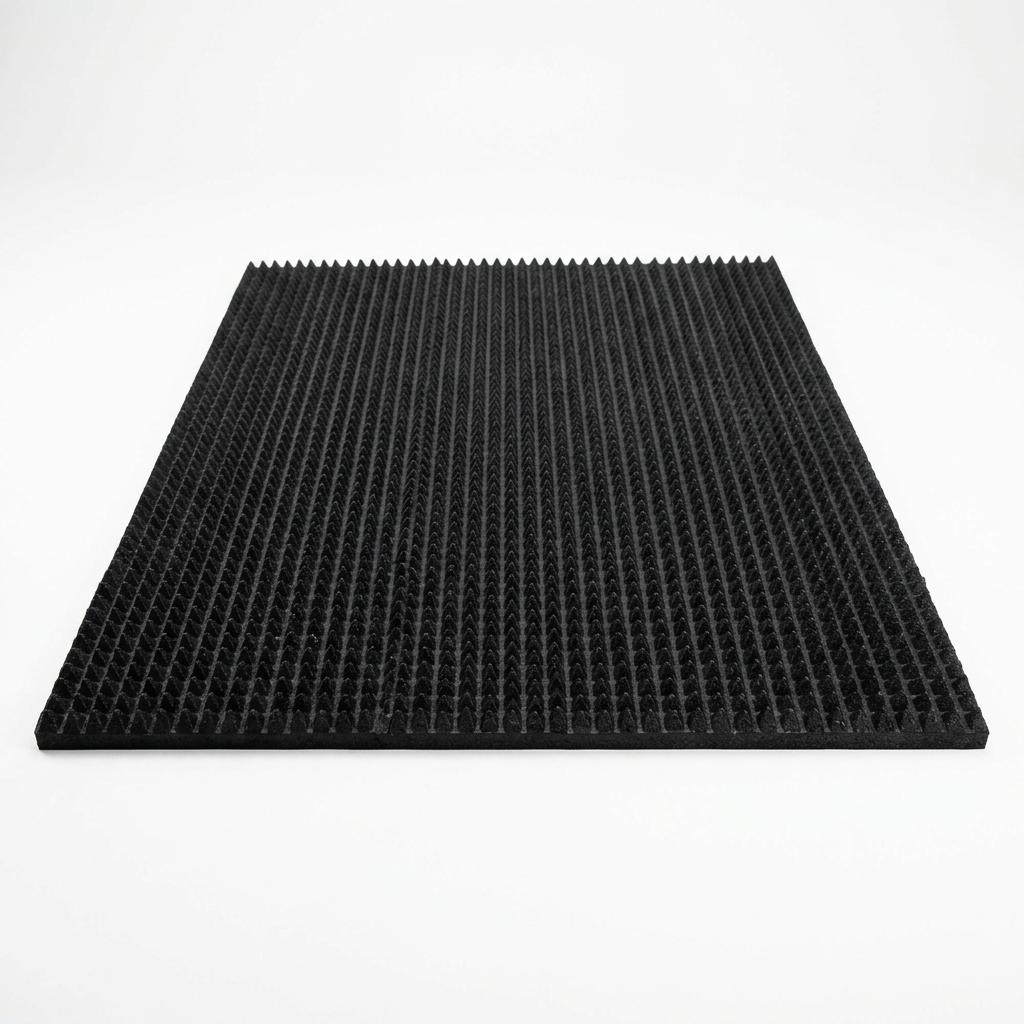 |
Rubber-Cal Shark Tooth Heavy Duty Mat | $3-$4/sq ft | Best Overall | Check Price |
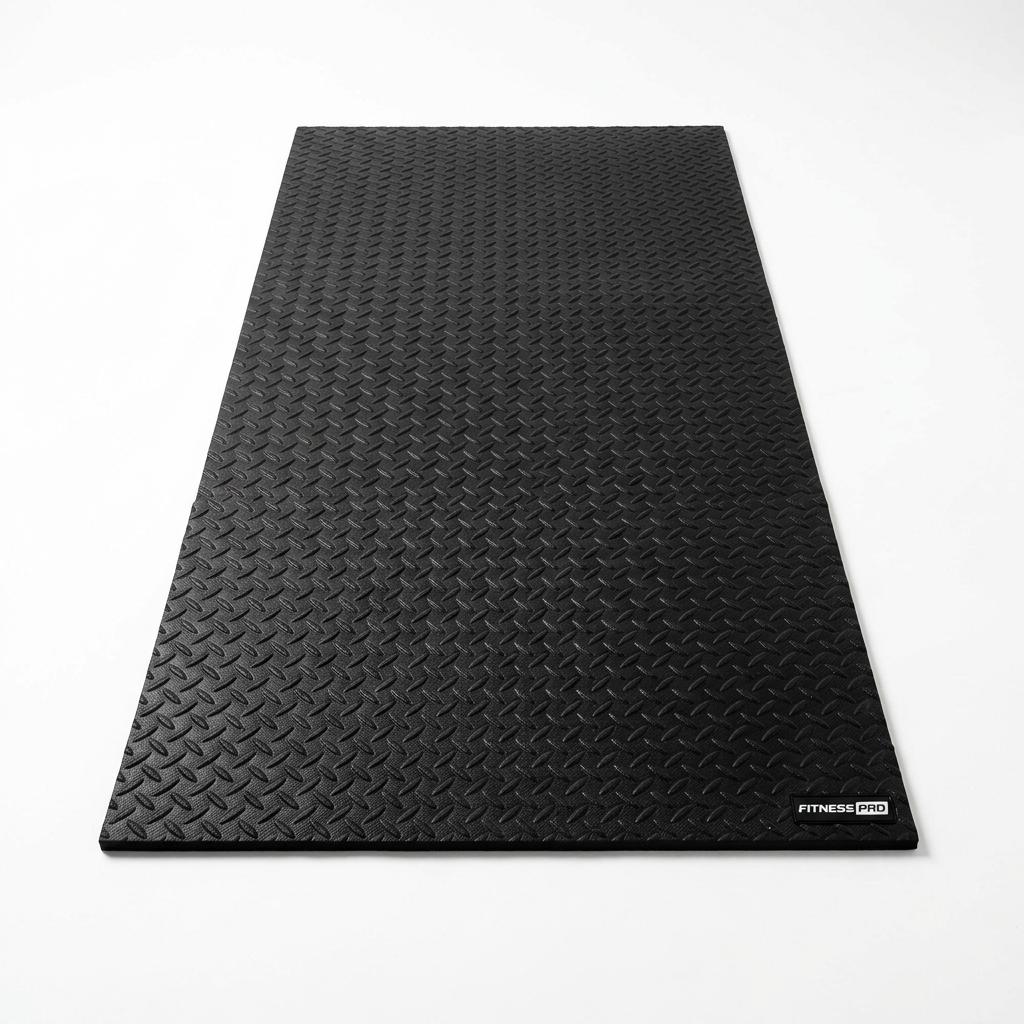 |
SuperMats Solid PVC Equipment Mat | $40-$70 | Best for Cardio Equipment | Check Price |
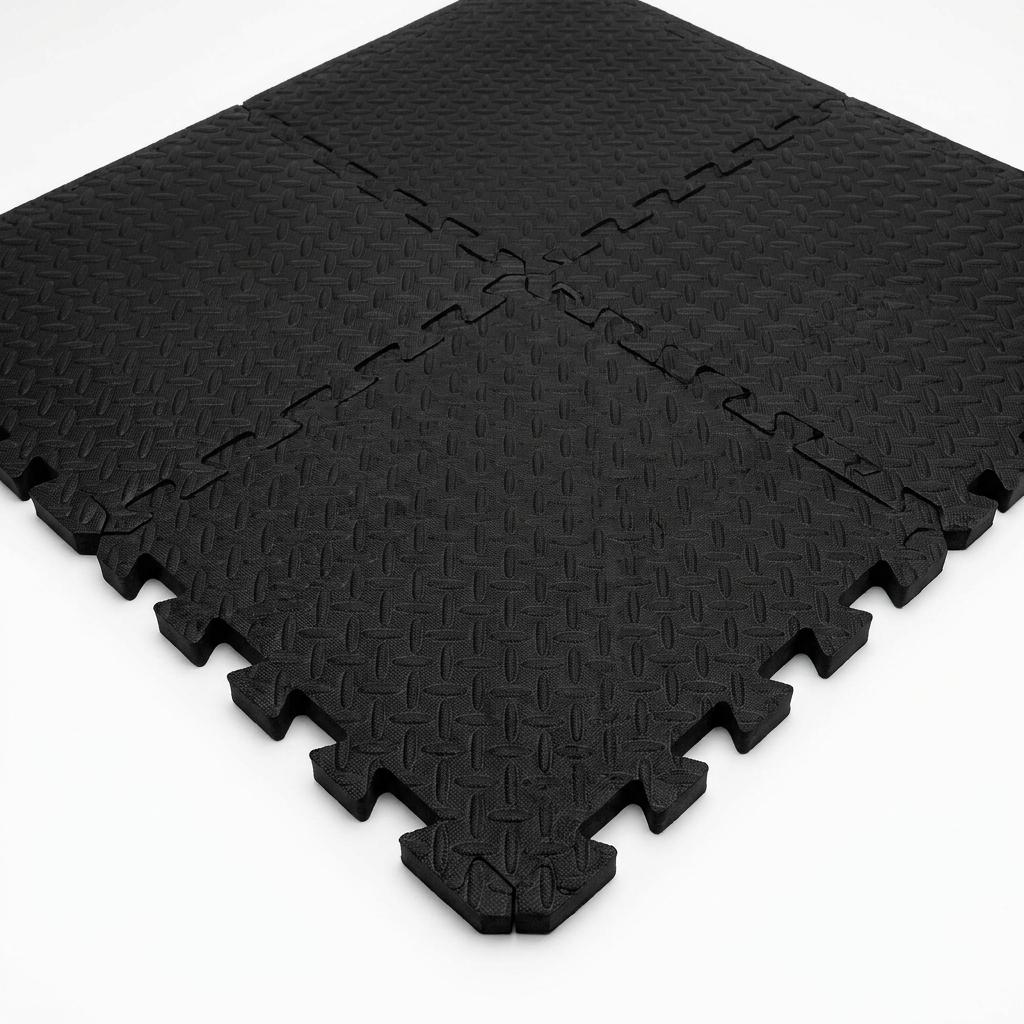 |
ProSource Fit High-Density Puzzle Mat | $1-$1.50/sq ft | Best Budget | Check Price |
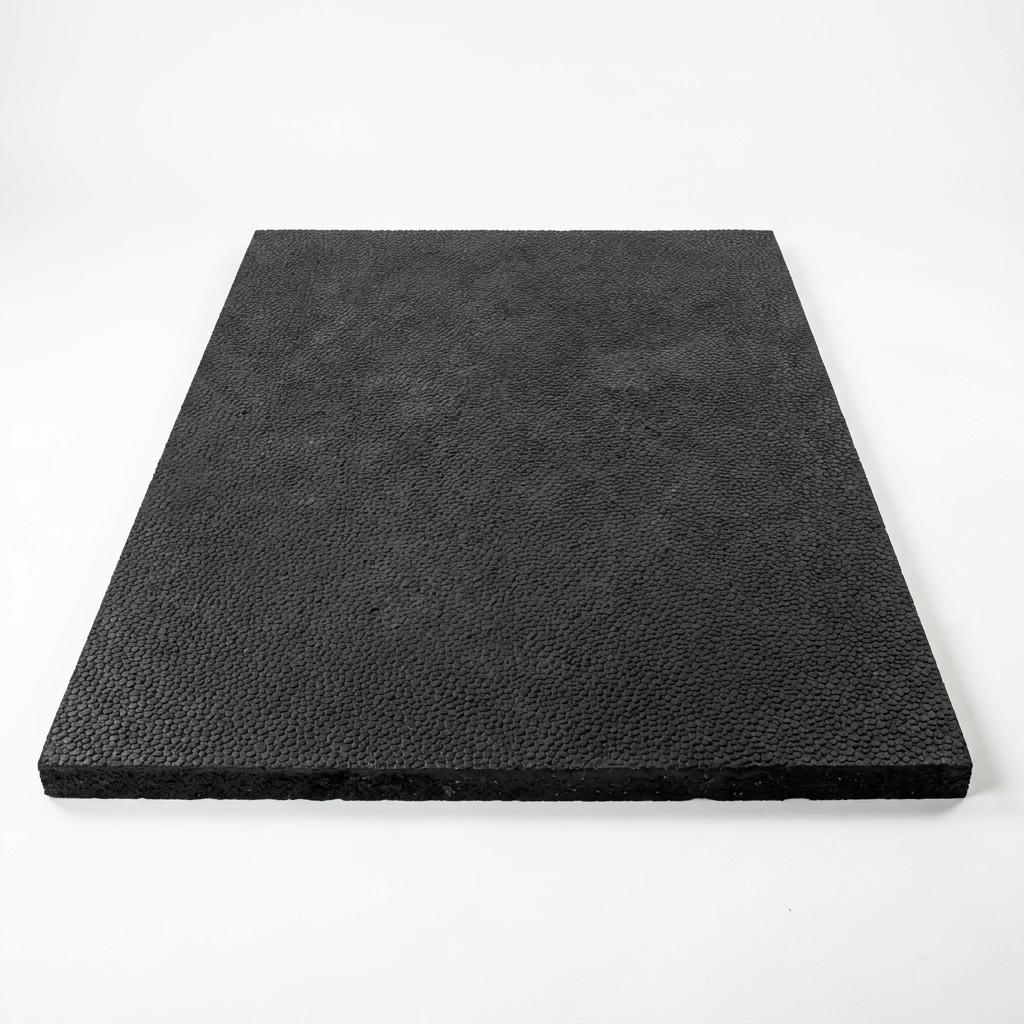 |
Tractor Supply 3/4 Inch Rubber Stall Mat | $2-$3/sq ft | Best Heavy Duty | Check Price |
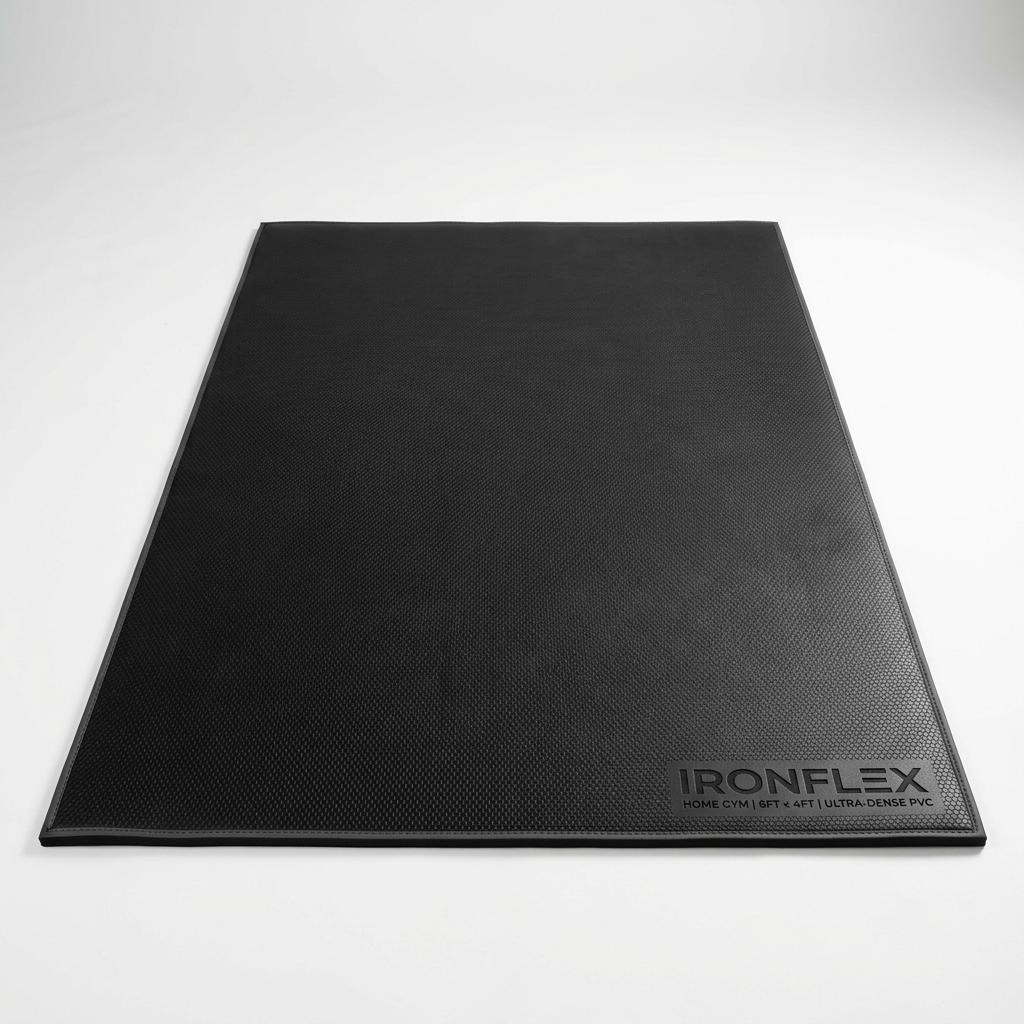 |
Gorilla Mats Premium Large Exercise Mat | $150-$200 | Premium Pick | Check Price |
Heavy-duty textured rubber mat that grips hardwood securely while protecting against scratches and dents.
Smooth PVC equipment mat designed to shield hardwood floors from cardio machines without causing scratches.
Affordable, non-abrasive EVA foam puzzle mats ideal for renters protecting hardwood on a budget.
Ultra-dense 3/4-inch recycled rubber stall mat offering unmatched protection for hardwood floors.
Premium large-format exercise mat with ultra-dense non-slip backing specifically designed for hardwood protection.
The Rubber-Cal Shark Tooth Mat is our top recommendation for hardwood floor protection thanks to its unique textured bottom that prevents any sliding or shifting during intense workouts. The 3/8-inch recycled rubber construction distributes weight evenly to prevent dents from heavy equipment, while its non-staining formula ensures your beautiful hardwood floors remain unmarked. It's the perfect balance of protection and performance.
Check Price on Amazon
SuperMats' Solid PVC Equipment Mat is purpose-built for protecting hardwood floors from the scratches and vibrations of cardio machines. Its smooth underside glides into place without scuffing your floor's finish, while the textured top surface keeps your equipment firmly anchored. At just a few pounds, it's incredibly easy to roll out for workouts and store away when not needed, making it ideal for multi-purpose rooms.
Check Price on Amazon
For renters seeking an affordable, temporary flooring solution that won't damage hardwood, the ProSource Fit High-Density Puzzle Mat is an excellent choice. The EVA foam material is naturally soft and non-abrasive, ensuring your floor's finish stays pristine. While not as durable as rubber under heavy weights, it's perfect for yoga, stretching, and bodyweight workouts, and can be easily assembled and disassembled when needed.
Check Price on Amazon
Originally designed for horse stalls, Tractor Supply's 3/4-inch Rubber Mat has become a legendary budget option in the home gym community. Its extreme density provides unparalleled protection for hardwood floors against dropped weights and heavy equipment. At roughly $1 per pound, it's one of the best values in gym flooring, though its 100-pound weight means you'll need help moving it into your apartment.
Check Price on Amazon
Gorilla Mats Premium Exercise Mat is specifically engineered for use on hardwood floors, featuring an ultra-dense, non-slip backing that grips wood surfaces without leaving marks. The double-sided construction ensures years of durability, and the included carrying strap makes it easy to roll up and store when guests arrive. While it costs more than basic options, its hardwood-specific design provides peace of mind for renters concerned about floor damage.
Check Price on Amazon