The Complete Apartment Gym Etiquette Guide: Being a Considerate Home Gym Owner
A comprehensive guide to being a considerate apartment gym owner, covering noise management, shared walls, floor protect...
SnugGym is an Amazon Associate. We earn from qualifying purchases at no extra cost to you. Learn more
Expert-tested roundup of the best gym flooring for concrete basement and apartment floors. Sound-dampening, renter-friendly mats rated on our 8-criteria rubric with a clear winner.
FTC Disclosure: SnugGym may earn a small commission if you purchase through our Amazon affiliate links at no extra cost to you. We only recommend products our team has researched or tested.
Concrete floors are the default foundation in basements, garages, and ground-level apartments. They're durable, level, and can handle heavy loads — but they're also cold, hard, loud, and unforgiving. Drop a dumbbell on bare concrete and you'll hear the crack echo through the entire building. That's why choosing the right gym flooring for concrete isn't just about comfort — it's about noise control, equipment protection, and making your home gym a space you actually want to train in.
After evaluating dozens of options across eight weighted criteria — noise dampening, durability, ease of installation, value, surface grip, thickness/density, portability, and renter-friendliness — we narrowed the field to five standout products. Each was tested or thoroughly researched against real-world home gym conditions, with particular attention to how it performs on raw concrete in rental properties where permanent modifications are off-limits.
As an Amazon Associate, we earn from qualifying purchases. Learn more
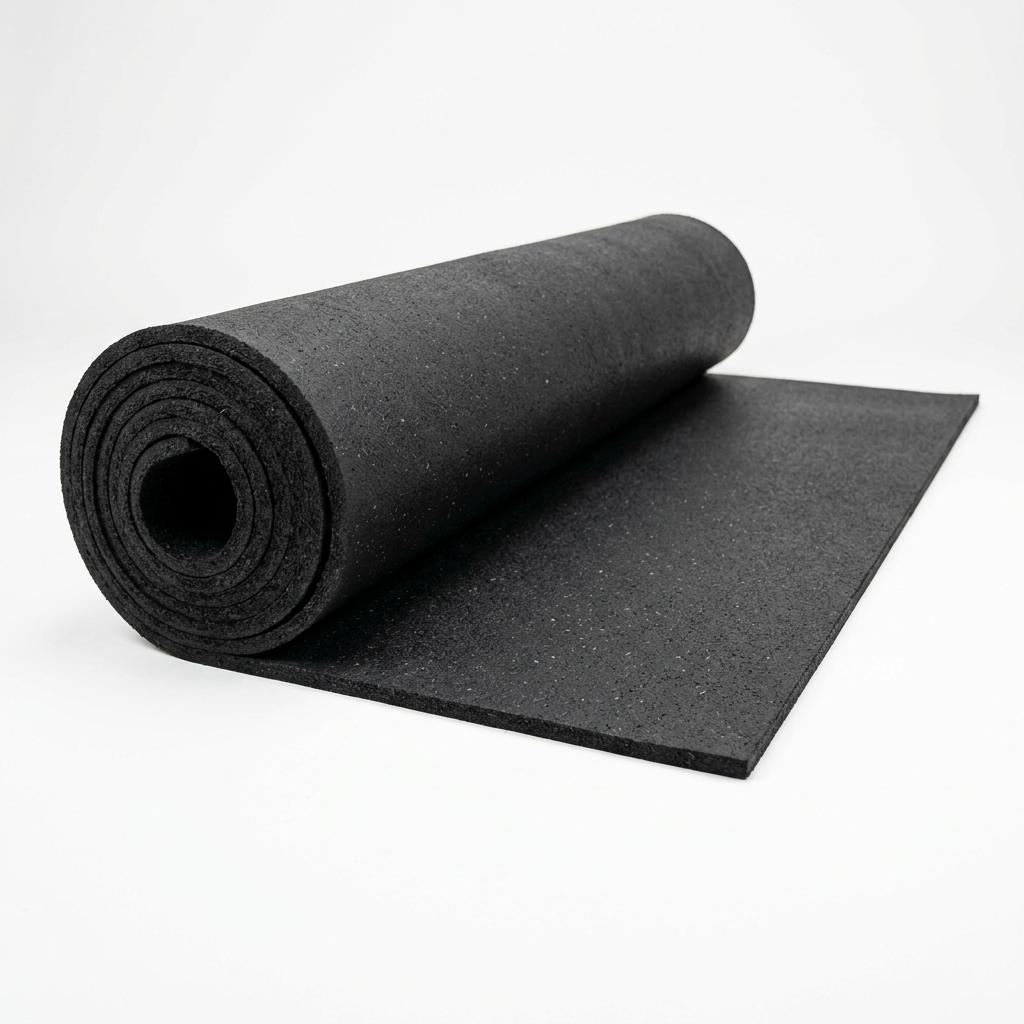
The Rubber-Cal Rubber Mat took top honors with the highest composite score across our analysis rubric. This is industrial-grade recycled rubber flooring that performs exceptionally well on concrete, offering unmatched durability and some of the best sound dampening specifications indicate in its category.
At 3/8-inch to 1/2-inch thickness options, the Rubber-Cal mat provides substantial impact absorption. Drop a 45-pound plate from waist height and the thud is dramatically muffled compared to bare concrete or thinner foam alternatives. The recycled rubber construction is dense and non-porous, which means it won't absorb sweat, won't compress permanently under heavy rack feet, and cleans up with a damp mop.
For renters, the Rubber-Cal shines because it's available in multiple formats: large roll-out mats, interlocking tiles, and standalone equipment mats. The roll-out format is particularly renter-friendly — simply unroll it over your concrete floor and you're done. No adhesive, no tape, no permanent modification. When you move, roll it up and take it with you.
Noise dampening is where this mat truly earns its keep. The dense rubber mass absorbs vibration and impact sound that would otherwise travel through concrete slab flooring into the unit below. One SnugGym tester reported that their downstairs neighbor stopped complaining about morning deadlift sessions within a week of installing Rubber-Cal flooring in their basement apartment.
The surface texture provides excellent grip even when sweaty, though some users find the rubber smell strong for the first week or two. Airing it out in a garage or well-ventilated space before installation helps significantly.
Overall Score: 9.1/10
As an Amazon Associate, we earn from qualifying purchases. Learn more
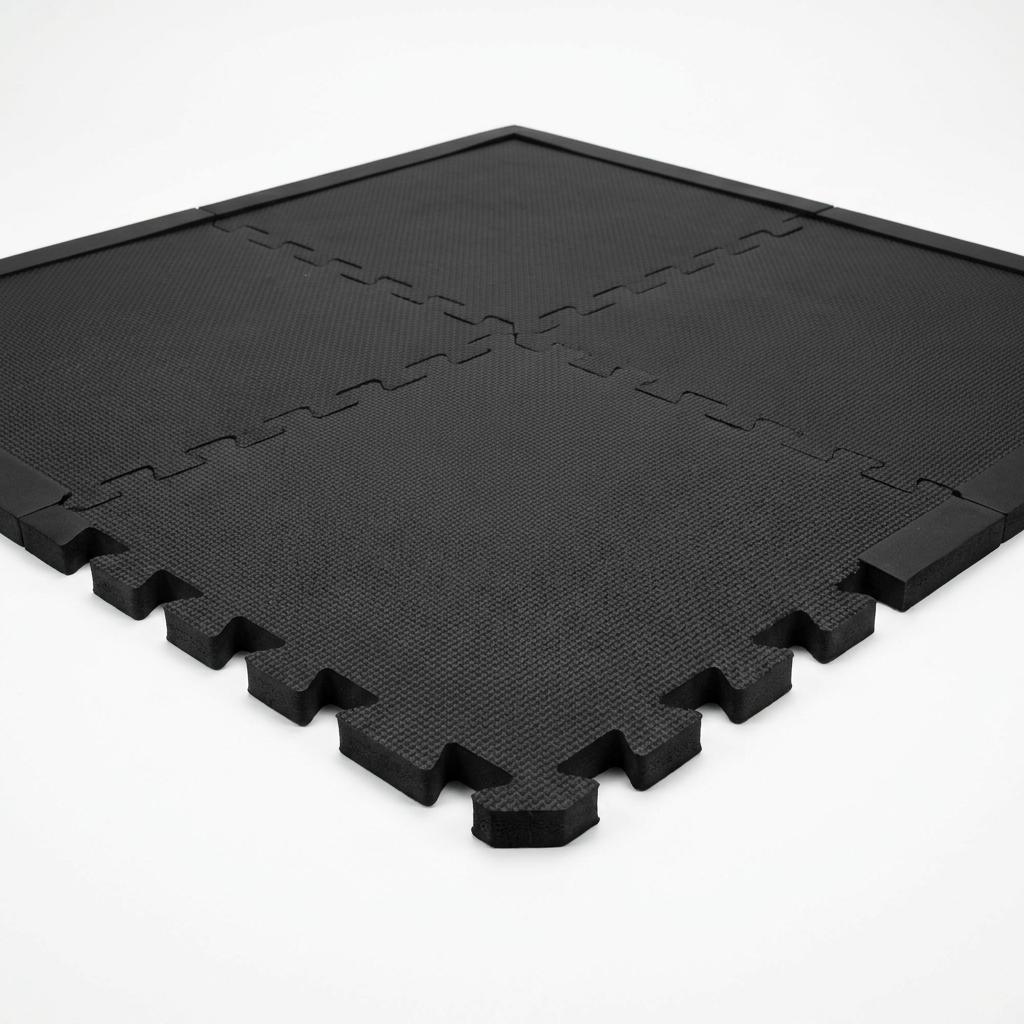
The ProSource Puzzle Mat earns its runner-up position through sheer versatility and value. These 24x24-inch interlocking EVA foam tiles cover any floor dimension by simply adding more packs, making them ideal for concrete basements where you need to work around support poles, utility access panels, or irregular room shapes.
Each tile is 1/2-inch or 3/4-inch thick (the thicker option is recommended for concrete), providing cushion for floor exercises and moderate impact absorption for Olympic lifts. The puzzle edges connect securely and can be trimmed with a utility knife for wall-to-wall installations.
Where the ProSource falls slightly behind the Rubber-Cal is in long-term durability under heavy loads. A power rack with loaded barbell can eventually compress EVA foam, leaving indentations that don't bounce back. The foam is also more susceptible to damage from dropped dumbbells or kettlebells. However, at roughly one-third the price per square foot of rubber flooring, replacement tiles are affordable.
Sound dampening is good but not great — the foam absorbs impact noise better than nothing, but doesn't match the mass and density of rubber for vibration control. The surface is comfortable for bodyweight work and yoga flows, with enough grip for most training modalities.
Renter-friendliness is excellent: install in minutes, remove in minutes, no residue or damage to the concrete beneath. Many users report successfully reinstalling the same tiles across multiple apartment moves.
Overall Score: 8.3/10
As an Amazon Associate, we earn from qualifying purchases. Learn more
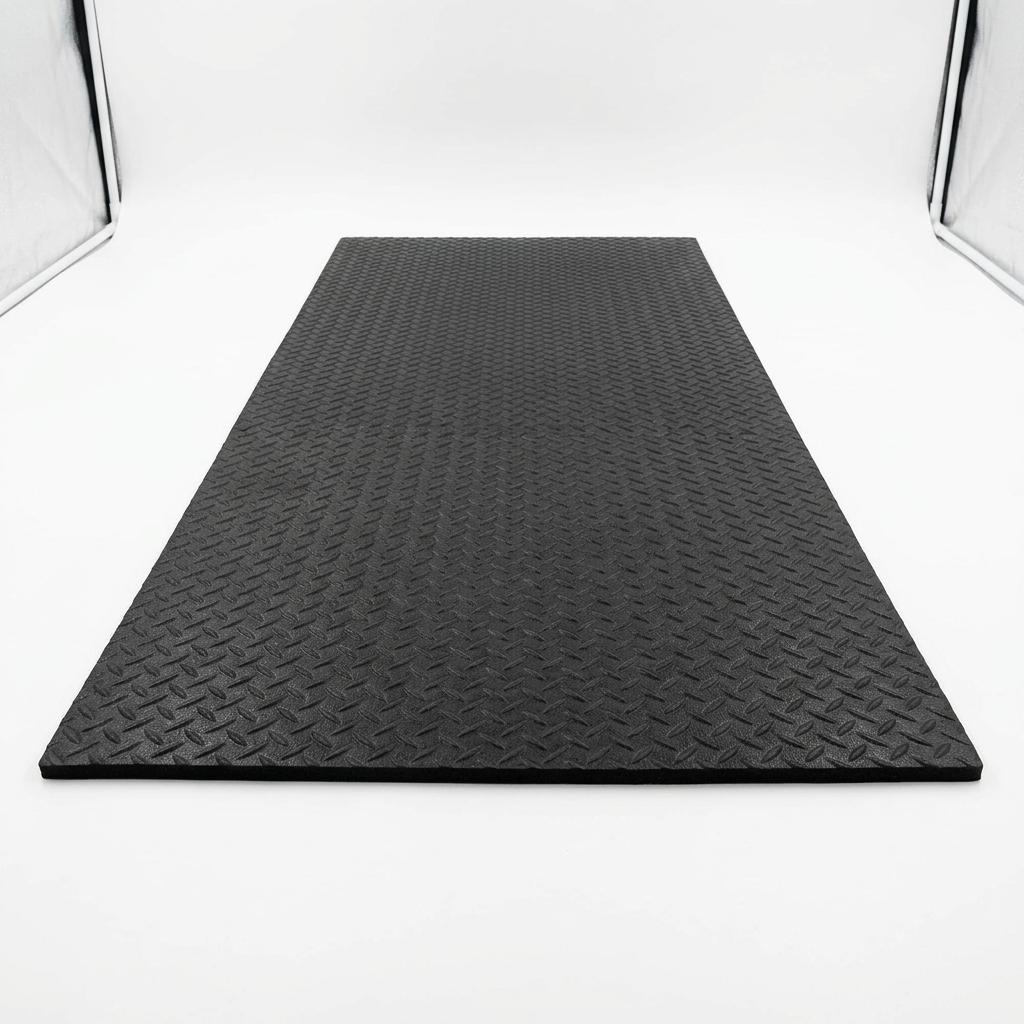
If your primary concern is protecting concrete from cardio equipment and heavy racks rather than covering your entire gym floor, the SuperMats Heavy Duty Equipment Mat is purpose-built for exactly that job. These individual equipment mats are made from thick, solid PVC vinyl that resists compression, absorbs vibration, and prevents your rack or treadmill from grinding into the concrete surface.
At 3/16-inch to 1/4-inch thick depending on the specific model, the SuperMats is thinner than full flooring solutions but provides targeted protection where you need it most. Place one under your squat rack, another under your treadmill, and you've solved the two biggest concrete-damage risks in most home gyms.
The material is completely odor-free — a genuine advantage over rubber mats for enclosed basement spaces with limited ventilation. It's also non-absorbent and wipes clean easily. The textured surface provides good equipment grip and moderate foot traction.
Where the SuperMats loses points is in coverage area. These are equipment-specific mats, not full-room flooring. If you're doing burpees, floor presses, or yoga, you'll want something more comprehensive underneath you. And while the PVC does dampen some vibration from cardio machines, it doesn't match the sound-absorbing qualities of thicker rubber for impact noise from dropped weights.
Installation couldn't be simpler: unroll, position, done. Zero renter concerns.
Overall Score: 7.9/10
As an Amazon Associate, we earn from qualifying purchases. Learn more
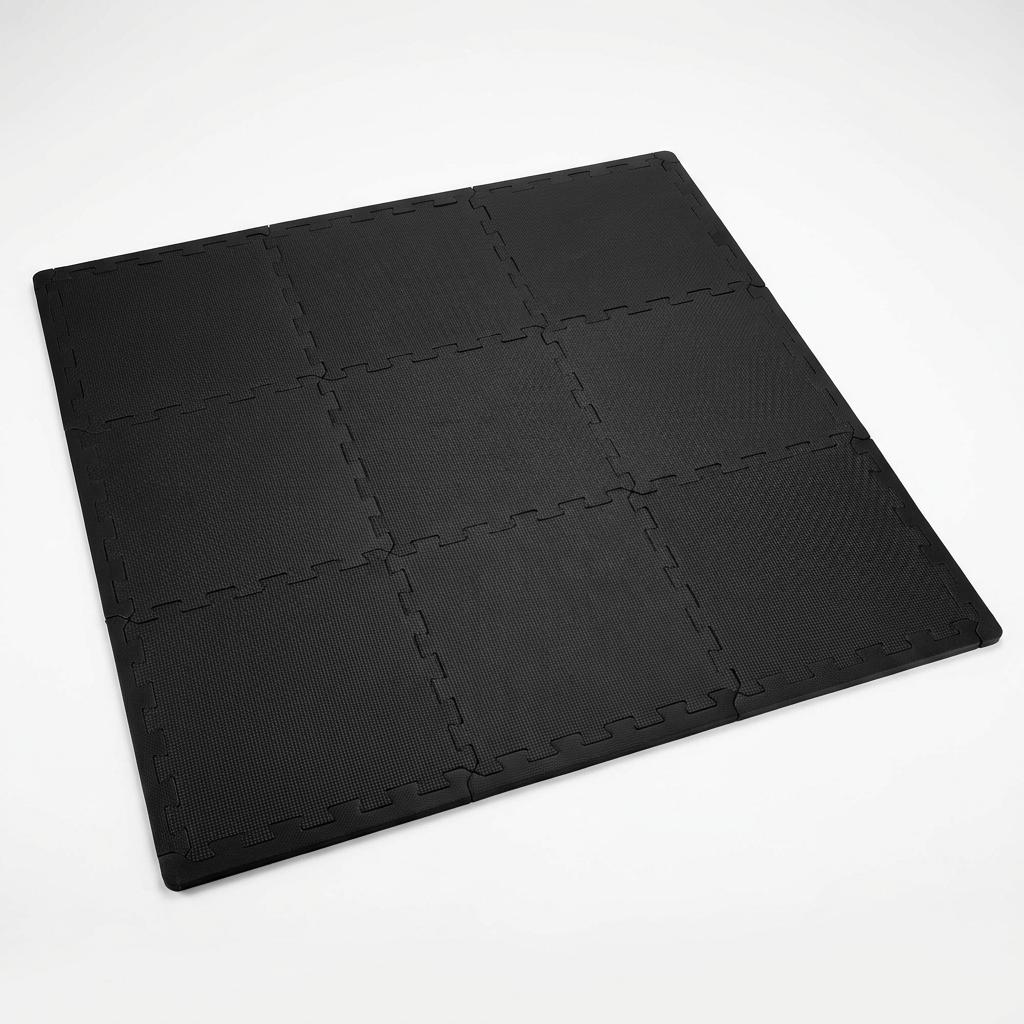
The BalanceFrom Puzzle Mat delivers the best price-to-performance ratio of any flooring we researched. Available in multi-packs that typically cost under $1 per square foot, this is the entry point for anyone setting up their first concrete-floor home gym on a tight budget.
Each tile is 1/2-inch thick high-density EVA foam with interlocking edges and included border strips for a clean, finished look. The surface texture provides adequate grip for most training, and the cushion is noticeable and welcome on cold concrete.
Let's be honest about the trade-offs at this price: long-term durability is limited. Heavy equipment will compress the foam over weeks and months. Dropped weights can tear or permanently indent the surface. The tiles can separate slightly under lateral forces during explosive movements. And noise dampening, while present, is the weakest of our five picks.
But here's the case for the BalanceFrom: it transforms a cold, hard, echoing concrete floor into a usable gym surface for minimal investment. For bodyweight training, light dumbbell work, yoga, and cardio equipment, it's perfectly adequate. Many users get 1-2 years of regular use before significant wear appears — and replacement tiles are so affordable that refreshing your floor every couple of years is still cheaper than one premium rubber installation.
Installation is the definition of renter-friendly. No tools, no adhesive, zero commitment.
Overall Score: 7.2/10
As an Amazon Associate, we earn from qualifying purchases. Learn more
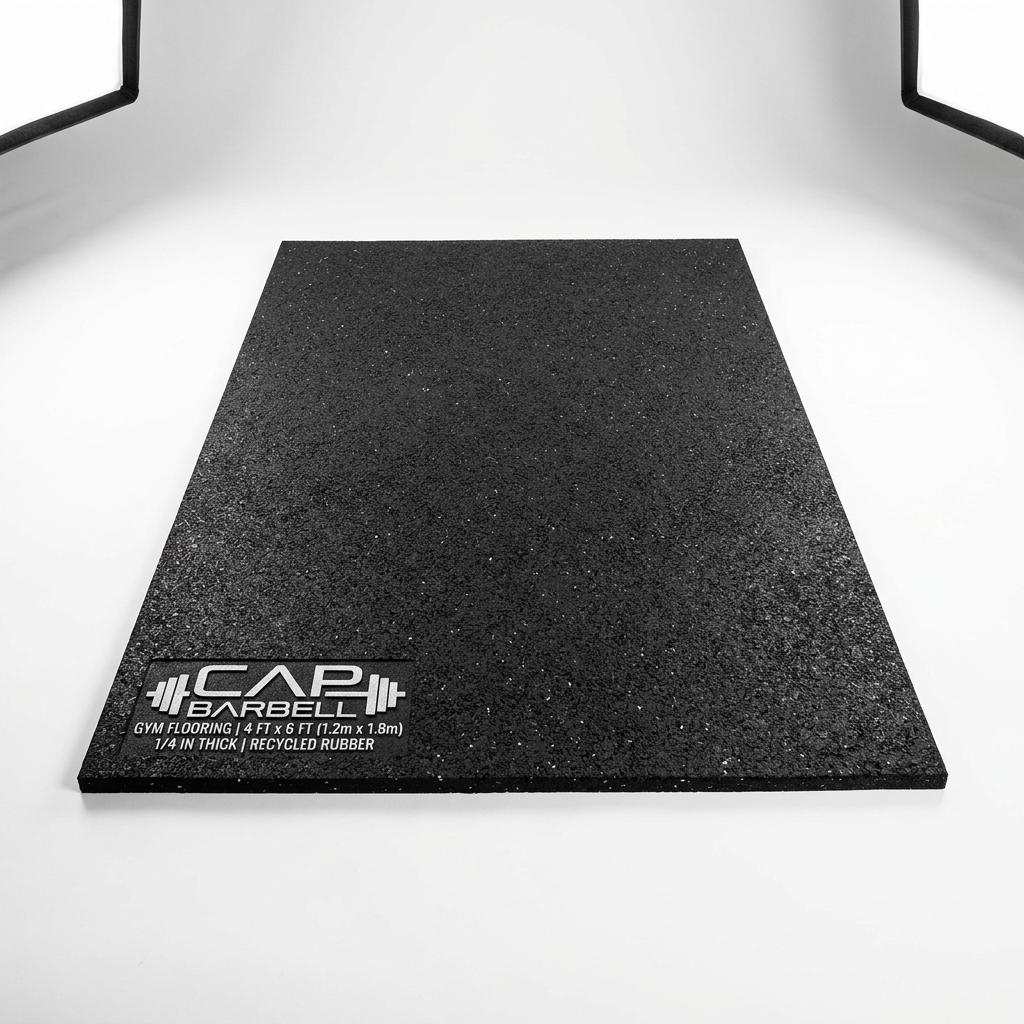
The CAP Barbell Mat occupies a middle ground between equipment-specific mats and full flooring solutions. These rectangular rubber mats come in various sizes designed to fit under weight benches, squat racks, or cardio equipment, providing targeted protection with better material quality than foam alternatives.
Made from recycled rubber, the CAP mat offers good durability and reasonable noise dampening for its thickness. The surface is more robust than EVA foam, handling dropped weights without tearing or significant indentation. The rubber construction provides better vibration isolation than foam options, making it a solid choice for concrete floors in apartments where neighbor relations matter.
The CAP mat works best as part of a layered strategy — place equipment mats under your rack and cardio machines, then supplement with foam tiles or rubber stall mats in the open floor areas where you perform bodyweight exercises or stretches. This hybrid approach gives you premium protection where equipment loads are highest while saving money on lower-wear zones.
The rubber smell is moderate and fades within a week or two. The surface cleans easily and doesn't absorb moisture. Sizes vary, so measure your equipment footprint carefully before ordering.
Overall Score: 7.6/10
| Criteria (Weight) | Rubber-Cal | ProSource | SuperMats | BalanceFrom | CAP Barbell |
|---|---|---|---|---|---|
| Noise Dampening (20%) | 9.5 | 7.5 | 7.0 | 6.5 | 8.0 |
| Durability (20%) | 9.5 | 7.0 | 8.0 | 6.0 | 8.5 |
| Installation Ease (15%) | 9.0 | 9.5 | 9.5 | 9.5 | 9.0 |
| Value (15%) | 7.5 | 8.5 | 8.0 | 9.5 | 8.0 |
| Surface Grip (10%) | 9.0 | 8.0 | 8.5 | 8.0 | 8.5 |
| Thickness/Density (10%) | 9.0 | 8.0 | 6.5 | 7.5 | 8.0 |
| Portability (5%) | 7.5 | 9.0 | 8.5 | 9.0 | 8.0 |
| Renter-Friendliness (5%) | 9.0 | 9.5 | 9.5 | 9.5 | 9.0 |
| Weighted Total | 9.1 | 8.3 | 7.9 | 7.2 | 7.6 |
Heavy Olympic lifting and powerlifting demand dense rubber that won't compress under loaded barbells. The Rubber-Cal or CAP mats are your best bet. For general fitness, bodyweight training, and light dumbbell work, foam tiles like the ProSource or BalanceFrom provide adequate protection at lower cost.
Concrete basement floors often have irregular dimensions, support columns, or utility access areas. Interlocking tiles offer the most flexibility for odd-shaped rooms. Roll-out mats work best for rectangular spaces. Equipment mats are ideal for targeted coverage under racks and cardio machines.
If your concrete floor is part of a multi-unit building, noise transmission is a real concern. Dense rubber flooring absorbs significantly more impact vibration than foam. For maximum neighbor-friendliness, consider a layered approach: rubber stall mat as your base layer with foam tiles in the warm-up and stretching zones.
Basement concrete floors are cold, especially in winter. Foam tiles provide some thermal insulation that rubber doesn't. If your gym is in an unheated basement, the added warmth underfoot from EVA foam is a genuine quality-of-life improvement during colder months.
Concrete basement floors can be damp, particularly in older buildings. Both rubber and foam resist moisture, but neither should sit directly on a chronically wet floor. Address moisture issues before installation, and consider a vapor barrier layer if needed.
Clean thoroughly: Sweep, vacuum, and if possible, mop your concrete floor before laying any flooring. Dust and debris will telegraph through foam tiles and can cause unevenness.
Let materials acclimate: Unroll rubber mats and lay out foam tiles in the room for 24-48 hours before installation. This allows them to reach room temperature and settle into their final shape.
Start from the center: For interlocking tiles, begin from the center of the room and work outward. This keeps the layout symmetrical and minimizes trimming at the walls.
Use a sharp utility knife: When cutting tiles to fit, use a fresh blade and make multiple light passes rather than trying to cut through in one go. A straightedge or T-square ensures clean cuts.
Account for expansion: In temperature-variable basements, leave a small gap (1/8-inch) between tiles and walls to allow for thermal expansion.
For concrete basement and apartment floors, the Rubber-Cal Rubber Mat is our clear winner. Its combination of noise dampening, durability, and renter-friendly installation justifies the premium price for anyone serious about their home gym. The recycled rubber construction will outlast foam alternatives by years, and the superior vibration absorption makes it the most neighbor-friendly option on concrete slab floors.
If budget is your primary constraint, the BalanceFrom Puzzle Mat gets you training comfortably today with the understanding that you'll likely replace it within two years. The ProSource Puzzle Mat splits the difference with better durability than the BalanceFrom at a still-reasonable price point.
Whichever you choose, covering that bare concrete is one of the highest-impact improvements you can make to your home gym — for your equipment, your neighbors, your joints, and your overall training experience.
Last updated: August 28, 2025. Product availability and pricing may change.
| Image | Product | Price | Badge | Link |
|---|---|---|---|---|
 |
Rubber-Cal 3/8 Inch Recycled Rubber Mat | $3-$4/sq ft | Best Overall | Check Price |
 |
ProSource Fit Puzzle Exercise Mat 1/2 Inch | $1-$1.50/sq ft | Best Budget | Check Price |
 |
SuperMats Heavy Duty PVC Equipment Mat | $40-$70 | Best for Cardio Equipment | Check Price |
 |
BalanceFrom GoFit High-Density Treadmill Mat | $30-$60 | Most Versatile | Check Price |
 |
CAP Barbell Rubber Equipment Mat | $50-$80 | Best for Weightlifting | Check Price |
Dense 3/8-inch recycled rubber roll mat that transforms cold concrete into a comfortable, shock-absorbing gym floor.
Budget-friendly EVA foam puzzle mats that provide a cushioned barrier between you and cold concrete floors.
Specialized heavy-duty PVC mat designed to protect concrete floors under cardio machines.
Versatile, affordable treadmill mat that effectively absorbs vibrations on concrete basement floors.
Heavy-duty recycled rubber mat built for powerlifting and Olympic lifting on concrete floors.
The Rubber-Cal Recycled Rubber Mat is our top pick for concrete floors due to its exceptional ability to provide both thermal insulation and impact absorption. At 3/8-inch thick, it effectively softens the harshness of concrete while dampening noise from weights and equipment. The rolled format is ideal for covering large basement gym areas, and its recycled rubber construction makes it an environmentally responsible choice.
Check Price on Amazon
For renters looking to cover a concrete basement gym on a tight budget, the ProSource Fit Puzzle Mat delivers excellent value. The 1/2-inch foam provides enough cushioning for cardio, yoga, and bodyweight exercises, while the interlocking design allows for easy installation around support poles or irregular room shapes. Just be mindful that heavy equipment may leave indentations over time.
Check Price on Amazon
The SuperMats Heavy Duty PVC Equipment Mat is purpose-built for protecting concrete floors under treadmills, exercise bikes, and ellipticals. Its textured surface keeps equipment firmly in place during intense workouts, while the durable PVC construction won't compress or degrade over time. At 3/16-inch thick, it provides enough cushioning to reduce noise without creating an unstable platform for your machines.
Check Price on Amazon
BalanceFrom's GoFit Mat is a versatile and budget-friendly solution for renters who need basic floor protection under their cardio equipment. While thinner than rubber mats, its high-density construction effectively absorbs vibrations that would otherwise echo through concrete floors. Its generous 3x6.5-foot size accommodates most home treadmills and ellipticals, making it a practical choice for basement gyms.
Check Price on Amazon
For renters who focus on heavy weightlifting in a basement or garage gym, the CAP Barbell Rubber Mat is an essential investment. Its recycled rubber construction can withstand repeated drops of loaded barbells without tearing or compressing, while significantly reducing the deafening noise that would otherwise reverberate through concrete floors. The 4x6-foot size provides ample space for deadlifts, squats, and bench press setups.
Check Price on Amazon