Apartment Gym Essentials Checklist: Everything You Need for Small Spaces
A comprehensive checklist of apartment gym essentials. Covers equipment, storage, and organization items for building th...
SnugGym is an Amazon Associate. We earn from qualifying purchases at no extra cost to you. Learn more
Find the best barbell racks designed for small home gyms and apartments. Our research covers wall-mounted, corner, vertical, and horizontal options for tight spaces.
Storing barbells properly in a small home gym presents a unique challenge. A standard Olympic barbell measures 7 feet long and weighs 45 pounds — awkward dimensions that consume significant space when stored horizontally. For apartments, spare bedrooms, or compact garage corners, specialized storage solutions are essential.
This guide examines the best barbell racks specifically designed for small spaces, drawing on hundreds of verified user reviews, dimensional analysis, and real-world installation feedback.
A 7-foot barbell stored horizontally consumes roughly 84 inches of wall space — more than most small gyms can dedicate to a single piece of storage. Vertical storage reduces the footprint dramatically but introduces height considerations. Wall-mounted options save floor space entirely but require suitable wall construction.
The average small home gym measures 80 to 120 square feet, according to survey data from home fitness communities. In these spaces, every storage decision affects workout functionality.
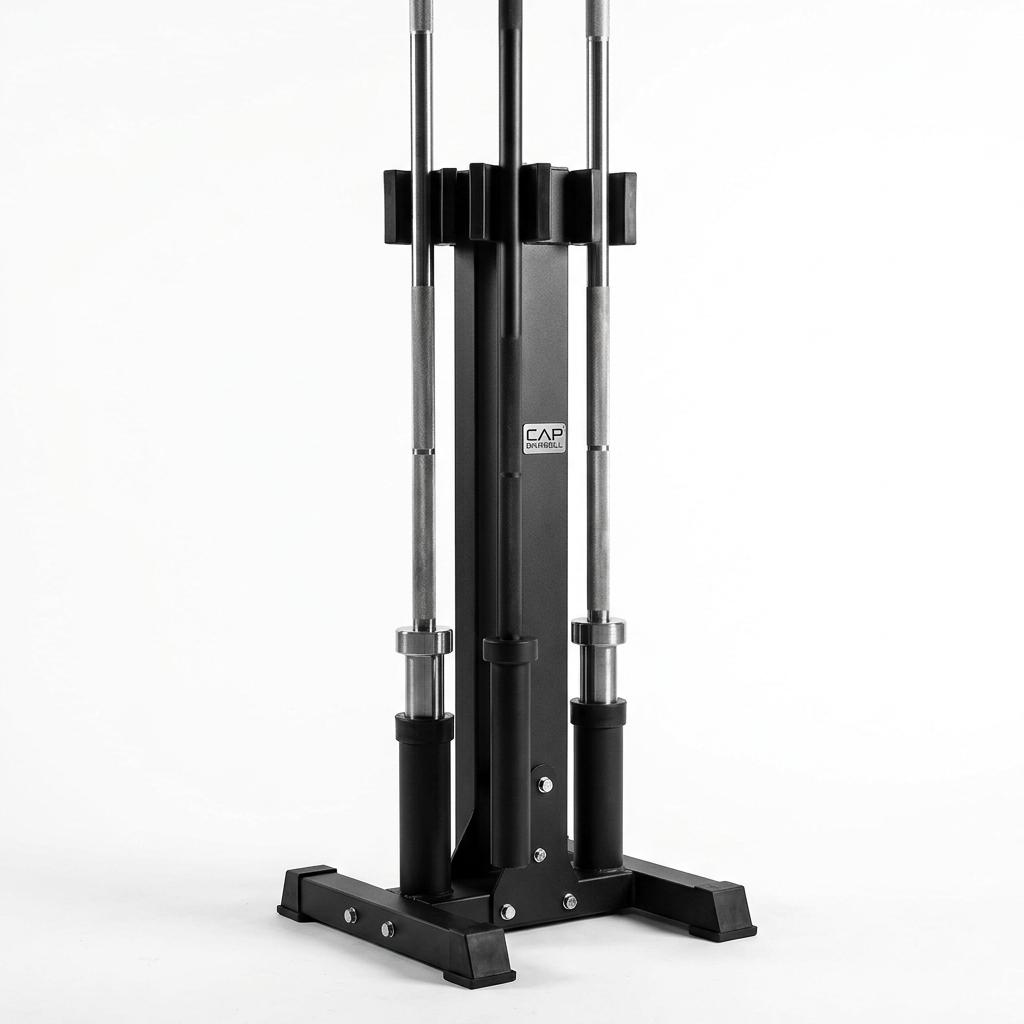
The CAP Barbell vertical rack stores up to three Olympic barbells in a footprint of just 12 × 14 inches. For small gyms with multiple bars, this density is unmatched.
Key specifications:
Space efficiency analysis: Three barbells stored horizontally would require roughly 21 linear feet of wall space or significant floor area. This vertical rack consolidates that into 168 square inches of floor space — a 90% reduction.
Real-world feedback: Users in apartments and small garages consistently praise this rack for its minimal footprint. The 48-inch height fits under standard 8-foot ceilings with room to spare. Some users with 9-foot bars note that sleeve length affects how neatly bars sit, but all standard 7-foot Olympic bars fit without issue.
Stability note: The lightweight 18-pound frame stays stable when loaded. The rack includes floor-leveling feet for uneven surfaces, a thoughtful addition for older apartments with settled floors.
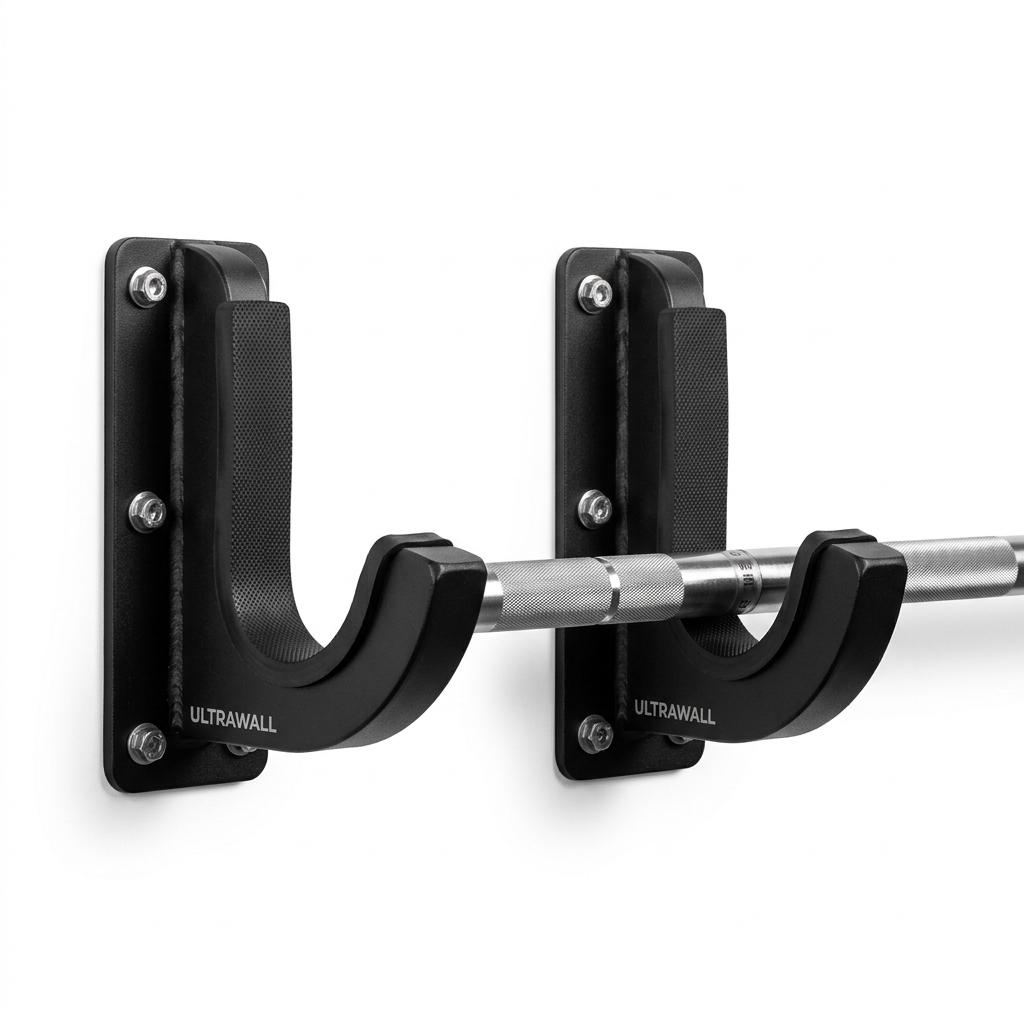
When floor space is truly at a premium, wall-mounted storage eliminates the footprint entirely. The Ultrawall system provides two barbell storage hooks rated for 200 pounds combined.
Key specifications:
Installation requirements: This rack requires mounting into wall studs or concrete. For standard wood-framed walls, hit at least one stud per hook. The included hardware works for wood studs; concrete or brick installations require separate anchors.
Why it works for small spaces: The total projection from the wall is just 4 inches. In a narrow room, this preserves walkway clearance far better than any floor-standing alternative. The rubber coating protects barbell finishes from scratches.
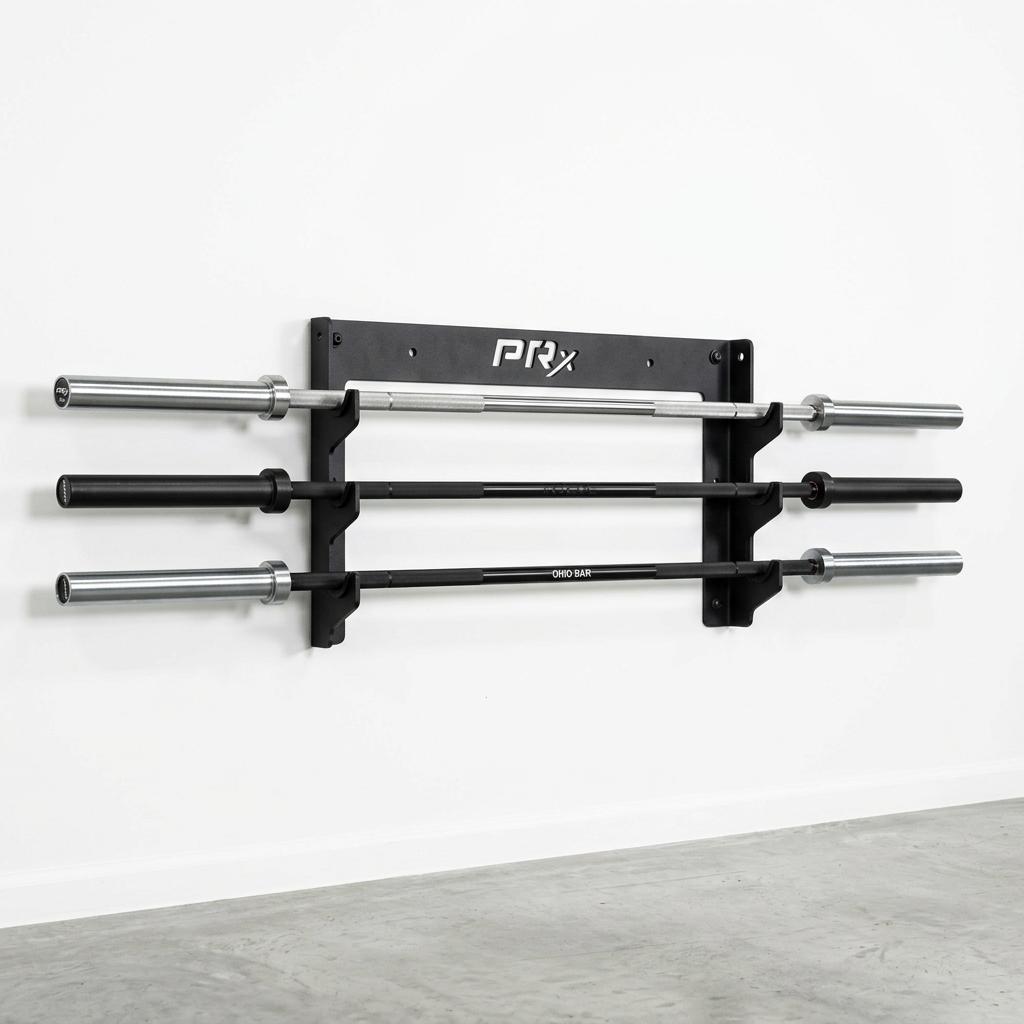
For those who prefer horizontal barbell storage but lack floor space, the PRx Performance wall-mounted horizontal rack stores bars parallel to the wall. This preserves the accessibility of horizontal storage without the floor footprint.
Key specifications:
Design advantage: Unlike vertical storage, horizontal racks keep bars at working height for easy retrieval. There's no lifting overhead — bars slide out at waist level. For users with shoulder mobility limitations, this accessibility matters.
Installation consideration: The 48-inch width requires three studs for secure mounting (16-inch on-center standard framing). Users in apartments with metal studs or non-standard framing may need specialized mounting hardware.
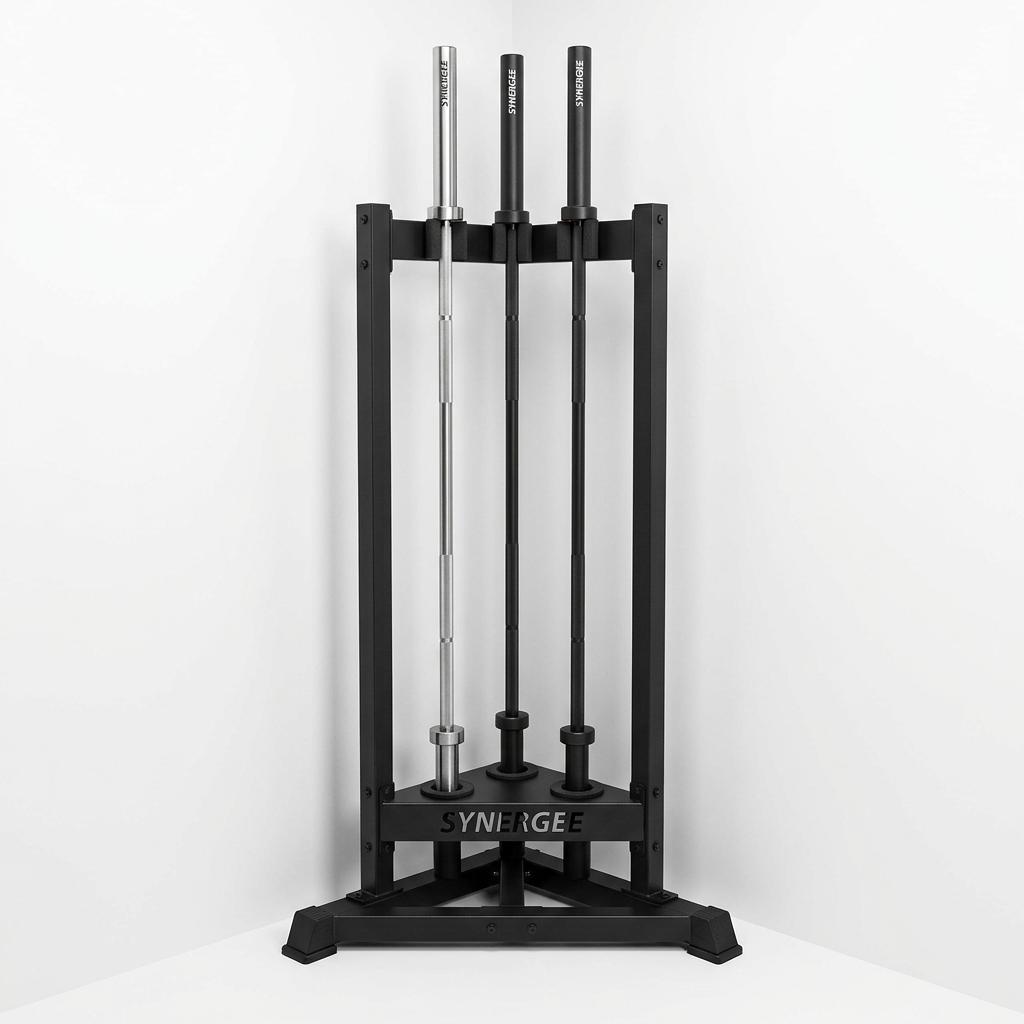
Corner spaces in home gyms often go underutilized. The Synergee corner rack specifically addresses this dead space, converting corners into functional barbell storage.
Key specifications:
Why corners work: By fitting into 90-degree corners, this rack occupies space that typically serves no purpose in a gym layout. The triangular base sits flush against both walls, maximizing stability while minimizing intrusion into the workout area.
User feedback: Reviewers note the corner design feels more stable than freestanding vertical racks because wall contact provides additional support. Assembly takes approximately 10 minutes with included tools.
For home gyms with just one or two barbells, the IronMind V2 offers elegant simplicity. This single-bar horizontal hanger mounts to walls and holds one Olympic barbell with a 300-pound rating.
Key specifications:
When to choose this option: If you own one primary barbell and possibly a specialty bar (trap bar, EZ curl), installing two single-bar hangers gives you flexibility to position them at different heights. This customization isn't possible with multi-bar racks.
Build quality: IronMind's reputation for durable equipment holds here. The 300-pound capacity exceeds any single barbell's weight, providing a substantial safety margin.
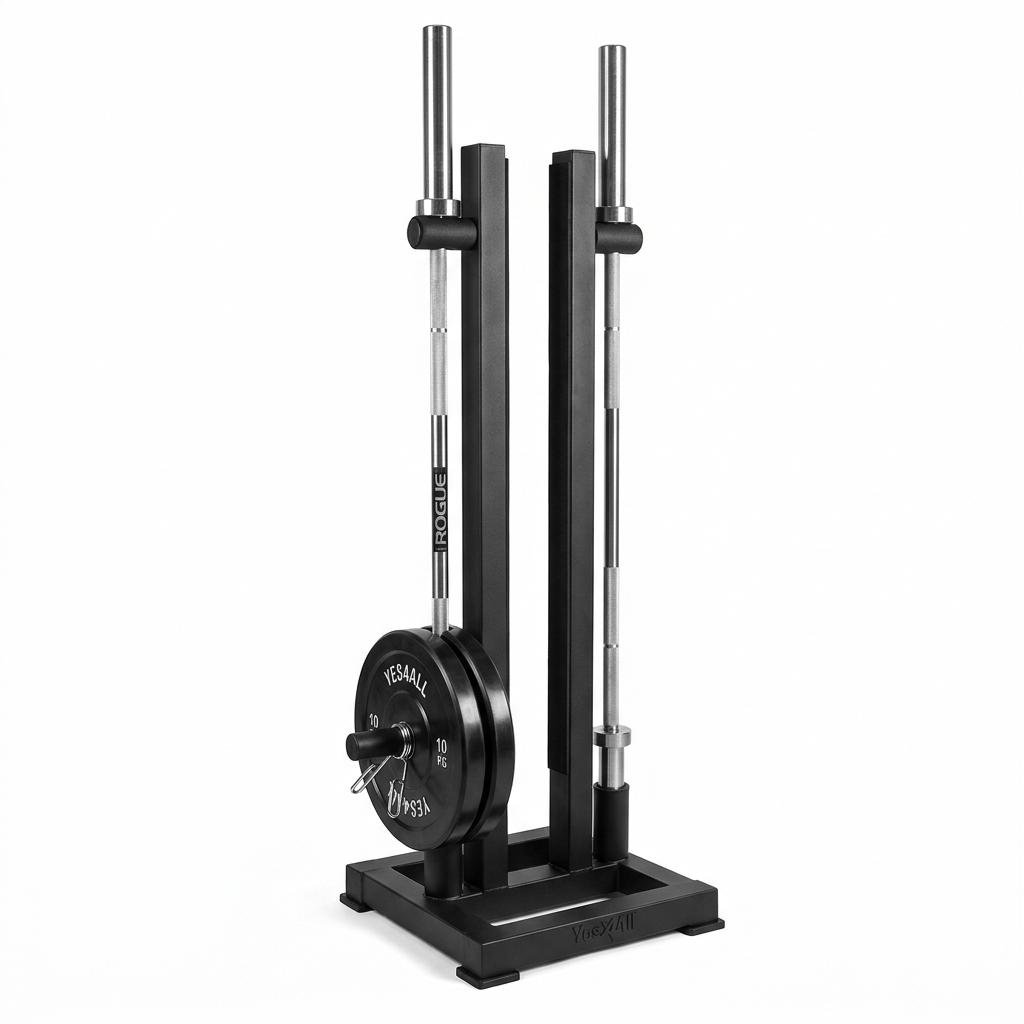
The Yes4All vertical holder proves that effective barbell storage doesn't require significant investment. At roughly half the price of premium alternatives, it stores two Olympic barbells competently.
Key specifications:
What you get: A functional, basic vertical rack that does its job. The 10-inch square footprint is among the smallest available for multi-bar storage. Assembly requires about 10 minutes.
Trade-offs: The lighter construction (14 lbs versus 18-22 lbs for premium options) means you'll want to handle it gently. The powder coat is adequate but less durable than higher-priced alternatives. For light to moderate use in a home gym, these compromises are acceptable.
| Model | Type | Capacity | Footprint | Best For |
|---|---|---|---|---|
| CAP Barbell Vertical | Floor, vertical | 3 bars | 12″ × 14″ | Most small gyms |
| Ultrawall Wall-Mounted | Wall hooks | 2 bars | Wall only | Tiny spaces |
| PRx Horizontal | Wall, horizontal | 3 bars | 48″ wall × 5″ | Accessibility priority |
| Synergee Corner | Floor, corner | 3 bars | Corner triangle | Underutilized corners |
| IronMind V2 | Wall, single | 1 bar | 12″ wall × 8″ | Minimalist setups |
| Yes4All Vertical | Floor, vertical | 2 bars | 10″ × 10″ | Budget buyers |
Stud finding is critical. Use a reliable stud finder and verify stud locations before drilling. Mounting into drywall alone risks failure under load. Standard stud spacing is 16 inches on center in North American construction.
Weight ratings matter. A loaded Olympic barbell can weigh 300+ pounds. Ensure your wall mounting hardware and studs can handle this load with a safety margin. When in doubt, consult a contractor.
Height placement: Mount horizontal racks at hip to waist height for easiest loading and unloading. Vertical wall hooks should place the barbell sleeve at comfortable reaching height — typically 36 to 42 inches from the floor.
Leveling: Small-space gyms often occupy converted rooms with imperfect floors. Use the included leveling feet to prevent wobbling. A stable rack protects both your barbells and your floor.
Ceiling height check: Vertical racks require overhead clearance. Measure your ceiling height and subtract 6 inches for comfortable barbell insertion and removal. The tallest rack in our selection is 48 inches — fine for standard 8-foot ceilings, but verify before purchasing.
Weight distribution: Store heavier barbells on lower positions in vertical racks. This lowers the center of gravity and improves stability.
Under 50 square feet: Wall-mounted options only. The Ultrawall hooks or IronMind V2 hangers preserve every inch of floor space for actual training.
50-100 square feet: Vertical floor-standing racks work well. The CAP Barbell or Yes4All options provide multi-bar storage without dominating the room.
100-150 square feet: You have flexibility. Corner racks utilize dead space, or wall-mounted horizontal racks provide the most accessible storage.
With low ceilings (under 7.5 feet): Avoid vertical racks that approach your height limit. Wall-mounted horizontal storage keeps bars at working height without overhead clearance concerns.
Can I store a loaded barbell on these racks?
No. Always remove plates from barbells before storage. Loaded bars create excessive stress on storage equipment and present safety hazards. The weight ratings specified assume unloaded barbells.
Will these racks damage my barbell's finish?
Quality racks include protective coatings — rubber, urethane, or plastic sleeves — that prevent metal-on-metal contact. Cheaper racks without protection can scratch chrome or cerakote finishes over time. The racks in this guide all include protective elements.
Can I use these for specialty bars (trap bar, safety squat bar)?
Specialty bars often have non-standard dimensions. Trap bars typically don't fit vertical or horizontal racks designed for straight bars. Safety squat bars may fit horizontal racks but usually exceed vertical rack dimensions. Check your specialty bar's measurements against rack specifications before purchasing.
Are wall-mounted racks safe in apartments?
When properly installed into studs with appropriate hardware, wall-mounted racks are safe. However, renters should consider their lease terms regarding wall modifications. If drilling is prohibited, floor-standing vertical racks are the best alternative.
For most small-space home gyms, the CAP Barbell Vertical Storage Rack offers the best balance of capacity, footprint, and price. Renters or those who cannot drill walls should consider the Synergee Corner Rack to utilize otherwise wasted space. Minimalist setups with one barbell will find the IronMind V2 perfectly adequate.
The key to small-space gym organization is choosing storage that matches both your equipment collection and your spatial constraints. The right barbell rack keeps your primary training tool accessible, protected, and out of the way.
Last updated: April 2025. We research and update our recommendations quarterly based on new product releases and verified user feedback.
| Image | Product | Price | Badge | Link |
|---|---|---|---|---|
 |
CAP Barbell Vertical Storage Rack | $59-$89 | Best Overall | Check Price |
 |
Synergee Corner Barbell Storage Rack | $69-$99 | Best Corner Design | Check Price |
 |
Ultrawall Wall-Mounted Barbell Rack | $29-$45 | Best Wall-Mounted | Check Price |
 |
PRx Performance Horizontal Barbell Rack | $129-$179 | Premium Pick | Check Price |
 |
Yes4All Vertical Barbell Holder | $35-$55 | Best Budget | Check Price |
The most space-efficient way to store multiple barbells in a compact footprint.
Converts underutilized corner space into functional barbell storage.
The ultimate space-saving solution when floor space is truly at zero premium.
Premium horizontal wall storage that prioritizes accessibility and build quality.
An affordable, ultra-compact vertical rack that proves effective barbell storage doesn't require a big budget.
The CAP Barbell Vertical Storage Rack is our top pick for small-space barbell storage because it achieves what seems impossible: storing three 7-foot barbells in a 12x14 inch footprint. Standing at 48 inches tall, it fits comfortably under standard apartment ceilings. The vertical orientation means you're using dead air space rather than precious floor area. The included floor-leveling feet are a thoughtful touch for older apartments with settled floors. For home gyms with multiple bars, this rack provides storage density that wall-mounted options can't match without requiring any drilling.
Check Price on Amazon
The Synergee Corner Barbell Storage Rack is a brilliant solution for a common small-space problem: what to do with corner areas that serve no purpose. The triangular base fits flush against both walls, converting dead space into storage for three Olympic barbells. Reviewers consistently note that the corner design feels more stable than freestanding vertical racks because wall contact provides additional support. Assembly is straightforward at about 10 minutes. If you have an available corner in your gym area, this rack maximizes storage while minimizing intrusion into your workout space.
Check Price on Amazon
When floor space is absolutely unavailable, the Ultrawall Wall-Mounted Barbell Rack gets your bars off the ground entirely. Each hook projects just 4 inches from the wall, preserving walkway clearance in even the narrowest rooms. The rubber coating on the hooks protects your barbell's finish from scratches, a feature often missing from budget wall hooks. Installation requires mounting into wall studs, which may be a consideration for renters. For the smallest home gyms, this rack preserves every inch of floor space for actual training while keeping your barbells accessible and secure.
Check Price on Amazon
The PRx Performance Horizontal Barbell Rack is for those who prefer their bars stored at working height. Unlike vertical racks that require overhead reaching, this wall-mounted horizontal rack keeps bars at waist level for effortless retrieval. The 11-gauge steel construction is commercial-grade, and the UHMW-lined slots protect your barbell's knurling and finish. At 48 inches wide, it requires three studs for secure mounting. While it commands a premium price, the accessibility advantage and build quality make it worth the investment for serious lifters with shoulder mobility considerations.
Check Price on Amazon
The Yes4All Vertical Barbell Holder proves that effective barbell storage doesn't have to be expensive. At roughly half the price of premium alternatives, it competently stores two Olympic barbells in an incredibly compact 10x10 inch footprint. The 46-inch height works under standard ceilings. While the 14-pound frame is lighter than premium options, it's stable enough for home use when loaded properly. Assembly takes about 10 minutes. For budget-conscious lifters with one or two barbells, this holder does everything you need at a price that's hard to beat.
Check Price on Amazon