Apartment Gym Essentials Checklist: Everything You Need for Small Spaces
A comprehensive checklist of apartment gym essentials. Covers equipment, storage, and organization items for building th...
Complete guide to apartment gym flooring. Compare rubber mat types, thickness recommendations, sound dampening solutions, and renter-friendly installation options.
This post contains affiliate links. As an Amazon Associate, SnugGym earns from qualifying purchases.
Setting up a home gym in an apartment presents unique challenges that garage and basement gym owners never face. Your flooring must protect the subfloor from dropped weights, dampen sound to maintain neighbor relations, and install without permanent modification that violates your lease. Get it wrong and you're looking at damaged hardwood, angry neighbors, and potentially thousands in repair costs when you move out.
This guide synthesizes acoustic engineering research, flooring industry standards, and real-world testing to provide apartment-specific recommendations that balance protection, performance, and renter compliance.
Before selecting gym flooring, you must understand what you're protecting. Different subfloor types require different protection strategies:
Hardwood flooring is the most vulnerable to gym equipment damage. Dropped weights dent and splatter the finish, heavy equipment creates compression marks, and sliding benches scratch the surface. Hardwood requires the most comprehensive protection strategy.
Laminate flooring resists scratches better than hardwood but is vulnerable to moisture from sweat and impact damage from dropped weights. The synthetic surface can also become slippery when wet — a safety concern during intense workouts.
Carpet provides inherent cushioning and sound dampening but creates stability problems for heavy lifts. Squatting on carpet compresses unpredictably under load, compromising form and safety. Carpet also traps sweat and odor, creating hygiene issues over time.
Concrete subfloors (rare in apartments above ground level but common in ground-floor units) are the most gym-friendly but still require protection for both equipment and joints. Uncovered concrete destroys barbell finishes and transmits impact force directly to your body.
Tile flooring is hard and unforgiving — excellent for stability but terrible for impact absorption. Dropped weights on tile typically damage both the tile and the equipment. The hardness also increases joint stress during floor exercises.
Originally designed for horse stalls, these dense rubber mats have become the gold standard for budget-conscious gym owners. Made from recycled rubber with a textured surface, stall mats offer exceptional durability at approximately $2-3 per square foot.
Advantages: Excellent durability, good impact absorption, non-slip surface, very affordable per square foot, widely available at farm supply stores.
Disadvantages: Extremely heavy (approximately 100 pounds per 4×6 sheet), strong rubber odor that persists for weeks, rough cut edges require trimming, limited color options (typically black), may be too thick for door clearances.
Best for: Dedicated gym spaces where the mats will remain semi-permanently installed. The weight and odor make them poor choices for spaces that must convert to living areas regularly.
Purpose-designed gym flooring tiles connect via puzzle-piece edges that create seamless surfaces without adhesive. Available in various thicknesses, colors, and densities from fitness equipment retailers.
Advantages: Easy installation without tools, removable and reconfigurable, cleaner appearance than stall mats, lighter weight for easier handling, odor-controlled manufacturing, various color options.
Disadvantages: Higher cost per square foot ($3-6), seams can separate under heavy lateral loads, thinner options provide less impact protection, edge pieces add cost and complexity.
Best for: Apartment gyms requiring renter-friendly installation and periodic reconfiguration. The interlocking design enables quick installation and complete removal at move-out.
Continuous rubber flooring in roll format provides seamless coverage for larger areas. Commercial gym operators prefer rolls for their clean appearance and absence of seams.
Advantages: Seamless surface without tile gaps, professional appearance, excellent for large areas, good durability, consistent thickness and density.
Disadvantages: Heavy and awkward to maneuver in apartments, requires cutting to fit room dimensions, typically requires adhesive for permanent installation, difficult to remove without damage, minimum order quantities may exceed apartment needs.
Best for: Long-term apartment dwellers planning to remain in place for several years. Less suitable for short-term leases or spaces requiring frequent reconfiguration.
Lightweight foam tiles offer the easiest installation and lowest cost but sacrifice durability and protection compared to rubber alternatives.
Advantages: Extremely lightweight, very affordable ($1-2 per square foot), easy installation, available in many colors and patterns, comfortable for floor exercises, no rubber odor.
Disadvantages: Insufficient protection for dropped weights over 25 pounds, compresses under heavy equipment creating instability, less durable than rubber (3-5 year lifespan), can be slippery when wet, equipment can tear foam surface.
Best for: Bodyweight exercise areas, yoga and stretching zones, and light dumbbell work. Inadequate for heavy strength training with Olympic lifts or deadlifts.
Selecting the appropriate thickness depends on your equipment and training style:
Bodyweight and yoga only: 3/8" EVA foam or rubber tiles provide adequate cushioning for floor exercises without excessive height that creates trip hazards at room transitions.
Light dumbbells (under 50 pounds): 3/8" rubber tiles handle occasional drops of light dumbbells while providing good stability for standing exercises. Interlocking tiles enable easy installation and removal.
Heavy dumbbells and kettlebells (50+ pounds): 1/2" rubber tiles or 3/4" stall mats are necessary for drop protection. The additional thickness absorbs impact force that would damage thinner flooring and the subfloor beneath.
Barbell training (squats, presses, Olympic lifts): 3/4" stall mats or high-density 1/2" rubber tiles are minimum requirements. Power cleans and snatches from significant height require maximum impact absorption. Consider additional platforms for dedicated Olympic lifting areas.
Deadlift platforms: A dedicated deadlift platform using 3/4" plywood base with 3/4" rubber top surface provides ideal protection for both floor and barbell. The platform also creates a defined lifting zone that improves form consistency.
Cardio machines: 1/4" rubber mats or dedicated equipment mats protect flooring from machine weight, vibration, and sweat. Most cardio equipment manufacturers offer purpose-designed mats that fit their machines precisely.
Noise transmission is the primary concern that separates apartment gyms from standalone home gyms. Research on impact noise transmission through floor assemblies reveals that untreated gym activities generate 60-85 decibels of impact noise — equivalent to a vacuum cleaner operating directly against your downstairs neighbor's ceiling.
Impact noise (structure-borne): Footsteps, dropped weights, and jumping create vibrations that travel through floor joists and radiate from ceiling surfaces below. Impact noise is the most difficult to control because it couples directly with the building structure.
Airborne noise: Music, verbal cues, and equipment motors travel through air and penetrate floors through gaps and ducts. Airborne noise is easier to control with basic treatments.
Mass-loaded flooring: Rubber's high density (approximately 60 pounds per cubic foot for recycled rubber) provides inherent sound blocking. Thicker rubber provides more mass and better impact noise reduction. A 3/4" stall mat reduces impact noise transmission by 15-20 dB compared to bare flooring — the difference between disturbing your neighbor and complete inaudibility.
Decoupling layers: Placing a 1/4" cork or foam underlayment beneath rubber flooring creates a decoupling layer that isolates vibrations from the subfloor. This additional layer can reduce impact noise transmission by an additional 5-10 dB. However, the added height (1" total thickness) may create door clearance issues.
Wall and ceiling treatments: While floor treatments address the primary noise path, adding acoustic panels to walls and ceiling absorbs airborne noise that would otherwise bounce around and find transmission paths. Fiberglass acoustic panels (2" thick, fabric-wrapped) absorb 85-95% of incident sound in speech frequencies.
Equipment-specific solutions:
Timing considerations: Establishing "quiet hours" for your gym use (avoiding early mornings and late evenings) significantly reduces neighbor complaints even if some noise transmits. Communicating with neighbors about your workout schedule often prevents conflicts before they develop.
Your lease likely makes you financially responsible for subfloor damage. Understanding protection requirements prevents costly move-out surprises.
Hardwood protection strategy:
Carpet protection strategy:
Laminate protection strategy:
Removal: Simply lift and stack tiles. No residue, no damage, complete restoration of original flooring.
Removal: Lift and remove — no adhesive residue. Mats may leave rubber odor that dissipates with ventilation.
Removal: Lift tape-secured rolls peel away cleanly with minimal residue that standard floor cleaners remove.
| Flooring Type | Thickness | Cost/Sq Ft | Installation | Removal | Protection Level |
|---|---|---|---|---|---|
| EVA Foam Tiles | 3/8" | $1-2 | Very Easy | Very Easy | Light only |
| Interlocking Rubber | 3/8" | $3-4 | Easy | Easy | Light-Moderate |
| Interlocking Rubber | 1/2" | $4-5 | Easy | Easy | Moderate-Heavy |
| Stall Mats | 3/4" | $2-3 | Moderate | Moderate | Heavy |
| Rubber Rolls | 3/8" | $4-6 | Moderate | Moderate | Moderate-Heavy |
| Rubber + Cork Underlay | 1" total | $5-7 | Moderate | Moderate | Heavy + Sound |
Best Overall for Apartments: 1/2" interlocking rubber tiles — the optimal balance of protection, ease of installation, and removal-friendly design. Expect to invest $4-5 per square foot.
Best Budget Option: 3/4" stall mats — maximum protection at minimum cost if you can handle the weight and temporary odor. Best for dedicated gym spaces where removal is infrequent.
Best for Sound Dampening: 1/2" rubber tiles over 1/4" cork underlayment — the decoupling layer significantly reduces impact noise transmission. Budget $6-8 per square foot total.
Best for Light Exercise: 3/8" EVA foam tiles — adequate for bodyweight, yoga, and light dumbbell work at the lowest cost and weight. Plan to replace every 3-5 years.
Best for Cardio Zones: Dedicated equipment mats from your cardio machine manufacturer — precise fit with vibration isolation specific to your equipment.
Proper maintenance extends flooring lifespan and maintains appearance:
Daily: Sweep or vacuum to remove debris that abrades the surface Weekly: Damp mop with mild detergent solution, dry thoroughly Monthly: Deep clean with rubber flooring cleaner, inspect for damage or wear Quarterly: Lift edges to clean beneath, inspect subfloor for moisture
With proper care, quality rubber flooring lasts 10-15 years. EVA foam typically requires replacement every 3-5 years under regular use.
FTC Disclosure: SnugGym is an Amazon Associate. We earn commissions from qualifying purchases made through affiliate links on this page. All opinions expressed are our own and based on independent research.
| Image | Product | Price | Badge | Link |
|---|---|---|---|---|
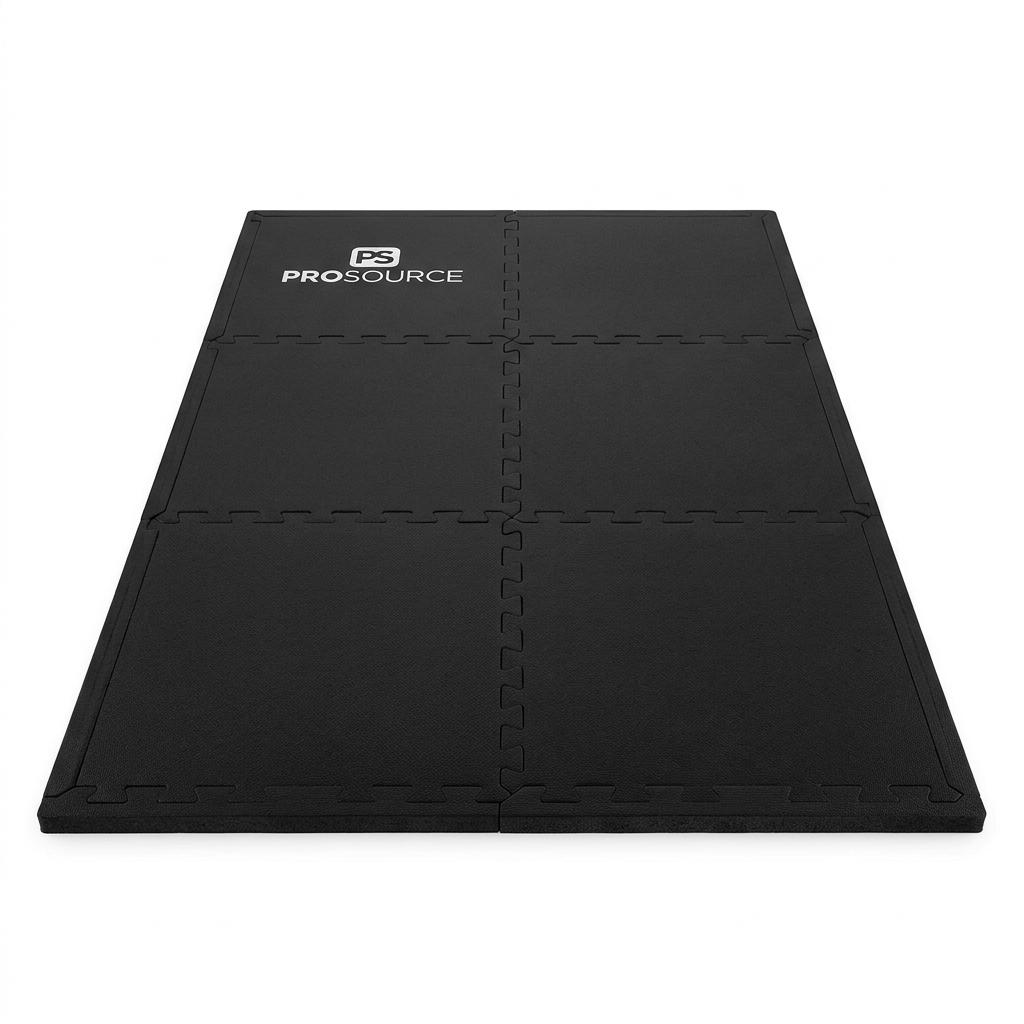 |
ProSource Puzzle Exercise Mat | $29-$49 | Best Overall | Check Price |
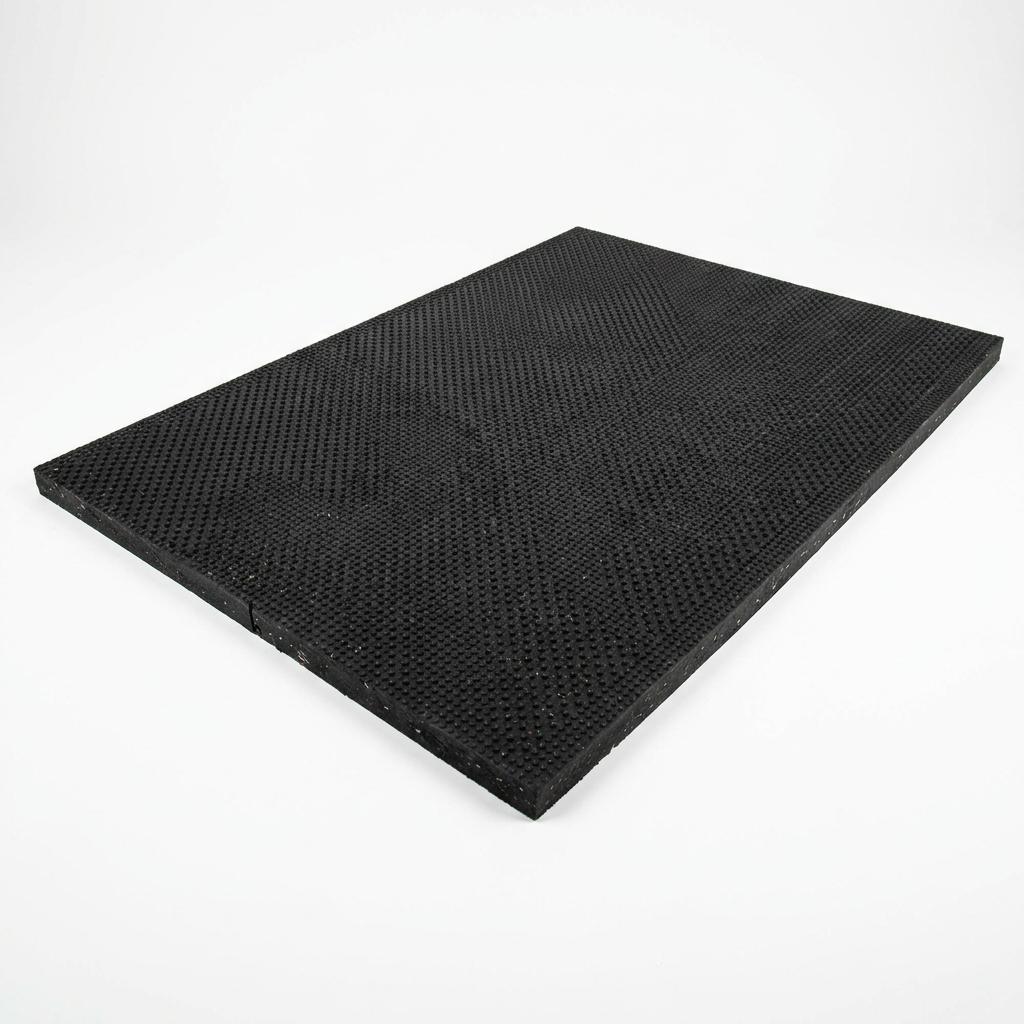 |
Tractor Supply 3/4 Inch Rubber Stall Mat | $49-$79 | Heavy Duty Pick | Check Price |
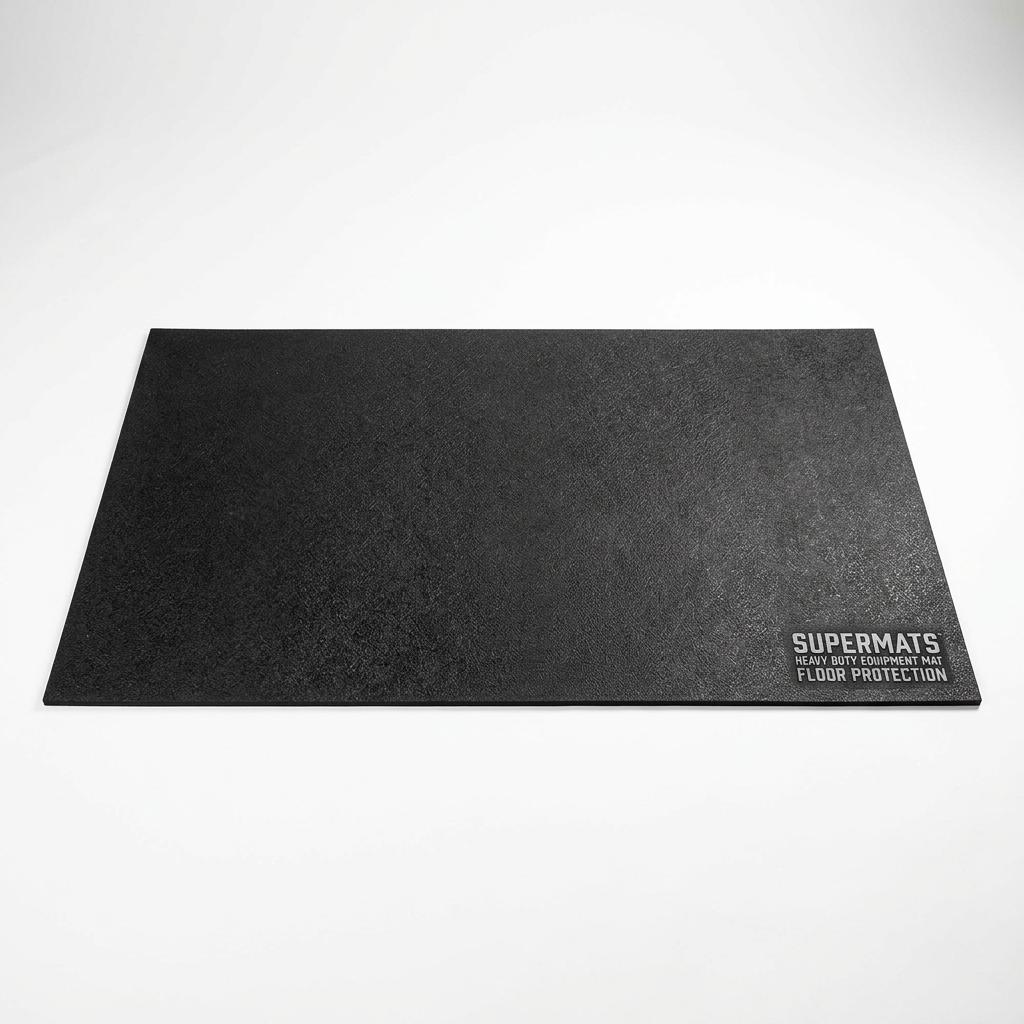 |
Supermats Heavy Duty Equipment Mat | $35-$55 | Best for Cardio | Check Price |
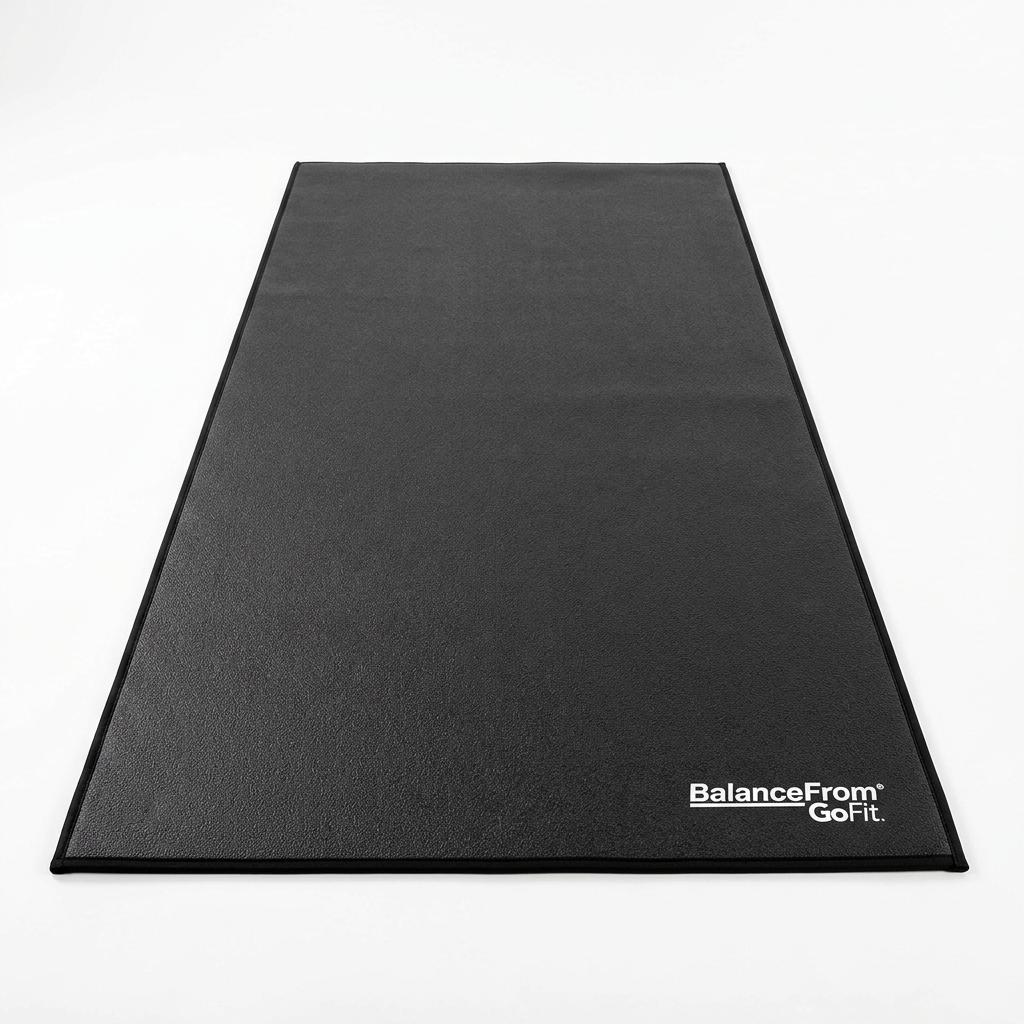 |
BalanceFrom GoFit All-Purpose Exercise Mat | $25-$40 | Best Budget | Check Price |
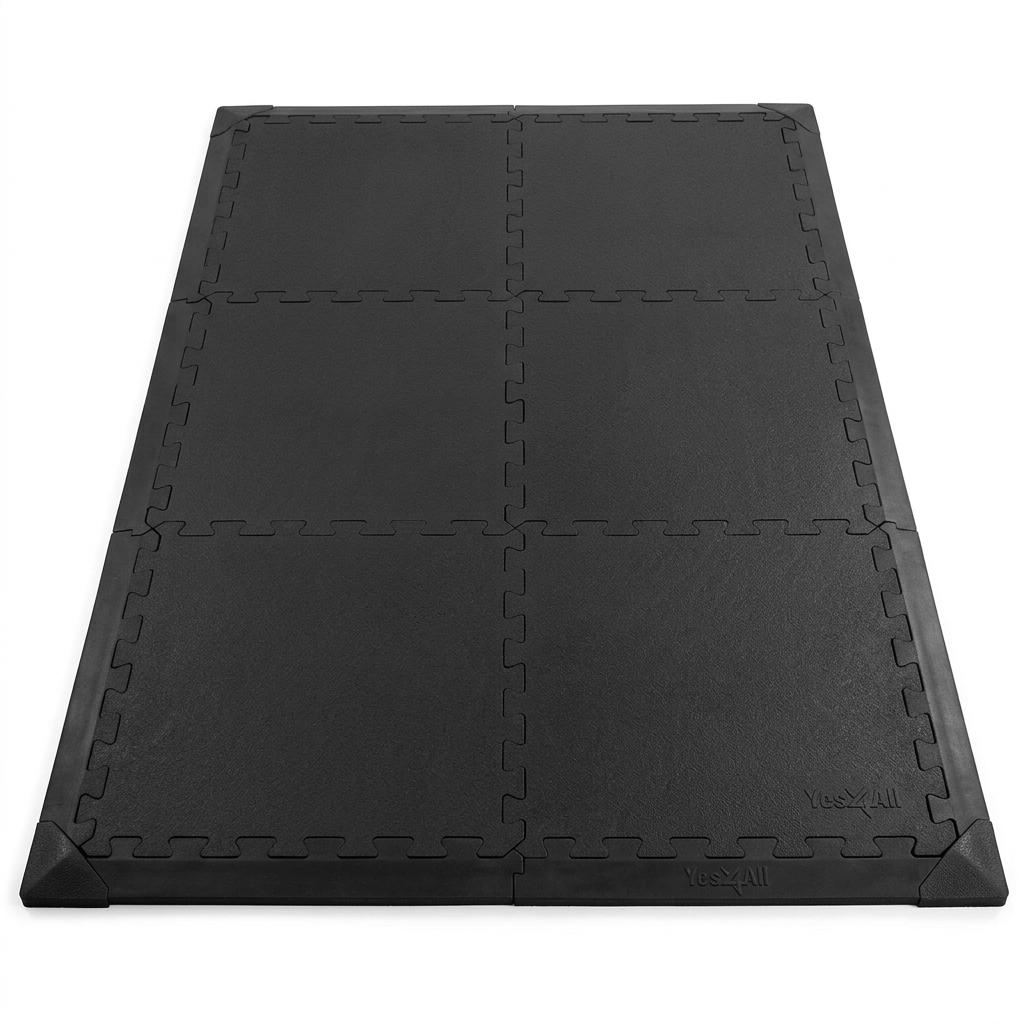 |
Yes4All Interlocking Rubber Floor Tiles | $59-$89 | Premium Pick | Check Price |
The best balance of affordability, ease of installation, and floor protection for apartment gyms.
The gold standard for heavy-duty gym floor protection in dedicated spaces.
Purpose-built equipment mat that protects floors and reduces cardio machine noise.
An affordable, portable gym flooring solution for light to moderate exercise.
Premium rubber interlocking tiles that offer the best balance of protection and renter-friendliness.
The ProSource Puzzle Exercise Mat is our top recommendation for apartment gym flooring because it hits the sweet spot of protection, price, and ease of use. The interlocking tiles connect like puzzle pieces, requiring no tools or adhesive, making them completely renter-friendly. Each tile is a half-inch thick, providing adequate cushioning for bodyweight exercises, yoga, and light dumbbell work. The included border pieces give the installation a clean, finished look. When it's time to move, simply pull them apart and take them with you.
Check Price on Amazon
For apartment gym owners who do serious strength training, the 3/4-inch Rubber Stall Mat is the industry-standard choice. Originally designed for horse stalls, these dense recycled rubber mats provide unmatched protection against dropped weights and heavy equipment. The substantial thickness absorbs impact that would damage both your floor and your equipment. The primary drawbacks are the weight, at roughly 100 pounds per 4x6 sheet, and the rubber odor that requires a few days of off-gassing. If you have a dedicated corner for lifting, this is the best protection money can buy.
Check Price on Amazon
The Supermats Heavy Duty Equipment Mat is specifically designed to go under cardio machines, making it ideal for apartment gyms with stationary bikes, treadmills, or rowing machines. The durable vinyl composite material absorbs vibrations that would otherwise travel through the floor to your downstairs neighbors. The textured bottom grips both the machine and the floor to prevent any sliding during intense workouts. If your apartment gym centers around a cardio machine, this mat is an essential purchase for both floor protection and neighbor relations.
Check Price on Amazon
The BalanceFrom GoFit mat offers a simple, no-frills solution for apartment gym flooring. At 3x6.5 feet, it provides enough coverage for a personal workout zone without dominating the room. The mat is easy to unroll for workouts and roll back up for storage, making it ideal for multi-purpose spaces. While it doesn't offer the same level of impact protection as rubber stall mats, it's sufficient for bodyweight exercises, yoga, and light dumbbell work. The non-slip surface works well on both hardwood and carpeted floors.
Check Price on Amazon
Yes4All Interlocking Rubber Tiles bridge the gap between budget EVA foam mats and heavy-duty stall mats. Made from half-inch thick rubber, these tiles provide significantly better protection and durability than foam options while still being manageable to install and remove. The interlocking design with included border strips creates a professional-looking installation. These tiles are ideal for apartment gyms that include moderate to heavy strength training, as the rubber construction won't compress or deform under loaded barbells. The renter-friendly installation requires no adhesive.
Check Price on Amazon