10-Minute HIIT Workout for Apartments: Burn Fat, Save Time
An intense 10-minute HIIT workout designed for apartments. Burn maximum calories with minimal space and no equipment nee...
Research-backed guide to what is tabata for small-space home gyms.
By SnugGym Editorial Team | Evidence Mode: Research-Backed
Tabata is a specific high-intensity interval training (HIIT) protocol consisting of 20 seconds of maximal-effort exercise followed by 10 seconds of complete rest, repeated for 8 rounds totaling 4 minutes. Unlike general HIIT — which encompasses many work-to-rest ratios — Tabata refers specifically to this 2:1 work-to-rest structure at all-out intensity, originally studied by Japanese researcher Dr. Izumi Tabata in 1996. The protocol's remarkable efficiency and substantial research backing have made it one of the most popular and scientifically validated training methods in modern fitness.
| Attribute | Description |
|---|---|
| Protocol | 20 seconds work / 10 seconds rest × 8 rounds |
| Total Duration | 4 minutes per Tabata |
| Work-to-Rest Ratio | 2:1 |
| Intensity | Maximal (170% VO₂ max in original study) |
| Total Work Time | 2 minutes and 40 seconds |
| Total Rest Time | 1 minute and 20 seconds |
| Primary Benefits | VO₂ max improvement, anaerobic capacity, fat loss |
In 1996, Dr. Izumi Tabata and his colleagues at the National Institute of Fitness and Sports in Kanoya, Japan, conducted a study that would fundamentally change exercise science's understanding of time-efficient training. Published in the journal Medicine & Science in Sports & Exercise, the study compared two groups of trained athletes:
Group 1 — Moderate-Intensity Steady State (MISS):
Group 2 — Tabata Protocol:
After 6 weeks of training:
| Outcome | MISS Group | Tabata Group |
|---|---|---|
| Aerobic capacity (VO₂ max) | Modest improvement | Greater improvement |
| Anaerobic capacity | No improvement | 28% improvement |
| Training time per week | 300 minutes | 46 minutes |
The Tabata group achieved superior aerobic improvements and dramatic anaerobic improvements — the first study to demonstrate that short-duration, supramaximal interval training could simultaneously improve both energy systems. The MISS group, despite training 6.5× longer, showed no improvement in anaerobic capacity and less aerobic improvement.
The protocol's effectiveness stems from its unique physiological demands:
VO₂ max — the maximum rate at which your body can consume oxygen during exercise — is one of the strongest predictors of cardiovascular health and longevity. The original Tabata study demonstrated that just 16 minutes of high-intensity work weekly produced greater VO₂ max improvements than 5 hours of moderate cardio. Subsequent research has consistently confirmed that Tabata-style protocols outperform steady-state training for aerobic capacity development when time is equated.
The 28% improvement in anaerobic capacity observed in the original study was unprecedented. Anaerobic capacity determines your ability to sustain high-intensity efforts lasting 30 seconds to 2 minutes — critical for sports performance, metabolic conditioning, and functional fitness.
Tabata training creates substantial EPOC, elevating calorie burn for 12–24 hours post-exercise. A study in the Journal of Applied Physiology found that Tabata-style protocols increased resting metabolic rate significantly more than moderate steady-state exercise. Additionally, the hormonal response — including acute growth hormone and catecholamine release — supports fat metabolism and preservation of lean muscle mass.
The 4-minute protocol is among the most time-efficient training methods ever studied. Even when performed 3–4 times weekly, total high-intensity training time remains under 20 minutes — achievable for virtually any schedule.
Unlike long-duration steady-state cardio, which can interfere with strength and muscle gains when performed excessively, Tabata's short duration and high intensity preserve anabolic signaling. This makes it compatible with strength and hypertrophy programs — a significant advantage for home gym users pursuing multiple fitness goals.
Eight rounds of truly maximal effort with minimal rest is psychologically demanding. Regular Tabata training builds tolerance for discomfort and the ability to sustain high effort under extreme fatigue — mental skills that transfer to all areas of physical performance.
Not all exercises work for true Tabata protocol. The ideal Tabata exercise:
| Category | Exercises | Notes |
|---|---|---|
| Cardio machines | Air bike, rowing machine, spin bike | Safest option; built-in intensity measurement |
| Bodyweight | Burpees, mountain climbers, squat thrusts, jumping jacks | No equipment needed; scalable |
| Kettlebell | Swings, snatches (one arm at a time) | High power output; technical at fatigue |
| Medicine ball | Slams, thrusters | Explosive; stress-relieving |
| Jump rope | Double-unders, high knees | Cardiovascular; coordination component |
| Exercise | Why Avoid |
|---|---|
| Heavy barbell lifts | Too technical at maximal fatigue; injury risk |
| Exercises requiring setup | Wastes work time; breaks intensity |
| Single-joint movements | Too little muscle mass for systemic stimulus |
| Sprinting (for general population) | High injury risk without gradual progression |
For research-matching stimulus:
| Parameter | Specification |
|---|---|
| Work interval | 20 seconds |
| Rest interval | 10 seconds |
| Rounds | 8 |
| Total time | 4 minutes |
| Intensity | 100%+ effort (maximal sustainable) |
| Exercise | Single movement throughout |
| Weekly frequency | 2–4 sessions |
| Modification | Protocol | Progression Path |
|---|---|---|
| Reduced intensity | 80–90% effort for 8 rounds | Increase 5% weekly |
| Reduced rounds | 4–6 rounds at maximal effort | Add 1 round every 2 weeks |
| Extended rest | 20s work / 20s rest × 8 | Reduce rest 2s weekly until 10s |
| Multiple exercises | Alternate 2 movements across rounds | Progress to single exercise |
| Application | Protocol | Frequency |
|---|---|---|
| Standalone cardio session | 1–2 Tabatas with 4 min rest between | 2–3× weekly |
| Workout finisher | 1 Tabata after strength training | 2× weekly |
| Morning metabolic boost | 1 Tabata upon waking | 3–4× weekly |
| Athletic conditioning | Sport-specific movement Tabata | 2× weekly in season |
| Fitness Level | Weekly Tabatas | Total High-Intensity Time | Notes |
|---|---|---|---|
| Beginner | 2–3 | 8–12 minutes | Spread across 2–3 sessions |
| Intermediate | 3–5 | 12–20 minutes | Can combine 2 Tabatas in one session |
| Advanced | 4–8 | 16–32 minutes | Monitor recovery closely |
Exercise: Air bike (Echo bike or similar) Protocol: 20 seconds max calories / 10 seconds rest × 8 rounds Goal: 80+ total calories for men, 60+ for women Equipment needed: Air bike
— Air bike for true Tabata conditioning.
Exercise: Concept2 rower Protocol: 20 seconds max meters / 10 seconds rest × 8 rounds Goal: 800+ total meters Tip: Set damper to 3–5 for optimal power output
As an Amazon Associate, we earn from qualifying purchases. Learn more
| Round | Exercise |
|---|---|
| 1–2 | Burpees |
| 3–4 | Mountain climbers |
| 5–6 | Jump squats |
| 7–8 | Push-up to plank jack |
For true minimal equipment: use burpees for all 8 rounds
Exercise: Two-handed kettlebell swings Protocol: 20 seconds max reps / 10 seconds rest × 8 rounds Load: Moderate (20–30% of bodyweight for most trainees) Goal: 15+ swings per round
As an Amazon Associate, we earn from qualifying purchases. Learn more
Tabata 1 (4 minutes): Air bike max calories Rest: 4 minutes active recovery (walking, light pedaling) Tabata 2 (4 minutes): Burpees max reps Total time: 14 minutes including rest
| Priority | Equipment | Why It Works for Tabata |
|---|---|---|
| Top Choice | Air bike (fan bike) | Upper + lower body; resistance increases with effort; safe at fatigue |
| Top Choice | Rowing machine | Full-body; measurable output; low impact |
| Excellent | Spin bike/stationary bike | Lower body focus; easily adjustable resistance |
| Excellent | Jump rope | Portable; scalable; coordination component |
| Very Good | Kettlebell | Power production; hip-dominant; versatile |
| Very Good | Medicine ball | Slam variety; explosive; upper body emphasis |
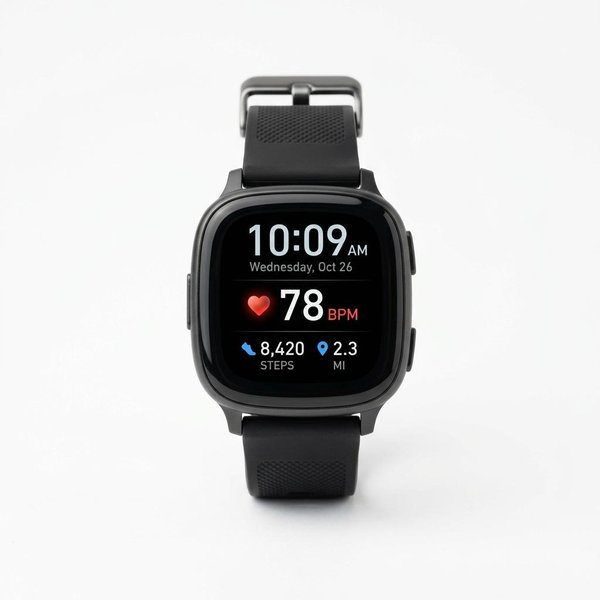
Precise timing is non-negotiable for Tabata. Options include:
As an Amazon Associate, we earn from qualifying purchases. Learn more
Tabata operates at intensities approaching or exceeding 100% of maximal oxygen uptake. This level of exertion creates significant cardiovascular stress. Individuals with any of the following should obtain medical clearance before beginning Tabata:
The fitness industry has diluted the Tabata name. Many "Tabata workouts" marketed online feature:
These may be effective workouts, but they are not the Tabata protocol as studied. True Tabata requires:
Tabata's intensity creates substantial systemic stress. Signs of excessive Tabata volume include:
If these appear, reduce Tabata frequency or substitute lower-intensity intervals.
By rounds 6–8, extreme fatigue makes maintaining proper form challenging. Safety strategies:
| Feature | Tabata | Standard HIIT | Sprint Interval Training (SIT) |
|---|---|---|---|
| Work duration | 20 seconds | 30s–4 minutes | 10–30 seconds |
| Rest duration | 10 seconds | 1:1 to 1:3 ratio | 2–4 minutes |
| Rounds | 8 | 4–10 | 4–6 |
| Total time | 4 minutes | 10–30 minutes | 15–25 minutes |
| Intensity | 170% VO₂ max | 85–95% max HR | All-out sprint |
| Primary benefit | VO₂ + anaerobic capacity | Fat loss, moderate VO₂ | Peak power, VO₂ |
| Research volume | Extensive | Very extensive | Growing |
Can beginners do Tabata? Beginners should build an aerobic base (4–6 weeks of moderate cardio) before attempting true Tabata. Modified versions with reduced intensity or fewer rounds are appropriate starting points.
How many calories does a 4-minute Tabata burn? During the session: approximately 50–80 calories depending on body size and exercise. Including EPOC, total calorie impact may reach 150–250 calories over 24 hours.
Can I do Tabata every day? No. True Tabata creates significant fatigue requiring 48 hours minimum between sessions. Daily Tabata quickly leads to overreaching and diminished returns.
Is Tabata better than running? For time efficiency and simultaneous aerobic/anaerobic development, yes. For specific running performance, running-specific training remains superior. Choose based on goals.
Can I build muscle with Tabata? Tabata preserves muscle but doesn't build it effectively. For muscle growth, prioritize resistance training. Use Tabata as a conditioning supplement.
Tabata represents one of the most scientifically validated time-efficient training protocols available. Dr. Izumi Tabata's original research demonstrated that 4 minutes of supramaximal interval training produced superior fitness improvements to 60 minutes of moderate exercise — a time-efficiency ratio that remains unmatched. For home gym users seeking maximum cardiovascular and metabolic benefit in minimum time, authentic Tabata protocol training delivers measurable, research-backed results that have stood the test of decades of scientific scrutiny.
FTC Disclosure: This article contains affiliate links to Amazon products. If you purchase through these links, SnugGym may earn a commission at no additional cost to you. This helps support our independent research and content creation.
Last updated: June 2025