10-Minute HIIT Workout for Apartments: Burn Fat, Save Time
An intense 10-minute HIIT workout designed for apartments. Burn maximum calories with minimal space and no equipment nee...

Master Jim Wendler's 5/3/1 program with this complete guide. Learn the principles, 4-week cycle structure, BBB variation, conditioning, home gym modifications, and get a full 12-month template.
FTC Disclosure: This article contains affiliate links. We may earn a commission if you purchase through these links at no additional cost to you. This helps support our independent research and testing.
Jim Wendler's 5/3/1 program has become arguably the most widely implemented strength training system in the world since its publication in 2009. Its enduring popularity stems not from complexity—5/3/1 is remarkably simple—but from a philosophical framework that prioritizes sustainable long-term progress over short-term gratification. For home gym users training without external accountability, 5/3/1's structured simplicity and emphasis on personal records over absolute loading make it an ideal programming choice. This guide provides everything you need to implement 5/3/1 effectively in your home gym.
Wendler distilled his program into four non-negotiable principles. Understanding these principles matters more than memorizing the rep schemes, as they inform every decision you'll make during training.
5/3/1 uses a training max rather than your true one-rep max. The standard recommendation is to set your initial training max at 90% of your actual 1RM. Some lifters, particularly those new to the program, are advised to start even lower—at 85% of their true max.
This conservative starting point serves multiple purposes. It ensures you complete all prescribed reps with excellent technique. It creates a psychological buffer that builds confidence as you consistently exceed minimum targets. And most importantly, it extends the progression timeline before you need to reset, allowing more total weeks of productive training.
Weight increases are small and infrequent by design:
| Lift Category | Monthly Increase |
|---|---|
| Upper body lifts (bench, overhead press) | 5 lbs per cycle |
| Lower body lifts (squat, deadlift) | 10 lbs per cycle |
These increases are added to your training max at the start of each new 4-week cycle, not to your working weights within a cycle. The result is a slow, inexorable climb that compounds dramatically over months and years. A bench press training max that starts at 200 lbs becomes 260 lbs after 12 cycles (48 weeks)—a 30% increase that most lifters would be thrilled to achieve.
The heart of 5/3/1 is the PR set on the final work set of each main lift. On the 5-rep week, you perform 5+ reps (as many as possible). On the 3-rep week, you perform 3+ reps. On the 1-rep week, you perform 1+ reps.
These AMRAP (as many reps as possible) sets serve as the program's built-in progress tracking. When you beat your previous rep record at a given weight, you know you're getting stronger regardless of what your absolute 1RM might be. This focus on rep PRs rather than weight PRs is psychologically liberating and physically sustainable.
Wendler emphasizes that strength training is only one component of fitness. 5/3/1 templates incorporate conditioning, mobility, and assistance work to create balanced athletes rather than one-dimensional lifters. This holistic approach is particularly valuable for home gym users who train for health and longevity rather than competitive powerlifting.
Each 5/3/1 cycle lasts four weeks. The main lifts follow a specific percentage progression:
| Set | Percentage of Training Max | Reps |
|---|---|---|
| 1 | 65% | 5 |
| 2 | 75% | 5 |
| 3 | 85% | 5+ (PR set) |
| Set | Percentage of Training Max | Reps |
|---|---|---|
| 1 | 70% | 3 |
| 2 | 80% | 3 |
| 3 | 90% | 3+ (PR set) |
| Set | Percentage of Training Max | Reps |
|---|---|---|
| 1 | 75% | 5 |
| 2 | 85% | 3 |
| 3 | 95% | 1+ (PR set) |
| Set | Percentage of Training Max | Reps |
|---|---|---|
| 1 | 40% | 5 |
| 2 | 50% | 5 |
| 3 | 60% | 5 |
The deload week is non-negotiable for most lifters. It provides necessary recovery before the next cycle's loading increases. Advanced lifters may extend cycles to 5-6 weeks between deloads, but beginners and intermediates should deload every fourth week.
5/3/1 is built around four core lifts:
These lifts are performed once per week each, typically arranged in a 4-day split:
| Day | Main Lift | Muscle Groups |
|---|---|---|
| Day 1 | Overhead Press | Shoulders, triceps, upper chest |
| Day 2 | Deadlift | Posterior chain, back, grip |
| Day 3 | Bench Press | Chest, shoulders, triceps |
| Day 4 | Squat | Quads, glutes, core |
A 3-day version compresses this by pairing overhead press with deadlift, or by rotating which lift is performed each session.
The most popular 5/3/1 template for muscle growth is Boring But Big (BBB). After completing your 5/3/1 work for the main lift, you perform 5 sets of 10 reps at a lighter percentage (typically 50-60% of your training max).
Example: Squat Day (BBB)
| Exercise | Sets x Reps | Percentage |
|---|---|---|
| Back Squat (5/3/1 work) | 3 sets | 65-95% per week |
| Back Squat (BBB) | 5x10 | 50-60% TM |
| Assistance: Leg Curl | 3x10-15 | — |
| Assistance: Leg Raise | 3x10-15 | — |
The beauty of BBB is its simplicity. You're performing the same movement twice—once heavy, once light—for a total of 8 sets. This high volume on the main lift drives both strength and hypertrophy without requiring complex exercise selection.
| Week | BBB Percentage | Notes |
|---|---|---|
| 1 | 50% TM | Introduction, establish baseline |
| 2 | 55% TM | Moderate increase |
| 3 | 60% TM | Highest BBB loading |
| 4 | Deload | 40% TM or skip BBB entirely |
Advanced lifters may use opposite BBB—performing 5x10 of a different lift than the main movement (e.g., deadlift 5x10 after squat 5/3/1). This reduces localized fatigue while maintaining high total volume.
Wendler categorizes assistance work into three tiers:
Wendler recommends hitting each category at least once per week:
Wendler mandates conditioning work as part of the 5/3/1 program. This isn't optional—it directly supports strength development by improving work capacity, recovery, and body composition.
Hard Conditioning (1-2x/week, 10-20 minutes):
Easy Conditioning (2-3x/week, 20-40 minutes):
The key is variety and consistency. Hard conditioning shouldn't interfere with lifting performance—schedule it 24+ hours before heavy lower body sessions when possible.
As an Amazon Associate, we earn from qualifying purchases. Learn more
As an Amazon Associate, we earn from qualifying purchases. Learn more
This template uses the BBB variation with a deload every 4th week. Starting training maxes: Squat 300, Bench 225, Deadlift 350, Overhead Press 135.
Run standard 5/3/1 with BBB at 50% TM. Focus on technique and hitting rep PRs. Add the standard 5 lbs to upper body TMs and 10 lbs to lower body TMs after each cycle.
Increase BBB to 55% TM. Continue TM progression. Consider adding a second assistance exercise per category if recovery permits.
Increase BBB to 60% TM. On the 5/3/1 week (week 3 of each cycle), push the final AMRAP set aggressively. Wendler calls this the "Leader/Anchor" structure—several moderate cycles followed by one aggressive cycle.
Reset training maxes to 85% of estimated 1RM if AMRAP performance has stagnated. Run two standard cycles, then test true 1RMs or estimated maxes in week 3 of the final cycle.
| Cycle | Starting TM | After Cycle TM | 1RM Estimate (TM x 1.1) |
|---|---|---|---|
| 1 | 270 | 280 | 308 |
| 2 | 280 | 290 | 319 |
| 3 | 290 | 300 | 330 |
| 4 | 300 | 310 | 341 |
| 5 | 310 | 320 | 352 |
| 6 | 320 | 330 | 363 |
| 7 | 330 | 340 | 374 |
| 8 | 340 | 350 | 385 |
| 9 | 350 | 360 | 396 |
| 10 | 360 | 370 | 407 |
| 11 | 370 | 380 | 418 |
| 12 | 380 | 390 | 429 |
This represents a 121-lb estimated squat increase in one year. While individual results vary, this illustrates the compounding power of consistent, small increments.
5/3/1 is exceptionally well-suited to home gym training:
If you lack a bench: Perform floor press as your main press movement. Use push-ups for assistance work.
If you have limited weight plates: Use higher-rep BBB sets (5x15 instead of 5x10) to maintain volume with lighter loads. Prioritize AMRAP performance on the main sets.
If you train in a small space: 5/3/1 requires minimal floor space—just enough for your rack and bench. BBB uses the same equipment as the main sets, so no additional space needed.
The relatively low volume of 5/3/1 (3 main work sets plus 5 BBB sets) means less total bar dropping than high-volume programs. The deload weeks are particularly neighbor-friendly. Schedule your heaviest 5/3/1 week sessions when noise is least disruptive.
Effective tracking is essential for long-term 5/3/1 success. Your log should capture:
Per Session:
Per Cycle:
| Date | Lift | Week | Set 1 | Set 2 | AMRAP Set | TM | Notes |
|---|---|---|---|---|---|---|---|
| Example | Squat | 5s | 175x5 | 200x5 | 230x8 | 270 | Felt strong |
Check price at Amazon for training journals
Mistake 1: Using True 1RM as Training Max Your training max should be 85-90% of your actual 1RM. Using your true max shortens your progression timeline and increases injury risk.
Mistake 2: Skipping the AMRAP Sets The PR sets are the engine that drives 5/3/1. Stopping at the prescribed minimum (5, 3, or 1) eliminates the autoregulation and progress-tracking benefits.
Mistake 3: Adding Weight Mid-Cycle Never increase weights within a 4-week cycle. Trust the percentages and let the AMRAP sets provide the challenge.
Mistake 4: Neglecting Conditioning Wendler explicitly requires conditioning. Skipping it makes you a less capable athlete and eventually limits your strength potential.
Mistake 5: Excessive Assistance Volume Remember: the main lifts and supplemental work (BBB) drive progress. Assistance work is supplementary. Don't turn 5/3/1 into a 2-hour bodybuilding session.
Jim Wendler's 5/3/1 program succeeds because it aligns with fundamental principles of human adaptation: start conservatively, progress gradually, track objective metrics, and balance stress with recovery. Its elegance lies in its simplicity—you could write the entire program on a napkin, yet it produces results that more complex systems struggle to match.
For home gym users, 5/3/1 offers the ideal combination of structure, flexibility, and minimal equipment requirements. The BBB variation transforms it from a pure strength program into a potent muscle-building system. And the 12-month progression framework ensures you never run out of productive training ahead of you.
Set your training maxes honestly, follow the percentages, attack the AMRAP sets, do your conditioning, and be patient. The strength you build with 5/3/1 will outlast any shortcut.
For a higher-volume hypertrophy approach, see our German Volume Training Guide. For autoregulated training, explore our RPE-Based Training Guide.
| Image | Product | Price | Badge | Link |
|---|---|---|---|---|
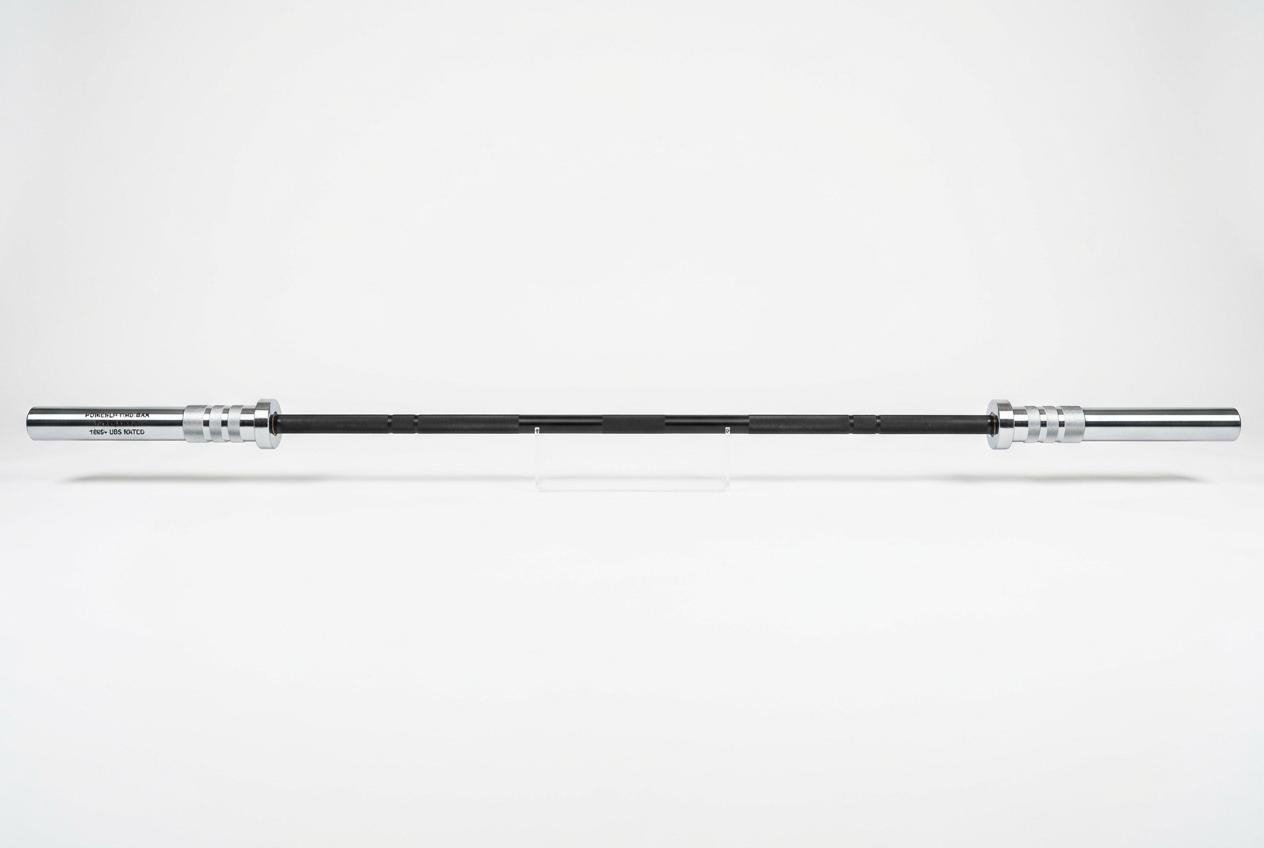 |
CAP Barbell Olympic Bar (The Beast) | $149.99-$189.99 | Best Overall | Check Price |
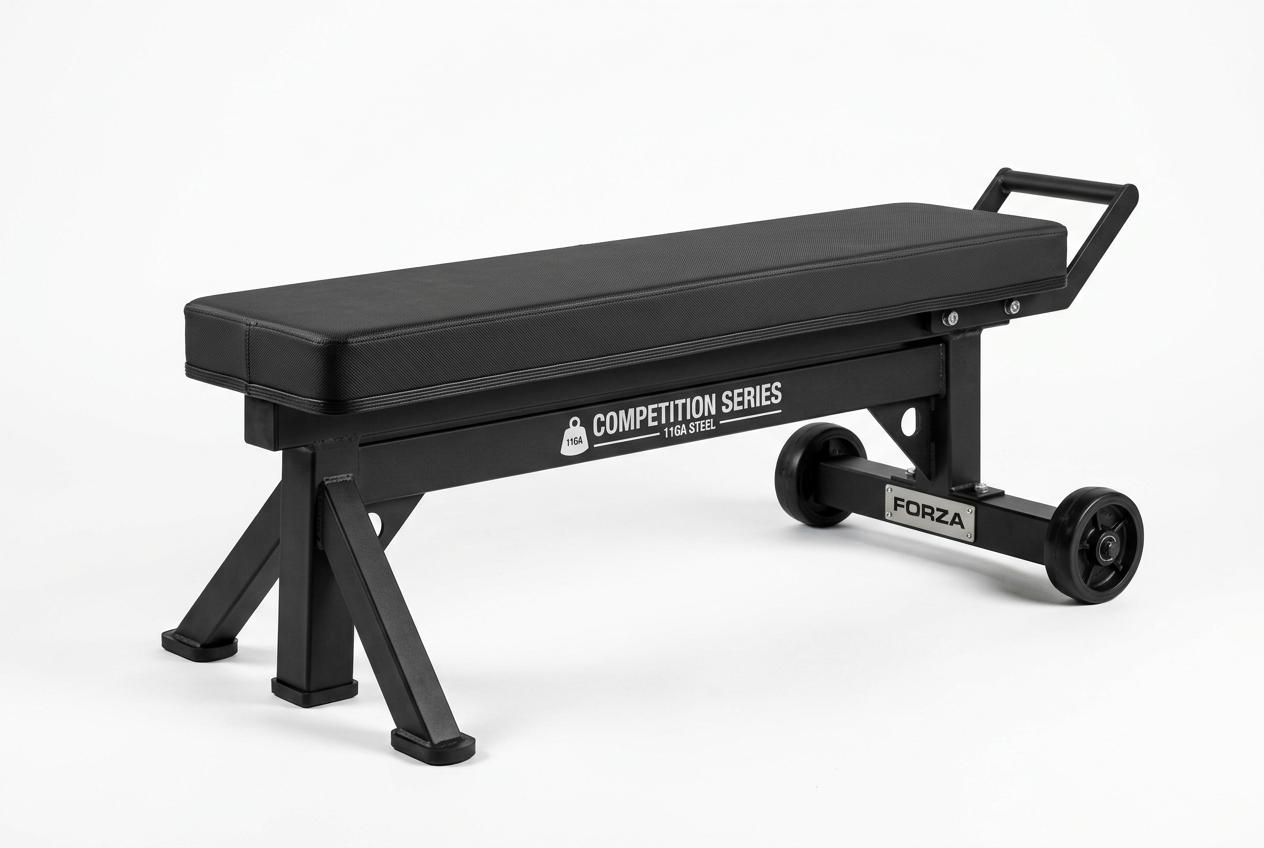 |
REP Fitness FB-5000 Competition Flat Bench | $219.99-$249.99 | Premium Pick | Check Price |
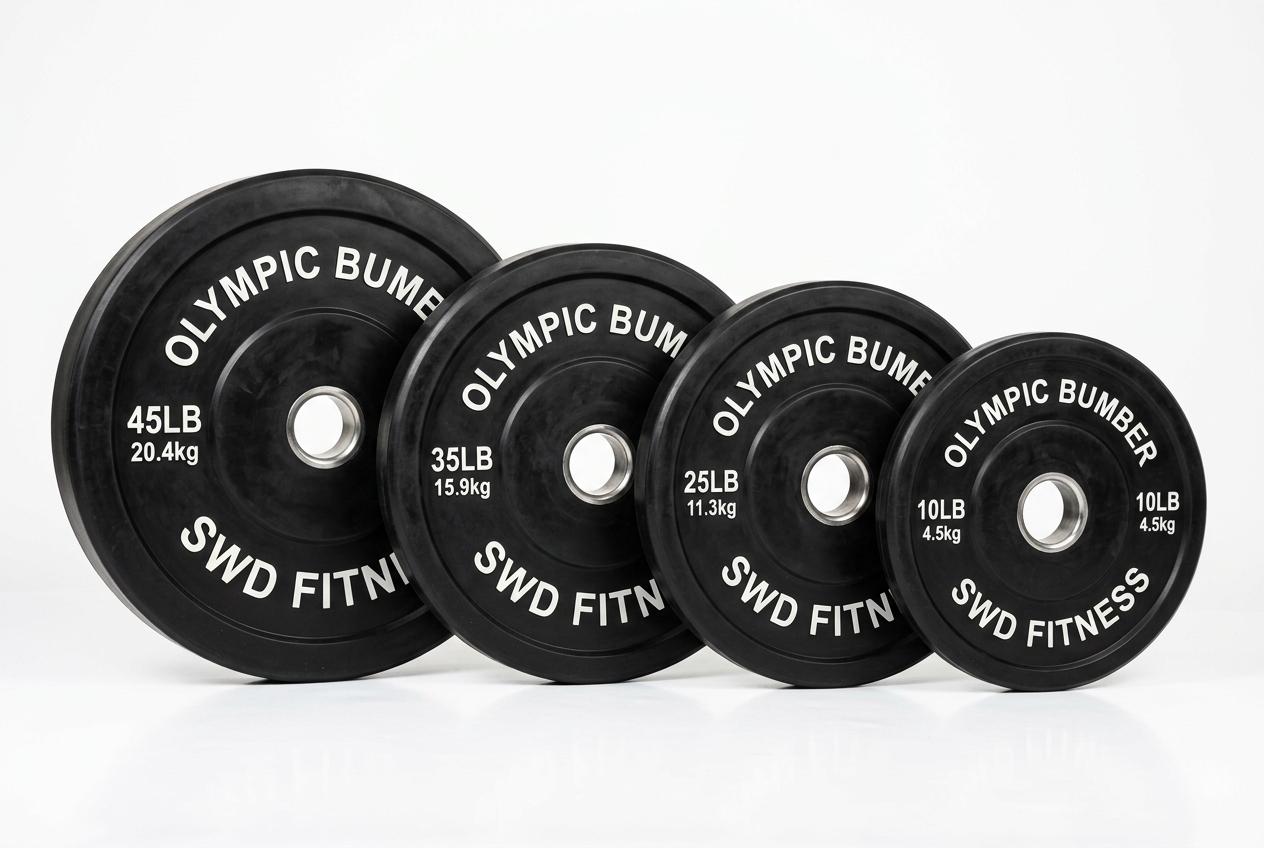 |
BalanceFrom Rubber-Coated Olympic Bumper Plates | $89.99-$299.99 | Best Value | Check Price |
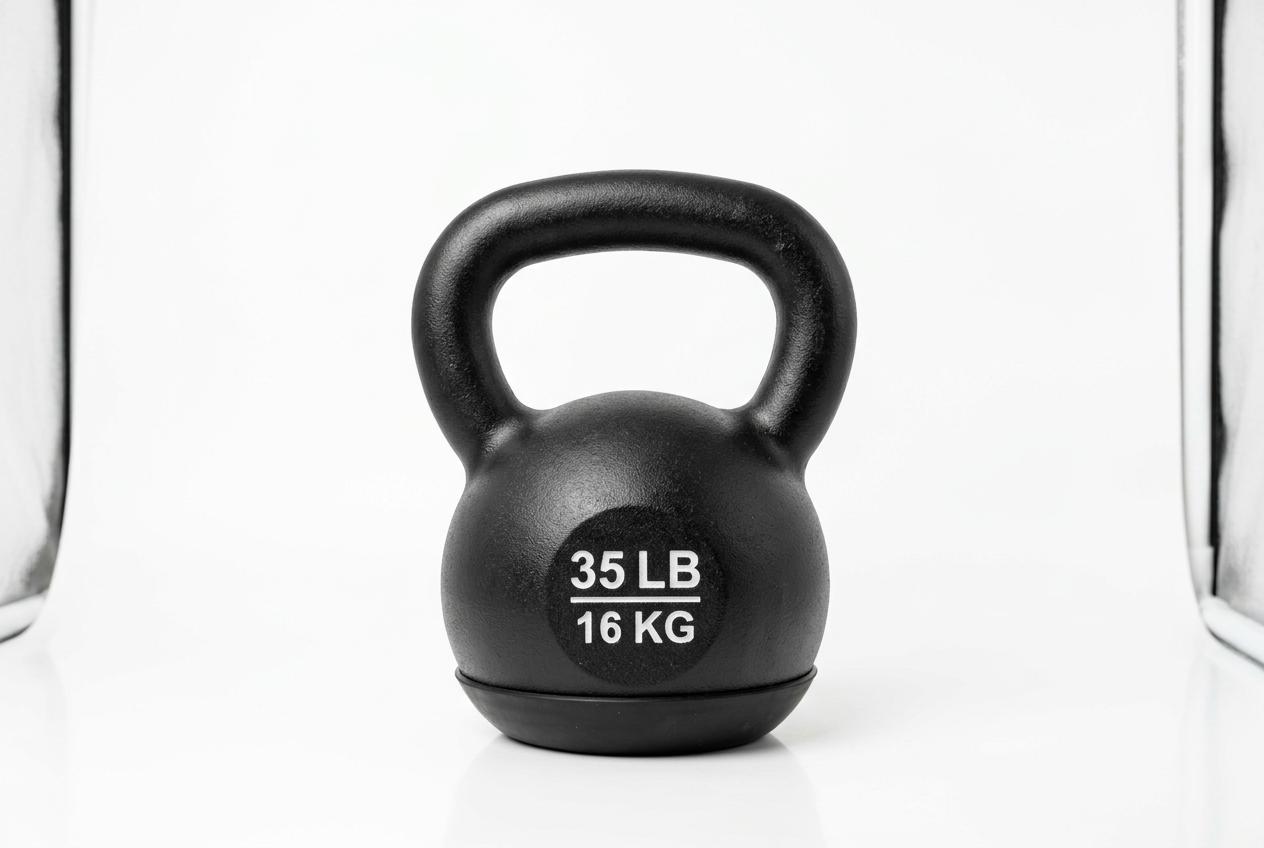 |
Yes4All Vinyl Coated Kettlebell | $24.99-$89.99 | Most Versatile | Check Price |
 |
Harbinger Padded Leather Weightlifting Belt | $24.99-$34.99 | Best for Heavy Lifting | Check Price |
A solid, affordable Olympic barbell that can handle the progressive loads of the 5/3/1 program for years of heavy compound lifting.
A competition-grade flat bench built for heavy bench pressing with rock-solid stability and a compact footprint ideal for home gyms.
Affordable, durable bumper plates that protect your home gym floor while delivering consistent weight for progressive 5/3/1 training.
A durable, floor-friendly kettlebell perfect for 5/3/1 accessory work like swings, goblet squats, and Turkish get-ups.
A comfortable, supportive leather belt that helps maintain proper intra-abdominal pressure during heavy 5/3/1 compound lifts.
The CAP Barbell 'Beast' is a proven workhorse for home 5/3/1 practitioners who need a reliable bar that will not break the bank. Its 1000-pound capacity easily accommodates the heavy singles and AMRAP sets that define the program, while the medium knurling hits the sweet spot between grip security and hand comfort. The black oxide finish holds up well in garage and basement gym environments. For anyone starting 5/3/1 at home, this bar delivers the performance you need at a price that leaves room in your budget for plates.
Check Price on Amazon
The REP FB-5000 is the flat bench that serious 5/3/1 practitioners dream of owning. Its innovative tripod design eliminates the front leg that typically gets in the way of foot placement during heavy bench sets, while the grippy vinyl pad keeps your shoulders locked in place even at maximum effort. The 1000-pound rating gives you confidence to push your AMRAP sets without worrying about equipment failure. Built on wheels with a handle, it is also easy to move around your home gym between bench and accessory work stations.
Check Price on Amazon
These BalanceFrom bumper plates are the ideal loading solution for 5/3/1 home gym training. The rubber coating means you can safely bail a failed squat or drop a deadlift without damaging your floor or bar, while the consistent weight calibration keeps your percentage-based training accurate. The stainless steel inserts slide smoothly onto any Olympic bar and resist corrosion. For beginners starting 5/3/1, the 260-pound set provides enough weight to progress for many months before needing additional plates.
Check Price on Amazon
The Yes4All Vinyl Coated Kettlebell is an outstanding accessory tool for the 5/3/1 program. Its wide handle makes two-handed swings comfortable even for larger hands, and the vinyl coating means you can set it down on any floor surface without worry. Use it for goblet squats as a main lift variation, swings for posterior chain conditioning, or Turkish get-ups as part of your warm-up routine. The consistent construction across weight increments means you can add heavier bells as you progress without adjusting to different dimensions.
Check Price on Amazon
The Harbinger Padded Leather Belt provides the core support needed to safely push your 5/3/1 training maxes on squats, deadlifts, and overhead presses. The 4-inch padded back sits comfortably against the lumbar spine, while the double-prong buckle ensures the belt stays exactly where you set it through your entire session. The suede interior grips your shirt to prevent the annoying belt-riding that can happen with slick leather designs. For intermediate lifters running 5/3/1, this belt hits the sweet spot of support and comfort.
Check Price on Amazon