10-Minute HIIT Workout for Apartments: Burn Fat, Save Time
An intense 10-minute HIIT workout designed for apartments. Burn maximum calories with minimal space and no equipment nee...
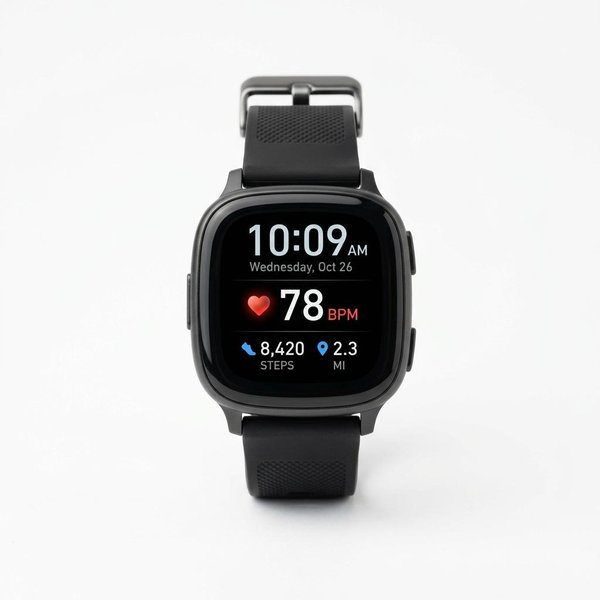
A structured upper body dumbbell routine emphasizing push/pull exercise balance for symmetrical strength development. Includes exercise selection, set/rep schemes, and progression strategies.
Upper body training with dumbbells offers distinct advantages for home gym users: independent limb loading corrects strength asymmetries, greater range of motion at the shoulder joint reduces impingement risk, and minimal equipment requirements make the approach practical for compact spaces.
This article presents a complete upper body routine structured around push/pull exercise pairing. The design ensures balanced muscular development across the chest, back, shoulders, and arms while minimizing injury risk through antagonist pairing and adequate recovery between sets.
The upper body contains opposing muscle groups that work in concert during daily movement and athletic activity:
Our analysis of movement pattern research indicates that push-dominant training (common among recreational lifters who prioritize chest and shoulder work) creates muscular imbalances that alter shoulder mechanics. Over time, this imbalance can contribute to anterior shoulder pain and reduced range of motion.
This routine alternates push and pull exercises within the workout. This approach:
| Order | Exercise | Category | Sets × Reps | Rest |
|---|---|---|---|---|
| A1 | Dumbbell chest press | Push | 4 × 8-10 | 90s |
| A2 | Bent-over dumbbell row | Pull | 4 × 8-10 | 90s |
| B1 | Seated dumbbell overhead press | Push | 3 × 10-12 | 75s |
| B2 | Single-arm dumbbell row | Pull | 3 × 10-12 per side | 75s |
| C1 | Incline dumbbell press | Push | 3 × 10-12 | 75s |
| C2 | Dumbbell Romanian deadlift | Pull | 3 × 10-12 | 75s |
| D1 | Lateral raise | Shoulder | 3 × 12-15 | 60s |
| D2 | Dumbbell bicep curl | Arm (pull) | 3 × 12-15 | 60s |
| E1 | Overhead dumbbell tricep extension | Arm (push) | 3 × 12-15 | 60s |
| E2 | Rear delt fly | Shoulder (pull) | 3 × 15-20 | 60s |
Total sets: 22 work sets — approximately 45-60 minutes including warm-up.
Pairing method: Perform A1, rest 90 seconds, perform A2, rest 90 seconds, repeat. Complete all sets of the A pairing before moving to B.
Movement: Lie on floor or bench, dumbbells at chest level, press vertically until arms lock out, lower with control.
Key technique points:
Muscles worked: Pectoralis major, anterior deltoid, triceps
Movement: Hinge at hips until torso is nearly parallel to floor, row dumbbells to lower ribs, lower with control.
Key technique points:
Muscles worked: Latissimus dorsi, rhomboids, middle trapezius, rear deltoid, biceps
Movement: Seated on bench with back support (or floor with legs extended), press dumbbells from shoulder height to lockout overhead.
Key technique points:
Muscles worked: Anterior and lateral deltoids, triceps, upper pectoralis
Movement: Support upper body on bench with one hand and knee, row dumbbell with free hand to hip, lower with control.
Key technique points:
Muscles worked: Latissimus dorsi, teres major, rhomboids, biceps
Movement: Set bench to 30-45° incline, press dumbbells from upper chest to lockout.
Key technique points:
Muscles worked: Upper pectoralis major, anterior deltoid, triceps
Movement: Hold dumbbells at thighs, hinge at hips pushing hips backward, lower dumbbells along legs until hamstring stretch is felt, return to standing.
Key technique points:
Muscles worked: Hamstrings, glutes, erector spinae, upper back (isometric)
Movement: Stand with dumbbells at sides, raise arms laterally to shoulder height with slight elbow bend, lower with control.
Key technique points:
Muscles worked: Lateral deltoid, supraspinatus (initial phase)
Movement: Stand with dumbbells at full arm extension, curl to shoulders, lower with control.
Key technique points:
Muscles worked: Biceps brachii, brachialis
Movement: Hold one dumbbell overhead with both hands, lower behind head by bending elbows, extend to lockout.
Key technique points:
Muscles worked: Triceps brachii (all three heads)
Movement: Hinge at hips, raise dumbbells laterally with arms slightly bent, squeezing shoulder blades together.
Key technique points:
Muscles worked: Posterior deltoid, rhomboids, middle trapezius
| Phase | Duration | Activities |
|---|---|---|
| General | 3 min | Arm circles, shoulder rolls, jumping jacks, light jog |
| Specific | 4 min | Two light sets of first paired exercises (A1/A2) at 50-60% working weight |
| Activation | 2 min | Band pull-aparts ×15, wall slides ×10, plank ×30s |
This routine uses double progression: increase reps within the target range first, then increase weight.
| Week | Goal |
|---|---|
| 1-2 | Establish working weights, stay at lower rep range (8, 10, 12, 15 depending on exercise) |
| 3-4 | Push to upper end of rep range on all sets |
| 5-6 | Increase weight by smallest increment (2.5-5 lbs) when upper rep range is achieved for all sets |
| 7+ | Repeat cycle from Week 3-4 with new weights |
Example: If you perform 4×8 on chest press in Week 1, work toward 4×10. When 4×10 is achieved across all sets, increase dumbbell weight and return to the 4×8 target.
For this routine, adjustable dumbbells provide the most efficient use of space and budget:
| Day | Training Focus | Session |
|---|---|---|
| Monday | Upper body | This routine |
| Tuesday | Lower body | Separate lower routine |
| Wednesday | Rest or active recovery | — |
| Thursday | Upper body | This routine (variation) |
| Friday | Lower body | Separate lower routine |
| Saturday | Cardio or conditioning | HIIT or steady-state |
| Sunday | Rest | — |
This upper body dumbbell routine addresses all major upper body muscle groups through antagonist-paired exercises, promoting balanced development and postural health. The push/pull structure ensures that no muscle group is neglected while training efficiency is maintained through alternating rest periods. Progress through double progression — adding reps first, then weight — over 6-8 week training blocks for continuous adaptation.
As an Amazon Associate we earn from qualifying purchases.