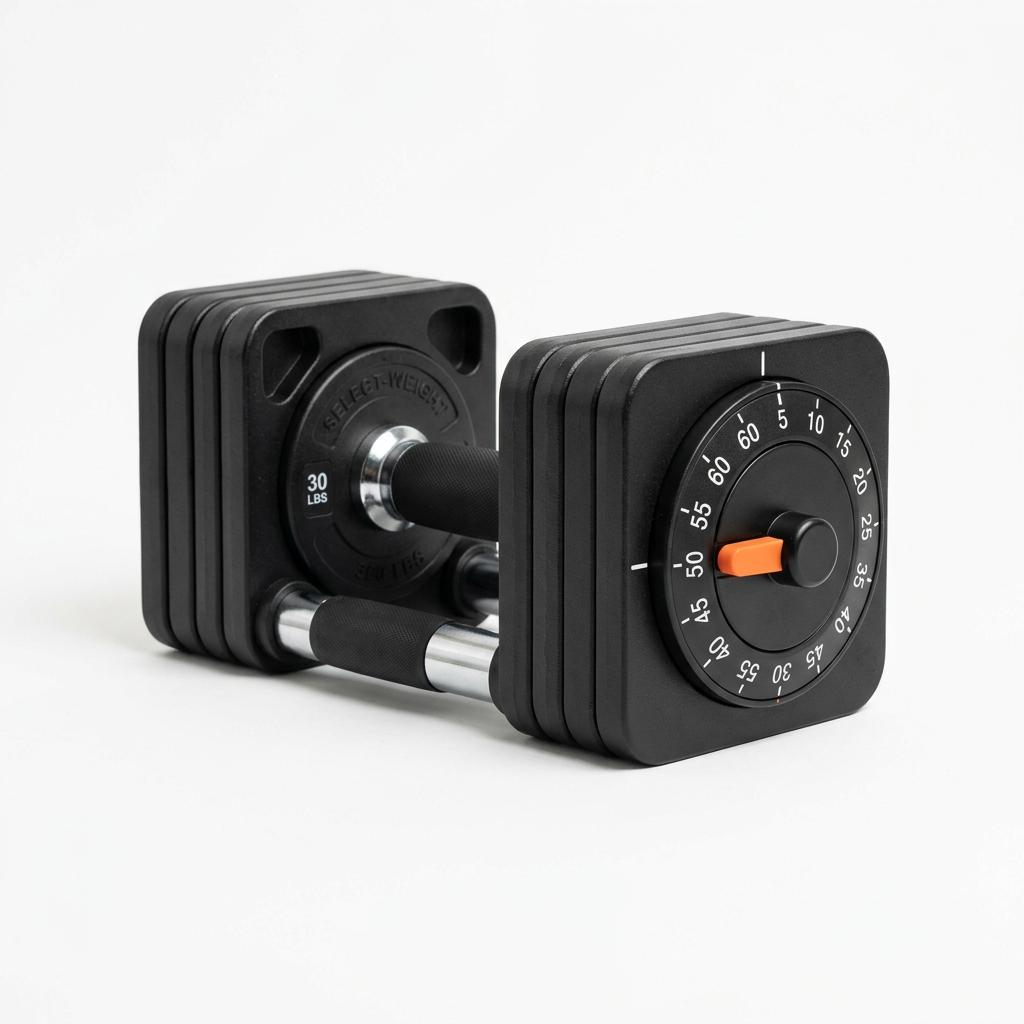
Best for Full Body
#1. PowerBlock Elite EXP Dumbbells
Price: $350-400 | Score: 94/100
Quick-adjust 5-50 lb dumbbells. Full body training requires versatile weights — these replace 20 pairs in minimal space.
Check price at AmazonSnugGym is an Amazon Associate. We earn from qualifying purchases at no extra cost to you. Learn more


Science-based comparison of full-body vs split training routines for home gym users covering frequency, volume, recovery, time efficiency, equipment needs, and programming examples.
FTC Disclosure: SnugGym.com is reader-supported. We may earn a commission through affiliate links at no extra cost to you. This helps fund our independent analysis and reviews.
One of the most consequential decisions you'll make in designing your home gym training program is how to organize exercises across your weekly schedule. Should you train your entire body in every session (full-body training), or divide your body parts across different days (split routines)? This choice affects everything from how often you train each muscle, how much volume you can perform per session, how well you recover, how efficiently you use your equipment, and ultimately, how fast you progress toward your strength and physique goals.
The debate between full-body and split training has persisted for decades, fueled by bodybuilding tradition, strength coaching philosophy, and increasingly, scientific research. What makes this question particularly important for home gym users is that your equipment limitations, time constraints, and recovery environment differ significantly from commercial gym training. An approach that works optimally in a fully equipped facility with professional recovery resources may not be ideal for your garage gym setup.
This research-backed comparison examines the evidence for each approach across seven critical dimensions, provides programming examples tailored to home gym equipment, and delivers a practical framework for choosing — or combining — these training styles based on your experience level, goals, and constraints.
In full-body training, you perform exercises targeting all major muscle groups in every session. A typical full-body workout includes:
Full-body routines are typically performed 2-4 times per week with rest days between sessions. The defining characteristic is that each muscle group receives direct or indirect stimulation in every workout.
Split routines divide the body's muscle groups across different training days. Common split configurations include:
Each muscle group is trained with higher volume but lower frequency — typically 1-2 times per week depending on the split configuration.
| Criteria | Full-Body | Split Routines | Winner |
|---|---|---|---|
| Training frequency per muscle | 2-4x per week | 1-2x per week (body part), 2x (upper/lower) | Full-Body |
| Volume per session | Moderate (6-10 sets per muscle) | High (12-20 sets per muscle) | Split |
| Session duration | 45-75 minutes | 60-90+ minutes | Full-Body |
| Recovery per muscle group | 48-72 hours between sessions | 72-168 hours between sessions | Full-Body |
| Time efficiency | Excellent — fewer total sessions | Moderate — more sessions needed | Full-Body |
| Equipment needs | Minimal — same exercises each session | Moderate — variety preferred | Full-Body |
| Progression potential for beginners | Excellent | Good | Full-Body |
| Progression potential for advanced | Good | Excellent | Split |
| Scientific support | Strong for most populations | Strong for advanced bodybuilders | Full-Body (general) |
Overall Winner: Full-Body for most home gym users; Split routines for advanced trainees with specific goals.
The most significant difference between full-body and split training is training frequency — how often each muscle group is stimulated per week. This distinction has profound physiological implications.
When you resistance train a muscle group, muscle protein synthesis — the process of building new muscle tissue — increases dramatically. Research consistently shows that this elevated MPS state returns to baseline approximately 24-48 hours after training in untrained individuals, and potentially as quickly as 12-24 hours in well-trained individuals.
Key implication: If you train each muscle group only once per week (as in traditional body part splits), your muscles spend 5-6 days per week not in an elevated MPS state. Full-body training, with 2-4 stimulations per week, keeps MPS elevated more consistently throughout the week.
Multiple meta-analyses support higher training frequencies:
For home gym users: Full-body training at 3x per week hits the research-supported frequency sweet spot (2-3x per muscle per week) without requiring excessive scheduling commitment.
In full-body training, each muscle group receives moderate volume per session — typically 3-6 sets for major muscle groups. This moderate per-session volume is easier to recover from, produces less cumulative fatigue, and allows for quality execution of each set.
Weekly volume example (3x full-body):
This volume range (10-20 sets per muscle per week) falls within the evidence-based optimal range for most trainees.
Split routines concentrate volume into fewer sessions, producing higher per-session stress:
Weekly volume example (upper/lower 4x):
Weekly volume example (body part split 5x):
The high per-session volume in body part splits creates significant localized fatigue, potentially reducing the quality of later sets. Research by Saric et al. (2019) demonstrated that training to failure produces diminishing returns after approximately 6 sets per muscle per session — additional volume within the same session stimulates less additional growth than the same volume spread across multiple sessions.
Home gym training often occurs in suboptimal recovery environments compared to commercial gyms:
In these contexts, the moderate per-session stress of full-body training is more sustainable than the high-volume assaults of body part splits. Recovery from 6 hard sets of chest is faster and more reliable than recovery from 20 sets in a single session.
A full-body routine performed 3 times per week:
| Component | Time |
|---|---|
| Warm-up | 5-10 minutes |
| Main lifts (3-4 compounds) | 25-35 minutes |
| Accessories (2-3 movements) | 10-15 minutes |
| Cool-down/stretch | 5 minutes |
| Total per session | 45-65 minutes |
| Total per week | 2.25-3.25 hours |
Three 60-minute sessions per week is achievable for virtually anyone, including busy professionals, parents, and students.
A Push/Pull/Legs routine performed 6 times per week:
| Component | Time |
|---|---|
| Warm-up | 5-10 minutes |
| Main lifts for target muscles | 30-40 minutes |
| Accessories and detail work | 15-20 minutes |
| Cool-down | 5 minutes |
| Total per session | 55-75 minutes |
| Total per week | 5.5-7.5 hours |
The doubled weekly time commitment of PPL creates genuine scheduling challenges. Missing sessions becomes more disruptive to program balance, and the 6-day schedule allows minimal flexibility for life events.
For home gym users with time constraints: Full-body training provides 80-90% of the results with 50-60% of the time investment. This efficiency advantage is often decisive.
Full-body training thrives on simplicity — the same compound movements performed repeatedly. A minimal but effective full-body home gym requires only:
| Equipment | Exercises Enabled |
|---|---|
| Barbell + plates | Squat, deadlift, bench, row, overhead press |
| Power rack or squat stands | Safe squatting and pressing |
| Adjustable bench | Flat and incline pressing, rows, step-ups |
| Pull-up bar | Pull-ups, chin-ups, hanging leg raises |
| Optional: dumbbells | Accessories, unilateral work, arm training |
This equipment list — barbell, rack, bench, pull-up bar — forms the foundation of most home gyms anyway. Full-body training uses this equipment efficiently without requiring extensive accessory collections.
Split routines, particularly body part splits, benefit from greater exercise variety to target muscles from multiple angles. This demands more equipment:
While not strictly necessary, these additions significantly improve split routine effectiveness. The home gym owner running body part splits will eventually want equipment that full-body trainees can function without.
The research supports a more nuanced view than "full-body is always better":
| Trainee Level | Optimal Frequency | Recommended Approach |
|---|---|---|
| Beginner (0-1 year) | 2-3x per muscle per week | Full-body, 3x per week |
| Intermediate (1-3 years) | 2x per muscle per week | Full-body or upper/lower |
| Advanced (3+ years) | 2-3x per muscle per week | Upper/lower or hybrid |
| Elite bodybuilders | 1-2x per muscle per week | Specialized splits |
The evidence overwhelmingly supports full-body or higher-frequency approaches for beginners and intermediates — who represent the vast majority of home gym users. Split routines become more justifiable only at advanced levels with very high volume requirements.
For trainees with less than one year of consistent resistance training, full-body routines offer multiple advantages:
With 1-3 years of training, the choice becomes more personal:
Advanced trainees requiring 20+ sets per muscle per week may find spreading volume across dedicated sessions more practical. However, even advanced home gym users often modify full-body templates rather than adopting traditional body part splits.
Workout A:
Workout B:
Schedule: Monday (A), Wednesday (B), Friday (A) — rotate A/B weekly
Progression: Add 2.5-5 lb to main lifts when all sets completed with good form. Deload every 4-6 weeks by reducing weight 10% for one week.
Upper A (Monday):
Lower A (Tuesday):
Upper B (Thursday): Variation of Upper A with exercise substitutions Lower B (Friday): Variation of Lower A with exercise substitutions
Progression: Add weight or reps weekly; deload every 6-8 weeks.
Many experienced home gym users adopt hybrid approaches that combine full-body frequency with split-like volume distribution:
Train full-body 3-4x per week, but emphasize different muscle groups each session:
This maintains 2-3x frequency for all muscles while allowing additional volume for specific goals.
4 sessions per week with full-body elements:
For the vast majority of home gym users, full-body training provides the optimal balance of effectiveness, efficiency, and sustainability. The research evidence strongly supports higher training frequencies (2-3x per muscle per week) for muscle growth and strength development, particularly for beginners and intermediates who comprise most home gym populations. The lower time commitment, simpler equipment needs, and faster technique development make full-body training the clear starting point.
Split routines become more appropriate as you advance, requiring higher total volume that becomes difficult to distribute across full-body sessions. The upper/lower split at 4x per week represents a natural evolution for intermediate trainees, maintaining relatively high frequency while accommodating greater volume.
Traditional body part splits (chest day, back day, etc.) have minimal scientific support compared to higher-frequency approaches. The once-per-week stimulation they provide falls well below the research-supported frequency for optimal results. While they may be psychologically satisfying and appropriate for elite bodybuilders with extreme volume needs, they're generally suboptimal for home gym users.
The practical recommendation: Start with full-body training 3x per week. Progress to a 4-day upper/lower split after 1-2 years of consistent training. Consider hybrid or specialized approaches only after you've exhausted progress on simpler templates. The fundamentals work for longer than most people realize — don't abandon effective simplicity for complexity that promises but rarely delivers.
Last updated: January 2025. Consult a qualified fitness professional or physician before beginning any exercise program.
| Feature | PowerBlock Elite EXP D | 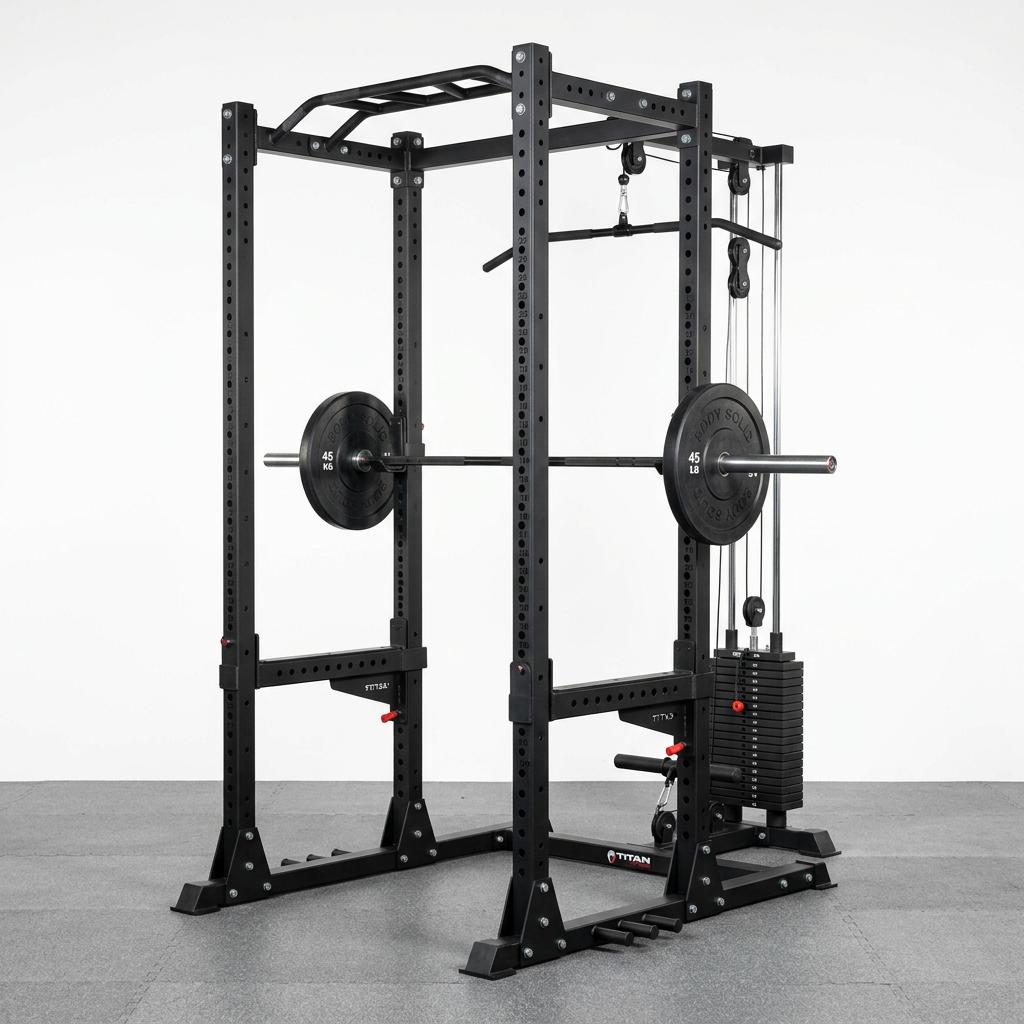 Fitness Reality 810XLT Fitness Reality 810XLT | 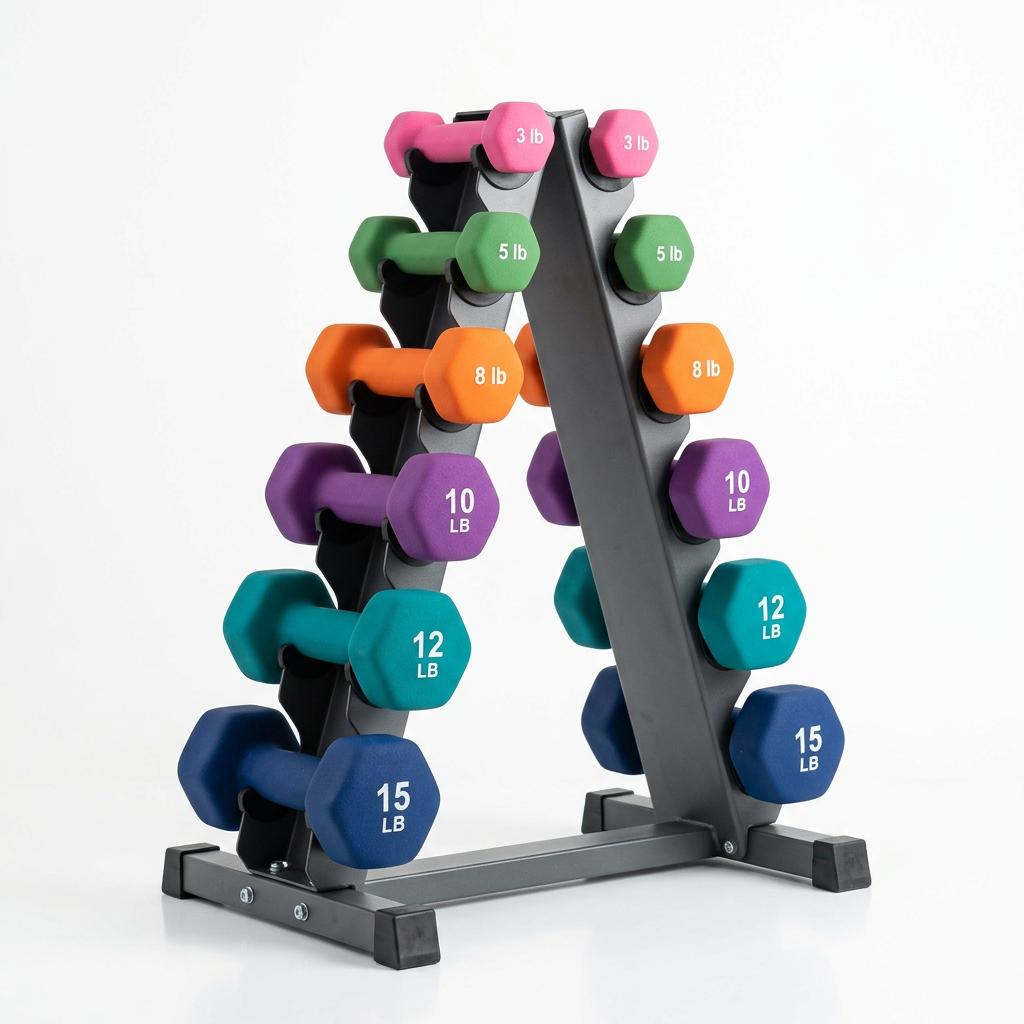 Amazon Basics Neoprene Amazon Basics Neoprene |
|---|---|---|---|
| Price | $350-400 | $350-400 | $45-65 |
| Score | 94/100 | 93/100 | 88/100 |
| Best For | Best for Full Body | Best for Splits | Budget Full Body |
| Prime | Yes | Yes | Yes |
$350-400 | Score: 94/100 | Best for Full Body
Quick-adjust 5-50 lb dumbbells. Full body training requires versatile weights — these replace 20 pairs in minimal space.
$350-400 | Score: 93/100 | Best for Splits
Full cage for heavy compound lifts on split days. J-hooks, safety spotters, pull-up bar, 800 lb capacity.
$45-65 | Score: 88/100 | Budget Full Body
Light dumbbell set for high-rep full body circuits. Color-coded, comfortable grip, includes stand.
Price: $350-400 | Score: 94/100
Quick-adjust 5-50 lb dumbbells. Full body training requires versatile weights — these replace 20 pairs in minimal space.
Check price at AmazonPrice: $350-400 | Score: 93/100
Full cage for heavy compound lifts on split days. J-hooks, safety spotters, pull-up bar, 800 lb capacity.
Check price at AmazonPrice: $45-65 | Score: 88/100
Light dumbbell set for high-rep full body circuits. Color-coded, comfortable grip, includes stand.
Check price at Amazon