10-Minute HIIT Workout for Apartments: Burn Fat, Save Time
An intense 10-minute HIIT workout designed for apartments. Burn maximum calories with minimal space and no equipment nee...

Circuit training guide for home gyms with exercise selection, timing protocols, and sample circuits for fat loss, strength, and conditioning goals.
SnugGym is reader-supported. When you buy through links on our site, we may earn an affiliate commission at no extra cost to you.
Circuit training is a workout methodology in which participants move through a series of exercises with minimal rest between each station, completing the full sequence (one circuit) before resting and repeating. Research published in the Journal of Strength and Conditioning Research demonstrates that circuit training can produce simultaneous improvements in muscular strength, muscular endurance, and cardiovascular fitness (Alcaraz et al., 2008). For home gym users, circuit training is particularly valuable because it maximizes training density—the amount of work performed per unit of time—which is essential when space and equipment are limited.
This guide covers circuit design principles, exercise selection strategies, timing protocols, and sample circuits tailored to different training goals in small-space environments.
| Element | Recommendation |
|---|---|
| Stations per circuit | 6–10 exercises |
| Work per station | 30–45 seconds |
| Transition time | 10–15 seconds between stations |
| Rest between circuits | 60–120 seconds |
| Total circuits | 3–5 rounds |
| Total workout time | 20–35 minutes |
| Space needed | 6' x 8' minimum |
Circuit training requires minimal equipment. A few versatile pieces enable substantial exercise variety:
| Equipment | Circuit Use | Recommended Product |
|---|---|---|
| Adjustable dumbbells | Compound and isolation exercises | Bowflex SelectTech 552 |
| Resistance bands | Pulling, pushing, glute activation | Fit Simplify Resistance Bands |
| Kettlebell | Swings, squats, carries, Turkish get-ups | Yes4All Kettlebell |
| Exercise mat | Floor exercises, comfort, floor protection | Gorilla Mats Exercise Mat |
| Adjustable bench | Step-ups, elevated push-ups, rows | Flybird Weight Bench |
Check price at Amazon — Bowflex SelectTech
Effective circuit design follows established principles supported by exercise science research:
Arrange exercises to avoid excessive localized fatigue that compromises form:
| Order | Rationale | Example Sequence |
|---|---|---|
| Upper → Lower → Core → Cardio | Alternates muscle groups | Push-up → Squat → Plank → Jumping jack |
| Push → Pull → Legs → Core | Balances movement patterns | Overhead press → Row → Lunge → Crunch |
| Compound → Isolation | Priority principle | Squat → Bicep curl → Deadlift → Lateral raise |
Research from Alcaraz et al. (2008) suggests that alternating muscle groups within a circuit allows higher total work output compared to grouping similar exercises together.
| Goal | Work Duration | Rest Between Stations | Rest Between Circuits | Circuits |
|---|---|---|---|---|
| Fat loss / Conditioning | 40–45s | 10–15s | 60s | 4–5 |
| Strength / Power | 20–30s | 20–30s | 90–120s | 3–4 |
| Muscular endurance | 50–60s | 5–10s | 45–60s | 3–4 |
| General fitness | 30s | 15s | 90s | 3–4 |
Each exercise in a circuit should be:
Protocol: 40 seconds work / 15 seconds transition. Rest 90 seconds between circuits. Complete 4 rounds.
| Station | Exercise | Target Area |
|---|---|---|
| 1 | Dumbbell squat to overhead press (thruster) | Legs, shoulders, full body |
| 2 | Renegade row (no push-up) | Back, core |
| 3 | Reverse lunge (alternating) | Legs, glutes |
| 4 | Push-up (standard or knee) | Chest, shoulders, triceps |
| 5 | Dumbbell Romanian deadlift | Hamstrings, glutes, back |
| 6 | Plank hold | Core, shoulders |
| 7 | Dumbbell bicep curl to overhead press | Arms, shoulders |
| 8 | Glute bridge hold (squeeze at top) | Glutes, hamstrings |
Estimated calorie burn: 250–350 calories in 25–30 minutes (varies by body weight and intensity).
Protocol: 30 seconds work / 30 seconds transition (time to set up next exercise). Rest 2 minutes between circuits. Complete 4 rounds with heavier weights.
| Station | Exercise | Target Area |
|---|---|---|
| 1 | Dumbbell goblet squat (heavy) | Legs, glutes |
| 2 | Dumbbell bench press (heavy) | Chest, shoulders, triceps |
| 3 | Dumbbell bent-over row (heavy) | Back, biceps |
| 4 | Dumbbell overhead press | Shoulders, triceps |
| 5 | Dumbbell Romanian deadlift | Posterior chain |
| 6 | Dumbbell farmer's carry | Grip, core, traps |
Use challenging weights that allow proper form for all 30 seconds. Rest periods are longer to maintain load quality.
Check price at Amazon — Adjustable Dumbbells
Protocol: 45 seconds work / 10 seconds transition. Rest 60 seconds between circuits. Complete 5 rounds.
| Station | Exercise | Target Area |
|---|---|---|
| 1 | High-knee march in place | Cardio, legs |
| 2 | Inchworm to push-up | Full body, hamstrings |
| 3 | Bodyweight squat (fast tempo) | Legs, glutes |
| 4 | Mountain climber | Core, shoulders, cardio |
| 5 | Alternating reverse lunge | Legs, balance |
| 6 | Superman hold | Lower back, glutes |
| 7 | Bicycle crunch | Core, obliques |
| 8 | Shadow boxing combinations | Cardio, shoulders |
This circuit requires no equipment and produces very low noise—ideal for apartment training at any time.
Protocol: 35 seconds work / 15 seconds transition. Rest 75 seconds between circuits. Complete 4 rounds.
| Station | Exercise | Target Area |
|---|---|---|
| 1 | Dumbbell alternating forward lunge | Legs, glutes |
| 2 | Dumbbell floor press | Chest, triceps |
| 3 | Dumbbell single-arm row (switch at 17s) | Back, biceps |
| 4 | Dumbbell goblet squat | Legs, glutes |
| 5 | Dumbbell lateral raise | Side deltoids |
| 6 | Dumbbell hip thrust | Glutes |
| 7 | Dumbbell hammer curl | Arms, forearms |
| 8 | Dumbbell overhead tricep extension | Triceps |
Protocol: 30 seconds work / 15 seconds transition. Rest 90 seconds between circuits. Complete 4 rounds.
| Station | Exercise | Target Area |
|---|---|---|
| 1 | Kettlebell swing | Posterior chain, power |
| 2 | Kettlebell goblet squat | Legs, glutes |
| 3 | Kettlebell single-arm row | Back, core |
| 4 | Kettlebell halo | Shoulders, core |
| 5 | Kettlebell Romanian deadlift | Hamstrings, glutes |
| 6 | Kettlebell Russian twist | Core, obliques |
Check price at Amazon — Kettlebells
30 seconds of work followed by 15 seconds of transition creates a 2:1 work-to-rest ratio. This density sustains elevated heart rate throughout the circuit, maximizing caloric expenditure. Research from Paoli et al. (2012) found that high-density circuit training produces significant improvements in body composition.
40 seconds of work with 20 seconds of rest allows slightly more recovery while maintaining intensity. This is the most versatile protocol and suits most training goals.
EMOM stands for "Every Minute On the Minute." At the start of each minute, perform the prescribed exercise or exercises. Whatever time remains in that minute is your rest. For example: 10 goblet squats at the start of each minute for 10 minutes. This protocol is excellent for work capacity development because as fatigue accumulates, your rest periods automatically shorten.
Set a timer for 20 minutes. Complete as many rounds of the circuit as possible (AMRAP) with no formal rest between circuits. Record your total rounds and attempt to beat that number in future sessions. This gamified approach to training is highly motivating and produces exceptional conditioning adaptations.
In a small apartment, circuit setup requires strategic thinking:
| Setup Strategy | Implementation |
|---|---|
| Station in place | Perform all exercises in one 6' x 8' area. No moving between stations—just grab different equipment. |
| Equipment triangle | Arrange dumbbells, kettlebell, and bands in a small triangle. Move one step between each. |
| Single dumbbell pair | Select one weight and design the entire circuit around it. Switching weights costs time and space. |
| Bodyweight + one tool | Use bodyweight for most exercises, adding only bands or one dumbbell for 2–3 stations. |
| Foldable bench | Use a foldable bench that can be moved or stored between exercises. |
| Method | Implementation |
|---|---|
| Add rounds | Progress from 3 circuits to 4, then 5 |
| Increase work duration | Extend from 30s to 40s per station |
| Decrease rest | Reduce transition time from 15s to 10s |
| Increase load | Use heavier dumbbells or thicker resistance bands |
| Increase exercise difficulty | Progress push-ups to decline push-ups, squats to jump squats (if noise allows) |
| Track density | Record rounds completed in a fixed time; beat your score |
How is circuit training different from HIIT? HIIT specifically involves alternating periods of very high intensity with recovery. Circuit training involves moving between exercises with minimal rest but does not necessarily require maximal intensity intervals. There is significant overlap—many HIIT workouts use circuit formats, and many circuits incorporate HIIT work-to-rest ratios.
Can circuit training build muscle? Circuit training can produce modest hypertrophy, particularly in beginners. However, traditional strength training with longer rest periods and progressive overload remains superior for maximizing muscle growth (Schoenfeld, 2010). Circuits are best viewed as a conditioning and general fitness tool.
How many times per week should I do circuit training? 2–4 sessions per week is appropriate for most individuals. Combine with 2–3 dedicated strength sessions for a balanced program.
Should I use the same circuit every session? Vary circuits every 2–4 weeks to prevent adaptation and maintain engagement. Rotate between 2–3 different circuit designs.
Can I do circuit training every day? Not recommended. The high training density creates significant systemic fatigue. Allow at least one full rest day between circuit sessions, or alternate upper-body-focused and lower-body-focused circuits.
References:
| Image | Product | Price | Badge | Link |
|---|---|---|---|---|
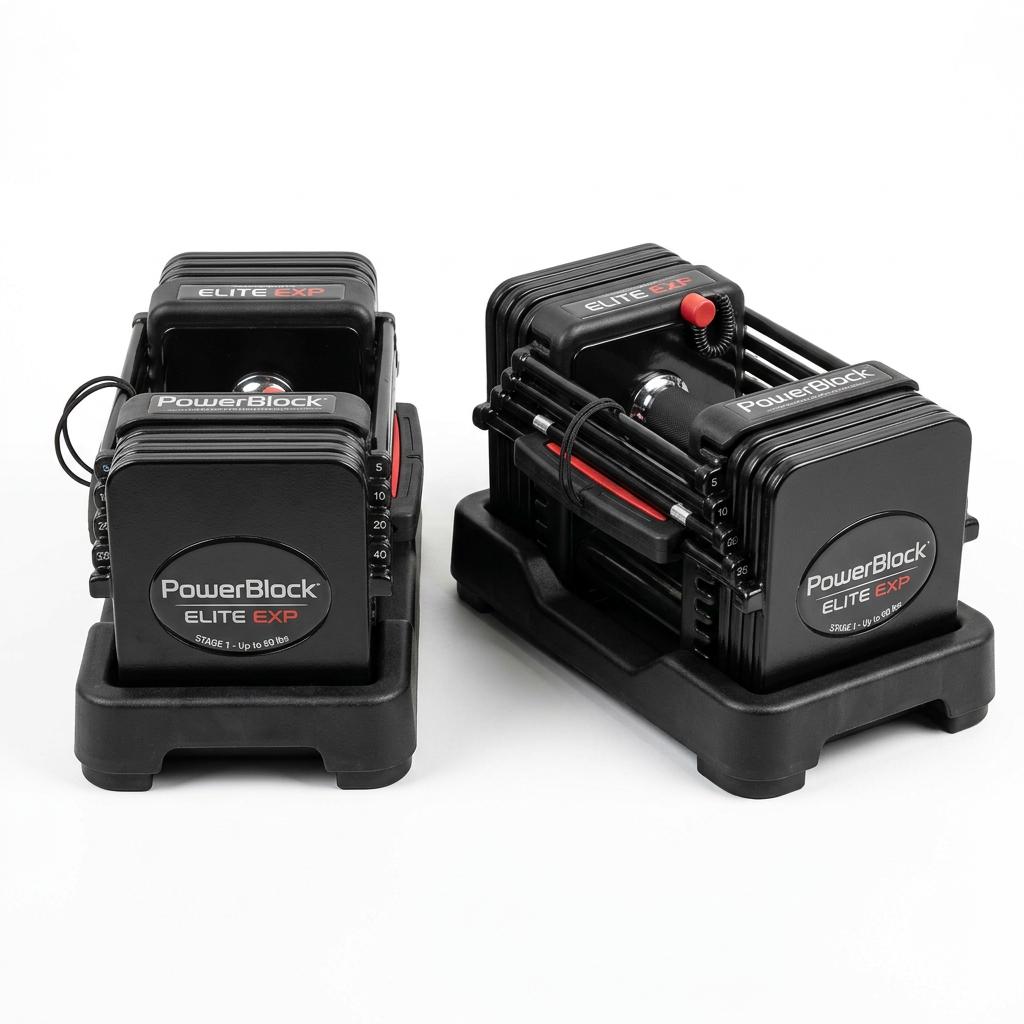 |
PowerBlock Elite EXP Adjustable Dumbbells (Stage 1) | $350-$450 | Best Overall | Check Price |
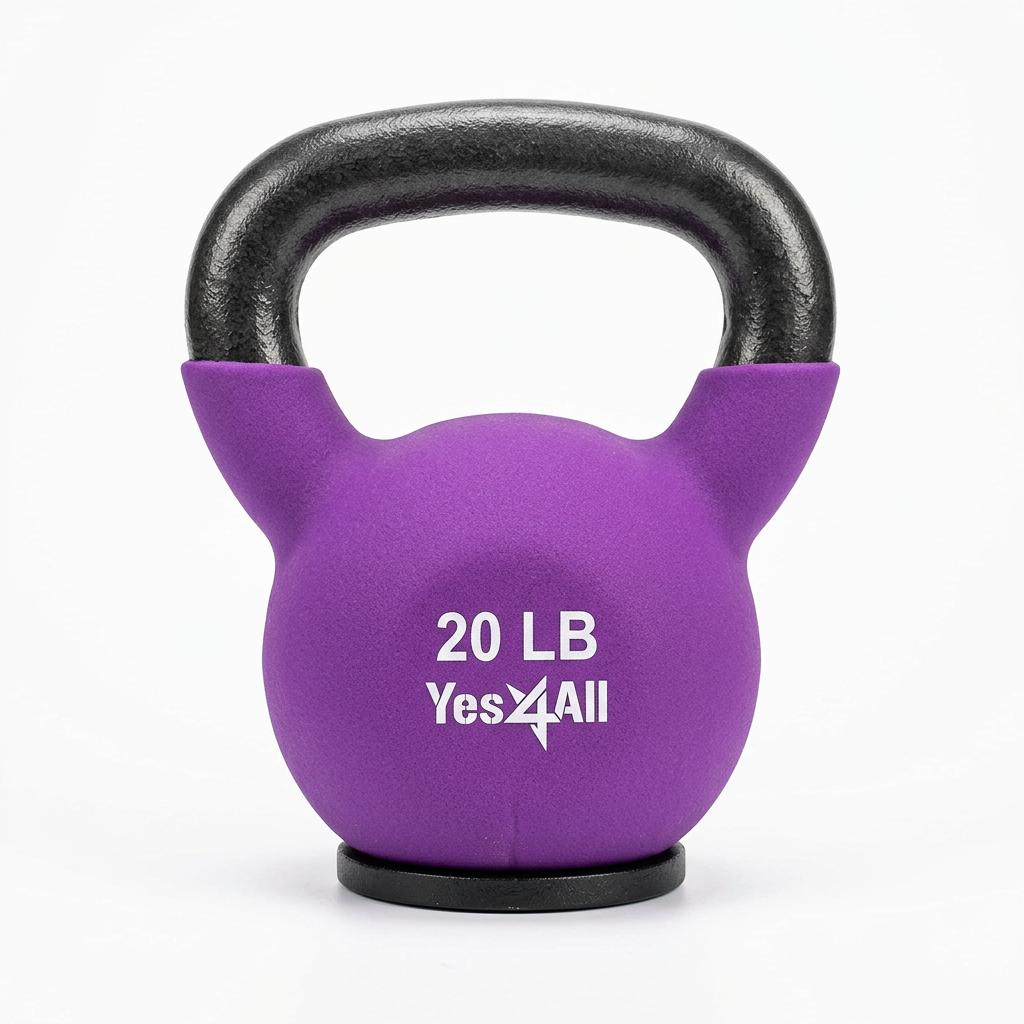 |
Yes4All Neoprene Coated Kettlebell | $35-$55 | Best Budget | Check Price |
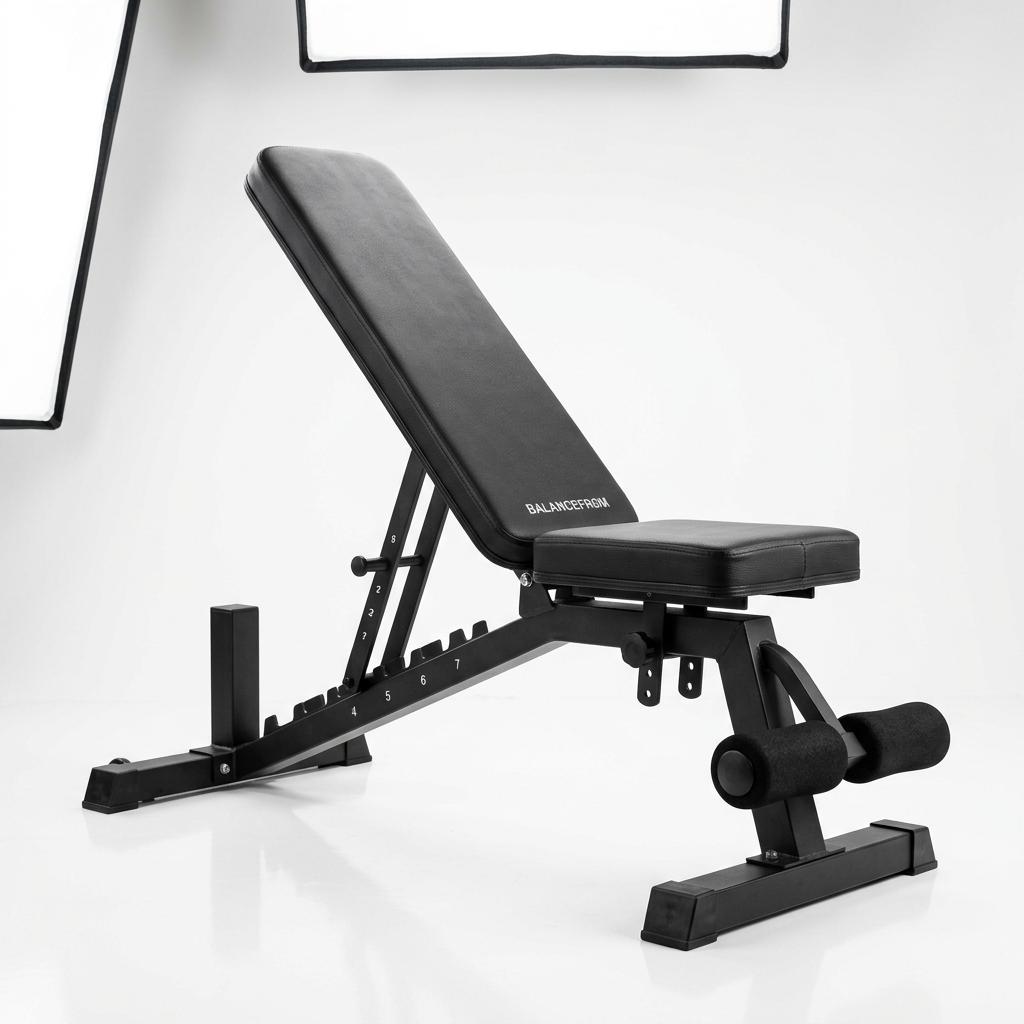 |
BalanceFrom GoFit All-Purpose Weight Bench | $80-$120 | Best for Versatility | Check Price |
 |
Amazon Basics High-Density Exercise Mat | $15-$25 | Best Value | Check Price |
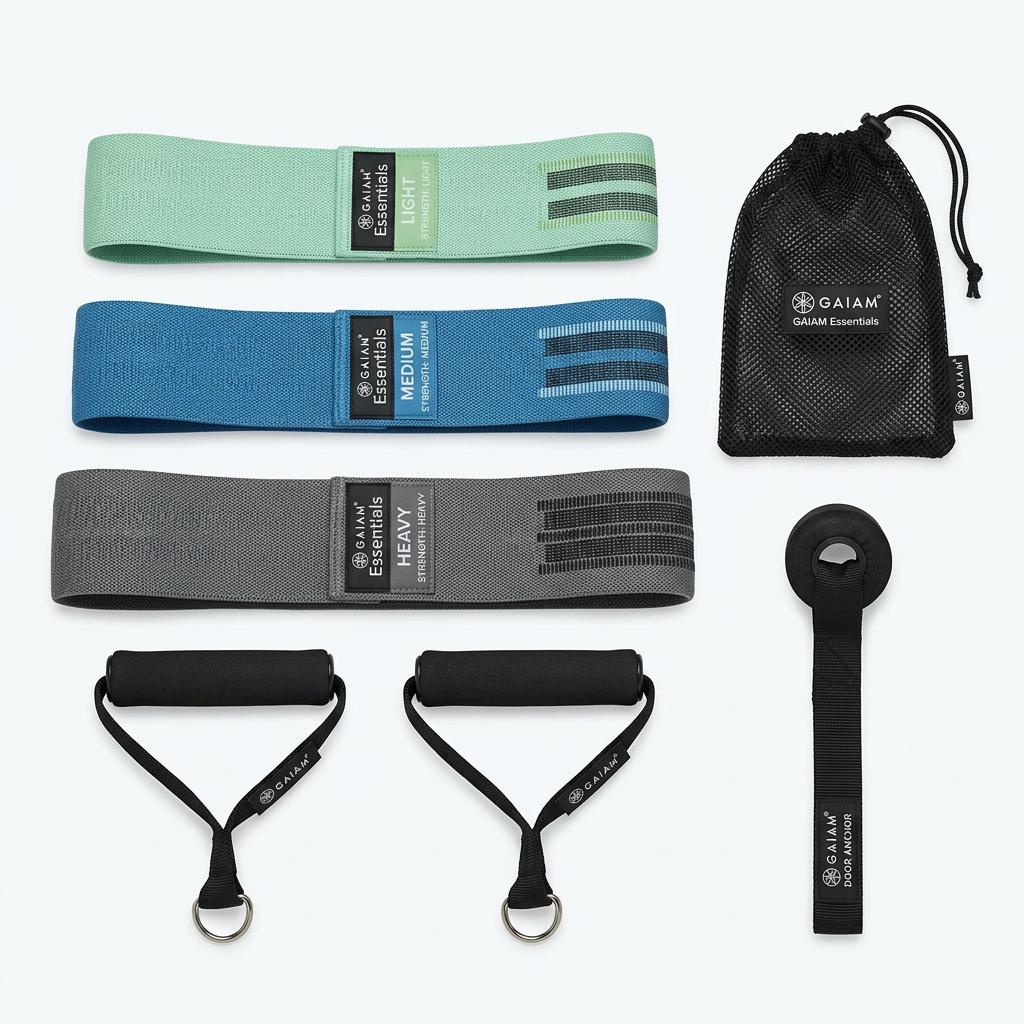 |
Gaiam Essentials Resistance Band Kit | $15-$25 | Best for Small Spaces | Check Price |
The gold standard in adjustable dumbbells for fast-paced circuit training with minimal equipment switching time.
A durable, budget-friendly kettlebell perfect for adding explosive movements to your circuit routines.
A highly adjustable, foldable weight bench that maximizes exercise variety in your circuit training.
An affordable, durable exercise mat that provides essential cushioning for floor-based circuit exercises.
A compact, fabric-based resistance band kit perfect for adding variety to small-space circuit training.
The PowerBlock Elite EXP Adjustable Dumbbells are the ultimate circuit training tool for home gyms. The unique selector pin system allows weight changes in under 3 seconds, keeping your heart rate elevated during fast-paced circuits. The expandable design means you can start with Stage 1 (5-50 lbs) and add expansion kits as you get stronger, making this a long-term investment in your fitness.
Check Price on Amazon
The Yes4All Neoprene Coated Kettlebell is the ideal budget addition to any circuit training home gym. The textured handle provides excellent grip security during high-rep kettlebell swings and snatches, while the neoprene coating lets you transition seamlessly between exercises without worrying about floor protection. The flat base ensures stable storage during rest periods.
Check Price on Amazon
The BalanceFrom GoFit All-Purpose Weight Bench transforms a basic home gym into a versatile circuit training station. With seven adjustable backrest positions from decline to full military press, you can hit every angle of chest, shoulder, and arm exercises. The foldable design means it can be tucked away after your workout, making it perfect for small home gym spaces.
Check Price on Amazon
The Amazon Basics High-Density Exercise Mat delivers exceptional value for circuit training enthusiasts who need reliable floor protection. The half-inch thickness provides adequate cushioning for bodyweight exercises, stretching, and core work, while the textured surface keeps you stable during mountain climbers and burpees. The included carrying strap makes it easy to move between storage and workout areas.
Check Price on Amazon
The Gaiam Essentials Resistance Band Kit is the perfect space-efficient addition to any home circuit training setup. The fabric loop bands won't roll or pinch like traditional latex bands, while the included door anchor and handles allow you to replicate cable machine exercises. This kit proves you don't need bulky equipment to get a comprehensive strength workout.
Check Price on Amazon