Apartment Home Gym Essentials Checklist: Start Here
The complete checklist for building an apartment-friendly home gym. Essential equipment, noise solutions, and space-savi...
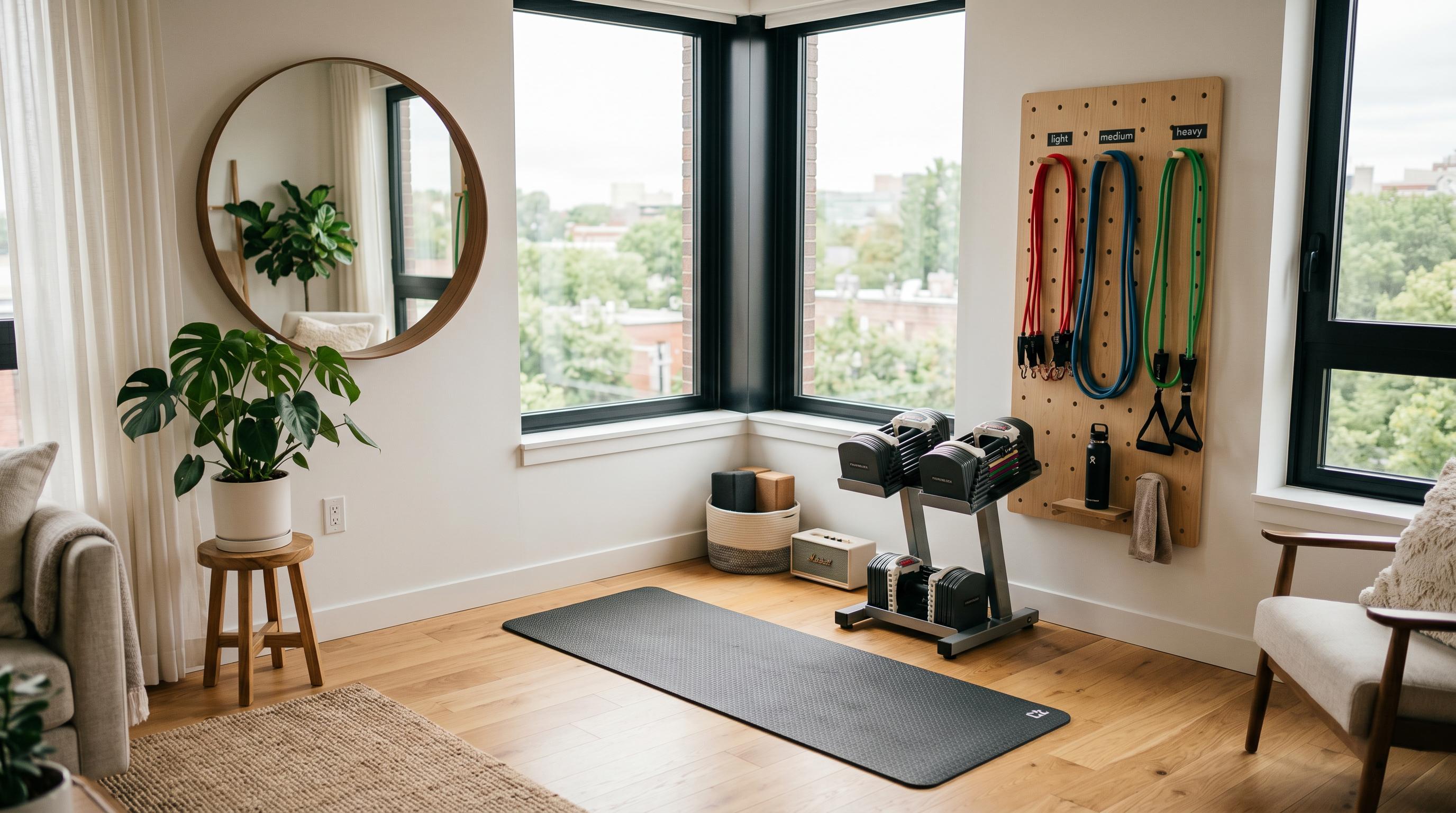
A practical guide to measuring, managing, and minimizing workout noise in apartments and shared buildings. Keep the peace while staying fit with research-backed strategies.
Noise is the single biggest obstacle to apartment fitness. A dropped dumbbell at 6 AM can turn a supportive neighbor into an angry one. A jumping jack session can earn you a stern note from building management. Understanding how workout noise travels—and how to control it—is essential for anyone training in a multi-unit building.
This guide provides a practical, research-backed framework for assessing your noise environment, measuring your workout's sound impact, and implementing effective mitigation strategies that keep you training hard without conflict.
Not all noise is equal. The acoustic engineers at NIST (National Institute of Standards and Technology) classify building noise into two categories, and understanding the difference is critical:
Airborne Sound
Structure-Borne Sound
The critical insight: Structure-borne noise is your enemy. That 50 lb dumbbell hitting your floor sends vibration directly through the floor joists into your neighbor's ceiling. It sounds like a bomb to them, even if it seems moderate to you.
| Building Type | Floor/Ceiling Assembly | Noise Transmission Risk |
|---|---|---|
| Post-war brick/concrete | Thick concrete slabs | Moderate—concrete dampens well |
| Mid-century wood frame | Wood joists + plaster | High—wood transmits vibration efficiently |
| Modern slab construction | Thin concrete + tile | Very high—rigid surfaces reflect sound |
| High-rise luxury | Engineered floors, insulation | Low—built with acoustic isolation |
If you do not know your building type, assume the worst and plan accordingly.
Before assessing workout noise, understand your starting point.
| Location | Measurement | Purpose |
|---|---|---|
| Your workout space | Ambient noise (HVAC, traffic) | Know your floor |
| Directly below your workout space | Ambient noise | Compare to workout noise later |
| Common hallway outside your door | Ambient noise | Assess hallway transmission |
| Adjacent walls (if shared) | Ambient noise | Assess lateral transmission |
Record measurements at different times: morning, afternoon, and evening.
The most effective noise mitigation is timing. Before planning workouts, learn:
A brief, friendly conversation with neighbors prevents far more conflict than any acoustic treatment.
Different exercises produce radically different noise signatures. Rate your planned workout on this scale:
| Noise Level | Exercises | dB Range* | Risk |
|---|---|---|---|
| Minimal | Yoga, stretching, planks, band work | 30–40 dB | Negligible |
| Low | Controlled dumbbell presses, rows, slow bodyweight | 40–55 dB | Low |
| Moderate | Moderate-paced cardio, light jumping, fast movements | 55–70 dB | Medium |
| High | Jumping jacks, burpees, running in place | 70–85 dB | High |
| Very High | Dropped weights, plyometric jumps, heavy barbell work | 85–110 dB | Very high |
\*Measured at floor level in typical apartment. Structure-borne transmission can amplify perceived noise 10–20 dB in adjacent units.
This simple test reveals your noise transmission reality:
If the rating is 3 or 4, you need significant mitigation for any jumping or weight work.
The equipment you choose matters more than any flooring solution.
Quiet Alternatives to Noisy Equipment:
| Instead of... | Try... | Noise Reduction |
|---|---|---|
| Jumping exercises | Step-ups on a platform | 80–90% |
| Running in place | Shadow boxing, band work | 90%+ |
| Dumbbell drops | Controlled eccentric lowering | 100% (no drop) |
| Olympic lifts | Slow, controlled strength movements | 80%+ |
| Jump rope | Resistance band cardio circuits | 90%+ |
| Plyometric jumps | Band-resisted movements | 85%+ |
Browse low-impact cardio equipment
Your floor is the primary transmission path to neighbors below. Layer these solutions:
Layer 1: Impact Absorption
| Product Type | Thickness | Cost (per sq ft) | Effectiveness |
|---|---|---|---|
| EVA foam puzzle mats | 3/8"–3/4" | $0.80–$2.00 | Basic—good for light work |
| Rubber stall mats | 3/4" | $2.00–$3.50 | Excellent—heavy and dense |
| Rubber gym flooring rolls | 3/8"–1/2" | $3.00–$6.00 | Very good—purpose-built |
| Cork underlayment + rubber | 1/4" + 3/8" | $4.00–$8.00 | Premium—best isolation |
Layer 2: Decoupling (Advanced)
For serious lifters, a floating platform decouples your equipment from the building structure:
Shop rubber gym mats | Browse foam puzzle mats
Train when noise impact is minimized:
| Time Window | Suitability | Notes |
|---|---|---|
| 6:00–7:00 AM | Bodyweight/yoga only | Most buildings have quiet hours until 7 AM |
| 7:00–9:00 AM | Moderate workouts | Neighbors likely awake and preparing for work |
| 9:00 AM–5:00 PM | Full workouts | Ideal window—most neighbors away |
| 5:00–8:00 PM | Moderate workouts | Many people home; avoid high-impact |
| 8:00–10:00 PM | Bodyweight/yoga only | Transition to quiet hours |
| 10:00 PM–7:00 AM | Stretching only | Strict quiet hours in most leases |
Where in your apartment you train affects noise transmission:
| Location | Advantages | Disadvantages |
|---|---|---|
| Ground floor | No neighbors below | Often concrete (harder on joints) |
| Interior room (no shared walls) | Fewer neighbors affected | Often smaller, poor ventilation |
| Over garage/basement | No occupied space below | May be cold, unfinished |
| Over your own kitchen/living room | You control the noise below | Still loud below |
| Avoid: over bedrooms | — | Guaranteed complaints |
If you have any choice, position your workout area:
Simple modifications reduce noise significantly:
| Modification | Noise Reduction | Cost |
|---|---|---|
| Urethane-coated dumbbells vs. iron | 60–70% drop noise | $20–$50 premium |
| Bumper plates vs. iron plates | 70–80% drop noise | $50–$100 premium |
| Magnetic spin bike vs. chain-drive | 50%+ | $100–$300 premium |
| Belt-drive rower vs. air rower | 60%+ | $200–$400 premium |
| Deadlift jack/pad | 40–50% | $30–$60 |
Just like financial budgeting, create a "noise budget" for your building:
High-impact exercises: 10 minutes max per session
Moderate-impact exercises: 20 minutes max per session
Low/no-impact exercises: Unlimited
Structure your workouts so high-impact work is brief and concentrated during optimal time windows. Follow with low-impact strength and flexibility work.
For unavoidable noise (heavy training days), a simple system prevents surprises:
If you are already in conflict with neighbors or management:
Most noise complaints are resolved permanently with flooring + timing adjustments + communication.
Training in an apartment does not mean accepting conflict with neighbors. A systematic noise assessment—measuring your environment, understanding your workout's acoustic profile, and implementing layered mitigation—lets you train hard while maintaining positive neighbor relations.
The golden rule: It is always cheaper to buy better flooring than to find a new apartment. Invest in noise mitigation before it becomes a problem, and you will never have to choose between fitness and peaceful community living.
For equipment that minimizes noise, see our equipment size database for flooring and space requirements, and check our apartment gym essentials checklist for quiet equipment recommendations.