FTC Disclosure: SnugGym.com is reader-supported. We may earn a commission through affiliate links at no extra cost to you. This helps fund our independent analysis and reviews.
NordicTrack vs Peloton: Which Premium Fitness Brand Wins in 2025?
When you're investing thousands of dollars in home fitness equipment, the choice between two industry giants — NordicTrack and Peloton — can feel overwhelming. Both brands dominate the premium connected fitness space, yet they approach home workouts from distinctly different angles. NordicTrack, with decades of heritage in traditional fitness equipment, has pivoted aggressively into connected fitness through its iFit platform. Peloton, the disruptive newcomer that went from startup to household name, built its empire on cult-like community engagement and slick, Apple-esque hardware design.
This comprehensive comparison examines every dimension that matters for your purchasing decision: brand philosophy, hardware quality, subscription value, content libraries, and long-term total cost of ownership. Whether you're eyeing an exercise bike, treadmill, or evaluating ecosystem lock-in, this research-backed analysis will help you make the right choice for your specific needs, space constraints, and budget.
Brand Background and Philosophy
NordicTrack: Legacy Meets Innovation
NordicTrack traces its origins to 1975 when it introduced the original NordicTrack ski machine, a cross-country skiing simulator that became iconic in American basements throughout the 1980s and 1990s. The brand changed hands multiple times before landing under ICON Health & Fitness (now iFIT Health & Fitness), one of the largest fitness equipment manufacturers globally. This parent company also owns ProForm, Freemotion, and Weider, giving NordicTrack access to massive manufacturing scale and decades of engineering expertise.
NordicTrack's philosophy centers on versatility and technology-forward hardware. Rather than focusing exclusively on one modality, the brand offers connected treadmills, bikes, ellipticals, rowers, and strength equipment — all unified under the iFit subscription ecosystem. Their equipment typically incorporates innovative mechanical features like auto-incline, auto-resistance, and even motorized decline on select treadmills, allowing iFit trainers to control your machine remotely during workouts.
Peloton launched in 2012 and shipped its first bike in 2014, founded by John Foley with a simple premise: bring the energy and accountability of boutique studio fitness into the home. The company went public in 2019 and saw explosive growth during the pandemic, becoming synonymous with connected fitness itself.
Peloton's philosophy is experience and community first, hardware second. While the bikes and treadmills are well-engineered, they're fundamentally delivery vehicles for the Peloton content ecosystem. The brand invested heavily in music licensing (though this has generated legal challenges), celebrity instructor development, and social features like leaderboards, high-fives, and hashtag communities. Peloton isn't selling exercise equipment — it's selling belonging, motivation, and a fitness identity.
At-a-Glance Comparison
| Criteria |
NordicTrack |
Peloton |
Winner |
| Price (entry bike) |
~$1,499 (S22i Studio) |
~$1,445 (Bike) |
NordicTrack (tie, slight edge) |
| Subscription cost |
iFit: $39/mo family / $15/mo individual |
$44/mo All-Access / $12.99 app |
NordicTrack |
| Hardware innovation |
Auto-incline/decline, rotating HD screens |
Premium build quality, automatic resistance |
NordicTrack |
| Content library depth |
Global workouts, Google Maps integration |
10,000+ classes, music-forward, live energy |
Peloton |
| Community engagement |
Growing but less active |
Leaderboards, tags, massive social presence |
Peloton |
| Product range |
Bikes, treadmills, ellipticals, rowers, strength |
Bikes, treadmills, Row, limited strength |
NordicTrack |
| Space efficiency |
Generally larger footprints |
More compact designs |
Peloton |
| Long-term value |
Lower ongoing costs, versatile hardware |
Higher resale, stronger brand loyalty |
Tie |
Overall Winner: Depends on priorities — NordicTrack for hardware versatility and value; Peloton for community and content experience.
The flagship bikes represent each brand's core offering and best showcase their respective strengths.
NordicTrack Commercial S22i Studio
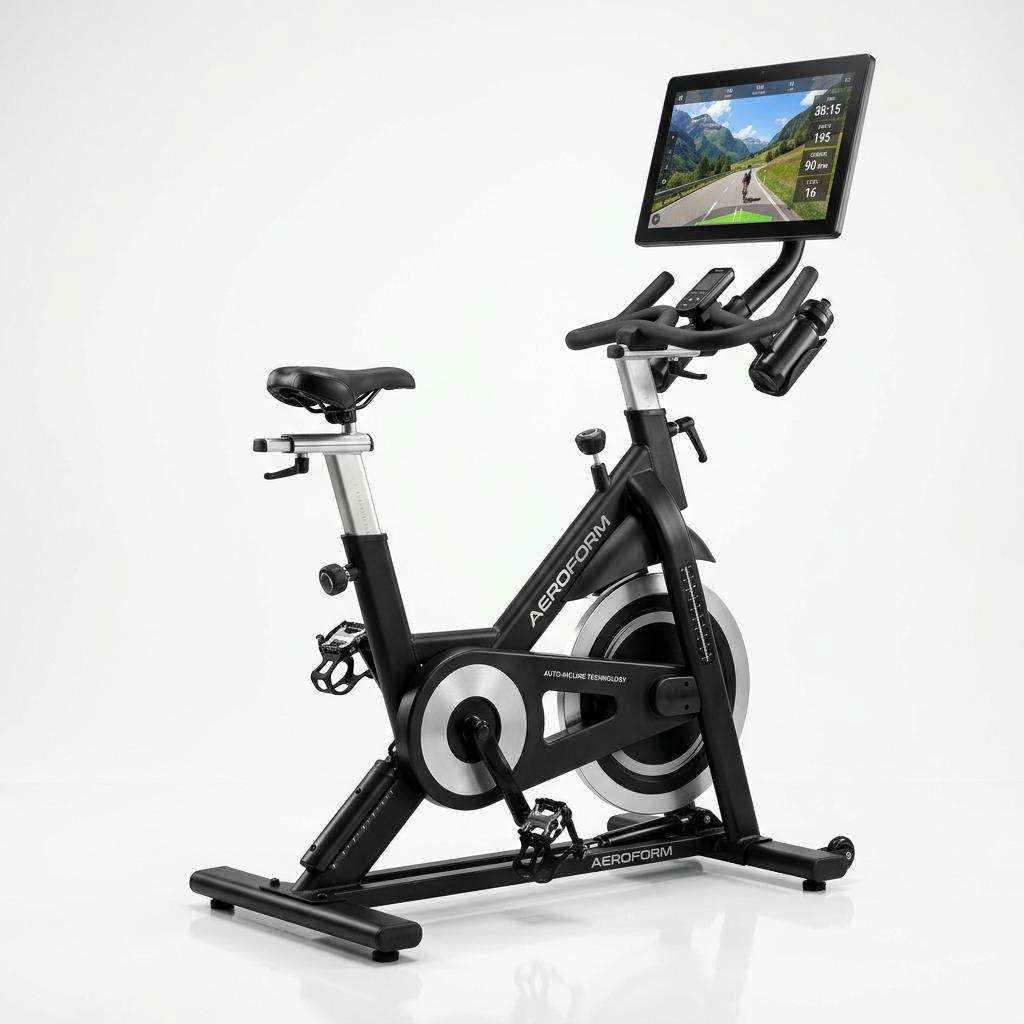
The S22i Studio is NordicTrack's premier connected bike, and it packs features that Peloton simply doesn't offer. The headline feature is motorized incline and decline — the bike frame physically tilts from -10% to +20%, simulating real-world terrain as you follow iFit routes through the Alps or Hawaiian coastlines. This isn't a gimmick; it dramatically changes muscle recruitment and workout intensity in ways a flat bike cannot replicate.
The S22i features a 22-inch HD touchscreen that rotates 360 degrees, enabling off-bike strength, yoga, and HIIT workouts. The bike includes a pair of 3-pound dumbbells for upper-body segments. The Silent Magnetic Resistance (SMR) system provides 24 digital resistance levels, and the AutoAdjust technology lets iFit trainers change your resistance remotely.
Build quality is solid with a 350-pound user capacity and commercial-grade steel frame, though fit and finish don't quite reach Peloton's premium standards. Some users report longer-term maintenance needs, particularly with the incline motor mechanism. Assembly is straightforward but requires two people due to the bike's 205-pound weight.
Peloton Bike+
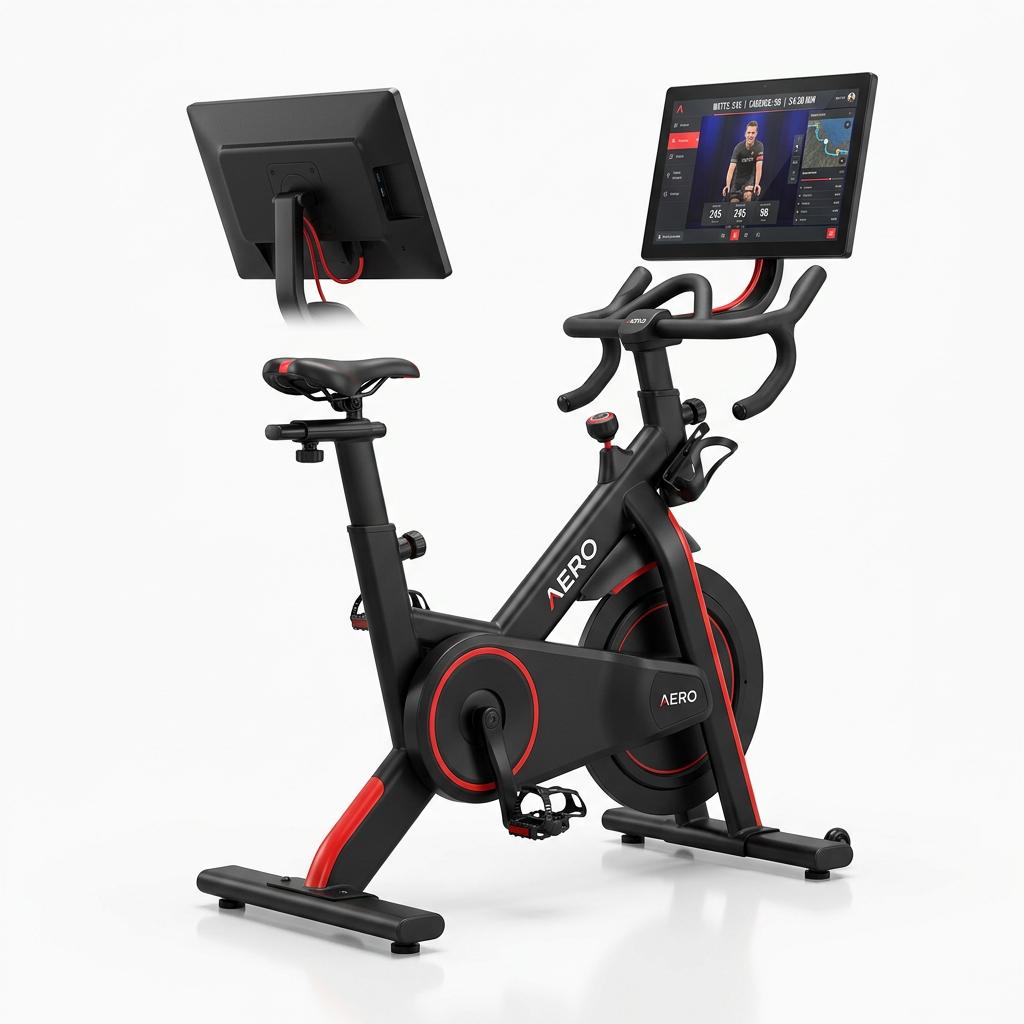
The Peloton Bike+ represents the evolution of the original Peloton Bike, addressing its most requested upgrades. The 23.8-inch HD touchscreen now rotates, finally enabling off-bike content consumption. The upgraded sound system delivers impressive audio quality, crucial for the music-driven class experience. Most significantly, the Bike+ introduces Apple GymKit integration, allowing one-tap Apple Watch pairing for heart rate monitoring, and an auto-follow resistance system that automatically adjusts to instructor cues.
Check price at Amazon
The Belt Drive with magnetic resistance delivers an exceptionally smooth, quiet ride — noticeably quieter than the S22i. The 100-pound flywheel provides substantial momentum that serious cyclists appreciate. Build quality is outstanding with automotive-grade powder coating and a 297-pound user capacity. Every touchpoint feels premium, from the resistance knob's detents to the shoe-cleat engagement.
Where the Bike+ falls short is feature breadth. There's no incline/decline capability. The 100 resistance levels offer fine granularity but no terrain simulation. You're paying primarily for the content experience and build refinement, not hardware innovation.
Treadmill Line Comparison
Both brands offer multiple treadmill models, but their approaches differ significantly.
NordicTrack Treadmills
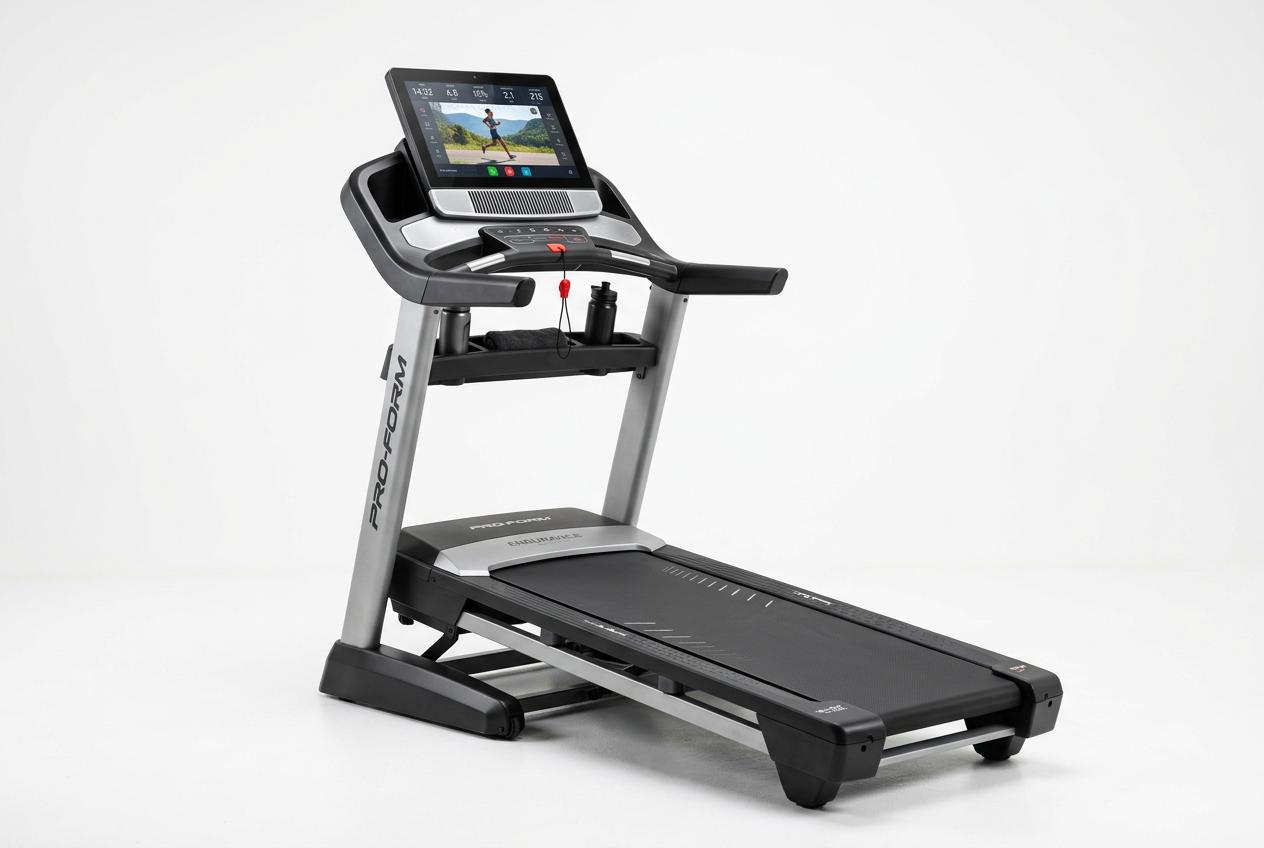
NordicTrack's treadmill lineup includes the Commercial 1750, 2450, 2950, and the incline trainer series (X22i, X32i). The Commercial 1750, often considered the best value, features:
- -3% decline to +12% incline (commercial models go higher)
- 14-inch HD touchscreen
- Folding SpaceSaver design with EasyLift assist
- 3.5 CHP DurX Commercial Plus motor
- 300-pound user capacity
- FlexSelect cushioning (adjustable deck firmness)
The incline trainers are genuinely unique in the market, offering up to 40% incline and -6% decline — essentially simulating mountain hiking and descent. No Peloton treadmill offers this range. The Google Maps integration through iFit allows you to run literally any street or trail worldwide with corresponding terrain simulation.
Peloton Treadmills
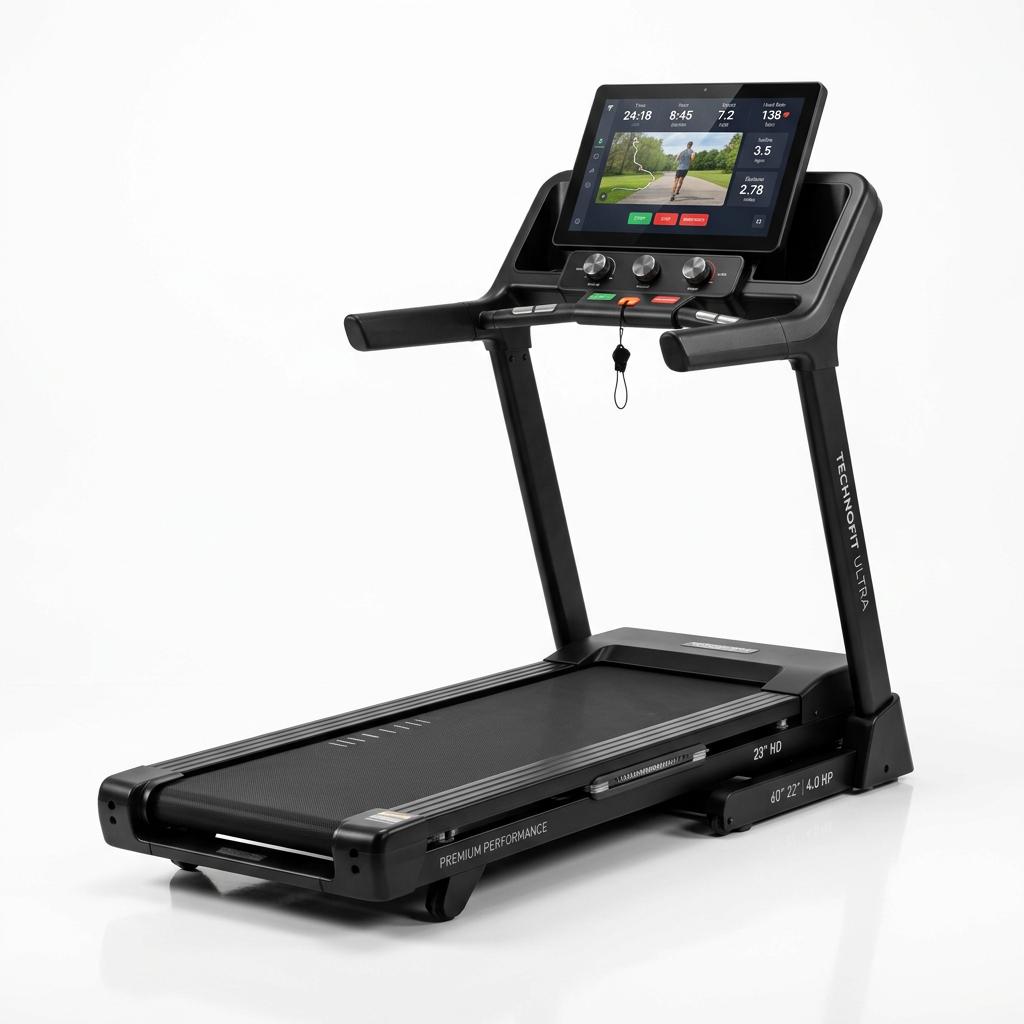
Peloton offers the Tread (the "original" slat-belt model, now called Tread+) and the newer standard Tread with traditional belt design. The standard Tread features:
- 23.8-inch HD touchscreen
- 0-12.5 mph speed range
- 0-12.5% incline (no decline)
- 59-inch running deck
- 300-pound user capacity
- Compact footprint relative to feature set
Check price at Amazon
The Tread+ (when available) uses an innovative slat-belt design with individual aluminum slats that provide superior shock absorption and a more responsive running feel. However, it has faced significant safety recalls and availability issues. Peloton's treadmill content integration is exceptional — running classes feature world-class coaches, curated playlists, and real-time metrics overlays that motivate powerfully.
Subscription Services: iFit vs Peloton App
The subscription is where these ecosystems truly differentiate, and it's arguably the most important factor in your long-term satisfaction.
iFit (NordicTrack)
iFit offers two tiers: Individual ($15/month, one profile, phone/tablet only) and Family ($39/month, five profiles, integrated with equipment). The content library includes:
- Studio classes: Cycling, running, strength, yoga, HIIT — fewer total classes than Peloton but growing rapidly
- Global workouts: Trainers lead workouts filmed in stunning locations worldwide — Patagonia, Bora Bora, Swiss Alps
- Google Maps integration: Draw any route on Google Maps and experience terrain-matched incline/decline
- Live events: Periodic live classes, though less frequent than Peloton
- AutoAdjust technology: Trainers control your machine's resistance, incline, and speed automatically
iFit's outdoor content is genuinely superior — the production quality of global workouts is cinematic, and the terrain-matched automation creates experiences Peloton cannot replicate. However, the studio class energy, music integration, and instructor star power lag behind Peloton. The user interface is functional but less polished.
Peloton Subscription
Peloton offers the App One ($12.99/month, limited features), App+ ($24/month, full app access, no equipment metrics), and All-Access ($44/month, equipment integration, unlimited profiles). The All-Access membership unlocks:
- 10,000+ on-demand classes across cycling, running, strength, yoga, meditation, stretching, and more
- 20+ live daily classes with real-time leaderboard competition
- Celebrity instructors with massive followings (Cody Rigsby, Robin Arzón, Alex Toussaint)
- Music-forward programming with themed classes by artist or genre
- Challenges, badges, and achievement tracking
- Stacking feature to queue multiple classes
- Just Work Out mode for non-equipment activities
Peloton's content library depth, live class energy, and community features are unmatched. The leaderboard creates competitive motivation that many users find essential. Music is integral to the experience, with explicit playlists and artist series. The app ecosystem extends beyond equipment to outdoor running, strength training, and meditation, making it valuable even without hardware.
The primary downside is cost — $44/month ($528/year) is significantly more than iFit's $39/month, and the price has increased historically. Music licensing disputes have also caused some popular classes to be removed, frustrating users.
Price Comparison and Total Cost of Ownership
Upfront Hardware Costs
| Equipment |
NordicTrack |
Peloton |
| Entry bike |
Commercial S22i: ~$1,499 |
Original Bike: ~$1,445 |
| Premium bike |
N/A at Bike+ tier |
Bike+: ~$2,495 |
| Entry treadmill |
EXP 7i: ~$1,099 |
Tread: ~$2,995 |
| Premium treadmill |
Commercial 2950: ~$2,499 |
Tread+: ~$4,295 |
NordicTrack consistently undercuts Peloton on upfront cost, often by $500-1,500 depending on the category. Frequent sales and financing promotions widen this gap further.
Subscription Costs (5-Year Ownership)
| Subscription |
Monthly |
5-Year Total |
| iFit Family |
$39 |
$2,340 |
| Peloton All-Access |
$44 |
$2,640 |
| Difference |
— |
Peloton costs $300 more |
Total 5-Year Cost (Premium Bike + Subscription)
| NordicTrack S22i |
Peloton Bike+ |
| Hardware |
$1,499 |
| 5-year subscription |
$2,340 |
| Total |
$3,839 |
| Savings with NordicTrack |
— |
The total cost of ownership strongly favors NordicTrack, with potential savings exceeding $1,200 over five years for comparable configurations. However, Peloton equipment typically retains higher resale value (40-50% vs 25-30% for NordicTrack), partially offsetting the difference if you plan to sell.
Hardware Quality and Durability
Build Standards
Peloton's hardware quality is demonstrably superior. The Bike+ uses automotive-grade finishes, precision-machined components, and tighter tolerances throughout. Touchscreens are responsive with excellent color accuracy. The overall aesthetic is minimalist and premium — equipment you'd happily display in a living room.
NordicTrack hardware is competent and functional but shows its mass-market manufacturing roots. Screens are good but not exceptional. Plastic components are more prevalent. The incline motors add complexity that may increase long-term maintenance needs. However, the underlying frames are robust commercial-grade steel, and the mechanical innovation (incline/decline) adds genuine functionality.
Warranty Comparison
| Component |
NordicTrack |
Peloton |
| Frame |
10 years |
5 years (Bike+) |
| Parts |
2 years |
1 year |
| Labor |
1 year |
1 year |
| Electronics |
2 years |
1 year |
NordicTrack offers superior warranty coverage, particularly on the frame and parts, reflecting ICON's confidence in their manufacturing scale and service infrastructure.
Noise Levels
For apartment dwellers and shared spaces, noise is a critical consideration:
- Peloton Bike+: Whisper-quiet operation — among the quietest stationary bikes available. Suitable for apartments with shared walls.
- NordicTrack S22i: Moderately quiet but the incline motor produces audible mechanical noise during adjustments. Slightly louder overall.
Treadmills from both brands generate significant noise and impact vibration, requiring proper flooring solutions in any shared living situation.
Space Requirements
| Equipment |
Footprint (L x W x H) |
Folding? |
| NordicTrack S22i |
55" x 21.9" x 57.4" |
No |
| Peloton Bike+ |
59" x 22" x 59" |
No |
| NordicTrack Commercial 1750 |
78.8" x 39.2" x 63" |
Yes (folds) |
| Peloton Tread |
68" x 33" x 62" |
No |
NordicTrack's folding treadmill design provides a significant advantage for space-constrained homes. Peloton equipment is generally more compact in its operating footprint but doesn't fold, requiring dedicated permanent space. Neither bike folds, though both have relatively small footprints compared to treadmills.
Who Should Choose NordicTrack?
NordicTrack is the better choice if you:
- Value hardware innovation over content polish — incline/decline and terrain simulation are genuinely differentiated features
- Want lower total cost of ownership without sacrificing connected fitness capabilities
- Prefer outdoor and global workout content — iFit's location-based workouts are best-in-class
- Need versatile equipment — the rotating screen and broader content types support full fitness programs
- Run or hike — treadmill incline trainers and Google Maps integration serve runners uniquely well
- Prefer flexibility — iFit's lower subscription cost and broader equipment ecosystem reduce lock-in
- Are self-motivated — you don't need leaderboard competition or live class energy to stay consistent
Who Should Choose Peloton?
Peloton is the better choice if you:
- Thrive on community and competition — the leaderboard, live classes, and social features are unmatched motivational tools
- Prioritize content quality and production value — Peloton's classes are simply better produced and more engaging
- Love music-driven workouts — artist series, themed rides, and playlist curation are central to the experience
- Want the premium experience — from unboxing to daily use, everything feels intentionally designed
- Value instructor connection — Peloton's instructors are genuine celebrities with devoted followings
- Need external motivation — the community accountability and live energy help inconsistent exercisers stick with it
- Plan to resell — Peloton's brand strength means significantly higher resale values
The Verdict
The NordicTrack vs Peloton decision ultimately comes down to what you value most: hardware innovation and value (NordicTrack) or content experience and community (Peloton).
NordicTrack offers more features per dollar, superior warranty coverage, unique hardware capabilities like incline/decline, and lower long-term subscription costs. The iFit platform delivers excellent outdoor content and auto-adjusting workouts that create experiences Peloton cannot match. For self-motivated users who prioritize functionality and value, NordicTrack is the smarter financial and practical choice.
Peloton delivers a superior holistic experience — better content, stronger community, more polished software, and premium hardware feel. The $1,200+ five-year cost premium purchases genuine value in motivation, engagement, and daily enjoyment. For users who've historically struggled with exercise consistency, Peloton's community and content may be the difference-maker that justifies the premium.
Neither choice is wrong. Both represent excellent connected fitness options that can transform your home workout routine. Your personal motivation style, budget flexibility, and space constraints should guide the final decision.
Last updated: January 2025. Prices and features subject to change. Verify current specifications with manufacturers before purchasing.
 Peloton Tread
 NordicTrack S22i Studi
 Peloton Bike+