Amazfit Brand Profile: Budget Smartwatches That Punch Above Their Weight
Research-backed profile of Amazfit, the Huami-owned brand disrupting the budget smartwatch market with feature-packed we...
Research-backed analysis from SnugGym about Matrix Fitness Brand Profile.
In This Article:
Matrix Fitness is the premium commercial fitness equipment brand of Johnson Health Tech (JHT), a Taiwanese multinational corporation headquartered in Taichung, Taiwan. Founded in 1975 by Peter Lo, Johnson Health Tech has grown from a small local manufacturer into one of the world's largest fitness equipment companies, with annual revenues exceeding $1 billion and manufacturing facilities across Asia.
JHT operates a portfolio of brands spanning multiple market segments:
This corporate structure gives Matrix Fitness significant advantages. The parent company's massive manufacturing scale enables Matrix to use higher-grade components and more sophisticated production techniques than standalone commercial brands. Shared engineering resources across the brand portfolio allow technology developed for residential markets to be refined and deployed in commercial products, and vice versa. The global distribution network ensures Matrix equipment is available in over 80 countries with localized service and support.
Matrix Fitness as a distinct brand was launched in 2001, making it relatively young compared to industry stalwarts like Life Fitness (founded 1968), Precor (1980), and Technogym (1983). Despite this shorter history, Matrix has established itself as a legitimate top-tier commercial brand through aggressive investment in industrial design, biomechanical engineering, and connected technology. The brand's rapid ascension reflects both Johnson Health Tech's manufacturing capabilities and strategic decisions to position Matrix as a design-forward alternative to the established commercial players.
Matrix Fitness is fundamentally a commercial brand, designing equipment first for the demands of 24-hour fitness centers, corporate wellness facilities, hospitality fitness centers, university recreation centers, and military bases. This commercial-first orientation shapes every aspect of Matrix product development:
Durability engineering — Commercial equipment must withstand 12–16 hours of daily use by users of varying sizes and skill levels. Matrix designs for 10–15 year lifespans under heavy commercial utilization, with frame structures, pivot points, and wear surfaces engineered accordingly. Residential users benefit from this durability surplus — Matrix equipment in home gyms is effectively overbuilt for its application.
Biomechanical precision — Commercial facilities serve diverse populations from deconditioned beginners to elite athletes. Matrix equipment undergoes extensive biomechanical testing to ensure safe, effective movement patterns across this full user spectrum. Ergonomic research informs seat positioning, handle angles, range of motion curves, and resistance profiles.
Serviceability — Commercial equipment must be serviceable by technicians in the field with minimal downtime. Matrix designs for modular component replacement, clear diagnostic procedures, and readily available parts. For residential users, this translates to equipment that can be repaired rather than replaced when components eventually wear.
Market position — Matrix occupies the premium tier of commercial fitness, competing directly with Life Fitness, Precor, Technogym, and Cybex (now owned by Life Fitness). Within this tier, Matrix differentiates through contemporary industrial design, competitive pricing relative to the established premium brands, and strong technology integration. The brand is particularly strong in the 24-hour gym segment (Anytime Fitness, Snap Fitness franchises) and corporate wellness environments.
Matrix Fitness organizes its product portfolio into distinct series targeting different commercial and residential applications:
Cardio Equipment:
Treadmills:
Ellipticals:
Bikes:
ClimbMills (C50) — Motorized stair climbers that replicate stair climbing with individual step control. More space-efficient than traditional stepmills and easier on knees.
S-Drive Performance Trainer — A self-powered sprint trainer that combines sled push, parachute resistance, and sprinting in one platform. Popular for athletic training environments.
Strength Equipment:
Ultra Series — Selectorized strength line with converging/diverging motion paths, independent moving arms, and integrated add-on weight systems. Contemporary aesthetic with heavy-gauge steel and premium upholstery.
Magnum Series — Plate-loaded and selectorized strength equipment with aggressive biomechanics for serious strength training. Popular in athletic performance facilities.
Connexus — Functional training ecosystem with peripheral stations, storage, and accessories for small group training and functional fitness programming.
Racks and Rigs — Modular rig systems for functional training, CrossFit-style programming, and small group training.
Matrix Fitness offers three console tiers across its cardio equipment, each representing a different level of technology integration:
XR Console — The base console with a 8.5" blue backlit LCD display. Provides workout programming, heart rate monitoring, and basic metrics. No app connectivity or entertainment features. Found on entry-tier equipment configurations.
XER Console — Mid-tier with a 10" touchscreen display. Adds app connectivity (including Netflix, YouTube, Facebook, and Instagram), WiFi, Bluetooth, and expanded workout programming. The XER represents the technology sweet spot for most facilities — meaningful connectivity without premium pricing.
XIR Console — Premium 16" touchscreen with the full technology suite including Sprint 8 HIIT programming, Virtual Active immersive video workouts, and comprehensive app integration. The XIR competes directly with Technogym's Live console and Life Fitness's SE3 HD console.
Sprint 8 — Matrix's proprietary HIIT programming integrated into XER and XIR consoles. Developed by exercise physiologist Phil Campbell, Sprint 8 guides users through 20-second high-intensity intervals with 90-second recovery periods, automatically adjusting resistance and incline. The program has been clinically validated to improve VO2 max, reduce body fat, and increase growth hormone response in as little as 3 sessions per week.
Virtual Active — Immersive video workouts that transport users to scenic locations worldwide. The video speed adjusts to the user's workout pace, creating an interactive experience on the XIR console. While not Peloton's live class experience, Virtual Active provides engaging content for facilities without the subscription costs of Peloton or iFit.
Workout Tracking Network (WTN) — Matrix's cloud-based facility management platform that enables workout data tracking, equipment usage analytics, and member engagement tools for commercial facilities. Not directly relevant to residential users but demonstrates Matrix's technology commitment.
Matrix Fitness equipment occupies the premium segment of the fitness market, with pricing that reflects commercial-grade construction and technology integration:
Residential pricing (when purchased for home use):
This pricing places Matrix above virtually all dedicated residential brands (NordicTrack, Sole, Bowflex, Horizon) and in direct competition with commercial-grade residential offerings from Life Fitness, Precor, and Technogym.
Value proposition: Matrix equipment typically costs 10–20% less than equivalent Life Fitness or Technogym products while offering comparable or superior technology integration. The Sprint 8 programming and Virtual Active content provide genuine value that competitors charge subscription fees for. For buyers specifically seeking commercial-grade equipment for home use, Matrix represents strong value within the premium tier.
Availability: Matrix Fitness sells primarily through commercial dealers and specialty fitness retailers. Unlike residential brands available on Amazon and at big-box stores, Matrix requires working with authorized dealers who provide delivery, assembly, and ongoing service. This dealer network ensures proper installation and service support but limits price competition.
While Matrix is fundamentally a commercial brand, the company does sell to premium residential customers through its dealer network. Residential buyers should understand several important considerations:
Space requirements — Commercial cardio equipment is larger than residential equivalents. A Matrix T75 treadmill requires significantly more floor space than a NordicTrack Commercial 1750. Ensure your gym space can accommodate the equipment footprint plus necessary clearance zones.
Power requirements — Commercial treadmills typically require dedicated 20-amp circuits — standard residential 15-amp outlets may not suffice. Verify your electrical infrastructure before purchasing. Some models can be configured for 120V residential power; others require 240V.
Weight and delivery — A Matrix T75 weighs 400+ pounds. Delivery and installation require professional handling — this is not equipment you unbox and wheel into place yourself. Delivery and installation costs ($300–$600) should be factored into the total purchase price.
Aesthetic considerations — Commercial equipment aesthetics are designed for facility environments, not home interiors. The industrial scale, large logos, and facility-oriented color schemes may not integrate with home decor as seamlessly as residential-branded equipment.
Dealer exclusivity — Matrix maintains authorized dealer relationships that limit discounting. You are unlikely to find Matrix equipment at significant discounts online. The dealer model provides service support but reduces pricing flexibility.
Matrix Fitness offers warranty coverage that reflects its commercial positioning:
Residential warranty (when sold for home use):
Light commercial warranty:
Full commercial warranty:
Service infrastructure: Matrix's dealer network provides the primary service channel for residential customers. This is both an advantage (professional technicians familiar with the equipment) and a limitation (service availability depends on local dealer presence). Major metropolitan areas generally have strong Matrix service coverage; rural areas may experience longer service response times.
For residential users, the lifetime frame warranty and 7-year parts coverage provide meaningful protection. However, after the 2-year labor warranty expires, service calls incur labor charges that can be substantial ($100–$150 per hour plus travel). Residential buyers should consider purchasing extended service contracts if available through their dealer.
Matrix vs. Life Fitness: Life Fitness holds the position of market leader in commercial fitness with decades of institutional presence and the broadest product catalog. Matrix competes through more contemporary industrial design, better standard technology integration (Sprint 8 and Virtual Active included at no subscription cost), and typically 10–15% lower pricing. Life Fitness wins on brand prestige, institutional relationships, and breadth of strength equipment. Matrix wins on design aesthetics, technology value, and elliptical innovation (Ascent Trainers).
Matrix vs. Precor: Precor pioneered elliptical technology and maintains strong positions in cardio equipment across commercial segments. Matrix and Precor are closely matched in cardio equipment quality and pricing. Precor's elliptical motion (CrossRamp adjustable incline) differs from Matrix's approach — both are excellent, with preference depending on individual biomechanics. Matrix's Sprint 8 programming is unique; Precor's strength equipment line is more developed.
Matrix vs. Technogym: Technogym occupies the ultra-premium position in commercial fitness with Italian design heritage and exceptional industrial design. Technogym equipment costs 30–50% more than equivalent Matrix products. The gap is justified for high-end hospitality and luxury wellness environments where equipment serves as interior design elements. For performance-focused facilities and serious home gyms, Matrix offers comparable function at significantly lower cost.
Matrix vs. Cybex (Life Fitness): Cybex, now part of Life Fitness, was historically known for exceptional biomechanics in strength equipment. Matrix's Ultra Series selectorized equipment compares favorably with Cybex in biomechanical quality while offering more contemporary aesthetics and better technology integration.
Matrix Fitness equipment is the right choice for:
Home gym owners seeking commercial-grade durability — If you want equipment that will last 15–20 years under residential use conditions, Matrix's commercial engineering provides genuine value over residential brands with 5–10 year lifespans. The warranty coverage supports this long-term ownership model.
Serious trainees who value biomechanical quality — Matrix equipment is engineered for effective, safe movement across diverse populations. If you have experienced discomfort or poor movement quality on residential equipment, Matrix's biomechanical precision may justify the premium.
Technology-interested users who dislike subscriptions — Sprint 8 and Virtual Active provide engaging, effective programming without ongoing subscription fees. Unlike Peloton (monthly subscription required) or NordicTrack (iFit subscription for full features), Matrix includes its core technology content in the purchase price.
Athletes and performance-focused trainees — The S-Drive Performance Trainer, Ascent Trainers, and Sprint 8 programming serve athletic development needs that most residential equipment does not address. Small-group training facilities and athletic performance centers find Matrix's functional training products particularly valuable.
Buyers who value professional installation and service — The dealer network model ensures equipment is properly installed, calibrated, and serviceable over its lifespan. If you prefer professional handling over DIY assembly and self-service, Matrix delivers.
Not recommended for: Budget-conscious buyers, users with limited space, those seeking streaming fitness class integration (Peloton-style), or buyers who prefer online discount purchasing over dealer relationships.
Matrix Fitness represents a compelling option in the premium fitness equipment market — a relatively young brand backed by one of the world's largest fitness equipment manufacturers, offering commercial-grade quality with competitive pricing and strong technology integration. The Johnson Health Tech parent company provides manufacturing scale, engineering resources, and global distribution that standalone brands cannot match.
For home gym owners specifically, Matrix makes sense if you are committed to commercial-grade equipment for long-term ownership, value included technology content over subscription models, and have adequate space, budget, and electrical infrastructure. The equipment is genuinely overbuilt for residential use, which means exceptional durability but also means you are paying for capability you will never fully utilize.
The primary alternatives to consider are Life Fitness (comparable quality, higher price, stronger brand prestige), Precor (comparable quality and price, different elliptical technology), and Technogym (superior design at significantly higher cost). Matrix occupies a strong value position within this competitive set — commercial-grade equipment with technology integration at prices 10–20% below the category leaders.
Work with an authorized Matrix dealer to experience the equipment firsthand, discuss space and electrical requirements, and understand total cost of ownership including delivery, installation, and service. This is a significant purchase that deserves in-person evaluation before committing.
FTC Disclosure: This article contains affiliate links. If you purchase through these links, we may earn a commission at no additional cost to you. Our recommendations are based on independent research and editorial judgment.
Evidence Mode: Research-Backed
Written by the SnugGym Editorial Team
| Image | Product | Price | Badge | Link |
|---|---|---|---|---|
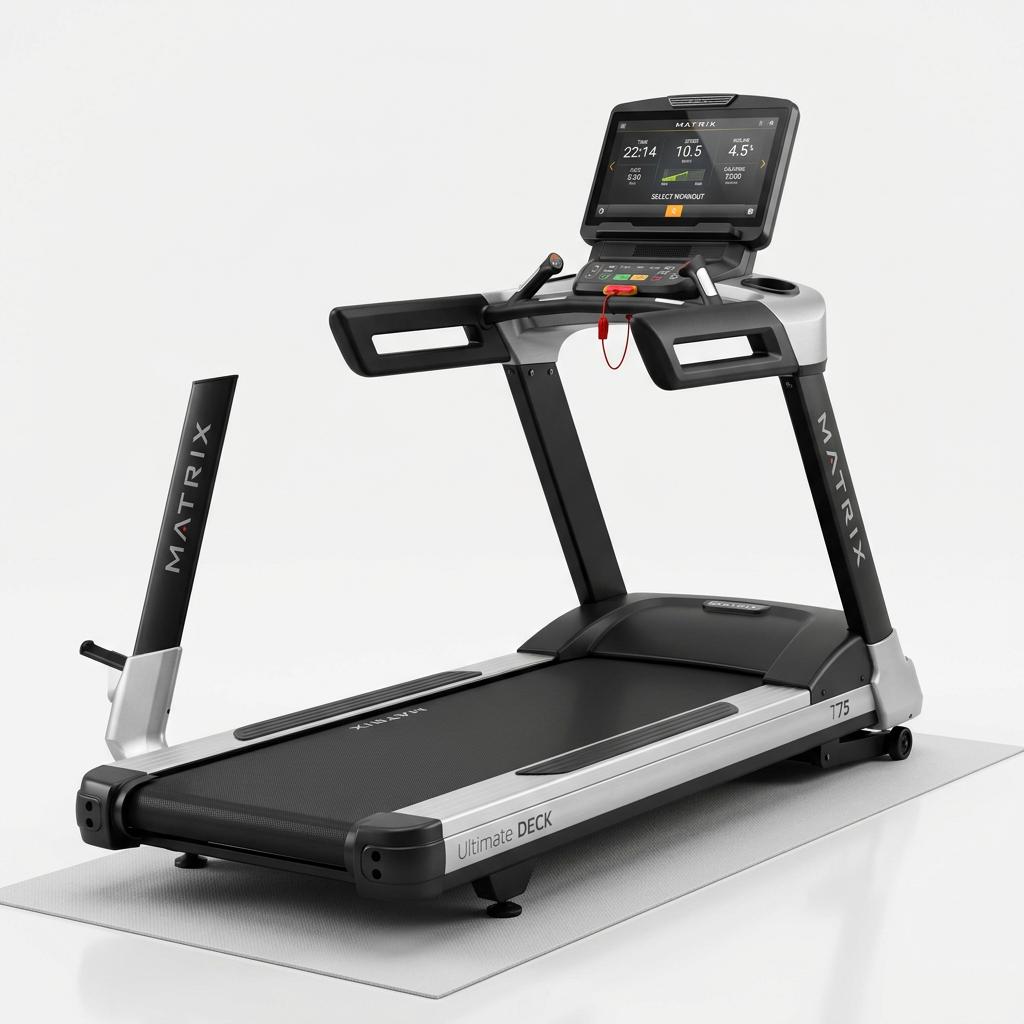 |
Matrix Fitness T75 Treadmill | $4,500-$6,500 | Premium Treadmill | Check Price |
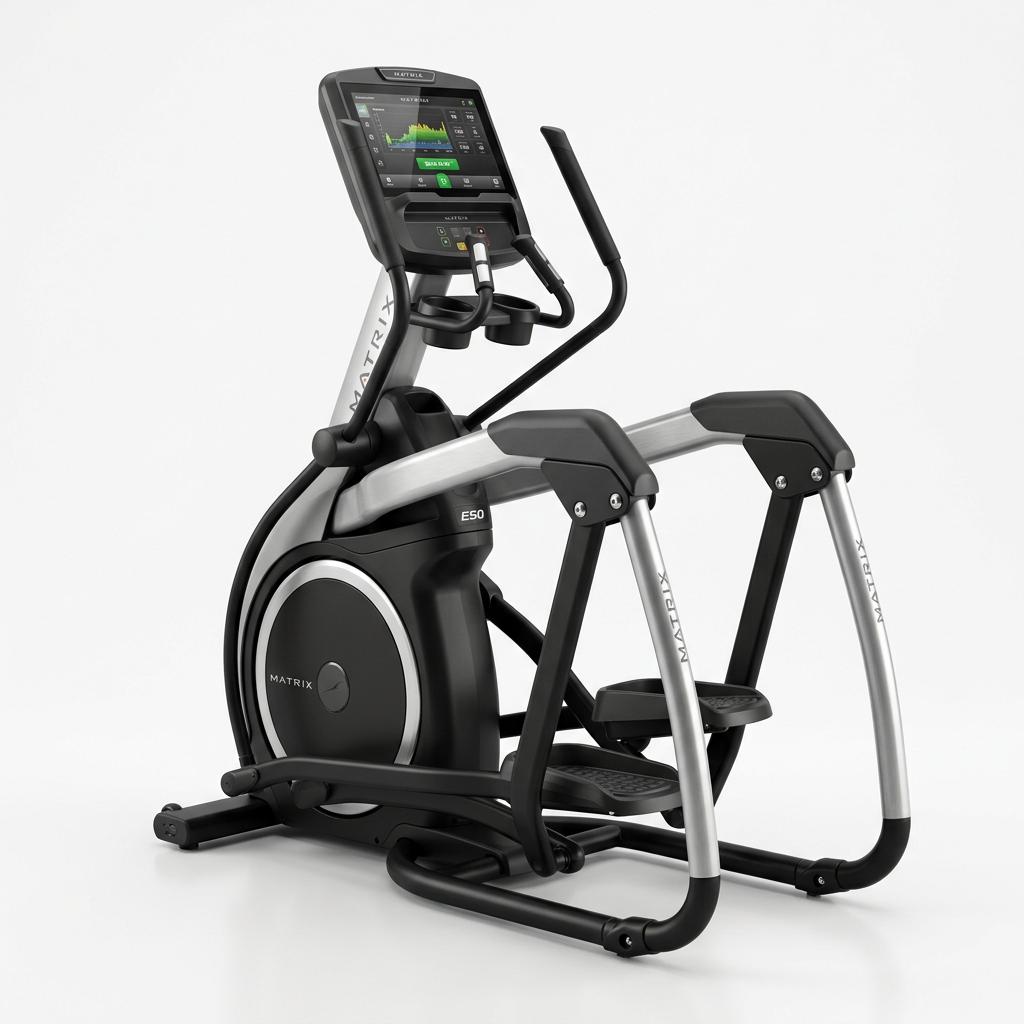 |
Matrix Fitness E50 Elliptical | $3,500-$5,500 | Best Premium Elliptical | Check Price |
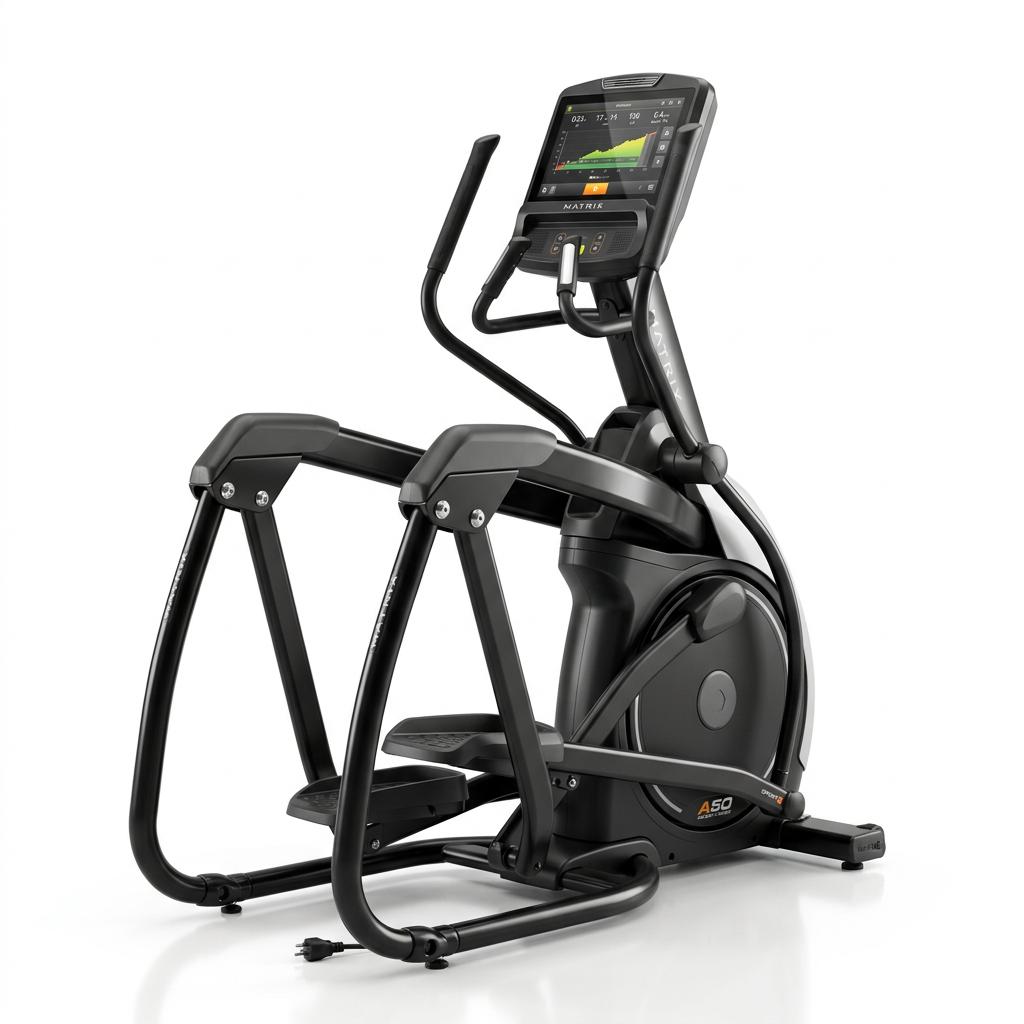 |
Matrix Fitness A50 Ascent Trainer | $4,000-$6,000 | Most Versatile Cross-Trainer | Check Price |
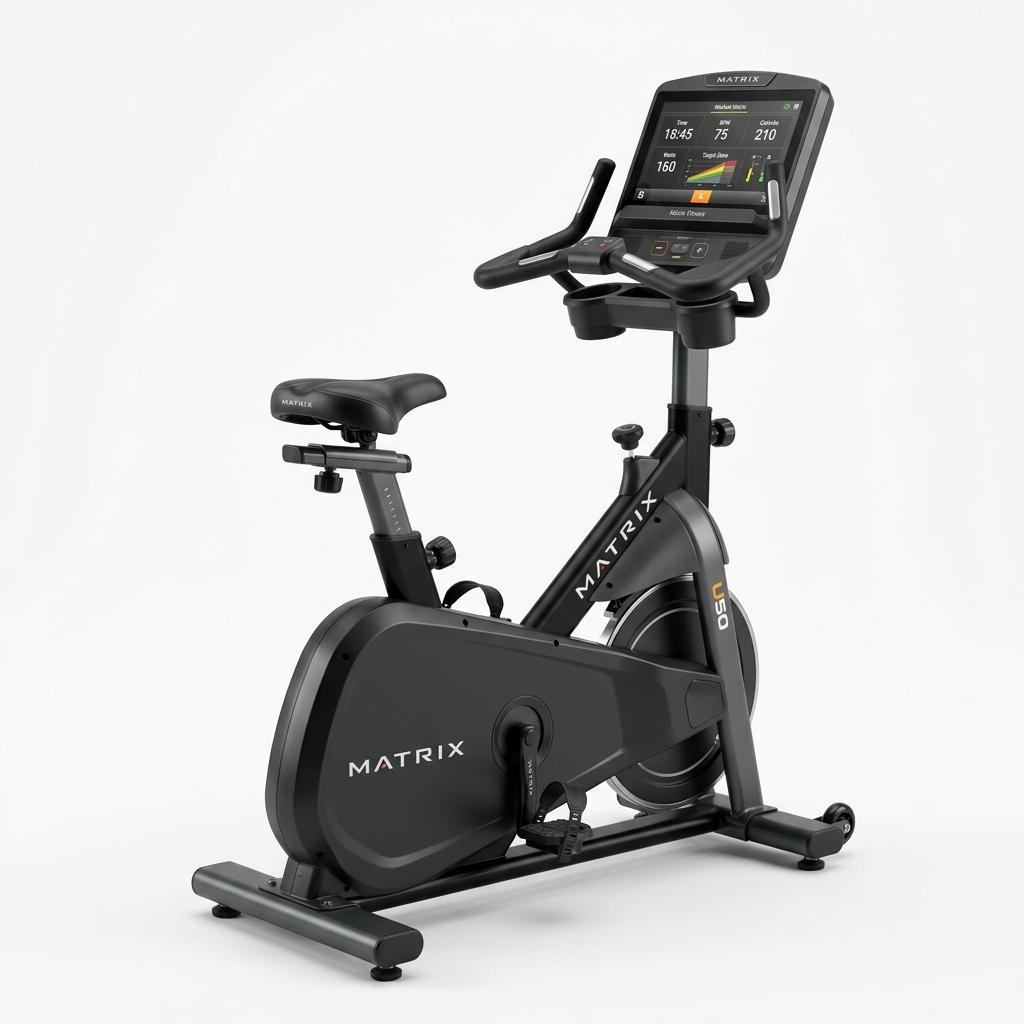 |
Matrix Fitness U50 Upright Bike | $2,000-$3,000 | Best Premium Upright Bike | Check Price |
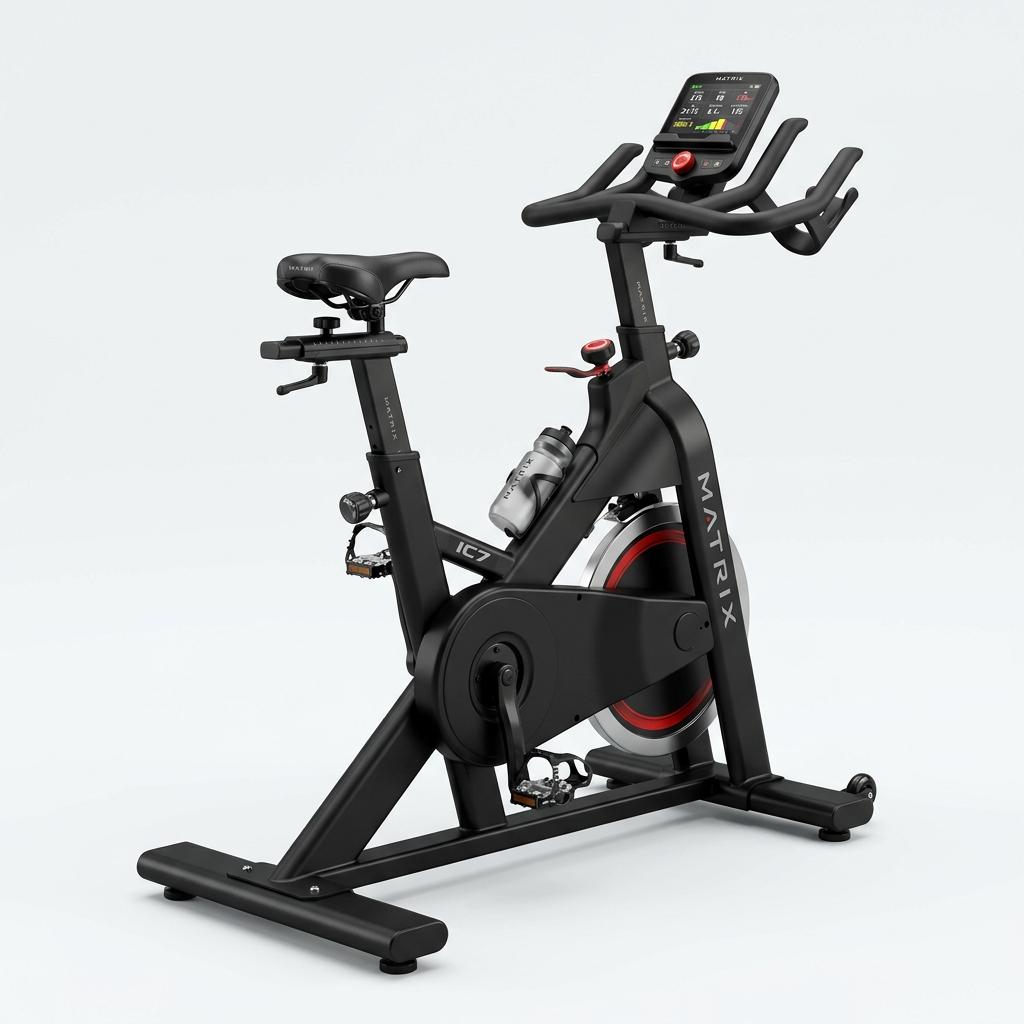 |
Matrix Fitness IC7 Indoor Cycle | $2,500-$3,500 | Best Commercial Indoor Cycle | Check Price |
The T75 Treadmill combines Matrix's Ultimate Deck cushioning with a powerful motor and immersive HD console for the ultimate home running experience.
The E50 Elliptical features Matrix's Suspension Elliptical Technology and Exact Force induction brake for a remarkably smooth and natural cross-training experience.
The A50 Ascent Trainer adapts to your natural movement with a variable stride path and zero-friction suspension design for a unique full-body cardio workout.
The U50 Upright Bike combines Matrix's commercial build quality with a compact footprint and ergonomic design for an efficient, comfortable cycling workout.
The IC7 Indoor Cycle delivers studio-quality spin classes at home with accurate power measurement and a precision aluminum flywheel for an authentic road feel.
The Matrix Fitness T75 Treadmill represents the pinnacle of home running technology, featuring the revolutionary Ultimate Deck cushioning system that provides a responsive yet forgiving running surface. The extra-large HD touchscreen console transforms every workout into an immersive journey through virtual destinations worldwide. Backed by a lifetime warranty on the motor and frame, the T75 is built to be the last treadmill you'll ever need to buy.
Check Price on Amazon
The Matrix Fitness E50 Elliptical showcases the brand's commitment to biomechanical excellence with its patented Suspension Elliptical Technology that eliminates wheel tracks for a smoother, more natural stride. The Exact Force induction brake system provides instant, precise resistance changes without the mechanical wear of traditional friction systems. For home gym owners who demand the absolute best in cross-training technology, the E50 is a worthwhile investment.
Check Price on Amazon
The Matrix Fitness A50 Ascent Trainer is unlike any other cardio machine, featuring a revolutionary variable stride that automatically adapts to your movement from short stepper-like motions to long elliptical strides. The zero-friction suspension design delivers the smoothest possible feel while reducing mechanical wear to virtually nothing. For users seeking a low-impact, total-body cardio solution that adapts to their body rather than forcing conformity, the A50 stands in a class of its own.
Check Price on Amazon
The Matrix Fitness U50 Upright Bike brings the cycling studio experience home with its precision-engineered drivetrain and ergonomically optimized riding position. The gel saddle and multiple adjustment points ensure comfortable positioning for riders of all sizes, while the XR console tracks essential metrics and even provides wireless device charging. Its compact footprint makes the U50 an excellent choice for home gyms where space is at a premium.
Check Price on Amazon
The Matrix Fitness IC7 Indoor Cycle is engineered for serious cyclists and spin enthusiasts who demand accurate power data and road-like feel from their indoor training. The WattRate TFT console displays precise wattage output, cadence, and heart rate for data-driven workouts. The precision-milled aluminum flywheel and maintenance-free belt drive deliver a pedal stroke that rivals outdoor cycling, making the IC7 the ultimate tool for off-season training and fitness improvement.
Check Price on Amazon