The 5 Best Ab Benches for Home Gyms in 2025: Decline & Adjustable Benches Tested
Research-backed guide to best ab benches home for small-space home gyms....
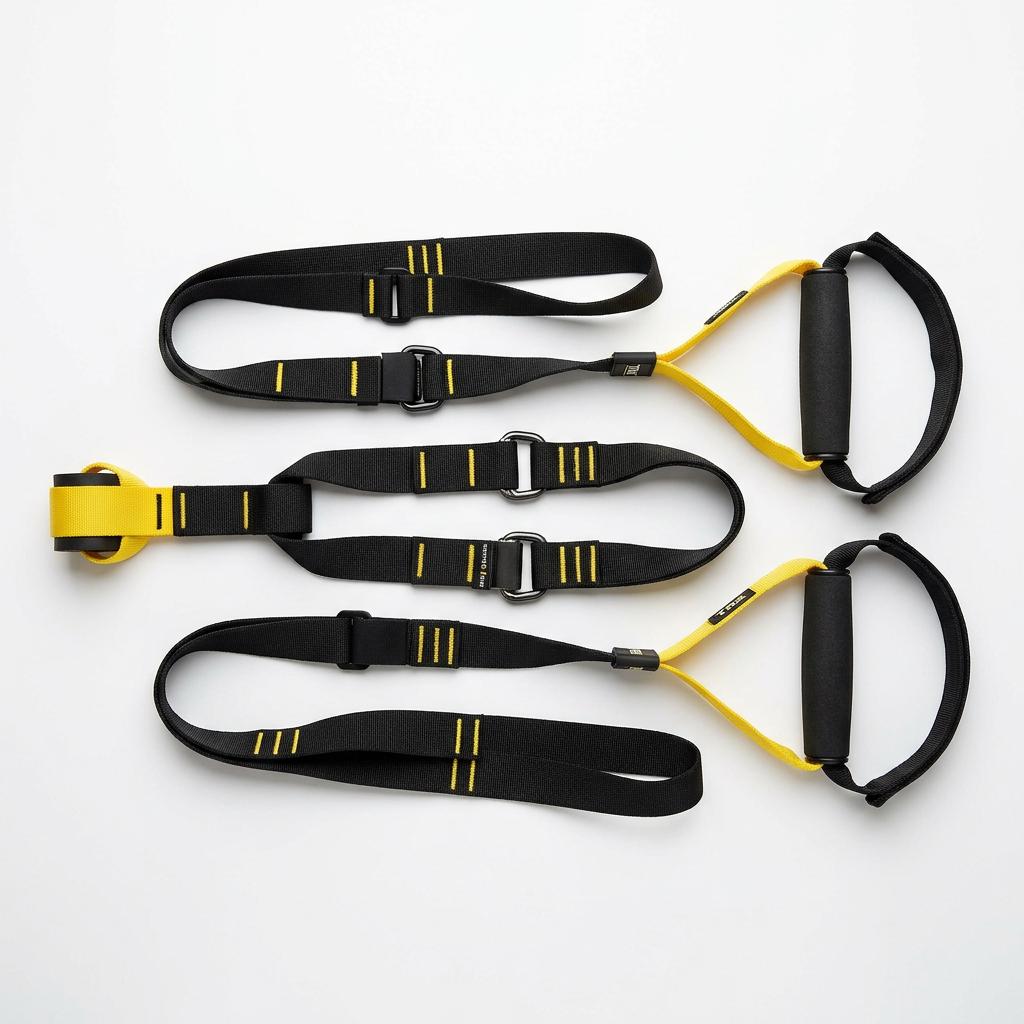
Learn what suspension training is, its history, scientific benefits, key terminology, and how to get started. The definitive glossary from SnugGym.
Suspension training has evolved from military innovation to mainstream fitness methodology, yet confusion persists about what exactly it is, how it works, and who should use it. This glossary provides definitive explanations of suspension training concepts, equipment, exercises, and terminology for beginners and experienced practitioners alike.
Suspension Training: A form of resistance exercise that uses a system of straps anchored to an overhead point, with the user gripping handles or placing feet in cradles to perform bodyweight movements. By adjusting body angle relative to the anchor, the user increases or decreases the effective resistance.
The key differentiator of suspension training is the instability element — because the straps are not rigid like a bar or machine, the body must continuously stabilize during exercises, resulting in greater core and stabilizer muscle activation compared to fixed-equipment alternatives.
Suspension training as we know it began with Randy Hetrick, a U.S. Navy SEAL squadron commander. Deployed with limited training equipment, Hetrick created the first suspension trainer using a jiu-jitsu belt and parachute webbing. He used it to maintain strength during deployments in remote locations.
| Year | Milestone |
|---|---|
| 1997 | First prototype created from parachute webbing and belt |
| 2001 | Continued development at Stanford MBA program |
| 2004 | TRX brand launched commercially |
| 2008 | First peer-reviewed suspension training research published |
| 2010–2015 | Rapid adoption in military, professional sports, and consumer markets |
| 2016–present | Competing brands emerge; methodology enters mainstream fitness |
While "TRX" has become synonymous with suspension training (similar to "Kleenex" for tissues), the methodology now encompasses multiple brands and designs:
| Brand | Design Philosophy | Key Differentiator |
|---|---|---|
| TRX | Single-anchor, premium build | App ecosystem, 5-year warranty |
| Lifeline | Split-anchor independence | Independent strap movement |
| PACEARTH | Budget, high capacity | 400-lb capacity at entry price |
| Amazon Basics | Minimal, functional | Lowest cost entry point |
Suspension training uses gravity and body weight as resistance. Unlike free weights where resistance is constant, suspension training resistance varies continuously based on:
| Factor | Effect on Resistance | Example |
|---|---|---|
| Body angle (steeper = harder) | Increases effective load | Parallel to floor = 50–60% body weight |
| Strap length (shorter = harder for rows) | Changes leverage | Short straps increase row difficulty |
| Single-limb vs. double-limb | Increases load per limb | Single-arm row = 100% body weight on one arm |
| Tempo (slower = harder) | Increases time under tension | 3-second eccentric increases difficulty without angle change |
The defining characteristic of suspension training is unstable support. Unlike a fixed pull-up bar or bench, suspension straps move in all planes. This instability:
| Term | Definition |
|---|---|
| Anchor point | The fixed overhead structure where straps attach (door, wall, ceiling, beam) |
| Door anchor | A wedge-shaped attachment that secures straps in a closed door without hardware |
| Suspension anchor | A loop or carabiner system for attaching to wall mounts, beams, or outdoor structures |
| Cam buckle | The adjustment mechanism that changes strap length (TRX uses barrel-style cams) |
| Foot cradle | The fabric loop at handle base where feet insert for lower-body and core exercises |
| Split-anchor | A design where each strap attaches independently (Lifeline Jungle Gym XT) |
| Single-anchor | A design where both straps converge at one attachment point (TRX) |
| Term | Definition |
|---|---|
| Atomic push-up | Push-up with feet in straps, adding a knee tuck (pike) at the top |
| TRX row | Horizontal pulling exercise with body angled beneath the anchor |
| Y-flye | Shoulder prehabilitation exercise forming a Y shape with arms |
| T-flye | Rear deltoid exercise forming a T shape with arms |
| Pike | Hip elevation position where body forms an inverted V |
| Body saw | Plank variation where feet in straps slide forward and back |
| Sprinter start | Lunge position with rear foot in strap, simulating sprint drive phase |
| Term | Definition |
|---|---|
| Angle adjustment | Changing body position relative to anchor to modify resistance |
| Progression | Systematic increase in exercise difficulty over time |
| Regression | Decreasing exercise difficulty (e.g., steeper angle for beginners) |
| Time under tension (TUT) | Total duration muscles are actively loaded during a set |
| Eccentric phase | The lowering portion of an exercise (typically 2–3 seconds) |
| Concentric phase | The lifting portion of an exercise (typically 1–2 seconds) |
| Isometric hold | Static position where muscle length does not change (e.g., plank) |
| Instability training | Exercise performed on unstable surfaces to increase stabilizer activation |
| Study | Findings | Year |
|---|---|---|
| Gaetz et al. | Suspension push-ups produce 40% greater core activation than floor push-ups | 2014 |
| Calatayud et al. | Suspension training achieves muscle activation comparable to machine training at appropriate angles | 2020 |
| Ko et al. | 8-week suspension training program increased upper body strength by 15% in untrained adults | 2021 |
| Exercise | Suspension Activation | Stable Equivalent | Increase |
|---|---|---|---|
| Push-up | 95% MVC rectus abdominis | 68% MVC (floor) | +40% |
| Plank | 88% MVC external oblique | 62% MVC (floor) | +42% |
| Row | 72% MVC lumbar multifidus | 51% MVC (bench) | +41% |
Source: Sports Biomechanics meta-analysis, 2022
Research demonstrates suspension training improves:
| Outcome | Evidence Level | Magnitude |
|---|---|---|
| Core stability | Strong | Large effect (d = 0.89) |
| Balance/proprioception | Strong | Moderate–Large (d = 0.63) |
| Functional movement screen scores | Moderate | Moderate (d = 0.54) |
| Shoulder stability | Moderate | Moderate (d = 0.48) |
| Lower back pain reduction | Emerging | Small–Moderate |
| Budget | Recommendation | Why |
|---|---|---|
| Under $50 | PACEARTH Suspension Trainer | 400-lb capacity, extension strap included |
| $50–$100 | Lifeline Jungle Gym XT | Split-anchor versatility |
| $100–$170 | TRX All-in-One | 5-year warranty, app ecosystem |
Door anchor (easiest, no tools):
Safety check: The door frame must be solid wood or MDF. Hollow-core doors will not support the load.
Master these five exercises before advancing:
| Exercise | Purpose | Difficulty |
|---|---|---|
| TRX Row | Pulling foundation | Beginner |
| TRX Push-Up | Pushing foundation | Beginner |
| TRX Squat | Lower body | Beginner |
| TRX Plank | Core stability | Beginner |
| TRX Face Pull | Shoulder health | Beginner |
See our Complete Suspension Training Guide for full exercise tutorials and programs.
| Profile | Benefit |
|---|---|
| Apartment/renter users | No installation, silent, stores in drawer |
| Travelers | 1–2 lbs, fits in carry-on |
| Beginners | Adjustable difficulty, guided app workouts |
| Rehabilitation patients | Low joint loads, adjustable assistance |
| Core-focused trainees | 40% greater core activation |
| Functional fitness enthusiasts | Multi-planar movement, instability challenge |
| Profile | Limitation |
|---|---|
| Powerlifters | Insufficient maximal loading for competition prep |
| Advanced bodybuilders | Resistance ceiling requires supplementation |
| Olympic lifters | No power development (no explosive loading) |
| Those with severe balance disorders | Instability may increase fall risk |
Q: Is suspension training the same as TRX? A: TRX is a brand of suspension trainer. "Suspension training" refers to the methodology regardless of brand. However, "TRX" is commonly used colloquially to mean any suspension training.
Q: Can suspension training build muscle? A: Yes. Research confirms suspension training produces muscle activation and hypertrophy comparable to moderate-load weight training, particularly for beginners and intermediates. Advanced trainees may need to add weight vests or progress to harder angles.
Q: Is suspension training safe for beginners? A: Yes. The adjustable angle allows beginners to start with minimal load (standing nearly upright) and progress gradually. The instability element actually strengthens stabilizer muscles that protect joints.
Q: How does suspension training differ from Pilates? A: Pilates emphasizes controlled, often slow movements with focus on alignment and breathing. Suspension training encompasses a broader range of intensities and movement speeds, including explosive and power-oriented exercises.
Q: Can I do suspension training every day? A: Like any resistance training, muscles require 48 hours of recovery between sessions. Train 3–4 days per week for optimal results.
Q: What is the difference between single-anchor and split-anchor systems? A: Single-anchor systems (TRX) converge both straps at one point, creating a V-shape. Split-anchor systems (Lifeline Jungle Gym XT) allow each strap to attach independently, enabling exercises like chest flyes and ring dips. See our TRX suspension trainer roundup for detailed comparisons.
Last updated: June 18, 2026. As an Amazon Associate, SnugGym earns from qualifying purchases.