The 5 Best Ab Benches for Home Gyms in 2025: Decline & Adjustable Benches Tested
Research-backed guide to best ab benches home for small-space home gyms....
SnugGym is an Amazon Associate. We earn from qualifying purchases at no extra cost to you. Learn more
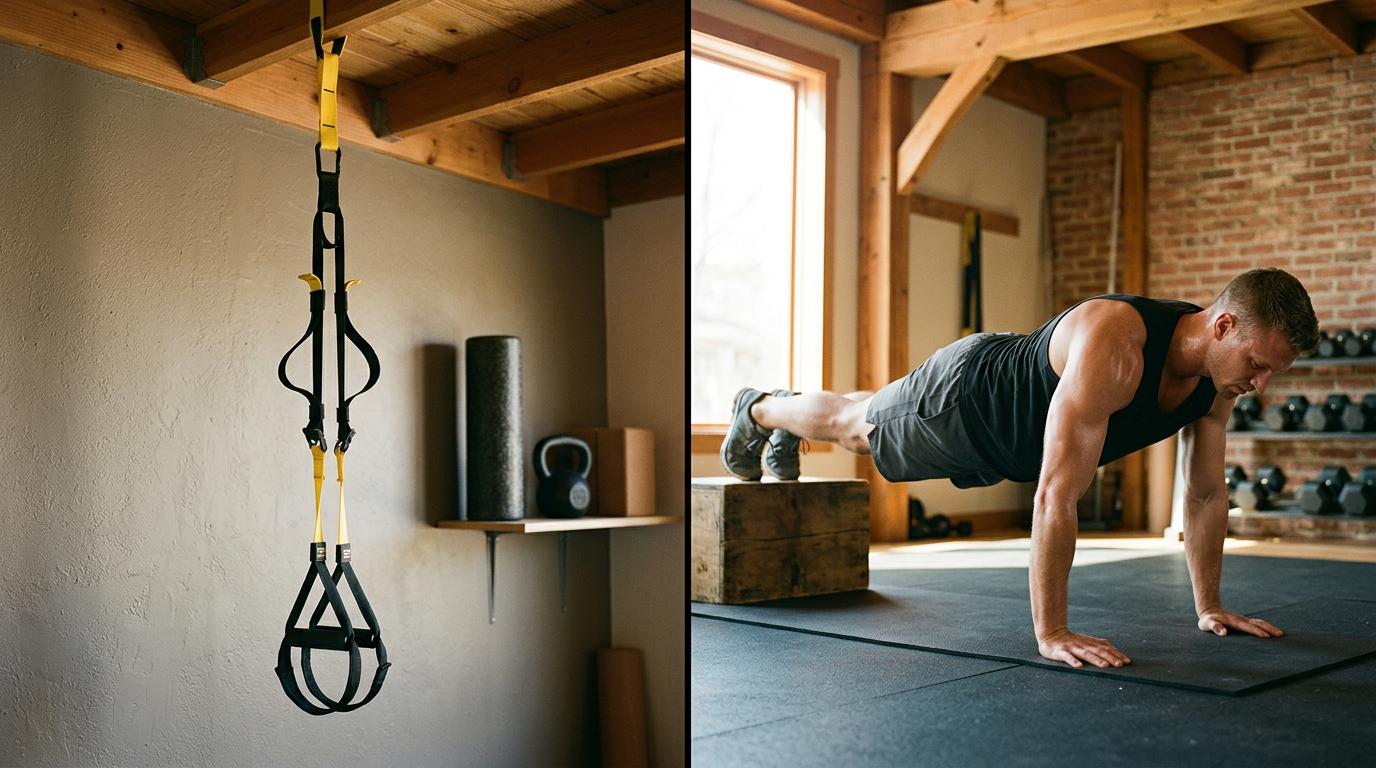
Detailed comparison of TRX suspension training versus traditional calisthenics. Discover which approach wins for strength, muscle growth, and small-space training.
The rise of home fitness has created a false dichotomy: TRX suspension training versus traditional calisthenics. Online debates frame these as competing methodologies when, in reality, they represent complementary approaches to bodyweight strength development. Understanding their differences, overlaps, and optimal integration enables smarter training decisions for small-space environments.
This comparison examines TRX and calisthenics across seven dimensions: exercise variety, muscle activation, equipment needs, progression systems, skill development, cost, and suitability for different fitness goals.
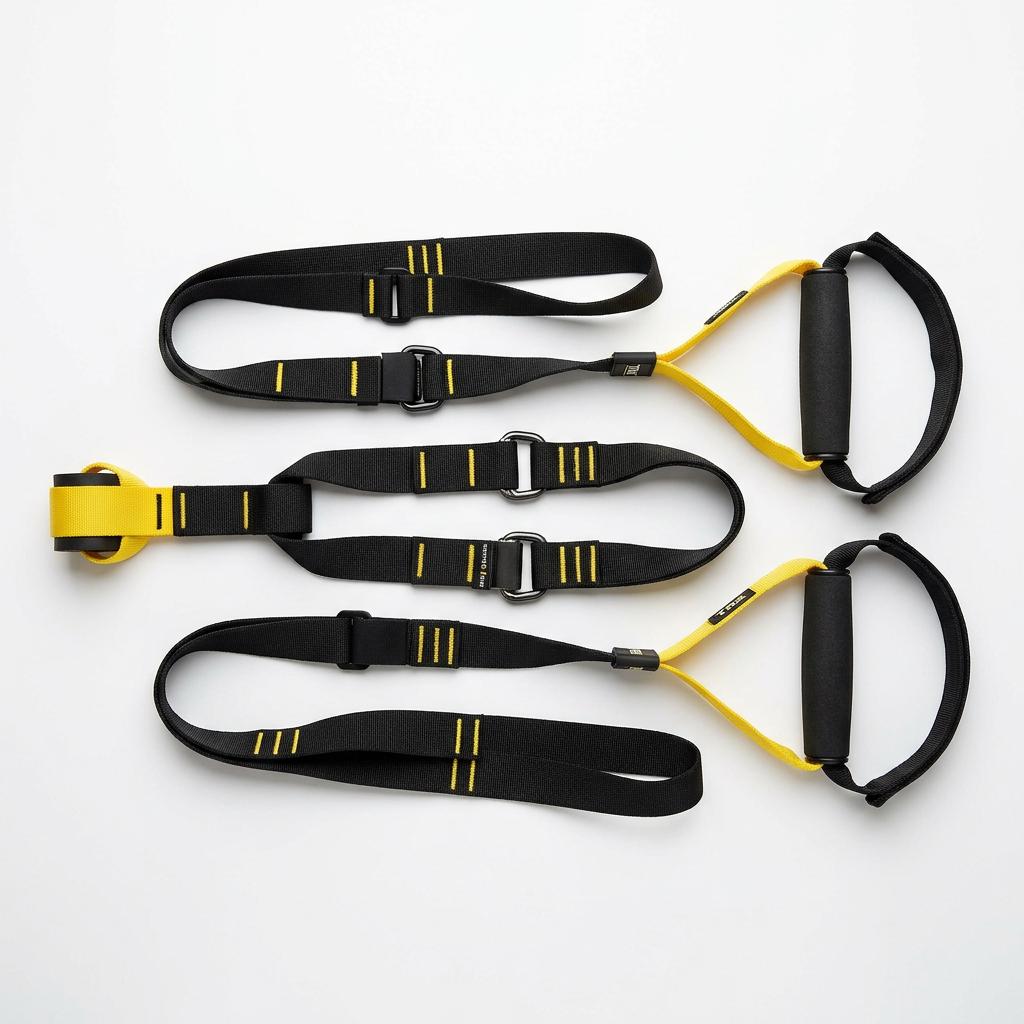
TRX (Total Resistance Exercise) is a branded suspension training system developed by former U.S. Navy SEAL Randy Hetrick. The system uses adjustable straps anchored overhead to support bodyweight exercises. "TRX" has become shorthand for suspension training generally, though it remains a specific brand and product line.
Key characteristics:
Calisthenics encompasses all bodyweight exercises performed without external equipment assistance (beyond fixed structures like bars and the floor). The discipline includes gymnastics-derived movements, street workout culture, and military fitness traditions.
Key characteristics:
| Category | TRX | Calisthenics | Winner |
|---|---|---|---|
| Pushing exercises | 15+ variations | 20+ variations | Tie |
| Pulling exercises | 8–10 variations | 10–15 variations | Calisthenics (slight) |
| Core exercises | 20+ variations | 15+ variations | TRX (slight) |
| Lower body | 12+ variations | 10+ variations | TRX (slight) |
| Static holds | Limited | Extensive | Calisthenics |
| Skill/freestyle | None | Extensive | Calisthenics |
| Total unique exercises | ~60 | ~70+ | Calisthenics (marginal) |
Analysis: Calisthenics offers more total exercise variations, primarily through static holds (planche progressions, levers) and skill-based movements (muscle-ups, handstands) that suspension straps cannot replicate. TRX compensates with greater pulling and core variety due to the adjustable anchor system.
Verdict: Calisthenics wins narrowly on total exercise count. TRX wins on pulling exercise quality and accessibility.
Research provides clear data on muscle activation comparisons:
| Exercise | TRX Activation | Calisthenics Equivalent | Winner |
|---|---|---|---|
| Push-up | 92% MVC (floor) | 88% MVC (floor) | TRX (instability bonus) |
| Row | 85% MVC | 91% MVC (inverted row, low bar) | Calisthenics |
| Squat | 78% MVC | 82% MVC (bodyweight squat) | Calisthenics |
| Core plank | 95% MVC | 72% MVC (floor plank) | TRX (significant) |
| Pull-up | N/A (not a TRX exercise) | 92% MVC | Calisthenics |
Sources: Journal of Strength and Conditioning Research, 2018–2022; Sports Biomechanics, 2020
Analysis: TRX's instability element increases core activation in all movements — the 40% greater core activation in TRX push-ups versus floor push-ups is well-documented. However, calisthenics can achieve higher absolute loads through advanced leverage (one-arm push-ups, weighted pull-ups) that TRX cannot replicate.
Verdict: TRX wins for core development and beginner-to-intermediate strength. Calisthenics wins for maximum strength potential and pulling development.
| Requirement | TRX | Calisthenics |
|---|---|---|
| Minimum equipment | Suspension trainer + anchor | None (floor exercises only) |
| Full exercise library | Suspension trainer + pull-up bar | Pull-up bar + dip station + parallettes |
| Total cost (minimum) | $35–$170 | $0 |
| Total cost (full) | $35–$170 | $80–$250 |
| Storage space | Fits in drawer | Varies by equipment |
| Portability | 1–2 lbs, highly portable | Body only (most portable) |
| Installation | Door anchor or wall mount | None to permanent |
Recommended Equipment:
| Goal | TRX Setup | Calisthenics Setup |
|---|---|---|
| Minimum viable | PACEARTH Suspension Trainer | None (floor only) |
| Comprehensive | TRX + Iron Gym Pull-Up Bar | Pull-up bar + dip station |
Verdict: Calisthenics wins for zero-cost entry. TRX wins for single-piece-of-equipment completeness. The optimal home gym uses both.
TRX uses a continuous adjustment system. By changing body angle, users modify resistance infinitely without changing exercises. This creates smooth progression:
| Exercise | Beginner | Intermediate | Advanced |
|---|---|---|---|
| Push | Upright (20% load) | Parallel (50% load) | Feet elevated (75% load) |
| Row | Upright (30% load) | Parallel (50% load) | Feet elevated (65% load) |
| Squat | Assisted (arms help) | Standard (bodyweight) | Single-leg (full bodyweight) |
Advantages: No exercise changes required; instant difficulty adjustment; excellent for beginners.
Limitations: Maximum resistance capped at bodyweight; advanced trainees eventually exhaust progression options.
Calisthenics uses a movement progression system. Users advance to harder exercise variations:
| Exercise | Beginner | Intermediate | Advanced | Elite |
|---|---|---|---|---|
| Push | Knee push-up | Standard push-up | Diamond/archer | One-arm push-up |
| Pull | Band-assisted | Bodyweight pull-up | Weighted pull-up | Muscle-up |
| Leg | Air squat | Bulgarian split | Pistol squat | Shrimp squat |
Advantages: Unlimited progression potential; skill acquisition is motivating; no equipment changes needed for floor exercises.
Limitations: Progression gaps can be large (e.g., standard push-up to one-arm push-up); some variations require equipment.
Verdict: Calisthenics wins for long-term progression potential. TRX wins for smooth beginner progression without exercise changes.
| Dimension | TRX | Calisthenics |
|---|---|---|
| Body awareness | Moderate (straps guide) | High (no external support) |
| Balance development | Moderate | High |
| Coordination | Moderate | High |
| Skill mastery satisfaction | Lower | Higher (freestyle, skills) |
| Gymnastic foundations | Limited | Extensive |
| Transfer to sports | Good | Excellent |
Verdict: Calisthenics wins for holistic movement development. The requirement to control body position without strap assistance builds superior body awareness, balance, and coordination.
| Scenario | TRX Cost | Calisthenics Cost | Winner |
|---|---|---|---|
| Zero budget | N/A | $0 (floor exercises) | Calisthenics |
| Under $50 | PACEARTH ~$40 | Pull-up bar ~$30 | Tie |
| Under $100 | Jungle Gym XT ~$85 | Bar + dip station ~$90 | Tie |
| Premium | TRX All-in-One ~$150 | Full setup ~$200 | TRX (lower cost) |
Verdict: Tie at most price points. Calisthenics wins for zero-budget scenarios. TRX wins for single-equipment comprehensiveness.
| Goal | TRX | Calisthenics | Recommendation |
|---|---|---|---|
| General fitness | ★★★★★ | ★★★★☆ | TRX (faster learning curve) |
| Muscle building | ★★★★☆ | ★★★★☆ | Tie (both effective to intermediate level) |
| Maximum strength | ★★★☆☆ | ★★★★★ | Calisthenics (unlimited progression) |
| Fat loss | ★★★★★ | ★★★★★ | Tie (both support HIIT and circuits) |
| Core development | ★★★★★ | ★★★★☆ | TRX (instability advantage) |
| Skill mastery | ★★☆☆☆ | ★★★★★ | Calisthenics (freestyle, gymnastics) |
| Rehabilitation | ★★★★★ | ★★★☆☆ | TRX (adjustable assistance) |
| Portability/travel | ★★★★★ | ★★★★★ | Tie (TRX packs small; calisthenics needs no equipment) |
The optimal training program integrates TRX and calisthenics rather than choosing between them:
| Day | Focus | TRX Exercises | Calisthenics Exercises |
|---|---|---|---|
| Monday | Push | TRX push-up, chest press, pike press | Dip (station), handstand work |
| Tuesday | Pull | TRX row, face pull, curl | Pull-up, inverted row |
| Wednesday | Legs + Core | TRX lunge, hamstring curl, plank | Pistol squat progression, L-sit |
| Thursday | Active recovery | TRX mobility flows | Yoga-inspired movement |
| Friday | Upper Body | TRX flye, single-arm row, press | Push-up variations, chin-up |
| Saturday | Full Body | TRX complexes (multi-exercise circuits) | Burpees, jump squats |
| Sunday | Rest | — | — |
Start with: TRX All-in-One or PACEARTH + Iron Gym Pull-Up Bar
This $80–$170 combination provides:
Add later: Dip station for dedicated dip work, parallettes for L-sit and handstand progressions.
| Criterion | Winner | Margin |
|---|---|---|
| Exercise variety | Calisthenics | Narrow |
| Muscle activation | Tie | Context-dependent |
| Equipment cost (entry) | Calisthenics | Significant ($0 vs. $35+) |
| Equipment cost (comprehensive) | Tie | Similar |
| Beginner accessibility | TRX | Significant |
| Long-term progression | Calisthenics | Significant |
| Core development | TRX | Moderate |
| Skill development | Calisthenics | Significant |
| Rehabilitation | TRX | Significant |
Overall Recommendation: Start with whichever system removes barriers to consistency. For most beginners, that means TRX (lower learning curve, instant exercise access) supplemented with pull-up bar work. As you advance, integrate more pure calisthenics skills and progressions. The question is not TRX or calisthenics — it is TRX and calisthenics, integrated intelligently.
Last updated: June 18, 2026. As an Amazon Associate, SnugGym earns from qualifying purchases.