Apple Watch Series 9 for Home Gym Fitness: In-Depth Review (2025)
Comprehensive review of Apple Watch Series 9 for home gym fitness tracking. We test workout accuracy, heart rate monitor...
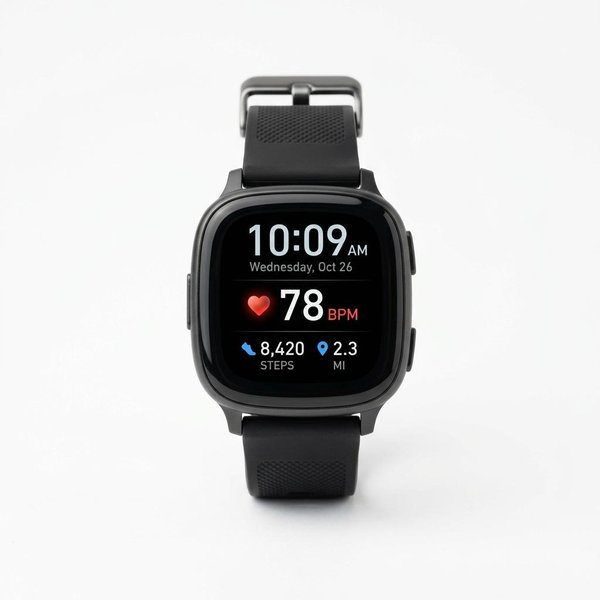
Learn the difference between Bluetooth and ANT+ wireless protocols for fitness devices. We explain how each works, their range, compatibility, and which to choose for your home gym setup.
Heart rate monitors, power meters, smart trainers, and GPS watches all need to communicate with other devices to display and record data. Two wireless protocols handle nearly all of this communication in the fitness ecosystem: Bluetooth and ANT+. Understanding how they differ, what each enables, and which devices support which protocol is essential for building a compatible home gym tech setup.
In short: ANT+ is designed specifically for sports sensors and allows one sensor to connect to multiple receivers simultaneously. Bluetooth is universal but typically limited to one-to-one connections. Most premium fitness sensors support both. If you're buying a heart rate monitor or power meter, dual-protocol support ensures maximum compatibility.
Bluetooth is a general-purpose wireless communication standard managed by the Bluetooth Special Interest Group (SIG). Originally designed for wireless audio and data transfer between consumer electronics, it has been adapted for fitness sensor use through Bluetooth Low Energy (BLE), introduced with Bluetooth 4.0 in 2010.
Key characteristics:
ANT+ is a proprietary wireless protocol developed by Dynastream Innovations (acquired by Garmin in 2006) specifically for sports, fitness, and health sensors. It is a subset of the broader ANT protocol optimized for ultra-low-power sensor networks.
Key characteristics:
Important note: ANT+ and Bluetooth are not interchangeable. A device that only supports ANT+ cannot communicate with a receiver that only supports Bluetooth, and vice versa. Many modern devices support both, but compatibility must be verified for each product combination.
The most important functional difference between ANT+ and Bluetooth for fitness applications is how they handle multiple connections.
ANT+ uses a broadcast model. A sensor (like a heart rate monitor) transmits data continuously on a specific "channel." Any number of receivers within range can "listen" to that channel simultaneously.
Practical example: A single ANT+ heart rate monitor can broadcast to:
All simultaneously. No pairing process is required for each new connection.
Standard Bluetooth Low Energy uses a paired connection model. A sensor typically connects to one receiver at a time. To switch to a different device, you must disconnect from the first and pair with the second.
Bluetooth 5.0 and beyond introduced expanded connection capabilities, but implementation varies by manufacturer. Most fitness sensors still operate in one-to-one mode for Bluetooth.
| Feature | ANT+ | Bluetooth LE |
|---|---|---|
| Connections | One-to-many (broadcast) | One-to-one (typical) |
| Pairing process | Minimal (automatic channel detection) | Explicit pairing required |
| Multiple devices | Yes, unlimited listeners | Usually one at a time |
| Dropout recovery | Fast (automatic reconnection) | Moderate (may require manual re-pairing) |
| Interference handling | Designed for high-density environments | Generally good but varies by implementation |
| Model | Bluetooth | ANT+ | Notes |
|---|---|---|---|
| Polar H10 | Yes | Yes | Dual protocol; gym and cycling compatible |
| Garmin HRM-Dual | Yes | Yes | Dual protocol; 3.5-year battery |
| Wahoo TICKR | Yes | Yes | Dual protocol; LED indicators |
| Polar H9 | Yes | Yes | Dual protocol; entry-level option |
| Budget Amazon HRMs | Usually Bluetooth only | No | Check specifications carefully |
Our analysis: All major brand chest straps now offer dual-protocol support. Budget models may be Bluetooth-only, limiting their utility for cyclists and multi-device setups.
ANT+ was the original standard for cycling power meters and remains dominant in the cycling ecosystem. Modern power meters universally support both ANT+ and Bluetooth.
| Device Category | ANT+ | Bluetooth | Notes |
|---|---|---|---|
| Garmin cycling computers | Receive | Some models | ANT+ is native; Bluetooth for phone sync |
| Wahoo bike computers | Receive | Receive | Dual-receive capability |
| Smart trainers | Both | Both | Most support both protocols |
| Power meter pedals | Both | Both | Universal dual support in current models |
| Brand | Receives ANT+ | Receives Bluetooth | Notes |
|---|---|---|---|
| Garmin (most models) | Yes | Yes | Native ANT+ support |
| Polar | Some models | Yes | Primarily Bluetooth ecosystem |
| Apple Watch | No | Yes | Bluetooth only; no ANT+ hardware |
| Coros | No | Yes | Bluetooth only |
| Suunto | Some models | Yes | Mixed support by model |
| Fitbit | No | Yes | Bluetooth only |
Key implication: Apple Watch, Coros, and Fitbit users cannot directly receive ANT+ sensor data. They must rely on Bluetooth connections or third-party bridges.
Many modern cardio machines (treadmills, bikes, rowers) broadcast workout data via both ANT+ and Bluetooth. This allows connection to apps like Zwift, Peloton, and Kinomap.
| Equipment | ANT+ | Bluetooth | Notes |
|---|---|---|---|
| Concept2 RowErg | Yes (PM5) | Yes (PM5) | Broadcasts to apps and watches |
| Peloton Bike | Yes | Yes | Closed ecosystem but broadcasts power |
| Smart bikes (Wahoo, Tacx) | Yes | Yes | Full dual support |
| Budget treadmills | Rare | Sometimes | Check specifications |
Both protocols operate at 2.4 GHz and have similar theoretical ranges:
Our analysis: In a typical apartment gym where the sensor and receiver are within 3–6 feet of each other, range is not a meaningful differentiator. Both protocols perform reliably at these distances.
ANT+ was designed for high-density sensor environments (group fitness classes, cycling events with hundreds of power meters). Its broadcast model is inherently robust against the connection dropouts that can affect Bluetooth's paired model.
In practice, both protocols are reliable for home gym use. Dropouts are more commonly caused by:
Than by protocol-level instability.
ANT+ holds a significant advantage in power efficiency. This matters most for devices that run on small coin cell batteries.
| Device Type | ANT+ Battery Life | Bluetooth Battery Life |
|---|---|---|
| Chest strap HRM | 400–500 hours | 200–400 hours |
| Cycling power meter | 100–200 hours | 80–150 hours |
| Speed/cadence sensor | 300–500 hours | 200–300 hours |
The difference is meaningful for devices that are inconvenient to open for battery replacement (crank-arm power meters, hub-mounted sensors). For chest straps where battery replacement takes 30 seconds, the difference is less consequential.
ANT+ is your native protocol. Buy dual-protocol sensors for maximum flexibility, but ANT+ will provide the broadest device compatibility and best battery life.
You are limited to Bluetooth. Buy Bluetooth-compatible sensors. For cycling, third-party apps (like Zwift or Wahoo SYSTM) running on a phone can bridge ANT+ data to your Apple Watch ecosystem.
ANT+ is the clear winner. If you want your heart rate monitor to broadcast to your watch, your bike computer, and your gym machine simultaneously, ANT+ does this natively. Bluetooth requires disconnecting and reconnecting between devices.
Choose a dual-protocol model (Polar H10, Garmin HRM-Dual, or Wahoo TICKR). The small price premium over Bluetooth-only models eliminates future compatibility concerns.
The fitness industry is gradually shifting toward Bluetooth as the universal standard. ANT+ remains strong in cycling and Garmin ecosystems but has not expanded into smartphones or general consumer electronics.
Bluetooth 5.0 and newer specifications include features that address some of ANT+'s traditional advantages (lower power, improved broadcast modes). Over the next 5–10 years, it is likely that Bluetooth will absorb most fitness sensor use cases.
Our analysis: For purchases made today, dual-protocol devices provide the best hedge against ecosystem changes. A chest strap that supports both ANT+ and Bluetooth will remain functional regardless of which protocol your next watch or app prefers.
Q: Can I use an ANT+ sensor with my iPhone?
iPhones do not have built-in ANT+ receivers. You need an external ANT+ dongle (Lightning or USB-C adapter) or a Bluetooth bridge device. Most iPhone users should buy Bluetooth sensors instead.
Q: Does ANT+ work with Android phones?
Some Android phones include ANT+ hardware (many Samsung Galaxy models). For others, an external USB ANT+ stick is required. Check your phone's specifications.
Q: Will Bluetooth and ANT+ interfere with each other?
No. They share the same frequency band but use different channel-hopping algorithms designed to coexist. In practice, devices running both protocols simultaneously experience minimal interference.
Q: Is one protocol more accurate than the other?
No. Both transmit the same sensor data. The protocol does not affect the accuracy of the underlying measurement—whether heart rate, power, or cadence.
| Factor | ANT+ | Bluetooth LE |
|---|---|---|
| Best feature | One-to-many connections | Universal device compatibility |
| Best for | Cyclists, multi-device setups | Smartphone users, general fitness |
| Battery life | Superior | Good |
| Device support | Fitness-specific; Garmin ecosystem | Universal (phones, watches, tablets) |
| Ease of pairing | Automatic | Requires explicit pairing |
| Future outlook | Stable but niche | Expanding; likely long-term winner |
| Recommended choice | Dual-protocol devices provide maximum flexibility |
As an Amazon Associate we earn from qualifying purchases.