Apple Watch Series 9 for Home Gym Fitness: In-Depth Review (2025)
Comprehensive review of Apple Watch Series 9 for home gym fitness tracking. We test workout accuracy, heart rate monitor...
How to measure fitness progress at home without gym equipment. Learn about body composition, strength metrics, performance benchmarks, and affordable tracking tools.
FTC Disclosure: SnugGym.com participates in the Amazon Associates Program. We earn commissions from purchases made through our links at no cost to you. Our reviews are independently researched and not influenced by affiliate partnerships.
Commercial gyms offer one underrated advantage: easy progress tracking. The same barbell every session, the same weight stack with numbered plates, the same scale in the locker room. When you transition to a home gym — especially a small-space setup with adjustable dumbbells and bodyweight exercises — tracking progress becomes less straightforward but arguably more important. Without objective metrics, it's easy to plateau without realizing it, gradually reducing effort while believing you're maintaining intensity. This guide provides a complete progress-tracking system designed specifically for apartment gym users.
| Challenge | Why It Happens | Solution |
|---|---|---|
| Variable equipment | Adjustable dumbbells vs. fixed weights | Standardize on specific weight settings |
| No built-in measurements | No gym scale, no body composition scanner | Affordable home alternatives below |
| Training alone | No spotter, no coach feedback | Video recording, objective benchmarks |
| Inconsistent conditions | Different times, temperatures, sleep | Control what you can; note variables |
| Motivation drift | No gym environment, no social pressure | Structured tracking creates accountability |
For home gym users, we recommend tracking four categories:
Body weight alone is a poor progress indicator — it fluctuates 2-4 lbs daily based on hydration, sodium intake, and glycogen stores. But tracked over weeks, weight trends reveal real changes.
Best practice: Weigh daily, record weekly averages. Look for 4-week trends, not daily changes.
Recommended scale: RENPHO Smart Body Fat Scale
| Specification | Detail |
|---|---|
| Metrics | Weight, body fat %, BMI, muscle mass, bone mass, water % |
| Connectivity | Bluetooth to RENPHO app |
| Accuracy | ±0.2 lb weight; body fat % within 3-5% of DEXA |
| Price | $25-35 |
Our analysis: The RENPHO scale provides useful trend data at a fraction of professional body composition testing costs. Bioelectrical impedance analysis (BIA) is not as accurate as DEXA scans, but for tracking changes over time, the precision is adequate. The app's trend graphs and data export are genuinely useful.
Weekly photos in consistent lighting, pose, and time of day reveal changes the scale misses — particularly body recomposition (simultaneous muscle gain and fat loss).
Protocol:
Measure every 2-4 weeks:
Record to the nearest 0.25 inch. Trends over months are meaningful; weekly changes are not.
Without access to a full weight room, track strength using rep-maxes — the maximum weight you can lift for a specific number of repetitions.
| Test | Equipment Needed | Frequency |
|---|---|---|
| 5-rep max dumbbell press | Adjustable dumbbells | Every 4 weeks |
| 10-rep max goblet squat | Single dumbbell or kettlebell | Every 4 weeks |
| Max pull-ups/chin-ups | Pull-up bar | Every 4 weeks |
| Max push-ups in 60 seconds | Floor | Every 4 weeks |
| Max plank hold | Timer | Every 4 weeks |
Testing protocol:
Use the Epley formula to estimate 1RM from higher-rep performances:
Estimated 1RM = Weight × (1 + Reps/30)
Example: If you squat 60 lb dumbbells for 8 reps: 60 × (1 + 8/30) = 60 × 1.27 = ~76 lb estimated 1RM
Track this estimated 1RM over time. An increasing estimated 1RM means you're getting stronger, even if you're training in different rep ranges.
| Test | How To | Equipment | Frequency |
|---|---|---|---|
| 500m row time | Row 500m as fast as possible | Rowing machine | Monthly |
| 1-mile time | Walk/run 1 mile | Treadmill or outdoors | Monthly |
| Step test | Step up/down 12" for 3 min, measure recovery HR | Step or bench | Monthly |
| Resting heart rate | Measure immediately upon waking | Fitness tracker or manual | Weekly |
A declining resting heart rate (measured consistently) indicates improving cardiovascular fitness. Elite endurance athletes have resting HRs in the 40s; average adults range from 60-80 bpm.
Track how much work you complete in a fixed time — a key metric when equipment is limited.
Example: "How many rounds of this circuit can I complete in 20 minutes?"
Record rounds completed. An increasing number over weeks indicates improving work capacity.
The most important metric for home gym users is simply showing up. Research consistently shows that consistency predicts results better than any specific program, equipment, or supplement.
Simple tracking method: A paper calendar where you mark an X for every workout day. Don't break the chain.
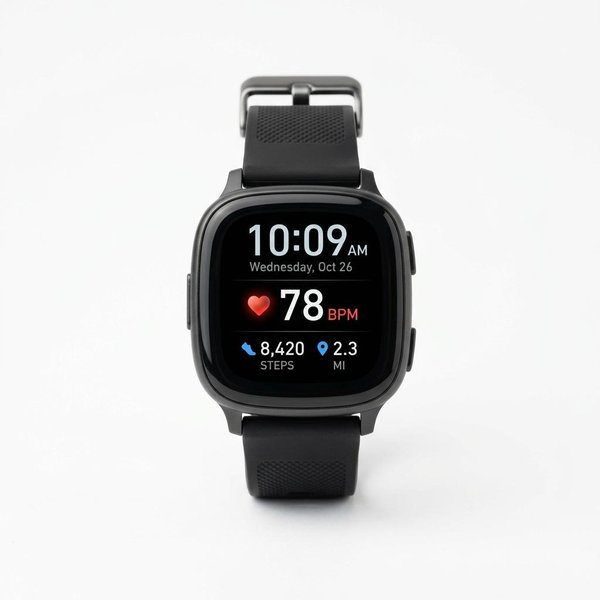
Digital alternative: The RENPHO scale app and most fitness trackers include workout logging. For a dedicated solution, the Fitbit Charge 6 ($120-160) tracks steps, heart rate, sleep, and active minutes automatically.
| Metric | Frequency | Time Required |
|---|---|---|
| Body weight | Daily (weekly average) | 30 seconds |
| Progress photos | Weekly | 5 minutes |
| Tape measurements | Monthly | 10 minutes |
| Strength tests | Monthly | 30 minutes |
| Cardio benchmarks | Monthly | 20 minutes |
| Workout log | Every session | 2 minutes |
| Tool | Cost | Tracks | Best For |
|---|---|---|---|
| Notebook + pen | $5 | Everything | Simplicity, no tech |
| RENPHO Smart Scale | $25-35 | Weight, body comp | Body composition trends |
| Smartphone camera | $0 | Visual progress | Body recomposition tracking |
| Measuring tape | $3 | Circumferences | Specific area changes |
| Stopwatch app | $0 | Times, planks | Performance benchmarks |
| Fitbit Charge 6 | $120-160 | Activity, HR, sleep | Comprehensive activity tracking |
| Garmin Forerunner 55 | $150-200 | Activity, HR, GPS | Runners and outdoor athletes |
How do I know if I'm making progress without gym equipment?
Track the metrics above consistently for 8 weeks. If your estimated 1RMs are increasing, your cardio benchmarks are improving, and your body composition is trending favorably, you're making progress. If all metrics are flat, adjust your program — increase intensity, volume, or exercise difficulty.
Is a smart scale worth it for home gym tracking?
Yes, at $25-35, a smart scale is the highest-value tracking investment. The automatic logging, trend graphs, and body composition estimates provide objective feedback that helps maintain motivation and identify when adjustments are needed.
How often should I test my strength?
Every 4-6 weeks is optimal. Testing more frequently doesn't capture meaningful changes and can interfere with regular training. Testing less frequently means slower feedback on program effectiveness.
What if my weight stays the same but I'm getting stronger?
This is body recomposition — simultaneously building muscle and losing fat. It's common in the first 6-12 months of serious training. Progress photos and tape measurements will reveal changes the scale doesn't. This is a positive outcome, not a plateau.