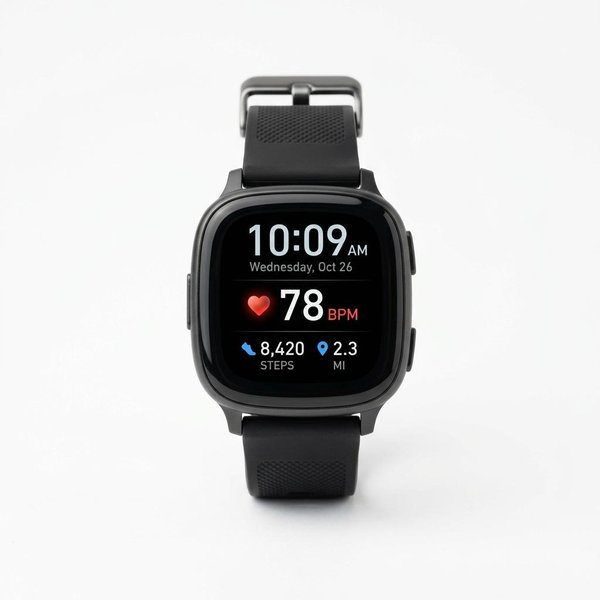
Apple Watch Series 9 for Home Gym Fitness: In-Depth Review (2025)
Comprehensive review of Apple Watch Series 9 for home gym fitness tracking. We test workout accuracy, heart rate monitor...
We analyze Mirror, Tonal, and Tempo smart home gym systems on price, workout quality, and space efficiency to determine if they're worth the investment.
Smart fitness mirrors combine reflective display technology with streaming workout content. Our analysis evaluates Mirror, Tonal, and Tempo on workout quality, space efficiency, total cost of ownership, and comparative value against traditional home gym setups.
The smart mirror category emerged in 2018 and has matured into three distinct product types: form-correction mirrors that emphasize bodyweight training, resistance-based systems that replace cable machines and free weights, and hybrid systems that combine both approaches. Each serves different user profiles and justifies (or fails to justify) its price point based on how well it matches specific training goals.
Understanding what these systems do well — and where conventional equipment remains superior — is essential before committing to a purchase that typically ranges from $1,500 to $4,000 plus monthly subscription fees.
| Feature | Mirror (lululemon) | Tonal | Tempo (formerly Studio) |
|---|---|---|---|
| Price Range (Hardware) | $1,495–$1,995 | $3,995+ | $1,195–$2,495 |
| Monthly Subscription | $39/mo | $59/mo | $39/mo |
| Training Type | Bodyweight, cardio, light resistance | Electromagnetic resistance (digital weights) | Free weights with AI form tracking |
| Resistance System | None (bodyweight only) | Up to 200 lbs per arm (digital) | Weights included (up to 75 lbs) |
| Installation | Wall-mounted; ~2 ft depth | Wall-mounted; requires studs | Freestanding or wall-mounted |
| Space Required | Minimal (wall space only) | Minimal (wall space only) | 3–5 sq ft for equipment |
| Form Feedback | Limited | No real-time form correction | 3D sensor tracks form and reps |
| Content Library | 10,000+ classes | Hundreds of workouts | Hundreds of workouts |
| Key Technology | Reflective LCD streaming | Electromagnetic resistance engine | 3D time-of-flight sensor |
Table based on manufacturer documentation and published pricing as of early 2025. Prices subject to change.
All three systems require less floor space than even a modest traditional home gym. Mirror and Tonal mount on the wall and extend only a few inches into the room. For apartment dwellers, urban homes, or anyone training in a spare bedroom or living room, this space efficiency is a genuine advantage. When not in use, Mirror functions as a full-length mirror; Tonal's arms fold flush against the wall.
The subscription libraries from all three manufacturers include professional instructors, varied programming (HIIT, strength, yoga, Pilates, meditation), and structured multi-week programs. The production quality matches or exceeds most YouTube fitness content and rivals boutique studio class experiences.
For beginners and intermediates, having guided instruction reduces the intimidation factor of program design and helps establish consistent training habits.
A barbell rack and weight plates in a living room create visual clutter that many household members find objectionable. A wall-mounted mirror or sleek resistance system is more visually integrated. This aesthetic factor, while not directly related to fitness outcomes, meaningfully affects how many users can realistically train at home without dedicated gym space.
Mirror is a wall-mounted, full-length reflective LCD screen. When activated, the display shows workout video content while the reflective surface allows you to see your form alongside the instructor. When off, it appears to be an ordinary mirror.
The Mirror is fundamentally a content delivery device with a form-check mirror overlay. It provides no resistance mechanism — all workouts rely on bodyweight, light dumbbells (purchased separately), or resistance bands. This limits strength development potential: once bodyweight exercises become too easy, progressive overload becomes difficult without external loading.
The Mirror makes sense for three user profiles:
For users seeking significant strength or muscle development, the Mirror's lack of loading mechanism is a fundamental limitation. $1,500 + $39/month buys a lot of traditional equipment that enables genuine progressive overload.
Tonal is a wall-mounted resistance training system that uses electromagnetic force (digital weights) to provide up to 200 pounds of resistance per arm through adjustable cable arms. The system calculates appropriate starting weights and automatically adjusts resistance throughout sets using features like "Smart Flex" (dynamic resistance adjustment) and "Eccentric Mode" (increased resistance on the lowering phase).
Tonal is the most technically sophisticated smart gym system and the only one that can genuinely replace traditional strength equipment for many users. The electromagnetic resistance system eliminates weight stacks and cable machines while providing adjustable resistance for movements including chest press, rows, lat pulldowns, shoulder press, bicep curls, and tricep extensions.
The 200-pound maximum (with upgrade) is sufficient for most isolation exercises and many compound movements for intermediate trainees. However, Tonal cannot replicate lower-body compound movements effectively — squats and deadlifts with meaningful load require different force vectors than the cable system provides. The system includes leg movements (goblet squats with a Tonal "smart handle," single-leg exercises), but these are not equivalent to barbell squats or deadlifts for strength development.
Total cost consideration: At approximately $4,000 for hardware plus $59/month ($708/year), the three-year ownership cost exceeds $6,000. This investment purchases a comprehensive cable machine replacement with guided programming. Whether that value proposition is justified depends on your training priorities and alternative use of that budget.
Tempo uses a 3D time-of-flight sensor to create a skeletal model of your body during workouts. This enables real-time rep counting, form feedback, and weight recommendations based on performance data.
Tempo's differentiator is genuine form feedback — the 3D sensor can detect when your squat depth is insufficient, when your back rounds during deadlifts, or when your knee valgus (inward collapse) occurs during lunges. This feedback, while not equivalent to a human coach, addresses a genuine pain point for home gym users training without supervision.
The inclusion of physical weights (Tempo Move includes dumbbells and weight plates; Tempo Studio includes a full weight set) means Tempo enables progressive overload more effectively than Mirror and with more traditional movement patterns than Tonal. You are lifting actual weights, not electromagnetic resistance.
The limitation is space: Tempo requires storage for weight plates, dumbbells, and the equipment itself. The form feedback, while useful, is limited to the exercises and positions visible to the 3D sensor. Complex movements or exercises performed outside the sensor's field of view receive no feedback.
| Approach | Initial Cost | 3-Year Cost | Strength Capability | Space Required |
|---|---|---|---|---|
| Tonal | $4,000 | $6,100 | Moderate (upper body), limited (lower body) | Minimal |
| Mirror | $1,500 | $2,900 | Low (bodyweight only) | Minimal |
| Tempo Studio | $2,500 | $3,900 | Good (free weights) | Moderate |
| Traditional home gym (rack, barbell, dumbbells, bench) | $1,000–$2,500 | $1,000–$2,500 (no subscription) | High (progressive overload unlimited) | Significant |
| Peloton/app + basic weights | $500–$1,500 | $1,000–$2,000 | Moderate | Minimal to moderate |
Cost estimates include subscription fees where applicable. Traditional gym costs assume no recurring digital subscription.
As an Amazon Associate we earn from qualifying purchases. Smart gym systems require active subscriptions for full functionality; factor ongoing costs into purchase decisions.