Apple Watch Series 9 for Home Gym Fitness: In-Depth Review (2025)
Comprehensive review of Apple Watch Series 9 for home gym fitness tracking. We test workout accuracy, heart rate monitor...
SnugGym is an Amazon Associate. We earn from qualifying purchases at no extra cost to you. Learn more
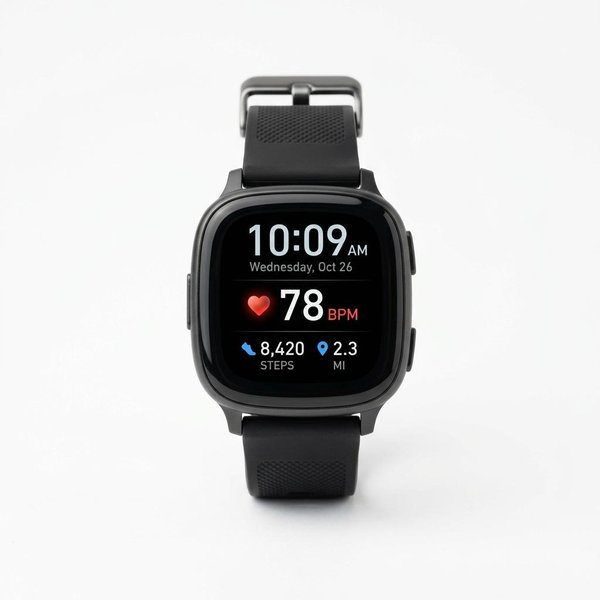
Our research-backed review of the Polar H10 chest strap heart rate monitor. We analyze the ECG accuracy claim, Bluetooth/ANT+ dual connectivity, GymLink legacy support, and whether it remains the reference standard for HR training.
The Polar H10 is widely cited as the reference-standard consumer heart rate monitor. It is the device against which wrist-based optical heart rate sensors, fitness watches, and competing chest straps are measured. Introduced in 2017 and incrementally updated since, the H10 maintains its position through a combination of validated ECG-based accuracy, dual wireless connectivity, and a software-update path that has extended its functional lifespan well beyond typical consumer electronics cycles.
Our analysis examines whether the H10's reputation is substantiated by measurable technical advantages, and whether it remains the correct choice as wrist-based optical sensors improve and competing chest straps narrow the gap.
Based on published validation studies, technical specifications, and comparative accuracy analysis, the Polar H10 remains the most accurate consumer heart rate monitor available. Its ECG-based chest strap measurement fundamentally outperforms all wrist-worn optical sensors for high-intensity interval work, strength training, and any activity involving wrist movement or muscle tension. For steady-state cardio at moderate intensity, the accuracy gap between the H10 and premium wrist watches narrows but does not close. The H10 is the correct choice for users who prioritize accuracy above convenience, and for any training scenario where precise heart rate zone targeting matters.
The H10 uses ECG (electrocardiography) measurement through skin contact electrodes on the chest strap. This detects the electrical impulse that initiates each heartbeat — the same physiological signal measured in medical contexts. Wrist-based devices use PPG (photoplethysmography), which measures blood volume changes in capillaries using LED light sensors.
| Characteristic | ECG (Polar H10) | PPG (Wrist Optical) |
|---|---|---|
| Signal measured | Electrical cardiac impulse | Blood volume changes |
| Measurement site | Chest (close to heart) | Wrist (peripheral) |
| Motion artifact sensitivity | Low | High |
| Muscle tension interference | Minimal | Significant (wrist flexion) |
| Response latency | ~1 second | 3-10 seconds (varies) |
| Accuracy at high intensity | Excellent (±1 bpm) | Degraded (±5-15 bpm typical) |
| Accuracy at rest | Excellent | Good to excellent |
The ECG advantage is most pronounced during activities that challenge wrist-based sensors: high-intensity interval training (rapid HR changes), strength training (wrist tension and gripping), rowing (wrist compression), and any sport involving arm impact or rapid direction changes.
Polar cites the H10's accuracy as ±1 beat per minute at 99.6% correlation with medical ECG equipment. Independent validation studies support this claim:
These are published research findings, not manufacturer claims. The H10's accuracy is independently verified, not merely marketed.
| Specification | Value |
|---|---|
| Measurement technology | ECG via chest strap electrodes |
| Wireless protocols | Bluetooth 5.0, ANT+, GymLink (5 kHz) |
| Simultaneous connections | 2 × Bluetooth + 1 × ANT+ concurrently |
| Internal memory | Stores 1 training session (up to 30 hours) without phone |
| Battery | CR2025 coin cell, ~400 hours typical |
| Water resistance | 30m (suitable for swimming) |
| Strap sizes | XS-S (20-26"), M-XXL (26-36"), XXXL (36-48") |
| Weight | 21g (sensor module only) |
| Firmware updates | Via Polar Beat / Flow app |
The H10's most technically distinctive feature is simultaneous support for three wireless protocols:
Bluetooth 5.0: Connects to smartphones, fitness watches, gym equipment, and apps. The H10 supports two simultaneous Bluetooth connections — meaning it can broadcast to, for example, a watch and a phone app simultaneously, or to a gym treadmill and a tablet.
ANT+: The legacy but still-dominant protocol for cycling computers, GPS watches (Garmin, Wahoo), and dedicated fitness devices. ANT+ remains more power-efficient than Bluetooth for continuous broadcasting and is preferred by many dedicated training devices.
GymLink (5 kHz): Polar's legacy analog protocol that enables underwater heart rate transmission to compatible poolside receivers. This is the feature that makes the H10 genuinely swim-compatible — Bluetooth does not propagate through water.
No competing chest strap offers this triple-protocol breadth. The Garmin HRM-Dual offers Bluetooth and ANT+ but lacks GymLink. The Wahoo TICKR offers Bluetooth and ANT+ but lacks the dual-Bluetooth and GymLink capabilities.
The H10 can record a single training session internally (up to 30 hours) and sync to the Polar Beat app afterward. This enables heart rate tracking for activities where carrying a phone is impractical — swimming, certain team sports, or phone-free outdoor training. The sensor module alone records HR data; the strap provides the electrode contact.
The H10 strap must be worn snugly against the skin, with the sensor module centered on the chest at approximately sternum level. The strap's silicone electrode pads require moisture (saliva, water, or conductive gel) for optimal signal acquisition at the start of exercise. Once sweating begins, conductivity improves.
For users who find chest straps uncomfortable, the H10's strap material is a soft textile with silicone grip dots that prevent shifting during movement. It is among the more comfortable chest straps available, though no chest strap matches the wearability convenience of a wristwatch.
The textile strap is removable and washable (hand wash recommended, air dry). With proper care, straps typically last 1-2 years of regular use before electrode degradation affects signal quality. The sensor module itself lasts substantially longer — many users report 5+ years of functional life. Replacement straps are available separately.
| Criterion | Rating | Analysis |
|---|---|---|
| Heart Rate Accuracy | 10/10 | Independently validated as the most accurate consumer HR monitor. ECG measurement fundamentally outperforms optical alternatives. No meaningful accuracy improvement is currently available at any price. |
| Connectivity Versatility | 9.5/10 | Bluetooth (dual), ANT+, and GymLink cover virtually every device and use case. Simultaneous multi-protocol broadcasting is technically best-in-class. |
| Battery Life | 9.0/10 | 400 hours from a CR2025 coin cell is excellent. Battery is inexpensive and widely available. No charging required — a practical advantage over rechargeable alternatives. |
| Comfort and Wearability | 7.5/10 | Among the more comfortable chest straps. Still a chest strap — requires skin contact, snug fit, and moisture for optimal signal. Cannot match wristwatch convenience. |
| Swim Compatibility | 9.0/10 | GymLink protocol enables underwater HR transmission unique to Polar. Internal memory records sessions for later sync. Genuinely swim-functional, not merely water-resistant. |
| Build Quality | 9.0/10 | Sensor module is robust and long-lived. Textile strap requires periodic replacement (1-2 years) but is inexpensive and readily available. |
| Firmware and Updates | 8.5/10 | Polar has updated H10 firmware multiple times since launch, adding features and improving connectivity. Extends functional lifespan meaningfully. |
| Value | 8.5/10 | At $79-$99, it is premium-priced for a chest strap but delivers accuracy and connectivity that justify the cost for serious training use. |
Overall Score: 8.9/10
| Feature | Polar H10 | Garmin HRM-Dual | Wahoo TICKR | Polar H9 |
|---|---|---|---|---|
| Price Range | $79-$99 | $59-$69 | $49-$59 | $49-$59 |
| ECG Accuracy | Excellent (±1 bpm) | Very Good (±2 bpm) | Very Good (±2 bpm) | Excellent (±1 bpm) |
| Bluetooth | Yes (dual) | Yes | Yes | Yes (single) |
| ANT+ | Yes | Yes | Yes | Yes |
| GymLink/5kHz | Yes | No | No | No |
| Internal Memory | Yes (30 hrs) | No | No | No |
| Swim HR Transmission | Yes | No | No | No |
| Battery Type | CR2025 (400 hrs) | CR2032 (3.5 yrs) | CR2032 (500 hrs) | CR2025 (400 hrs) |
| Firmware Updates | Yes | Limited | Limited | No |
The Garmin HRM-Dual offers comparable Bluetooth/ANT+ connectivity at lower cost but lacks GymLink, internal memory, and firmware updates. The Wahoo TICKR is the budget dual-protocol option. The Polar H9 shares the H10's core accuracy but lacks dual-Bluetooth, internal memory, and GymLink — a viable choice for users who do not need those specific features.
The Polar H10 is not merely a good heart rate monitor — it is the reference standard against which all others are measured. Its accuracy is independently validated, its connectivity is technically best-in-class, and its ongoing firmware support has extended its relevance years beyond typical product lifecycles.
The question is not whether the H10 is good (it is demonstrably excellent) but whether a given user needs what it offers. For steady-state joggers satisfied with their Apple Watch's optical sensor, the H10's accuracy advantage is unnecessary. For HIIT athletes, strength trainers, swimmers, and anyone following precise heart rate zone protocols, the H10's capabilities are not merely preferable — they are functionally necessary for correct training execution.
At $79-$99, it is a premium chest strap. For its target user, it is also an investment in training precision that returns value on every workout.
Last updated: January 2025. Accuracy claims based on published independent validation studies (Gilgen-Ammann et al. 2019; Bent et al. 2020). Specifications based on Polar published data.