Apple Watch Series 9 for Home Gym Fitness: In-Depth Review (2025)
Comprehensive review of Apple Watch Series 9 for home gym fitness tracking. We test workout accuracy, heart rate monitor...
SnugGym is an Amazon Associate. We earn from qualifying purchases at no extra cost to you. Learn more
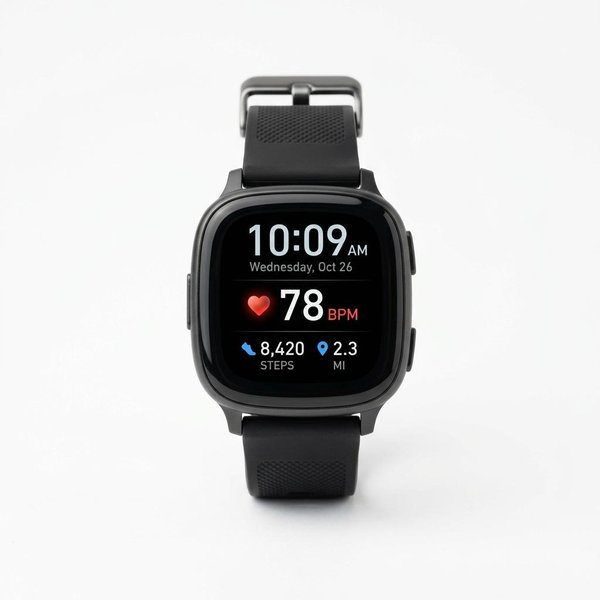
Compare GPS watches and fitness trackers for home gym and outdoor training. Feature overlap, accuracy differences, and selection guidance by workout type.
The distinction between GPS watches and fitness trackers has blurred. Premium fitness trackers now include GPS. Budget GPS watches track daily steps. The category boundaries are increasingly meaningless—but the underlying feature differences still matter for specific use cases.
This guide breaks down what each device type actually does, where their capabilities overlap, and how to choose based on your training environment, data requirements, and budget.
A wrist-worn device primarily designed for all-day activity monitoring: steps, distance, calories, sleep, heart rate, and smartphone notifications. Typically slim, lightweight, and touchscreen-oriented. GPS may be connected (phone-required) or built-in (premium models).
Typical examples: Fitbit Charge 6, Garmin Vivosmart 5, Amazfit Band 7, Xiaomi Smart Band 8.
Typical price range: $40–200.
A wrist-worn device primarily designed for workout tracking with built-in GPS, extended battery life, and training analysis features. Larger, more rugged, with physical buttons for operation during sweaty or gloved activity.
Typical examples: Garmin Forerunner 265, Coros Pace 3, Apple Watch Series 9/Ultra, Polar Vantage V3, Suunto Race.
Typical price range: $200–800+.
| Feature | Budget Fitness Tracker ($40–80) | Premium Fitness Tracker ($100–200) | Entry GPS Watch ($200–350) | Premium GPS Watch ($350–800) |
|---|---|---|---|---|
| Built-in GPS | No (phone-connected only) | Sometimes (yes on premium) | Yes | Yes (multi-band on some) |
| Heart rate | Optical, 24/7 | Optical, 24/7 + workout | Optical, 24/7 + workout | Optical + optional chest strap |
| Step counting | Yes | Yes | Yes | Yes |
| Sleep tracking | Basic (time, stages) | Detailed (stages, SpO2, HRV) | Detailed | Detailed + recovery metrics |
| Workout modes | 10–20 | 20–40 | 30–50+ | 50–100+ |
| Battery life (typical use) | 7–14 days | 5–14 days | 10–20 hours GPS; 7–14 days smartwatch | 20–60 hours GPS; 14–30 days smartwatch |
| Water resistance | 5 ATM typical | 5 ATM typical | 5–10 ATM | 10 ATM+ (dive-rated on some) |
| Third-party apps | Minimal | Some | Extensive (Wear OS, watchOS) | Moderate to extensive |
| Music storage | No | Sometimes | Sometimes | Often |
| Contactless payment | Sometimes | Often | Often | Often |
| Smartphone notifications | Yes | Yes | Yes | Yes |
| Training load analysis | No | Basic | Moderate | Advanced (recovery, readiness, VO2max) |
| Barometric altimeter | No | Sometimes | Yes | Yes |
| Body weight/size | Lightweight (20–30g) | Light (20–35g) | Moderate (35–50g) | Heavier (50–90g) |
| Screen visibility in sun | Moderate | Moderate | Good–Excellent | Excellent (MIP or AMOLED) |
| Button operation | Touch only | Touch only | Touch + buttons | Touch + buttons |
Built-in GPS is the defining hardware difference. Connected GPS (using your phone's GPS via Bluetooth) is functionally equivalent for route tracking but requires carrying your phone.
| GPS Type | Typical Accuracy | Best For |
|---|---|---|
| Connected (phone) | 3–10 meters | Occasional outdoor tracking |
| Built-in single-band | 3–8 meters | Regular outdoor running/cycling |
| Built-in dual-frequency (L1+L5) | 1–3 meters | Urban canyons, dense tree cover, precise pacing |
For home gym users who rarely exercise outdoors, built-in GPS is unnecessary. For runners and cyclists who train without phones, it's essential.
Optical heart rate (the green-light sensor on the wrist) varies in accuracy by device quality and activity type:
| Activity Type | Optical HR Accuracy | Notes |
|---|---|---|
| Walking, daily activity | ±3–5 bpm (good) | Stable wrist, low movement |
| Steady-state running | ±5–10 bpm (moderate) | Running motion creates noise |
| High-intensity intervals | ±10–20 bpm (poor) | Rapid HR changes lag behind optical sensors |
| Strength training | ±10–25 bpm (poor) | Wrist flexion, grip tension, rapid changes |
| Cycling | ±5–15 bpm (moderate) | Depends on wrist position and road vibration |
Chest strap heart rate monitors (Bluetooth or ANT+) provide ECG-accurate readings (±1–2 bpm) and are the standard for serious training. Premium GPS watches support chest strap pairing. Fitness trackers generally do not.
Our assessment: For home gym strength training and HIIT, neither optical sensor is highly accurate during the workout itself. Both are adequate for 24/7 resting heart rate and recovery tracking. If precise heart rate zone training matters for your goals, a chest strap paired with a GPS watch is the accurate solution.
Both device types count steps using a 3-axis accelerometer. Published validation studies indicate:
Step counting is directionally useful for trend tracking but not precise enough for research-grade measurement on any consumer device.
Best choice: Premium fitness tracker or entry GPS watch.
Why: Strength training generates poor optical heart rate data regardless of device. The value lies in tracking workout frequency, duration, and session logging—not in precise physiological measurement. A fitness tracker records that you completed "Back & Biceps, 45 minutes" and tracks your weekly consistency. A GPS watch adds rep counting (on some models), rest timer functionality, and better button operation with sweaty hands.
Key features that matter: Easy workout mode initiation, rest timer, button operation (not touch-only), water/sweat resistance, weekly training volume summary.
Best choice: Premium fitness tracker or any GPS watch.
Why: Indoor cardio doesn't use GPS. Treadmills and bikes have their own speed/distance displays. The wearable adds heart rate (moderate accuracy), calorie estimation, and session logging. Both device types handle this equally well.
Exception: If your treadmill or bike connects via Bluetooth to transmit speed/cadence data to the watch, a GPS watch with ANT+ support expands compatibility.
Best choice: Entry to premium GPS watch.
Why: Built-in GPS is essential for pace, distance, and route tracking. Connected GPS (phone-required) is impractical for running—phones bounce, require armbands, and add weight.
Key features that matter: GPS accuracy, pace alerts, interval programming, auto-lap, post-run data analysis (pace per mile/km, elevation, heart rate zones).
Best choice: GPS watch with button operation and interval timer.
Why: HIIT requires rapid transitions, sweaty hands, and precise interval timing. Touchscreen fitness trackers become frustrating when wet. Physical buttons on GPS watches enable lap timing, interval start/stop, and display navigation mid-workout without looking at the screen.
Best choice: Premium fitness tracker.
Why: The slim form factor encourages 24/7 wear (including sleep). Better battery life means less frequent charging. Step counting, sleep tracking, and basic workout modes cover the needs of most general fitness users. The device you wear consistently provides better data than the device you leave on the charger.
Best choice: Premium GPS watch.
Why: Multi-sport modes, open-water GPS tracking, structured workout support, training load analysis, and recovery metrics are GPS watch territories. The investment pays for itself in training coherence and injury prevention through load management.
GPS watches vary dramatically in battery life. A Coros Pace 3 delivers 38 hours of GPS tracking. An Apple Watch Ultra delivers 18–36 hours with typical use. A Garmin Forerunner 265 delivers ~20 hours GPS. For ultrarunners, multi-day hikers, or anyone who forgets to charge devices, this difference is decisive—not incremental.
Fitness trackers generally win on daily-use battery life (7–14 days) but lose on GPS battery life (they often don't have built-in GPS at all).
During high-intensity exercise, touchscreens become unreliable. Sweat, gloves, and rapid movement all interfere with touch input. GPS watches universally include physical buttons. Many fitness trackers are touch-only. If you do HIIT, outdoor winter training, or any workout where you can't precisely tap a screen, buttons are essential.
The Apple Watch and Wear OS (Google) watches support extensive third-party apps—Spotify, Strava, training programs, messaging. Dedicated sport watches (Garmin, Coros, Polar, Suunto) have more limited app ecosystems but deeper native sport functionality.
If smartwatch features matter as much as fitness features, a smartwatch with GPS (Apple Watch, Galaxy Watch, Pixel Watch) bridges both categories at the cost of reduced sport-specific battery life.
Consider where your data lives:
If you're already embedded in one ecosystem, switching costs (lost historical data, relearning interfaces) may outweigh marginal hardware differences.
| Budget | Best Option | Rationale |
|---|---|---|
| Under $50 | Basic fitness tracker (Xiaomi, Amazfit bands) | Step counting, sleep, basic HR. No GPS. |
| $50–120 | Mid-tier fitness tracker (Fitbit Inspire, Amazfit GTS) | Better HR, some have connected GPS, detailed sleep. |
| $120–200 | Premium fitness tracker or budget GPS watch | Pivot point. Fitbit Charge 6 (tracker) vs. Coros Pace 3 (GPS watch). |
| $200–350 | Entry GPS watch (Garmin Forerunner 165, Coros Pace 3) | Built-in GPS, buttons, workout modes, training analysis. Best value zone. |
| $350–500 | Mid-tier GPS watch (Garmin Forerunner 265, Polar Vantage V3) | Better GPS, AMOLED screens, advanced metrics. |
| $500–800 | Premium GPS watch (Garmin Fenix, Apple Watch Ultra) | Durability, mapping, multi-week battery, sapphire glass. |
| $800+ | Flagship (Garmin Epix, Apple Watch Ultra 2) | Marginal gains over mid-tier for most users. Status/feature premium. |
The fitness tracker vs. GPS watch decision simplifies to three questions:
The device you wear consistently is more valuable than the device with the best specifications. Comfort, battery life, and habit compatibility matter more than marginal sensor accuracy differences.
As an Amazon Associate we earn from qualifying purchases.
Last updated: 2025-07-21