Apple Watch Series 9 for Home Gym Fitness: In-Depth Review (2025)
Comprehensive review of Apple Watch Series 9 for home gym fitness tracking. We test workout accuracy, heart rate monitor...
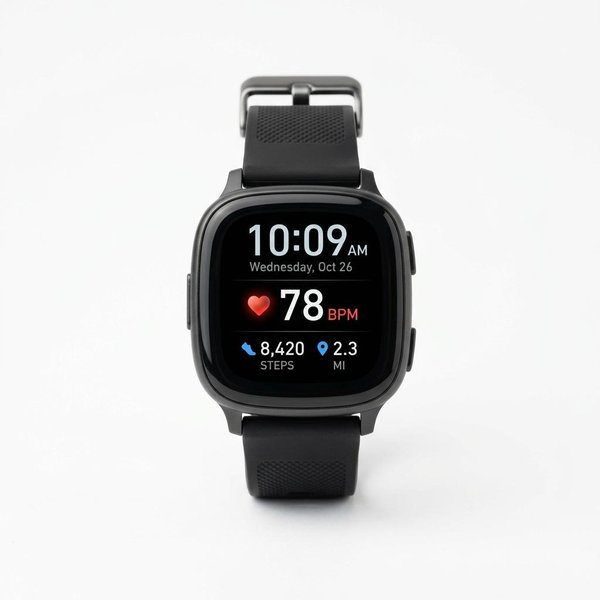
Our comprehensive, research-backed guide to choosing a fitness tracker in 2026. Compare features, accuracy, ecosystems, and find the perfect device for your training goals.
Our comprehensive guide breaks down every factor you should consider when purchasing a fitness tracker in 2026, from sensor accuracy and battery life to ecosystem integration and long-term value.
The fitness tracker market has fragmented into distinct categories: budget bands under $50, mid-range trackers at $100-200, sports watches at $300-500, and premium multi-function devices exceeding $700. Each category serves different users, and the wrong choice leads to abandoned devices in drawers — research suggests 30% of fitness trackers are discontinued within six months of purchase, often due to mismatched expectations.
This guide helps you navigate the landscape systematically, ensuring your investment matches your actual training needs, technical preferences, and budget constraints.
Before evaluating specifications, identify your dominant activity. The right tracker for a marathon runner differs fundamentally from the right tracker for a strength-focused home gym athlete or a general wellness seeker.
| Primary Activity | Priority Features | Budget Range | Form Factor |
|---|---|---|---|
| Running (outdoor) | GPS accuracy, pace alerts, structured workouts | $200-500 | Watch |
| Home gym strength | Rep counting, rest timers, HR during lifting | $100-400 | Watch or band |
| Mixed training | Multi-sport modes, training load, recovery | $250-600 | Watch |
| General wellness | Steps, sleep, stress, all-day comfort | $50-200 | Band or ring |
| Swimming | 5 ATM+ water rating, pool metrics, open water GPS | $200-500 | Watch |
| Recovery focus | HRV, sleep stages, temperature, readiness scores | $300-800 | Ring or strap |
Your primary use case should drive 70% of your decision. Secondary features (smartwatch functions, contactless payment, music storage) should not override core training utility.
Virtually all modern fitness trackers use photoplethysmography (PPG) — green LED light shone into the skin, measuring blood volume changes to infer heart rate. This technology works well for steady-state cardio but degrades during high-intensity intervals, wrist-flexing movements (rowing, kettlebell work), and rapid heart rate changes.
What the research shows: A 2024 meta-analysis in Sports Medicine found that wrist-based optical heart rate monitors have mean absolute percentage errors of 3-5% during steady-state exercise, 8-12% during high-intensity intervals, and 10-15% during strength training. Chest strap monitors (electrical detection) reduce these errors to 1-2% across all modalities.
Implication: If heart rate zone training during intervals or strength work is critical to your programming, budget for a Bluetooth chest strap ($50-90) regardless of which tracker you choose. No wrist-based optical sensor has overcome this physics limitation.
GPS accuracy determines pace and distance precision for outdoor activities. Three tiers exist:
| GPS Type | Typical Accuracy | Price Tier | Best For |
|---|---|---|---|
| Connected (phone GPS) | Moderate, phone-dependent | Budget bands | Occasional outdoor use |
| Single-band L1 | 3-5% error | Entry-level watches | Casual runners |
| Dual-frequency L1+L5 | 1-2% error | Mid-range to premium | Serious runners, trail athletes |
| Multi-band GNSS | <1% error | Premium | Ultrarunners, navigation-heavy |
For home gym athletes who primarily run neighborhood loops or park trails, dual-frequency L1+L5 (available in watches $250+) provides sufficient accuracy. Multi-band GNSS becomes relevant only for complex navigation in dense forest or urban canyon environments.
SpO2 monitoring uses red and infrared PPG to estimate blood oxygen saturation. Consumer wearable accuracy typically falls within 2-4% of clinical pulse oximeters under resting conditions but degrades during movement and cold extremities.
Utility assessment: For healthy athletes at sea level, continuous SpO2 tracking provides limited actionable insight. It becomes valuable for: high-altitude acclimatization monitoring, sleep apnea screening (trend data), and illness detection during respiratory infections. If none of these apply to you, SpO2 is a nice-to-have rather than a need-to-have.
Only a few wearables (Oura Ring, some Garmin watches, Apple Watch Series 8+) include skin temperature sensors. This metric tracks deviation from your personal baseline rather than absolute temperature, making it useful for: illness early detection, menstrual cycle tracking, and recovery status inference.
Utility assessment: Temperature trending provides unique data that HR and HRV cannot replicate. For athletes who train hard and want to minimize illness-related training interruptions, this feature justifies modest premiums.
Fitness tracker ecosystems are increasingly walled gardens. Your choice affects data portability, third-party app integration, and future device compatibility.
| Ecosystem | Strengths | Weaknesses | Hardware Range |
|---|---|---|---|
| Apple Health/Fitness | Deep iOS integration, third-party app breadth, medical research participation | iPhone required, limited web access, data export restrictions | Apple Watch only |
| Garmin Connect | Training analytics depth, Connect IQ apps, excellent web platform | Steep learning curve, social features limited | Wide (Forerunner, Fenix, Instinct, Venu) |
| Fitbit/Google | User-friendly interface, large community, Google ecosystem integration | Declining feature innovation, privacy concerns post-acquisition | Limited (Charge, Sense, Versa) |
| Polar Flow | Training Load Pro, recovery diagnostics, coaching tools | Narrower device range, smaller community | Vantage, Ignite, Grit |
| Whoop | Recovery focus, strain/recovery balance, continuous monitoring | No GPS, no display, expensive subscription | Strap only |
| Coros | Value pricing, long battery life, EvoLab analytics | Limited third-party integration, narrower app ecosystem | Pace, Apex, Vertix |
| Amazfit/Zepp | Budget pricing, long battery, good hardware specs | Software polish lags, limited third-party apps | Wide range of bands and watches |
Key question: Are you buying a device or an ecosystem? Switching from Apple Watch to Garmin means rebuilding years of health data and learning new software. For athletes with years of training logs in one platform, ecosystem continuity may override marginal hardware differences.
Manufacturer battery claims are measured under ideal conditions (minimal notifications, no GPS, no always-on display). Real-world battery life is typically 30-50% lower.
| Use Pattern | Claimed Battery | Realistic Battery | Charging Frequency |
|---|---|---|---|
| Basic band, light use | 14 days | 7-10 days | Weekly |
| Smartwatch, no workouts | 18 hours | 24-36 hours | Daily |
| Smartwatch, 1hr GPS daily | 36 hours | 18-24 hours | Daily |
| Sports watch, no GPS | 14 days | 7-10 days | Weekly |
| Sports watch, 1hr GPS daily | 20 hours GPS | 5-7 days total | 2x weekly |
| Premium sports watch, heavy use | 40 hours GPS | 3-5 days total | 2x weekly |
Practical guidance: If you find charging daily unacceptable, eliminate smartwatches and focus on sports watches or basic bands. If you train 5+ days weekly with GPS, prioritize 20+ hour GPS battery watches to avoid mid-week charging anxiety.
At this price point, you get reliable step counting, sleep time estimation, and basic heart rate monitoring. These devices suit wellness-focused users who want general activity awareness without training specificity.
Our pick: Amazfit Band 7 — 18-day battery, AMOLED display, SpO2, continuous HR, 5 ATM water resistance. No GPS, but exceptional value for basic tracking.
This tier adds connected GPS (uses phone), workout mode auto-detection, and improved app ecosystems. Suitable for casual exercisers who want activity logging without premium pricing.
Our picks:
The sweet spot for most home gym athletes. Built-in GPS, multi-sport modes, training load metrics, and recovery tracking. Watches in this range handle 90% of training scenarios.
Our picks:
Enhanced durability, superior mapping, advanced recovery metrics, and broader smartwatch features. For athletes who demand top-tier specifications.
Our picks:
Devices in this category serve specific use cases: the Whoop 4.0 for recovery optimization, Oura Ring for sleep tracking, or the most premium outdoor watches.
Our picks:
Before finalizing your purchase, verify these specifications match your needs:
| Feature | Why It Matters | Minimum Spec |
|---|---|---|
| Water resistance | Swimming, showering, sweat | 5 ATM (50m) minimum |
| Display type | Outdoor visibility, battery impact | AMOLED preferred; transflective for max battery |
| Heart rate zones | Training intensity guidance | 5-zone support with custom zone editing |
| Workout modes | Activity-specific tracking | Your primary activities must be supported |
| Data export | Training log continuity | GPX, TCX, or FIT export; API access preferred |
| Music storage | Phone-free workouts | 2GB+ for meaningful music libraries |
| Contactless payment | Convenience during runs | NFC support (Garmin Pay, Apple Pay, Fitbit Pay) |
| Third-party apps | Workout program flexibility | Connect IQ, App Store, or equivalent |
Vague "AI coaching" claims: Many budget trackers promise AI-powered insights that amount to generic "move more" suggestions. Verify that AI features provide specific, actionable guidance based on your actual data.
Required subscriptions for basic features: Some devices (Whoop, Oura, Tonal) lock core functionality behind paywalls. Factor 2-3 years of subscription costs into total cost of ownership.
Crowdfunding promises: Unestablished brands on Kickstarter and Indiegogo frequently overpromise sensor accuracy and app quality. Stick to manufacturers with established support infrastructure and return policies.
Proprietary charging cables: If the device uses a unique charging cable, verify replacement availability. Obsolete charging cables render devices useless.
| User Type | Our Recommendation | Budget |
|---|---|---|
| Budget-conscious beginner | Amazfit Band 7 | $40-50 |
| iPhone user, all-around | Apple Watch Series 9 or SE | $250-400 |
| Serious runner, data-focused | Garmin Forerunner 265 | $420-450 |
| Value-focused endurance athlete | Coros Pace 3 | $230-250 |
| Recovery-obsessed athlete | Whoop 4.0 or Oura Ring Gen 3 | $300-720 over 2 years |
| Strength training primary | Fitbit Charge 6 + chest strap | $140-220 |
| Multi-sport outdoor athlete | Garmin fenix 7 Pro | $700-800 |
The perfect fitness tracker does not exist — but the right tracker for your specific needs does. Start with your primary activity, verify sensor accuracy requirements, choose an ecosystem you can live with long-term, and calculate total cost of ownership including subscriptions. Avoid feature creep: a $50 band that you wear daily delivers infinitely more value than an $800 watch abandoned after three months.
Our analysis suggests that most home gym athletes will find optimal value in the $200-400 range, where dual-frequency GPS, robust training features, and week-long battery life converge. Spend more only when you have specific, justified needs that cheaper devices cannot meet.