Apple Watch Series 9 for Home Gym Fitness: In-Depth Review (2025)
Comprehensive review of Apple Watch Series 9 for home gym fitness tracking. We test workout accuracy, heart rate monitor...
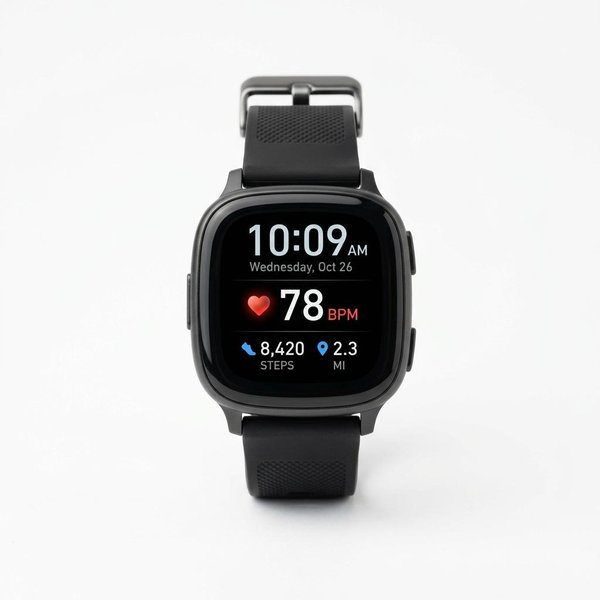
An evidence-based guide to fitness tracker accuracy covering heart rate, calorie, step counting, GPS, and sleep tracking. Compares chest strap vs. wrist-based monitoring and identifies which metrics actually matter.
Fitness trackers and smartwatches promise quantified insight into your health and exercise performance. Our analysis examines the published validation studies for each major metric category to determine which numbers you can trust, which require interpretation, and which should be treated as rough estimates at best.
The central finding: Consumer wearables are generally accurate for metrics that rely on direct mechanical measurement (step counting, GPS position) and less accurate for metrics that rely on algorithmic interpretation of physiological signals (calorie expenditure, sleep stages). Understanding these distinctions prevents misinformed training and nutrition decisions.
| Method | Technology | Mechanism |
|---|---|---|
| Chest strap | Electrical (ECG) | Detects electrical signals from the heart muscle |
| Wrist optical (PPG) | Photoplethysmography | Measures blood volume changes in capillaries using LED light |
Published validation studies comparing consumer devices to clinical-grade ECG systems reveal consistent patterns:
| Activity Type | Chest Strap Accuracy | Wrist Optical Accuracy | Notes |
|---|---|---|---|
| Rest / light activity | Excellent (±1–2 bpm) | Good (±3–5 bpm) | Both methods perform well at low intensities |
| Steady-state cardio (running, cycling) | Excellent (±1–2 bpm) | Moderate (±5–10 bpm) | Optical tends to lag during gradual intensity changes |
| High-intensity intervals | Excellent (±1–3 bpm) | Poor to moderate (±10–20 bpm) | Rapid heart rate changes challenge optical sensors |
| Resistance training | Good (±2–5 bpm) | Poor (±10–30 bpm) | Wrist flexion and muscle tension disrupt optical readings |
| Activities with arm motion | Good (±2–5 bpm) | Poor (±15–40 bpm) | CrossFit, rowing, boxing create motion artifacts |
Why optical wrist sensors struggle during exercise:
| Use Case | Recommended Device | Why |
|---|---|---|
| Zone 2 training (steady-state cardio) | Wrist optical is sufficient | Accuracy is adequate at constant moderate intensity |
| Zone 4/5 training (threshold, VO2 max) | Chest strap recommended | Optical sensors frequently underreport at high intensities |
| HIIT / interval training | Chest strap recommended | Rapid heart rate changes exceed optical tracking capability |
| Strength training | Chest strap if tracking heart rate | Wrist readings during lifting are unreliable |
| Sleep heart rate | Wrist optical is sufficient | Accuracy improves at rest |
| All-day resting heart rate trending | Wrist optical is sufficient | Trend data is meaningful even with minor absolute errors |
Calorie estimation on wearables involves multiple layers of estimation:
Each layer introduces error. The cumulative result is an estimate with significant variance.
| Study Type | Calorie Estimate Error | Context |
|---|---|---|
| Walking | 10–30% overestimation | Most accurate of all activities |
| Running | 10–25% overestimation | Slightly better than walking due to more consistent motion |
| Cycling | 20–40% overestimation | Wrist-based devices often fail to detect cycling motion |
| Resistance training | 30–60% overestimation | Highly inaccurate; algorithms are not designed for weightlifting |
| Daily total energy expenditure | 15–30% error | BMR estimates vary; activity detection is imperfect |
What this means practically: If your watch reports you burned 500 calories during a workout, the actual expenditure likely falls between 350 and 600 calories. The error is directional — most devices overestimate rather than underestimate.
| Issue | Explanation |
|---|---|
| Individual metabolic variance | Two people of the same weight and age can have 15–25% different metabolic rates |
| Heart rate variability | Some people have naturally higher or lower heart rates for the same oxygen consumption |
| Poor activity classification | A tracker may classify vacuuming as "moderate exercise" or weightlifting as "light activity" |
| Fitness level not fully accounted for | Fitter individuals burn fewer calories at the same heart rate than unfit individuals |
Our recommendation: Use calorie data as a rough directional guide ("this was a higher-burn workout than yesterday") rather than a precise value for nutrition planning. For nutrition purposes, track body weight and adjust intake based on trends, not device-reported expenditure.
Step counting is one of the most reliable metrics on modern wearables because it relies on a direct mechanical measurement — accelerometer data interpreted as foot strikes.
| Condition | Accuracy | Notes |
|---|---|---|
| Walking on flat ground | Excellent (±1–3%) | The primary use case; very reliable |
| Running | Very good (±2–5%) | Slight undercounting at very high cadences |
| Uneven terrain | Good (±5–10%) | Occasional missed or extra steps |
| Treadmill | Very good (±2–5%) | Similar to outdoor walking |
| Non-ambulatory activity | Variable false positives | Driving on bumpy roads, washing dishes, manual labor |
| Slow walking (under 2 mph) | Moderate (±5–15%) | May miss steps if cadence is very low |
| Carrying objects | Moderate (±5–10%) | Restricted arm swing reduces detection |
Why step counts are useful: While 10,000 steps is an arbitrary goal with no specific scientific basis, step counting provides an objective, consistent measure of daily movement volume. Tracking relative changes ("I walked 20% more this week than last week") is meaningful even if the absolute number has minor error.
Limitations: Step counting does not capture exercise intensity. 10,000 steps of leisurely walking is not equivalent to 10,000 steps that include hills or intervals. Heart rate or perceived exertion data adds necessary context.
Fitness trackers and watches connect to the Global Positioning System (or GLONASS, Galileo) to determine location. Distance and pace are calculated from positional changes over time.
| Factor | Impact on Accuracy |
|---|---|
| Urban canyons (tall buildings) | Moderate to severe degradation; reflected signals create position error |
| Tree cover | Mild to moderate degradation; dense canopy blocks signals |
| Open sky | Best accuracy; minimal interference |
| Wrist position | Moderate impact; keep wrist oriented toward sky when possible |
| Multi-band GNSS | Significant improvement; newer devices use multiple satellite systems |
| Immediate start | Device needs 10–30 seconds to acquire full satellite lock |
| Condition | Distance Error | Pace Error |
|---|---|---|
| Open road running | 1–3% | Minimal |
| Track running | 1–2% | Minimal |
| Urban running | 3–8% | Moderate; pace may fluctuate spuriously |
| Trail running | 2–5% | Mild; tree cover causes minor errors |
| Cycling | 1–3% | Similar to running on roads |
Instant pace vs. average pace: GPS-derived instant pace (your current speed) is highly variable and often inaccurate due to the 1–5 second sampling rate of consumer GPS. Average pace over a lap, mile, or kilometer is far more reliable. Use lap pace rather than current pace for pacing decisions during runs.
| Metric | Accuracy | Notes |
|---|---|---|
| Time in bed | Excellent | Detected by wear/not-wear sensors and movement |
| Sleep onset (approximate) | Good | Detected by reduced movement and heart rate changes |
| Wake time | Good | Detected by movement and heart rate increase |
| Total sleep time | Good to very good | Calculated from time in bed minus detected awake periods |
| Sleep consistency (bedtime/wake time trends) | Excellent | Trend data is highly reliable |
| Metric | Accuracy | Notes |
|---|---|---|
| Sleep stages (light, deep, REM) | Poor to moderate | Compared to clinical polysomnography, consumer devices show 50–70% agreement for stage classification |
| Deep sleep duration | Poor | Most inconsistent metric; often over- or under-reported by 30+ minutes |
| REM sleep duration | Moderate | Slightly better than deep sleep but still inconsistent |
| Sleep score | Subjective | Algorithm-dependent; not clinically validated |
| Sleep quality | Not directly measurable | No consumer device can directly measure sleep quality |
Why sleep stage accuracy is limited: Clinical sleep staging requires brainwave (EEG) measurement, eye movement tracking (EOG), and muscle tone monitoring (EMG). Consumer devices use only heart rate variability and movement — two indirect proxies for sleep stages. These proxies correlate with sleep stages at the population level but show significant individual variance.
| Use This Data | Ignore or Treat Skeptically |
|---|---|
| Total time in bed | Specific minutes of "deep sleep" |
| Bedtime and wake time consistency | Exact stage percentages |
| Week-to-week sleep duration trends | Single-night sleep scores |
| Whether you got 7–9 hours | Whether you got "enough" REM based on device output |
Our analysis prioritizes wearable metrics based on accuracy and actionable value:
| Metric | Why It Matters | How to Use It |
|---|---|---|
| Resting heart rate (RHR) trend | Indicator of cardiovascular fitness and recovery | Track weekly average; decreasing trend indicates improving fitness; sudden increases may indicate overtraining or illness |
| Heart rate during exercise | Guides training intensity zones | Train in appropriate zones for your goals |
| Step count / daily movement | Objective measure of sedentary vs. active behavior | Set consistent daily targets; track trends |
| Sleep duration | Strongly associated with health outcomes | Prioritize 7–9 hours; track consistency |
| Metric | Accuracy Caveat | How to Use It |
|---|---|---|
| GPS distance and average pace | Good in open areas; degraded in urban environments | Track performance trends over repeated routes |
| Exercise heart rate (chest strap) | Excellent accuracy | Real-time intensity guidance; post-workout analysis |
| Heart rate variability (HRV) | Moderate accuracy on some devices | Morning HRV trends can indicate recovery status |
| Metric | Accuracy Issue | How to Use It |
|---|---|---|
| Calorie expenditure | 15–60% error depending on activity | Directional reference only; do not use for precise nutrition planning |
| Sleep stages | 30–50% error vs. clinical measurement | Ignore exact stage durations; focus on total sleep time |
| Wrist heart rate during strength training | Highly inaccurate | Do not rely on these numbers for training decisions |
| "Recovery" or "readiness" scores | Algorithm-dependent; limited validation | Treat as one input among many; do not let it override how you actually feel |
| Action | Impact | Effort |
|---|---|---|
| Wear the device snugly (one finger width of tightness) | Significant improvement in optical HR accuracy | Low |
| Position optical sensor 1–2 inches above wrist bone | Moderate improvement in HR accuracy | Low |
| Wait for GPS lock before starting activity | Eliminates distance/pace errors from cold start | Low |
| Wear chest strap for intervals and strength training | Dramatic improvement in HR accuracy during these activities | Moderate |
| Keep firmware updated | Manufacturers release accuracy improvements | Low |
| Calibrate stride length if device offers it | Improves indoor treadmill distance estimates | Low |
| Manually start/stop activity modes | Reduces misclassification errors | Low |
As an Amazon Associate we earn from qualifying purchases.