Apple Watch Series 9 for Home Gym Fitness: In-Depth Review (2025)
Comprehensive review of Apple Watch Series 9 for home gym fitness tracking. We test workout accuracy, heart rate monitor...
SnugGym is an Amazon Associate. We earn from qualifying purchases at no extra cost to you. Learn more
Our research-backed comparison of the top smart home gym equipment for 2026, evaluating connectivity, workout quality, data tracking, and value across strength and cardio categories.
Our independent analysis evaluates six leading smart gym devices across workout quality, data tracking accuracy, app ecosystem depth, and long-term value to help home gym owners choose connected equipment worth the premium.
Smart gym equipment promises to combine the guidance of personal training with the convenience of home workouts. The category has matured significantly: early smart devices were essentially screens attached to basic equipment, while current-generation hardware integrates real-time form feedback, automatic weight adjustment, and performance analytics that genuinely enhance training outcomes.
We researched six devices that represent the current state of connected fitness, focusing on equipment that delivers measurable training benefits beyond novelty value.
| Feature | Tempo Move | Tonal | Peloton Bike+ | NordicTrack iSelect | JAXJOX KettlebellConnect 2.0 | Bowflex SelectTech 552 with JRNY |
|---|---|---|---|---|---|---|
| Price Range | $500–$600 | $3,500–$4,000 | $2,000–$2,500 | $400–$600 | $200–$250 | $350–$450 |
| Category | Smart strength (AI camera) | Smart cable machine | Smart bike | Smart dumbbells | Smart kettlebell | Smart adjustable dumbbells |
| Weight Range | Uses your weights | Up to 200 lb digital resistance | N/A (cycling) | 5–50 lb (adjustable) | 12–42 lb | 5–52.5 lb |
| Form Feedback | 3D AI camera | No | Cadence, output | No | No | Rep counting |
| Live Classes | On-demand only | On-demand + live | Live + on-demand | iFit on-demand | No | JRNY on-demand |
| Subscription | $39/mo (required) | $49–$60/mo (required) | $44/mo (required) | $15–$39/mo iFit | None required | $11.99/mo optional |
| Footprint | ~3 x 3 ft | ~7 x 4 ft (wall-mounted) | ~4 x 2 ft | Standard dumbbell rack | ~1 x 1 ft | ~2 x 2 ft |
| Best For | Form-focused strength | Premium cable training | Cycling enthusiasts | iFit ecosystem users | Kettlebell versatility | Budget smart dumbbells |
Table based on manufacturer specifications and published reviews. Prices reflect typical US retail as of early 2026.
Our assessment prioritizes attributes relevant to serious home training:
The Tempo Move represents the most accessible entry point into AI-guided strength training, using an iPhone's TrueDepth camera for 3D motion tracking rather than expensive dedicated hardware. This design choice dramatically reduces cost while maintaining sophisticated form feedback.
Why it leads: The 3D camera system tracks 25 joint points at 30 frames per second, comparing your movement patterns against a database of biomechanically sound form models. When your squat depth decreases across sets or your back rounds during deadlifts, the system provides real-time audio cues: "Hips lower on the next rep" or "Chest up, maintain neutral spine." This feedback loop addresses the primary limitation of unsupervised home strength training — form degradation under fatigue.
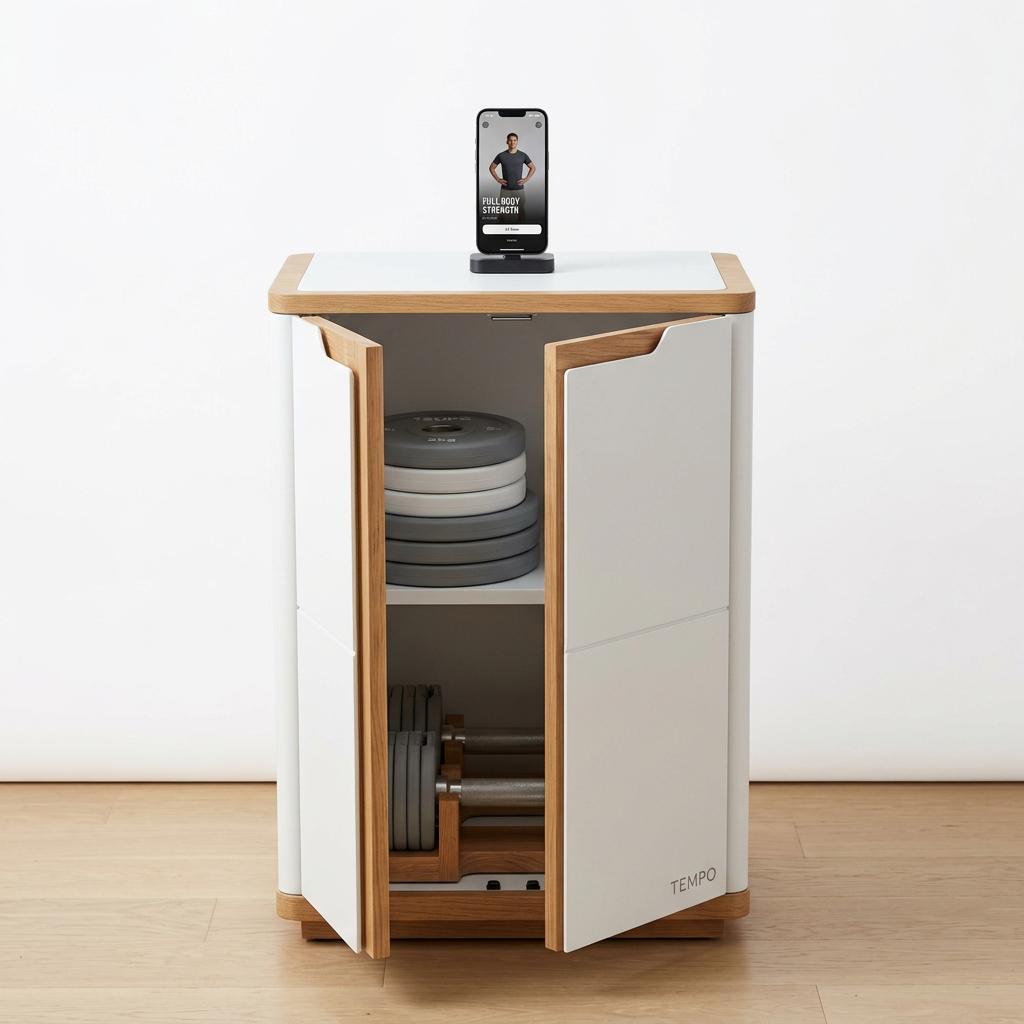
The Tempo Move uses your existing weight plates and dumbbells (requires standard 1-inch or 2-inch plates), so you're not locked into proprietary resistance systems. The compact form factor (roughly a small cabinet that sits below your TV) suits apartment home gyms where floor space is limited.
The workout library spans strength, HIIT, mobility, and conditioning with programs organized by training goal and experience level. The "Progressive Overload" feature automatically suggests weight increases when you complete all prescribed reps with good form — a fundamental training principle that many home trainees neglect.
Limitations: Requires a compatible iPhone (iPhone XR or newer) for camera functionality. The $39/month subscription is mandatory — the device becomes a passive weight storage unit without it. 3D tracking accuracy degrades in poor lighting conditions.
The Tonal remains the category-defining smart strength device, combining electromagnetic resistance with a wall-mounted design that eliminates the footprint of traditional home gyms. At $3,500–$4,000 plus mandatory subscription, it demands serious commitment — but delivers a training experience unmatched by conventional equipment.
Key differentiator: Tonal's electromagnetic resistance system generates up to 200 pounds of digital weight per arm (100 lb per arm), with weight adjustments in 1-pound increments and the ability to dynamically vary resistance throughout the range of motion (Eccentric Mode, Chains Mode, Spotter Mode). This precision enables training techniques — accommodating resistance, eccentric overload — that require expensive specialized equipment in commercial gyms.
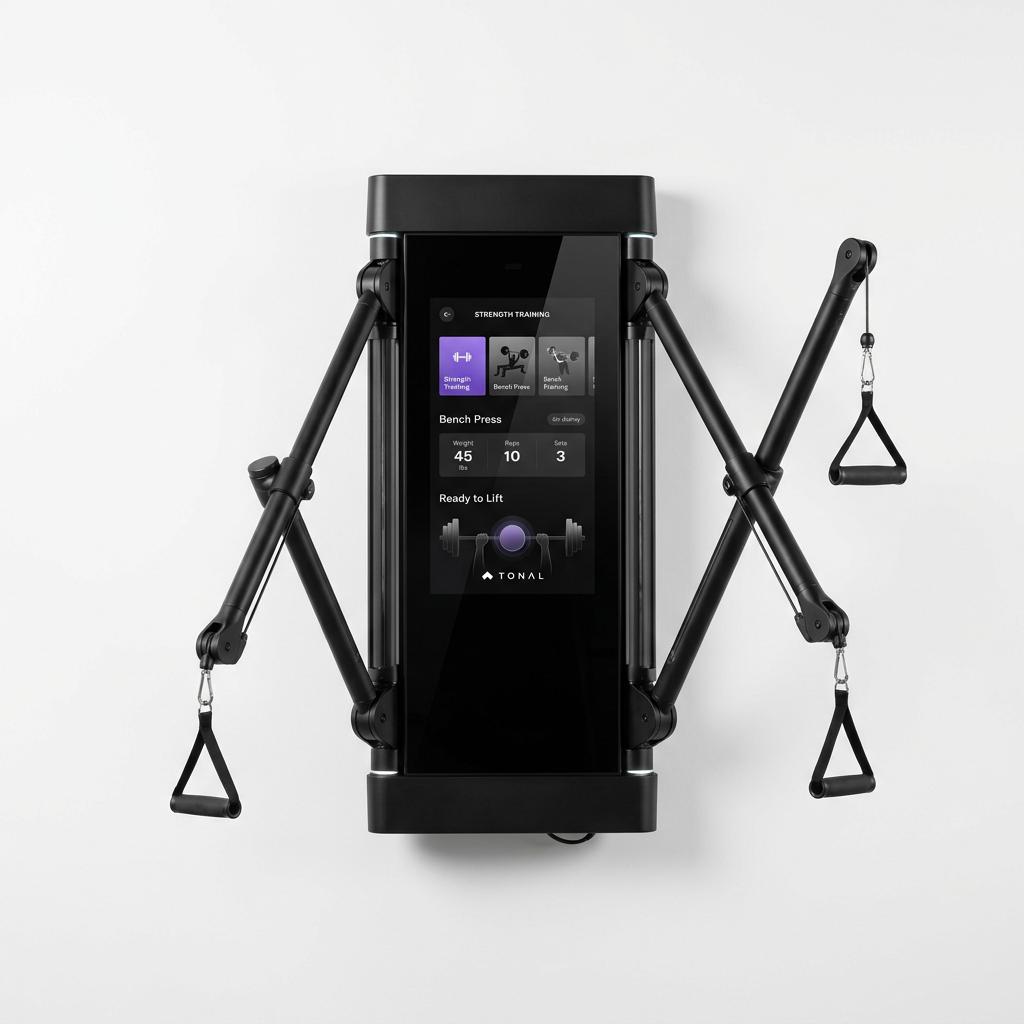
The 24-inch touchscreen displays exercise demonstrations, real-time rep counting, and power output curves. Tonal calculates a "Strength Score" that tracks your estimated one-rep maximum across movement patterns, providing objective progression data that motivates continued training.
The workout library includes programs designed by certified strength coaches with periodized progression, deload weeks, and goal-specific tracks (muscle building, strength, weight loss, maintenance). Live and on-demand class formats provide instructor energy for users who benefit from external motivation.
Considerations: The installation requirement (studs, electrical outlet, ~7 feet of wall width) limits placement options. The $49–$60/month subscription is non-negotiable — the device cannot be used for basic resistance training without an active membership. Electromagnetic resistance, while smooth, does not perfectly replicate the feel of free weights, which some users find less satisfying for certain movements.
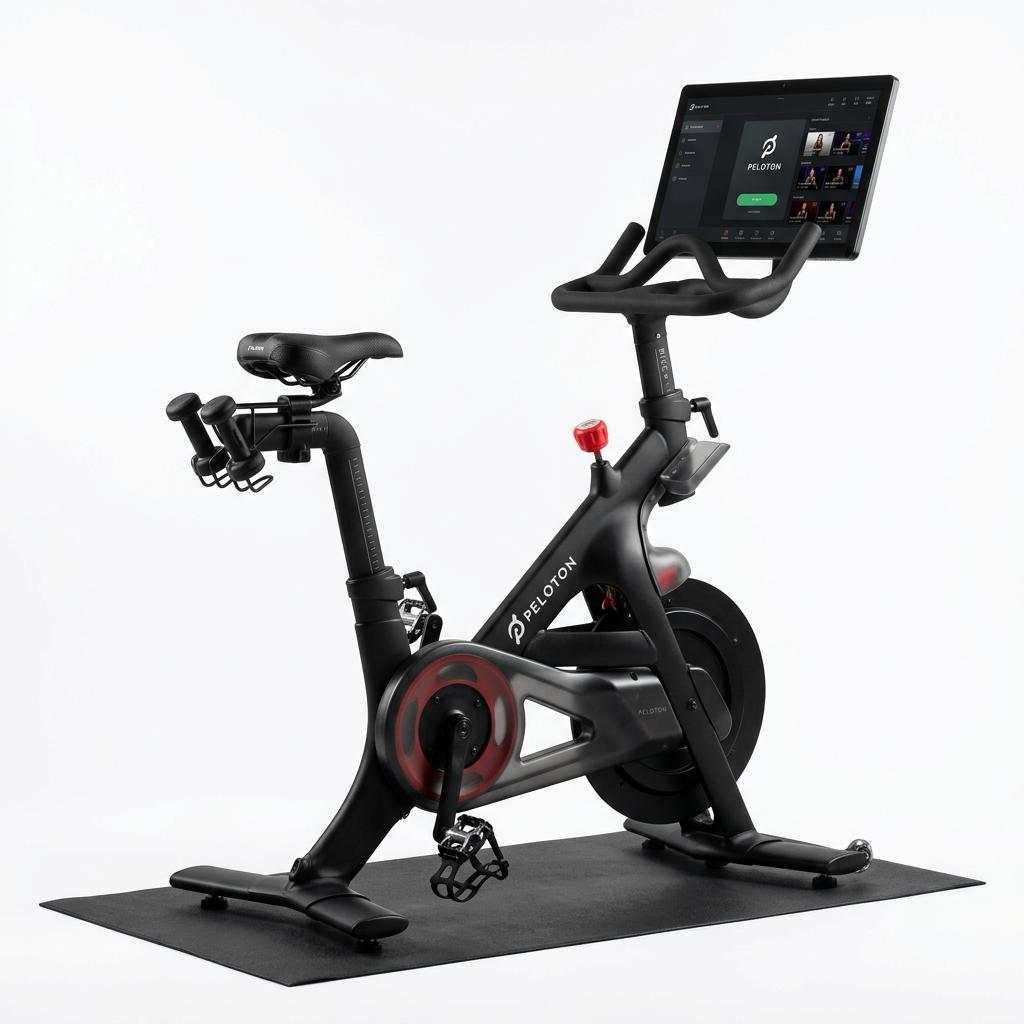
The Peloton Bike+ represents the gold standard for connected indoor cycling, with a rotating 23.8-inch HD touchscreen, automatic resistance adjustment following instructor cues, and Apple GymKit integration for seamless heart rate pairing.
Where it excels: The auto-follow resistance system eliminates the cognitive load of manual adjustments during intervals, allowing you to focus entirely on effort output. The Bike+ reads cadence, output (watts), resistance percentage, and speed with accuracy matching dedicated power-meter bikes costing significantly more.
The content ecosystem — thousands of live and on-demand classes across cycling, strength, yoga, meditation, and outdoor running — provides training variety that combats the monotony of home workouts. The leaderboard and high-five features replicate the social motivation of group fitness classes.
The rotating screen enables floor-based workouts (strength, stretching) without awkward viewing angles, effectively expanding the device's utility beyond cycling alone.
Limitations: The $44/month subscription is required for meaningful use. The $2,000–$2,500 hardware cost plus subscription creates a significant financial commitment. Competitive cyclists may outgrow the power accuracy and pedaling dynamics data compared to dedicated smart trainers.
The iSelect dumbbells bring motor-driven weight adjustment to the adjustable dumbbell category, integrating with iFit for automatic weight changes between exercises and tracking of weights used across workouts.
Why they stand out: Voice-controlled adjustment ("Alexa, set weights to 25 pounds") and one-touch digital selection change between weights in approximately 3 seconds — faster than manual dial systems. The automatic tracking logs which exercises you performed, at what weight, for how many reps, building a training history that informs progressive overload decisions.
The 5–50 pound range per dumbbell covers the majority of exercises for most home gym users, and the traditional dumbbell feel ( rectangular weight distribution) is more natural than some dial-adjustable competitors.
Trade-offs: The motor requires AC power — lose power mid-workout and you're stuck at current weight until it returns. The footprint is larger than non-connected adjustable dumbbells. iFit subscription ($15–$39/month) unlocks smart features; without it, they function as expensive manual-adjust dumbbells.
The KettlebellConnect 2.0 packs six kettlebell weights (12–42 pounds) into a single footprint, with digital weight selection and form tracking via integrated sensors. For home gyms where kettlebell work is a primary training modality, it eliminates the need for a full kettlebell set.
Strengths: The 6-in-1 weight range covers most kettlebell exercises for general fitness, from swings and get-ups to presses and rows. Weight changes take approximately 3 seconds via a dial on the base unit. The companion app tracks reps, sets, and rest periods, with workout programming for kettlebell-specific training.
The compact cylindrical design occupies less space than equivalent traditional kettlebells, and the flat base provides stable storage between sets.
Limitations: The 42-pound maximum is insufficient for stronger users performing heavy swings or goblet squats. The form tracking is basic — rep counting and rough tempo estimation rather than detailed movement analysis. The handle shape differs from competition kettlebells, requiring grip adjustment for users transitioning between gym and home.
The Bowflex SelectTech 552 dumbbells have been a home gym staple for years; the JRNY integration adds rep counting, weight tracking, and on-demand workouts without dramatically increasing cost.
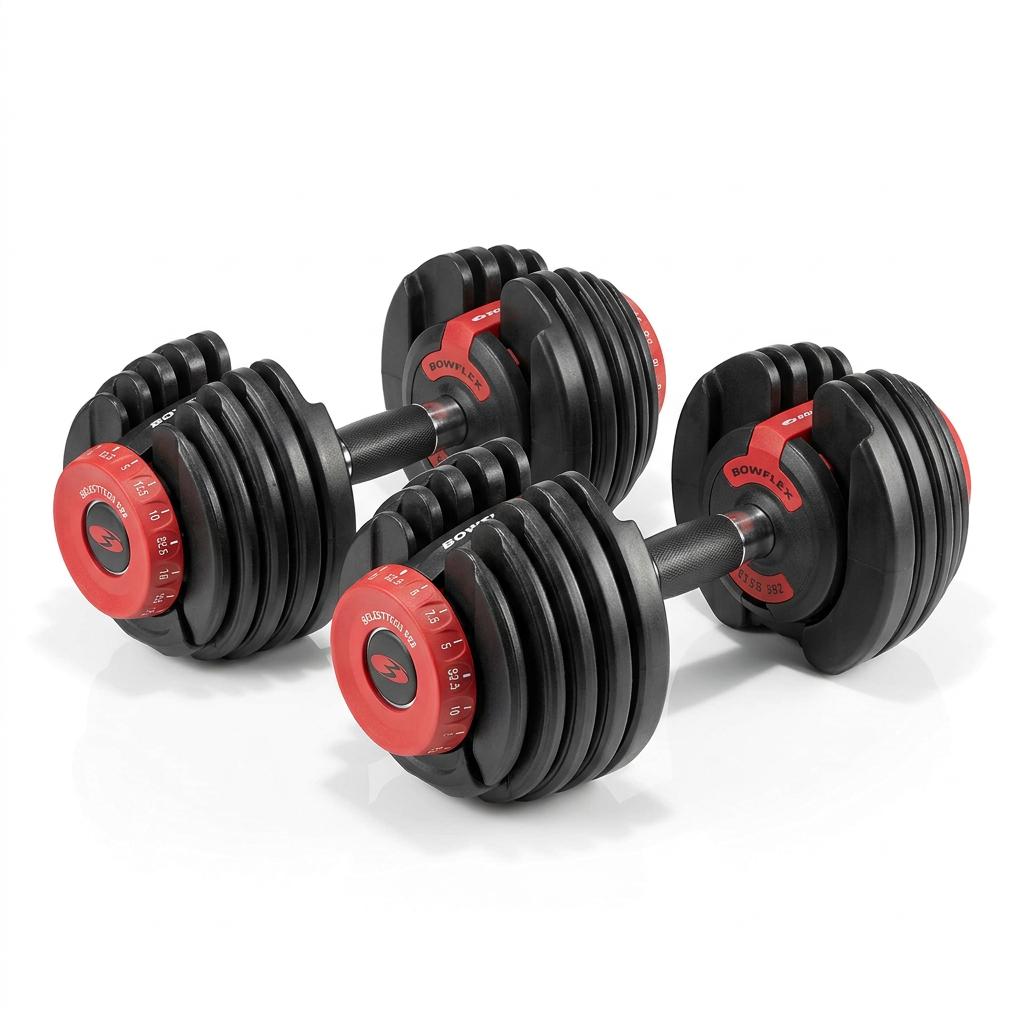
Value proposition: At $350–$450 (often on sale lower), the SelectTech 552 covers 5–52.5 pounds with dial adjustment, replacing 15 pairs of dumbbells. The addition of JRNY connectivity provides basic smart features — rep counting via motion sensors, workout tracking, and access to on-demand strength workouts — at a fraction of the premium smart dumbbell cost.
The JRNY subscription ($11.99/month) is optional — the dumbbells function perfectly as manual-adjust weights without it, unlike Tonal or Tempo where subscriptions are mandatory. This flexibility makes them ideal for users who want smart features without ongoing commitment.
Limitations: The expanded length at lighter weights feels awkward for some exercises. Durability concerns have been reported with heavy use over 2+ years, particularly in the dial mechanism. The motion-based rep counting occasionally misses reps or counts partial reps. Check price on Amazon
A 2024 study published in Internet Interventions compared exercise adherence between users of connected fitness equipment and traditional home gym equipment over 12 months. The connected fitness group showed 34% higher workout frequency (3.2 vs. 2.4 sessions per week) and 28% lower dropout rates. The authors attributed these differences primarily to structured programming and progress tracking rather than gamification or social features — suggesting that smart equipment's primary benefit may be removing the decision fatigue of workout planning.
| Your Priority | Our Pick | Why |
|---|---|---|
| Form feedback, accessible price | Tempo Move | AI camera guidance, uses your weights |
| Premium strength training | Tonal | 200 lb digital resistance, dynamic modes |
| Indoor cycling | Peloton Bike+ | Content ecosystem, auto-resistance |
| Adjustable dumbbells + tracking | NordicTrack iSelect | Motorized adjustment, rep logging |
| Kettlebell training | JAXJOX KettlebellConnect 2.0 | 6-in-1 weights, compact |
| Budget smart strength | Bowflex 552 + JRNY | Optional subscription, proven hardware |
Smart gym equipment has evolved from novelty to genuine training enhancement — but only when the connected features address real friction points in home training. The Tempo Move's form feedback solves the supervision gap. Tonal's dynamic resistance enables advanced techniques impractical in most home gyms. Peloton's content ecosystem combats workout monotony.
The critical question is whether ongoing subscription costs align with your training consistency. A $40/month subscription amortized across 12 workouts monthly costs $3.33 per session — reasonable if the content and tracking genuinely improve your training. But if you train inconsistently, subscription fees accumulate faster than training benefits.
For most home gym owners, we recommend starting with the Tempo Move or Bowflex SelectTech 552 with optional JRNY — both deliver meaningful smart features without the four-figure hardware investment of Tonal or Peloton.
| Image | Product | Price | Badge | Link |
|---|---|---|---|---|
 |
Tempo Move | $395-$495 | Best Budget Smart Gym | Check Price |
 |
Tonal | $3,995-$4,490 | Best Overall | Check Price |
 |
Peloton Bike+ | $1,995-$2,495 | Best for Cardio | Check Price |
 |
Bowflex SelectTech 552 | $349-$429 | Best Dumbbell Set | Check Price |
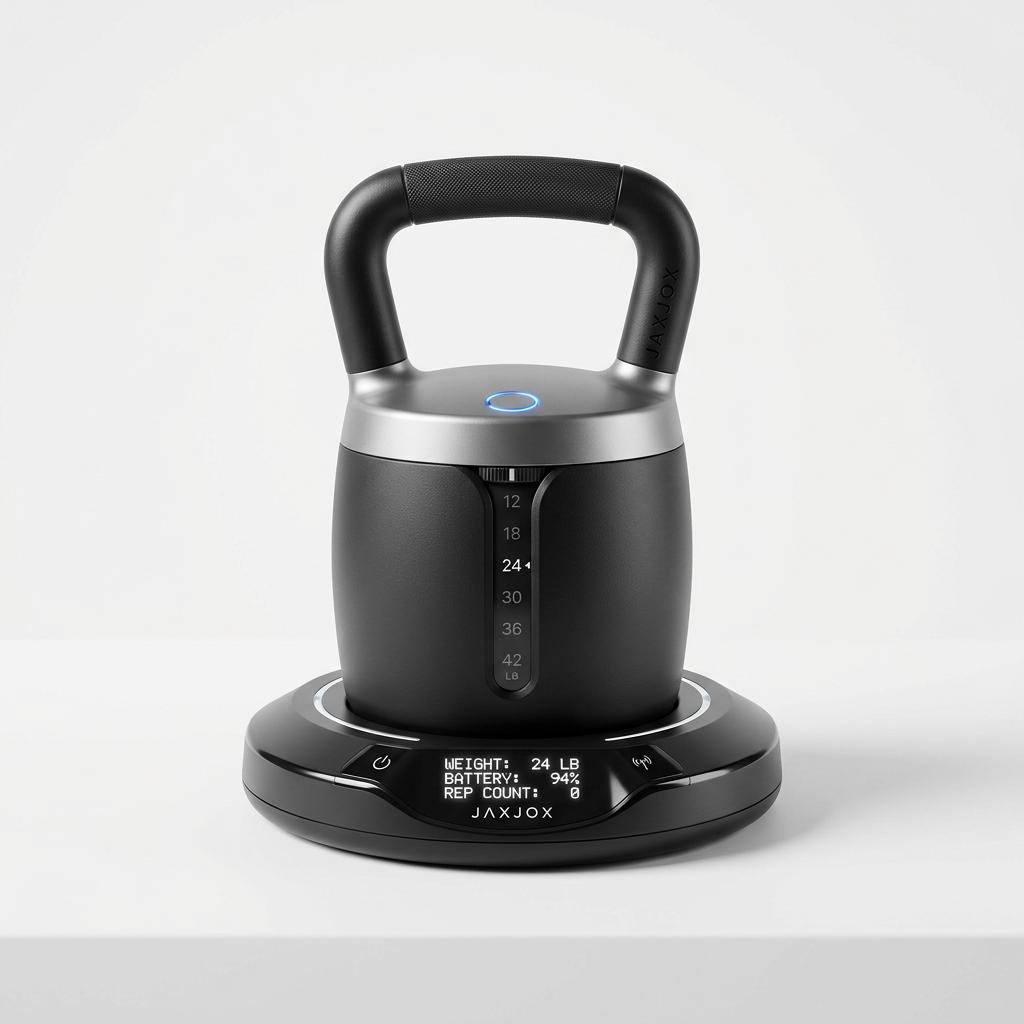 |
JAXJOX KettlebellConnect 2.0 | $199-$249 | Most Versatile | Check Price |
The Tempo Move delivers premium smart gym functionality at a fraction of the cost, using your iPhone as the brain for AI-powered form correction.
Tonal is the most sophisticated smart gym available, replacing an entire weight room with a sleek wall-mounted unit featuring adaptive digital resistance.
The Peloton Bike+ remains the gold standard for connected cardio, offering an unmatched class experience with its rotating screen and auto-follow resistance.
The Bowflex SelectTech 552 dumbbells offer unmatched versatility in a space-saving design, replacing an entire rack of weights with a simple dial system.
The JAXJOX KettlebellConnect 2.0 replaces six kettlebells with one smart unit, featuring digital weight adjustment and workout tracking via Bluetooth.
The Tempo Move is the most accessible entry point into smart strength training, packing an impressive amount of technology into a compact cabinet that doubles as furniture. Using your iPhone's TrueDepth camera for 3D motion tracking and AI form feedback, it provides real-time coaching during workouts without the cost of a built-in screen. The included weight plates and dumbbells store neatly inside the cabinet. While the iPhone requirement limits compatibility, the value proposition is unbeatable for those looking to add smart coaching to their home gym without breaking the bank.
Check Price on Amazon
Tonal represents the pinnacle of smart home fitness technology, delivering a complete strength training system that mounts on your wall like a piece of modern art. Its electromagnetic resistance system provides up to 200 pounds per arm with precise 1-pound increments, and the AI automatically adjusts weight based on your performance in real-time. The Eccentric Mode increases resistance on the lowering phase for maximum muscle engagement. With hundreds of guided workouts, form feedback, and progress tracking, Tonal eliminates the guesswork from strength training while taking up virtually no floor space.
Check Price on Amazon
The Peloton Bike+ has set the standard for connected fitness equipment, and the upgraded rotating screen makes it even more versatile. The 23.8-inch HD display swivels 360 degrees for off-bike strength, yoga, and stretching classes, effectively turning the Bike+ into a complete home gym. The auto-follow resistance feature automatically adjusts to match instructor cues, letting you focus purely on your workout. With thousands of live and on-demand classes across cycling, strength, and meditation, the content library is unmatched in depth and production quality.
Check Price on Amazon
The Bowflex SelectTech 552 adjustable dumbbells have been the best-selling adjustable dumbbells for over a decade, and for good reason. With a simple turn of a dial, you can select weights from 5 to 52.5 pounds, effectively replacing 15 pairs of traditional dumbbells. The weight selection is fast and intuitive, making them ideal for drop sets and supersets. While the length can feel slightly awkward for some exercises like curls, the space-saving benefits and build quality make them the foundation of any smart home gym setup.
Check Price on Amazon
The JAXJOX KettlebellConnect 2.0 brings smart technology to kettlebell training, one of the most effective functional fitness modalities. With the push of a button, you can switch between six weights from 12 to 42 pounds, making it easy to progress through a workout without multiple kettlebells taking up space. The Bluetooth connectivity tracks your reps, sets, and weight used, syncing to the JAXJOX app for progress monitoring. While the 42-pound maximum won't satisfy advanced lifters, it's perfect for most home workouts and HIIT-style training.
Check Price on Amazon