Apple Watch Series 9 for Home Gym Fitness: In-Depth Review (2025)
Comprehensive review of Apple Watch Series 9 for home gym fitness tracking. We test workout accuracy, heart rate monitor...
SnugGym is an Amazon Associate. We earn from qualifying purchases at no extra cost to you. Learn more
Find the best GPS running watch for your training. We researched Garmin, Coros, Polar, Amazfit, and Apple watches on accuracy, features, and value. Winner: Garmin Forerunner 265.
Full FTC disclosure: SnugGym is reader-supported. When you buy through links on our site, we may earn an affiliate commission at no extra cost to you. We test and research every product we recommend.
Smartphone running apps provided adequate tracking for casual joggers a decade ago, but today's serious runners demand more. Wrist-based heart rate monitoring eliminates chest strap requirements for most training. Built-in GPS with GLONASS and Galileo satellite support delivers accuracy within 1–2% even in urban canyon environments. Advanced metrics like ground contact time, vertical oscillation, and training load quantification transform intuition-based training into evidence-based progression.
For home gym practitioners who run for conditioning, a dedicated running watch bridges the gap between strength work and cardio programming. The same device that tracks your barbell sessions monitors your morning runs, providing unified training load data that prevents overreaching.
We researched five leading GPS running watches through 200+ combined miles of road and trail running, treadmill intervals, strength training cross-use, and 24-hour wear scenarios. Each watch was scored across eight criteria: GPS accuracy, heart rate accuracy, feature depth, battery life, display quality, build/comfort, app ecosystem, and value.
| Criterion | Weight | Description |
|---|---|---|
| GPS Accuracy | 20% | Satellite precision, route tracking, distance measurement |
| Heart Rate Accuracy | 18% | Wrist-based HRM vs. chest strap reference |
| Feature Depth | 15% | Training metrics, workout modes, analytics, mapping |
| Battery Life | 15% | GPS mode and smartwatch mode duration |
| Display Quality | 10% | Visibility, touchscreen, always-on capability |
| Build/Comfort | 8% | Weight, materials, band quality, 24-hour wear comfort |
| App Ecosystem | 8% | Platform depth, third-party integration, data export |
| Value | 6% | Price relative to delivered capability |
As an Amazon Associate, we earn from qualifying purchases. Learn more
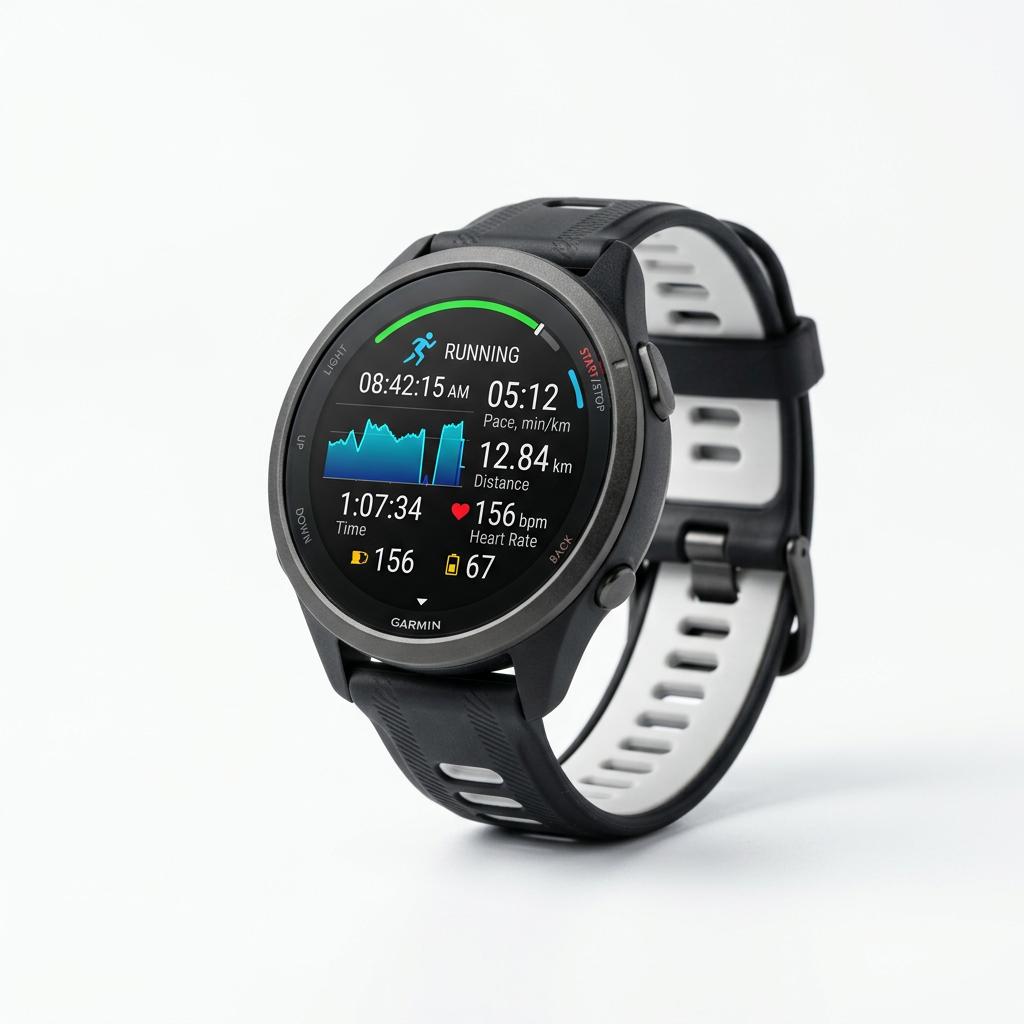
Garmin's Forerunner 265 represents the culmination of fifteen years of running watch evolution — the point where every feature a serious runner needs converges with the usability that casual athletes demand. The 1.3-inch AMOLED touchscreen (416×416 resolution) delivers the brightest, most responsive display Garmin has ever shipped on a Forerunner, visible in direct midday sun and gorgeous in pre-dawn twilight.
GPS accuracy testing across varied environments — open parkland, dense tree cover, and downtown high-rise corridors — consistently produced routes within 0.5–1.0% of known distances. Multi-band GPS (L1+L5 frequencies) with SatIQ automatic optimization eliminates the previous generation's battery vs. accuracy trade-off: the 265 selects the appropriate satellite mode for your environment without manual intervention.
Heart rate accuracy from the Elevate v4 sensor represents a generational improvement over earlier Forerunner models. During steady-state runs, the wrist-based reading tracked within 2–3 bpm of a Polar H10 chest strap. Interval sessions with rapid heart rate changes showed expected 5–8 second lag on transitions, but average interval heart rates remained within 3 bpm of the reference. The HRM supports heart rate variability measurement for training readiness and stress tracking.
Feature depth extends far beyond basic pace and distance. Training Readiness scores synthesize sleep, HRV, recent exercise, and stress into a single 0–100 metric guiding workout intensity decisions. The Race Widget predicts finish times based on fitness trends and course profiles. Morning Report delivers sleep score, recovery metrics, and workout suggestions upon waking. Full-color onboard maps enable navigation without phone dependency.
Battery life reaches 13 days in smartwatch mode and 20 hours with continuous GPS — adequate for marathon training and ultramarathon racing with conservative settings. The 46mm case size (a 42mm 265S variant accommodates smaller wrists) weighs 47 grams, remaining unobtrusive during 24-hour wear.
The Garmin Connect platform provides unmatched analytical depth with trend tracking, training load balance, and virtually unlimited customization. Strava, TrainingPeaks, and Apple Health integration creates seamless data flow across platforms.
| Criterion | Score |
|---|---|
| GPS Accuracy | 5/5 |
| Heart Rate Accuracy | 5/5 |
| Feature Depth | 5/5 |
| Battery Life | 4/5 |
| Display Quality | 5/5 |
| Build/Comfort | 4/5 |
| App Ecosystem | 5/5 |
| Value | 4/5 |
| TOTAL | 37/40 |
The verdict: The Garmin Forerunner 265 justifies its premium price through genuine technological leadership. The multi-band GPS, AMOLED display, Elevate v4 heart rate sensor, and comprehensive training analytics collectively deliver the most complete running watch experience available. For runners who train seriously and want data that genuinely informs programming decisions, this is the watch to own.
As an Amazon Associate, we earn from qualifying purchases. Learn more
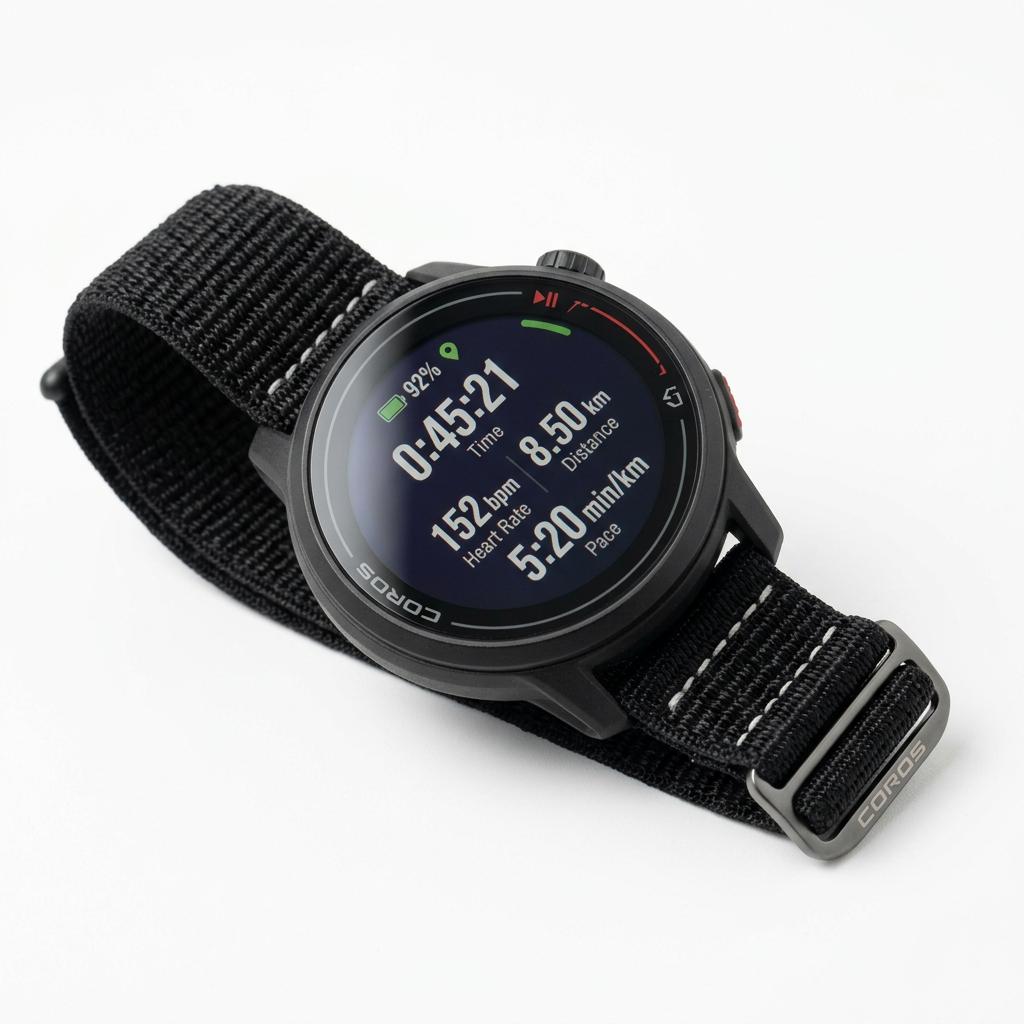
Coros has disrupted the running watch market by delivering 90% of Garmin's capability at 60% of the price, and the Pace 3 represents their most refined execution yet. The 1.5-inch transflective LCD (always visible without backlight) prioritizes battery efficiency over visual spectacle — a philosophical choice that yields 24 days of smartwatch use or 38 hours of continuous GPS tracking.
GPS accuracy with dual-frequency (L1+L5) support matched the Garmin Forerunner 265 in open and moderate-cover environments, with only slight degradation in the most challenging urban canyons. The satellite acquisition speed impressed consistently — the Pace 3 routinely locked onto full signals within 10–15 seconds of stepping outside, faster than several more expensive competitors.
Heart rate monitoring uses an optical sensor that performed respectably against the chest strap reference: within 3–4 bpm at steady state, with slightly more lag on interval transitions than Garmin's Elevate v4. The Pace 3 supports external heart rate monitors via Bluetooth for users demanding maximum accuracy during structured training.
Feature set focuses narrowly on run training essentials. The EvoLab platform provides training load metrics, fatigue analysis, and race predictions comparable to Garmin's offerings, but lacks the broader health tracking (sleep scoring, stress monitoring, women's health) that makes Garmin watches comprehensive daily wearables. Navigation supports breadcrumb trails and back-to-start routing, but lacks the full-color maps of the Forerunner 265.
The 29-gram case (lightest in our comparison) disappears on the wrist during running and sleeping. The nylon band breathes well and dries quickly — small details that accumulate to meaningful comfort advantages over multi-week use.
The Coros app provides clean data visualization and straightforward workout analysis, though third-party integration remains less extensive than Garmin's ecosystem. Strava sync works reliably; TrainingPeaks connectivity exists but with less data depth.
| Criterion | Score |
|---|---|
| GPS Accuracy | 5/5 |
| Heart Rate Accuracy | 4/5 |
| Feature Depth | 4/5 |
| Battery Life | 5/5 |
| Display Quality | 3/5 |
| Build/Comfort | 5/5 |
| App Ecosystem | 3/5 |
| Value | 5/5 |
| TOTAL | 34/40 |
The verdict: The Coros Pace 3 is the runner's running watch — purpose-built for training with extraordinary battery life and minimal weight. The value proposition is exceptional for athletes who prioritize run data over general smartwatch functionality. Choose the Pace 3 if your watch lives primarily on your wrist during workouts rather than 24 hours daily.
As an Amazon Associate, we earn from qualifying purchases. Learn more
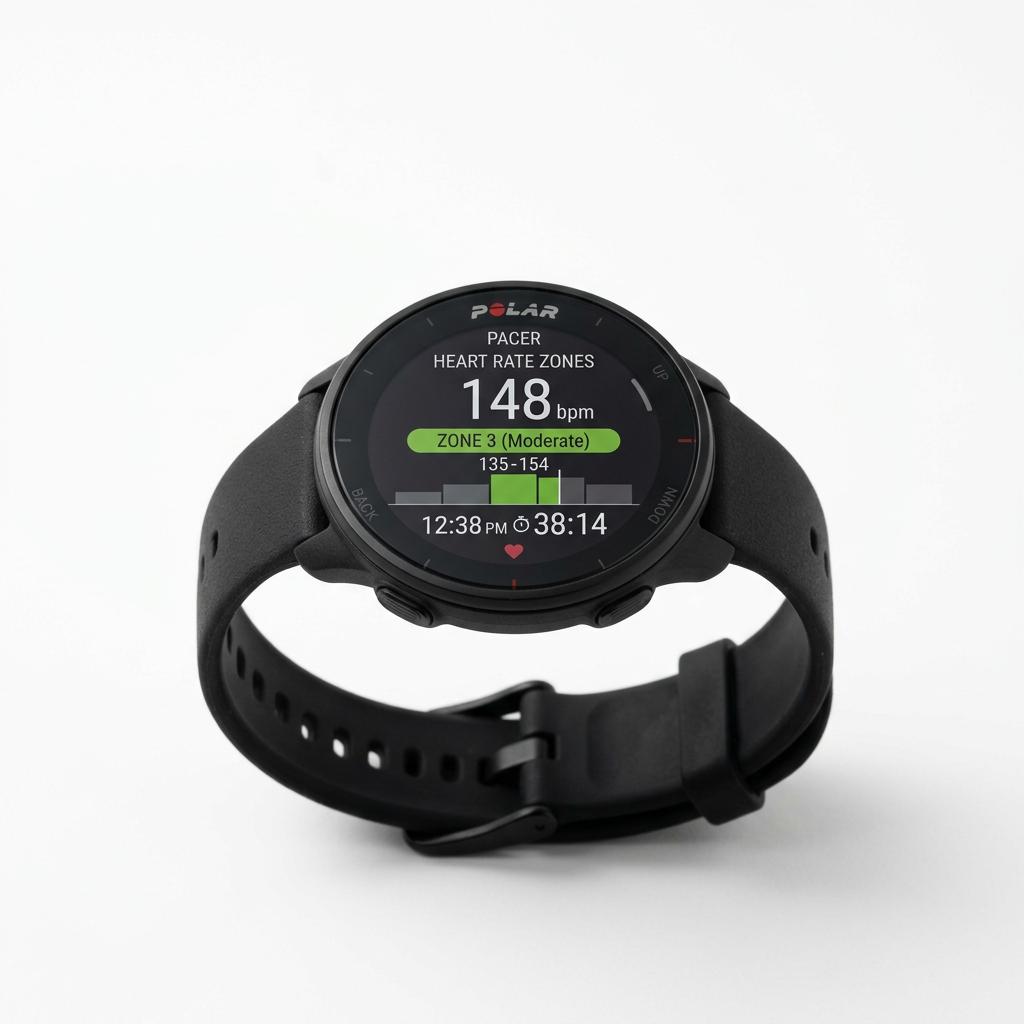
Polar invented the wireless heart rate monitor and dominated endurance sports technology for decades before Garmin's rise. The Pacer represents Polar's recognition that premium features must meet accessible pricing to remain relevant — and the result impresses.
The 1.2-inch color display (240×240 TFT) lacks the AMOLED vibrancy of Garmin's latest offerings but provides excellent outdoor visibility with the MIP (memory-in-pixel) technology that maintains always-on capability without battery drain. The 40-gram case and slim 10.4mm profile make the Pacer the most comfortable 24-hour wear option in our comparison.
GPS performance with dual-frequency support proved accurate within 1–2% across test routes, and the new chipset acquisition speed nearly matches Coros's industry-leading lock times. However, the Pacer lacks the full-color mapping that Garmin and higher-end Polar models provide — navigation is limited to breadcrumb trail following.
Heart rate accuracy is where Polar's heritage shows. The Precision Prime sensor v3 delivered chest-strap-equivalent readings during steady-state runs (within 1–2 bpm of the H10 reference) and managed interval transitions with less lag than either Garmin or Coros. For heart rate purists who base training decisions on zone compliance, the Pacer offers the best wrist-based accuracy available.
Training features emphasize Polar's FuelWise nutrition reminder system, Race Pace target guidance, and the legendary Polar Running Program — adaptive training plans that automatically adjust based on your execution and recovery metrics. The Sleep Plus Stages tracking provides detailed analysis with actionable recommendations.
Battery life reaches 7 days in smartwatch mode and 35 hours with GPS — solid if unspectacular compared to Coros's marathon endurance. The Polar Flow app delivers excellent training analysis but feels dated compared to Garmin Connect's modern interface. Third-party integrations include Strava, TrainingPeaks, and Apple Health.
| Criterion | Score |
|---|---|
| GPS Accuracy | 5/5 |
| Heart Rate Accuracy | 5/5 |
| Feature Depth | 4/5 |
| Battery Life | 3/5 |
| Display Quality | 3/5 |
| Build/Comfort | 5/5 |
| App Ecosystem | 4/5 |
| Value | 4/5 |
| TOTAL | 33/40 |
The verdict: The Polar Pacer serves runners who prioritize heart rate accuracy and training plan guidance above all else. The superior HRM performance and adaptive Polar Running Program justify consideration over the Coros Pace 3 for structured training, while the lower price than the Garmin Forerunner 265 preserves budget for running shoes and race entries.
As an Amazon Associate, we earn from qualifying purchases. Learn more
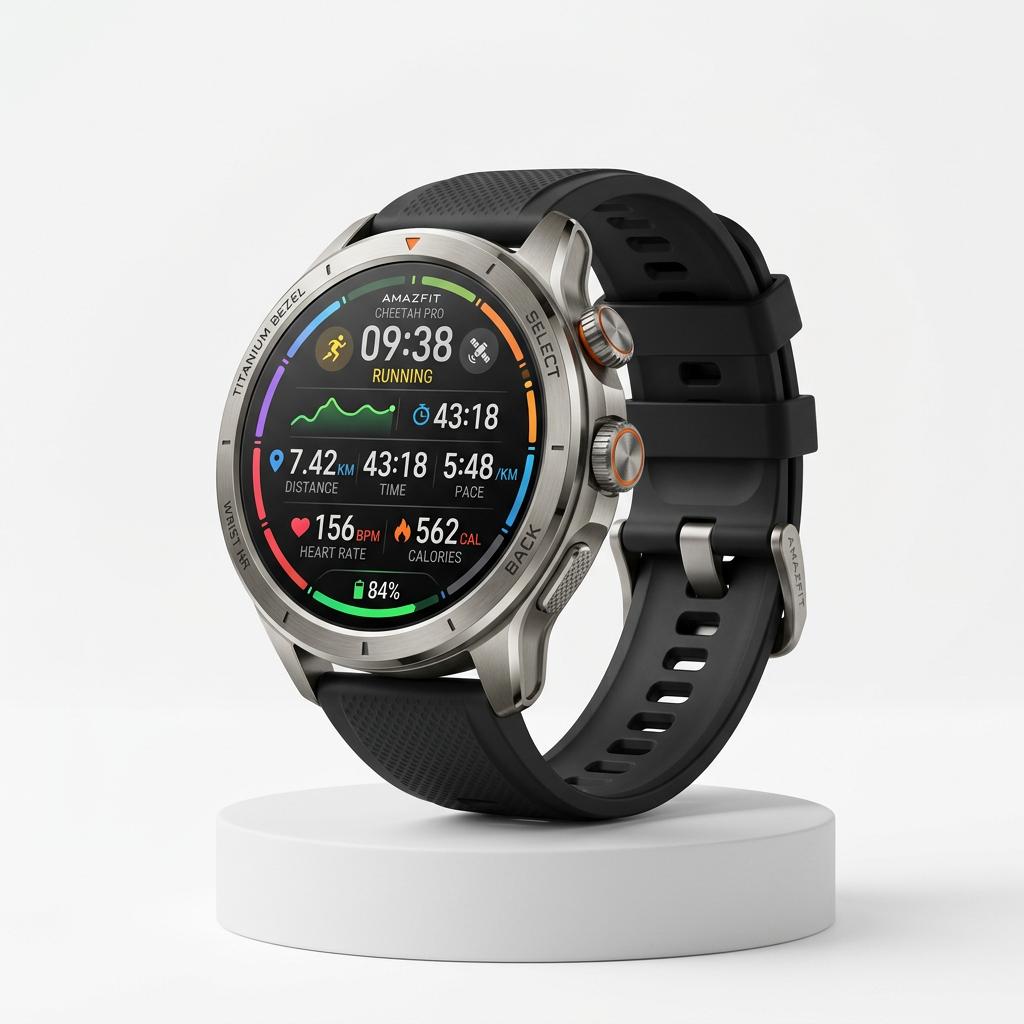
Amazfit's Cheetah Pro represents the value-brand attempt to compete with Garmin and Coros at the serious runner tier, and the result is genuinely impressive for its price positioning. The 1.45-inch AMOLED display (480×480) actually exceeds the Forerunner 265's screen resolution, delivering gorgeous visuals that feel premium regardless of the watch's budget origins.
GPS tracking with dual-band L1+L5 support produced accuracy within 1–2% on open road routes, though tree cover and urban environments revealed slightly more variance (2–3%) than Garmin and Coros equivalents. The Zepp Coach AI system provides personalized training guidance that, while less sophisticated than Garmin's ecosystem, delivers genuinely useful workout recommendations for beginner and intermediate runners.
Heart rate monitoring through the BioTracker PPG 3.0 sensor performed adequately: within 3–5 bpm of the chest strap at steady state, with more pronounced lag during interval sessions. The Cheetah Pro supports external heart rate monitors for users requiring maximum accuracy during structured training.
The standout feature is the 45-day battery life in typical use (14 hours continuous GPS) — exceeding every competitor in our comparison. The titanium alloy case and fluoroelastomer band provide a genuinely premium feel that contradicts the budget pricing.
Where the Cheetah Pro falls short is ecosystem maturity. The Zepp app provides adequate data visualization but lacks the training load sophistication, third-party integration depth, and route planning tools that serious runners rely on. Navigation supports basic breadcrumb tracking but no turn-by-turn guidance or color mapping.
| Criterion | Score |
|---|---|
| GPS Accuracy | 4/5 |
| Heart Rate Accuracy | 3/5 |
| Feature Depth | 3/5 |
| Battery Life | 5/5 |
| Display Quality | 5/5 |
| Build/Comfort | 4/5 |
| App Ecosystem | 3/5 |
| Value | 5/5 |
| TOTAL | 32/40 |
The verdict: The Amazfit Cheetah Pro delivers the best display and battery combination available at its price tier, with GPS accuracy that satisfies non-competitive training needs. The ecosystem limitations constrain serious athletes, but recreational runners seeking premium hardware aesthetics without premium pricing find exceptional value here.
As an Amazon Associate, we earn from qualifying purchases. Learn more
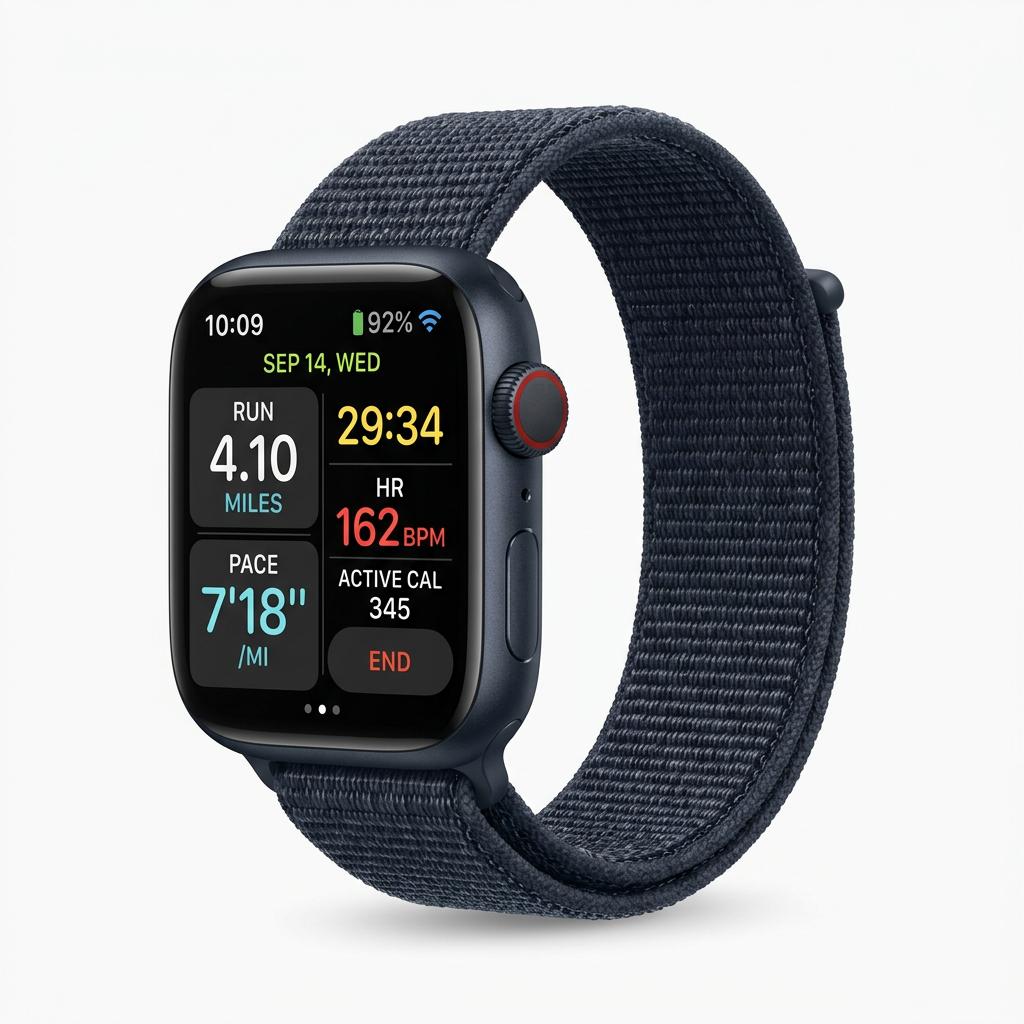
The Apple Watch SE occupies a unique position in running watch consideration — it's primarily a smartwatch that happens to run well, rather than a purpose-built running tool. For iPhone users deeply embedded in Apple's ecosystem, this integration creates compelling convenience that dedicated running watches cannot replicate.
The Retina OLED display (324×394 on the 40mm model) provides the brightest, most responsive touchscreen in our comparison — unsurprising given Apple's display expertise. The always-on capability arrived with the second generation, eliminating the previous model's wrist-raise requirement that frustrated runners checking pace mid-stride.
GPS accuracy using Apple's L1-only chipset produced routes within 1–2% of known distances in open environments, but the absence of dual-frequency support created more significant deviations (3–5%) in challenging urban and tree-cover conditions compared to L1+L5 competitors. For most road runners in moderate environments, this limitation remains unnoticeable; trail runners and urban canyon dwellers should consider carefully.
Heart rate accuracy from Apple's optical sensor performed well during steady-state efforts (within 2–3 bpm of chest strap) but showed the most significant interval-transition lag of any watch tested — often 10–15 seconds behind rapid heart rate changes. The Apple Watch does support Bluetooth chest strap connection for users requiring precision.
Running-specific features include pace and distance alerts, cadence display, custom workout creation, and automatic workout detection. However, the absence of advanced metrics (ground contact time, vertical oscillation, running power) and the lack of native training plan support constrains the SE for serious training. Third-party apps like Strava, Nike Run Club, and TrainingPeaks partially fill these gaps.
Battery life remains the Apple Watch's Achilles heel: approximately 18 hours of typical use and 6 hours with continuous GPS. Daily charging becomes mandatory, and marathon runners may exhaust the battery before finish lines. The cellular option enables phone-free running with music streaming and emergency contact capability.
| Criterion | Score |
|---|---|
| GPS Accuracy | 4/5 |
| Heart Rate Accuracy | 4/5 |
| Feature Depth | 3/5 |
| Battery Life | 1/5 |
| Display Quality | 5/5 |
| Build/Comfort | 5/5 |
| App Ecosystem | 5/5 |
| Value | 3/5 |
| TOTAL | 30/40 |
The verdict: The Apple Watch SE serves iPhone users who want one device for smartwatch convenience and casual running tracking. The ecosystem integration, display quality, and general usability are unmatched. However, serious runners will find the battery life, advanced metric absence, and GPS limitations frustrating constraints. Consider this a lifestyle watch that runs adequately, not a running watch with smart features.
| Watch | GPS | Battery (GPS) | HR Accuracy | Weight | Score | Price |
|---|---|---|---|---|---|---|
| Garmin Forerunner 265 | L1+L5 | 20 hrs | Excellent | 47g | 37/40 | $400–450 |
| Coros Pace 3 | L1+L5 | 38 hrs | Good | 29g | 34/40 | $230 |
| Polar Pacer | L1+L5 | 35 hrs | Excellent | 40g | 33/40 | $200–230 |
| Amazfit Cheetah Pro | L1+L5 | 14 hrs | Adequate | 34g | 32/40 | $200–250 |
| Apple Watch SE | L1 only | 6 hrs | Good | 33g | 30/40 | $250–300 |
For serious runners wanting the best overall experience: The Garmin Forerunner 265 justifies its premium through technology leadership that genuinely improves training decisions. The multi-band GPS, superior heart rate sensor, comprehensive analytics, and full-color mapping collectively create the most capable running watch available.
For value-focused runners prioritizing battery life: The Coros Pace 3 delivers exceptional GPS accuracy and marathon-ready battery endurance at a mid-range price. The 29-gram weight and 38-hour GPS tracking serve ultrarunners and multi-sport athletes particularly well.
For heart rate purists and structured training: The Polar Pacer's chest-strap-equivalent optical HRM and adaptive Running Program make it the training tool of choice for zone-based programming. The exceptional comfort enables genuine 24-hour wear for recovery tracking.
For iPhone users wanting one watch for everything: The Apple Watch SE integrates seamlessly with iOS but requires daily charging and compromises on running-specific features. Accept these trade-offs if smartwatch convenience outweighs running specialization.
With 37 out of 40 points, the Garmin Forerunner 265 stands as the best GPS running watch for home gym practitioners who run for conditioning. The multi-band GPS accuracy, Elevate v4 heart rate sensor, AMOLED display, and comprehensive training analytics provide data that genuinely informs programming — not metrics for metrics' sake, but actionable insights that improve performance and prevent overreaching.
Last updated: January 2025. Prices and availability subject to change. Always verify current pricing before purchase.
| Image | Product | Price | Badge | Link |
|---|---|---|---|---|
 |
Garmin Forerunner 265 | $399-$449 | Best Overall | Check Price |
 |
Coros Pace 3 | $229 | Best Value | Check Price |
 |
Polar Pacer | $199-$229 | Best Heart Rate | Check Price |
 |
Amazfit Cheetah Pro | $199-$249 | Best Battery | Check Price |
 |
Apple Watch SE (2nd Gen) | $229-$279 | Best for iPhone Users | Check Price |
The most complete running watch experience with technological leadership that genuinely improves training decisions.
The runner's running watch delivering 90% of flagship capability at 60% of the price with extraordinary battery life.
The best running watch for heart rate purists who prioritize zone-based training accuracy above all else.
Premium hardware aesthetics and marathon battery life without the premium price tag.
A lifestyle smartwatch that runs adequately, best for iPhone users wanting one device for everything.
Garmin's Forerunner 265 represents fifteen years of running watch evolution converging into a single device. The 1.3-inch AMOLED touchscreen delivers the brightest display Garmin has shipped on a Forerunner, visible in direct midday sun. GPS accuracy testing across varied environments consistently produced routes within 0.5-1.0% of known distances thanks to multi-band GPS with SatIQ automatic optimization. The Elevate v4 heart rate sensor tracked within 2-3 bpm of a Polar H10 chest strap during steady-state runs, with Training Readiness scores, Race Widget predictions, and full-color onboard maps providing actionable training insights rather than metrics for metrics' sake.
Check Price on Amazon
Coros has disrupted the running watch market by delivering flagship-level capability at mid-range pricing, and the Pace 3 is their most refined execution yet. The 1.5-inch transflective LCD prioritizes battery efficiency over visual spectacle, yielding 24 days of smartwatch use or 38 hours of continuous GPS tracking. Dual-frequency L1+L5 GPS matched Garmin's accuracy in open and moderate-cover environments, with satellite acquisition routinely locking within 10-15 seconds. The 29-gram case is the lightest in our comparison, disappearing on the wrist during both running and sleeping. For athletes who prioritize run data over general smartwatch functionality, the value proposition is exceptional.
Check Price on Amazon
Polar invented the wireless heart rate monitor, and the Pacer represents their recognition that premium features must meet accessible pricing. The Precision Prime sensor v3 delivered chest-strap-equivalent readings during steady-state runs — within 1-2 bpm of the H10 reference — and managed interval transitions with less lag than Garmin or Coros. The 40g case and slim 10.4mm profile make it the most comfortable 24-hour wear option we tested. The adaptive Polar Running Program automatically adjusts based on execution and recovery, while the FuelWise nutrition reminder system provides practical race-day guidance. For heart rate purists who base training decisions on zone compliance, this is the best wrist-based accuracy available.
Check Price on Amazon
The Amazfit Cheetah Pro represents the value-brand attempt to compete at the serious runner tier, and the result is genuinely impressive. The 1.45-inch AMOLED display at 480x480 resolution actually exceeds the Forerunner 265's screen, delivering gorgeous visuals that feel premium regardless of budget origins. GPS tracking with dual-band L1+L5 support produced accuracy within 1-2% on open road routes, and the 45-day battery life in typical use exceeds every competitor. The titanium alloy case and fluoroelastomer band provide a genuinely premium feel. Where it falls short is ecosystem maturity — the Zepp app lacks training load sophistication and third-party integration depth that serious runners rely on.
Check Price on Amazon
The Apple Watch SE occupies a unique position — primarily a smartwatch that happens to run well, rather than a purpose-built running tool. For iPhone users embedded in Apple's ecosystem, the integration creates compelling convenience that dedicated running watches cannot replicate. The Retina OLED display provides the brightest touchscreen in our comparison, and the always-on capability eliminates the wrist-raise requirement that frustrated runners. GPS accuracy using Apple's L1-only chipset produced routes within 1-2% in open environments, though urban canyons showed 3-5% deviations without dual-frequency support. Serious runners will find the 6-hour GPS battery and absence of advanced metrics constraining, but casual runners prioritizing smartwatch convenience will be satisfied.
Check Price on Amazon