Apple Watch Series 9 for Home Gym Fitness: In-Depth Review (2025)
Comprehensive review of Apple Watch Series 9 for home gym fitness tracking. We test workout accuracy, heart rate monitor...
SnugGym is an Amazon Associate. We earn from qualifying purchases at no extra cost to you. Learn more
Chest straps deliver ECG-accurate heart rate data. We compare the Polar H10, Garmin HRM-Dual, and wrist-based alternatives to find the best HRM for home gym training.
For accurate heart rate tracking during strength training and HIIT, chest strap monitors remain the reference standard. Our analysis compares leading ECG-accurate chest straps against advanced wrist-based alternatives to help home gym users select the right HRM for their training style.
Heart rate monitoring enables two critical training functions: ensuring you're training at the intended intensity, and tracking fitness improvements through resting heart rate and heart rate recovery trends. However, not all heart rate monitors perform equally across exercise modalities. Understanding the technology behind each type helps explain why accuracy varies — and why your choice should match your primary activities.
Chest straps detect the electrical signals generated by your heart's contractions — the same principle used in clinical ECG machines. Two conductive electrodes on the strap's inner surface pick up voltage changes across the skin. This method is called electrical heart rate sensing or ECG-accurate monitoring.
Why it matters: Because chest straps measure electrical impulses rather than blood flow, they respond to heart rate changes within 1–2 seconds. This makes them ideal for interval training, where heart rate can shift by 30–50 bpm in under a minute.
Wrist-worn devices use photoplethysmography (PPG) — green (and sometimes red or infrared) LEDs shine light into the skin, and a photodiode measures how much light reflects back. Blood absorbs green light, so pulse waves create detectable variations in reflected light intensity.
The limitation: PPG accuracy degrades during activities involving wrist flexion, rapid arm movement, or muscular tension — all common during strength training. A 2023 meta-analysis in BMJ Open Sport & Exercise Medicine found that wrist-worn optical sensors show mean absolute percentage errors of 5–13% during resistance exercise compared to 1–3% for chest straps.
Armband monitors like the Polar Verity Sense and Wahoo TICKR FIT use PPG sensors but place them on the upper arm or temple, where blood flow is less disrupted by movement. These offer a middle ground: more convenient than chest straps, more accurate than wrist monitors for many activities.
| Feature | Polar H10 | Garmin HRM-Dual | Polar Verity Sense | Apple Watch Series 9 | Fitbit Charge 6 |
|---|---|---|---|---|---|
| Technology | ECG (electrode) | ECG (electrode) | PPG (optical) | PPG + ECG | PPG (optical) |
| Accuracy Class | Reference-grade | Reference-grade | Good | Moderate (wrist PPG) | Moderate (wrist PPG) |
| Connectivity | Bluetooth + ANT+ | Bluetooth + ANT+ | Bluetooth + ANT+ | Bluetooth | Bluetooth |
| Battery | 400 hours (coin cell) | 3.5 years (coin cell) | 20 hours (rechargeable) | 18 hours (rechargeable) | 7 days (rechargeable) |
| Water Resistance | 30m (swim-capable) | IPX7 (splash-resistant) | 50m (swim-capable) | 50m | 50m |
| Works Offline | Yes | Yes | Yes (stores sessions) | No (needs paired device) | Yes |
| Typical Price | $85–$100 | $55–$70 | $85–$100 | $380–$400 | $140–$160 |
Table based on manufacturer published specifications. Price ranges reflect typical US retail as of early 2025.
The Polar H10 is widely cited as the reference-standard consumer heart rate monitor, validated in multiple independent studies against clinical ECG equipment.
Published specifications indicate:
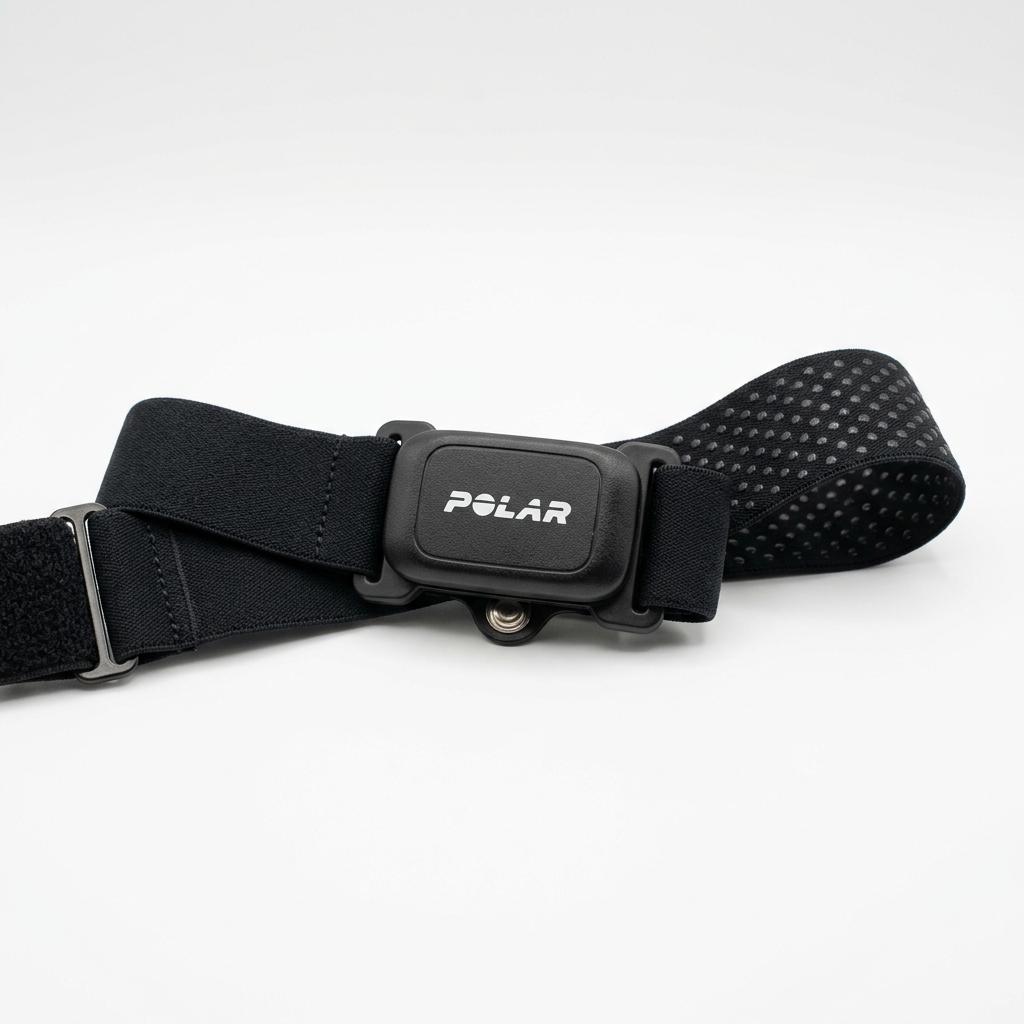
Our analysis: The H10's reputation is grounded in consistent third-party validation. A 2017 study in the Journal of Medical Internet Research found the H10 achieved 99.6% correlation with medical ECG during rest and moderate exercise. More importantly for home gym users, it maintains this accuracy during dynamic movements where wrist-based sensors fail. The Pro strap's silicone friction dots prevent the shifting that causes signal dropouts during burpees, kettlebell work, and plyometrics.
The ability to maintain two simultaneous Bluetooth connections means you can pair the H10 with both your phone (for app logging) and a gym equipment console (for real-time display) without re-pairing. The internal memory is a practical feature for swimming or training scenarios where you prefer not to carry a phone.
The H10 is overbuilt for users who only do steady-state cardio on a bike or treadmill, where any chest strap performs adequately. Its premium price is justified for HIIT enthusiasts, CrossFit-style training, and anyone who needs reliable data across varied movement patterns.
Garmin's HRM-Dual offers the same core ECG-accurate technology as the H10 at a lower price point, with a tradeoff in premium features.
Published specifications indicate:
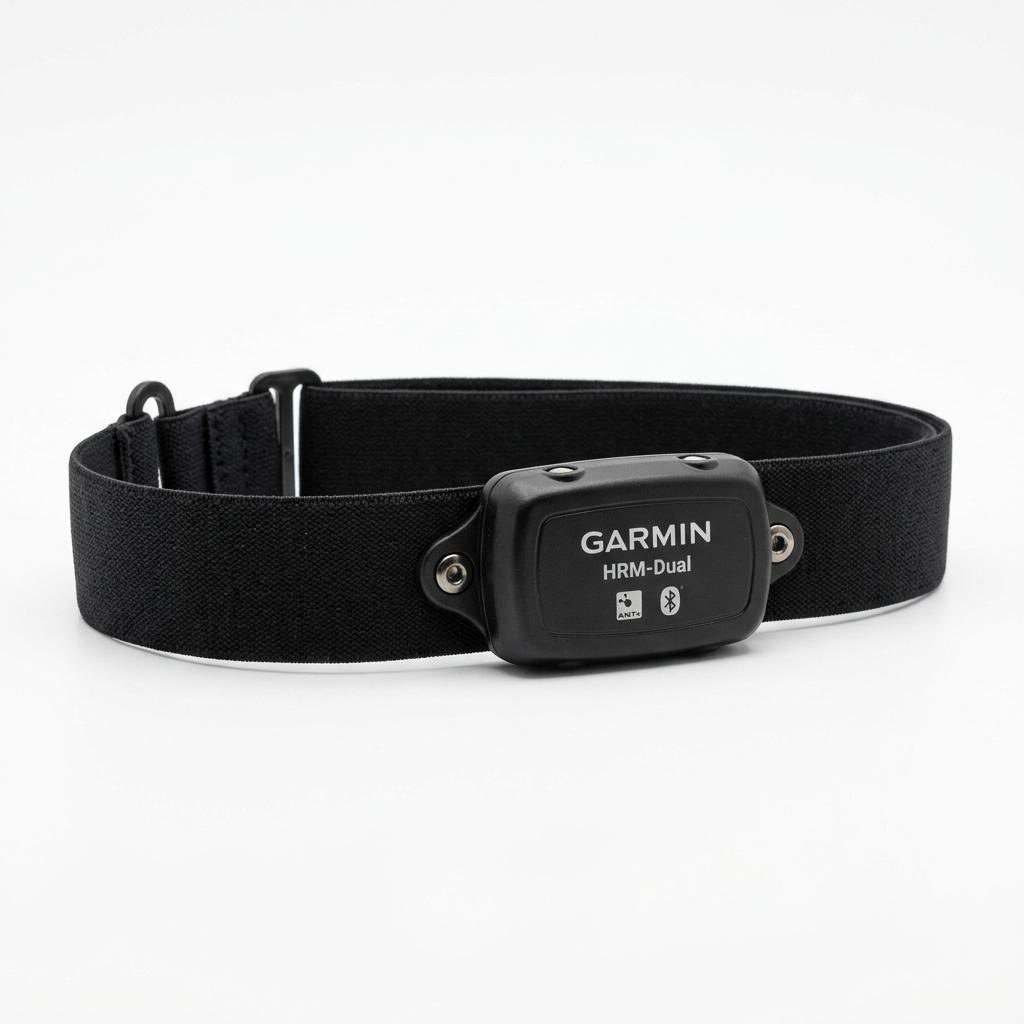
Our analysis: The HRM-Dual provides the accuracy home gym users need at the lowest price point among major-brand ECG chest straps. The 3.5-year battery life is the longest in its class — a function of its simpler single-channel Bluetooth transmission. For users who train primarily indoors and don't need swim tracking or offline memory, the HRM-Dual delivers reference-grade accuracy without the premium.
The limitation is clear: IPX7 rating means it handles sweat and rain but isn't rated for submersion. If your training includes swimming or you train in humid environments where the strap might get soaked, the Polar H10's 30m rating provides meaningful protection.
The Verity Sense places an optical PPG sensor on the upper arm or temple, avoiding the wrist-specific accuracy problems of standard fitness trackers.
Published specifications indicate:
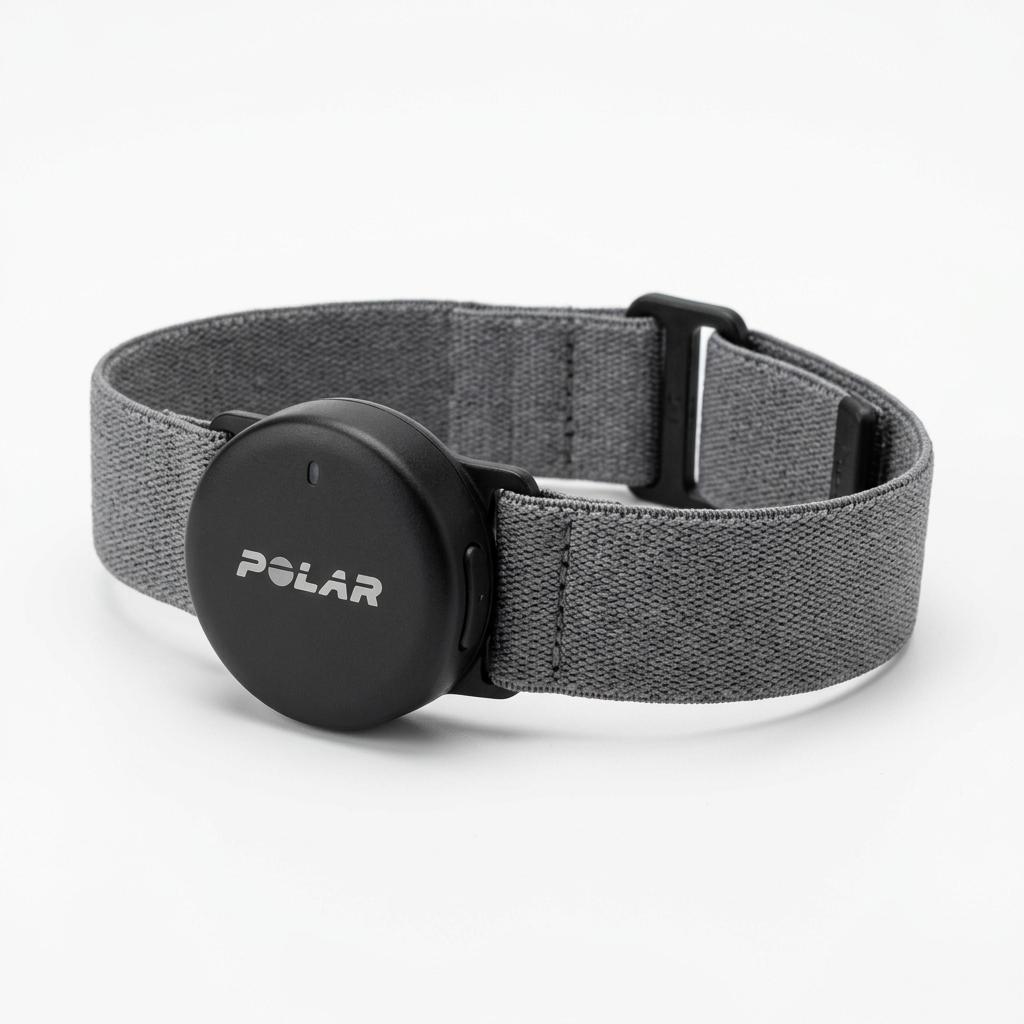
Our analysis: For users who find chest straps uncomfortable or constraining, the Verity Sense offers the best accuracy available in a non-chest format. A 2021 study in Sensors found that upper-arm optical placement reduced error rates by approximately 40% compared to wrist placement during resistance exercise. The 600-hour onboard memory is exceptional — you could train for months without syncing. The rechargeable battery is a practical consideration: 20 hours means weekly charging for most users, which is manageable but adds friction compared to the year-plus battery life of coin cell chest straps.
Wrist-based optical sensors from the Apple Watch Series 9 and Fitbit Charge 6 can provide adequate heart rate data for specific use cases:
Wrist HRM works reasonably well for:
Wrist HRM struggles with:
Our research indicates: If 80% or more of your training is steady-state cardio, a wrist-based tracker provides acceptable accuracy. If you incorporate significant strength training or HIIT, a chest strap or armband monitor will deliver more reliable data.
| Your Training Style | Recommended Monitor | Reasoning |
|---|---|---|
| Mixed strength + cardio, HIIT | Polar H10 | Reference accuracy across all modalities, swim-capable |
| Primarily indoor cycling/rowing | Garmin HRM-Dual | Best value for ECG accuracy, exceptional battery life |
| Chest strap intolerant | Polar Verity Sense | Best non-chest accuracy, massive onboard memory |
| Mostly steady-state cardio | Fitbit Charge 6 wrist HRM | Adequate accuracy without additional device |
| Apple ecosystem user, mixed training | Apple Watch + H10 (paired) | Smartwatch convenience + accurate HRM when needed |
Chest strap electrodes degrade with use and washing. Our research indicates:
As an Amazon Associate we earn from qualifying purchases. Heart rate accuracy claims are based on published research studies; individual results may vary. This content is for informational purposes and does not constitute medical advice.
| Image | Product | Price | Badge | Link |
|---|---|---|---|---|
 |
Polar H10 Heart Rate Sensor | $85-$100 | Best Overall | Check Price |
 |
Garmin HRM-Dual | $55-$70 | Best Value | Check Price |
 |
Polar Verity Sense | $85-$100 | Best Alternative | Check Price |
 |
Apple Watch Series 9 | $380-$400 | Premium Pick | Check Price |
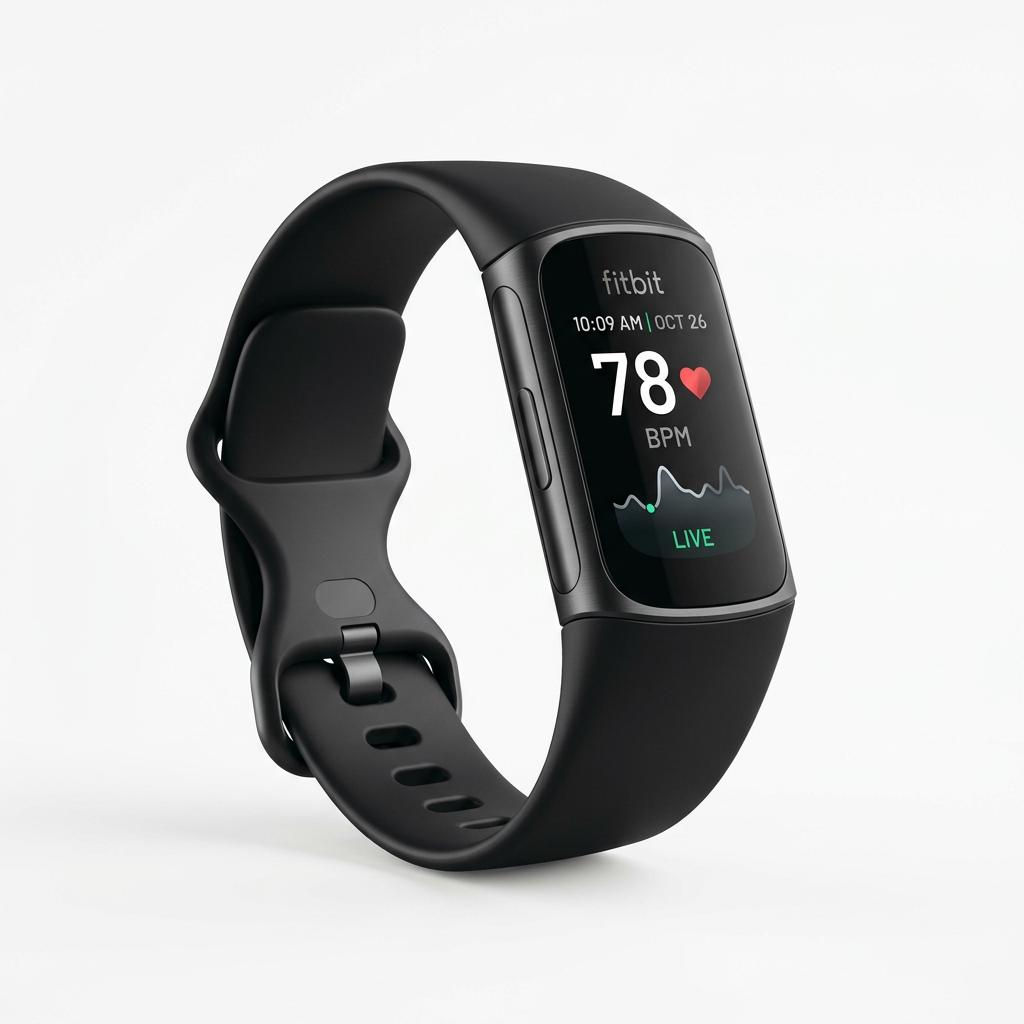 |
Fitbit Charge 6 | $140-$160 | Best Fitness Tracker | Check Price |
The reference-standard consumer heart rate monitor with ECG-accurate performance validated in multiple independent studies.
The best value among major-brand ECG chest straps, delivering reference-grade accuracy with exceptional battery life.
The best option for users who find chest straps uncomfortable, delivering excellent accuracy through upper-arm optical placement.
The most capable smartwatch for fitness, best for users whose training is primarily steady-state cardio with occasional strength work.
The best dedicated fitness tracker for users wanting long battery life and solid cardio tracking without smartwatch complexity.
The Polar H10 is widely cited as the reference-standard consumer heart rate monitor, and for good reason. A 2017 study in the Journal of Medical Internet Research found it achieved 99.6% correlation with medical ECG during rest and moderate exercise. More importantly for home gym users, it maintains this accuracy during dynamic movements where wrist-based sensors fail. The Pro strap's silicone friction dots prevent shifting that causes signal dropouts during burpees, kettlebell work, and plyometrics. The ability to maintain two simultaneous Bluetooth connections means you can pair the H10 with both your phone and gym equipment console without re-pairing. The internal memory stores one training session without a paired device, useful for swimming. With 400-hour battery life from a user-replaceable coin cell, it runs for years without fuss.
Check Price on Amazon
The Garmin HRM-Dual provides the accuracy home gym users need at the lowest price point among major-brand ECG chest straps. The 3.5-year battery life is the longest in its class, a function of its simpler single-channel Bluetooth transmission. For users who train primarily indoors and don't need swim tracking or offline memory, the HRM-Dual delivers reference-grade accuracy without the premium. The traditional electrode-based sensing maintains reliable connection during all exercise modalities, from heavy deadlifts where wrist monitors fail due to grip tension, to rapid HIIT transitions where optical sensors lag. The limitation is clear: IPX7 rating means it handles sweat and rain but isn't rated for submersion. If your training includes swimming, the Polar H10's 30m rating provides meaningful protection.
Check Price on Amazon
For users who find chest straps uncomfortable or constraining, the Polar Verity Sense offers the best accuracy available in a non-chest format. A 2021 study in Sensors found that upper-arm optical placement reduced error rates by approximately 40% compared to wrist placement during resistance exercise. The 600-hour onboard memory is exceptional, allowing months of training without syncing. The rechargeable battery delivers 20 hours of continuous use, meaning weekly charging for most users. The six-LED optical sensor uses three green and three red LEDs to capture blood flow data from multiple angles, dramatically reducing motion artifacts. While it can't quite match chest strap accuracy during rapid heart rate changes in HIIT, the difference is small enough that most users won't notice. For anyone who has abandoned chest straps due to discomfort, the Verity Sense is the upgrade you've been waiting for.
Check Price on Amazon
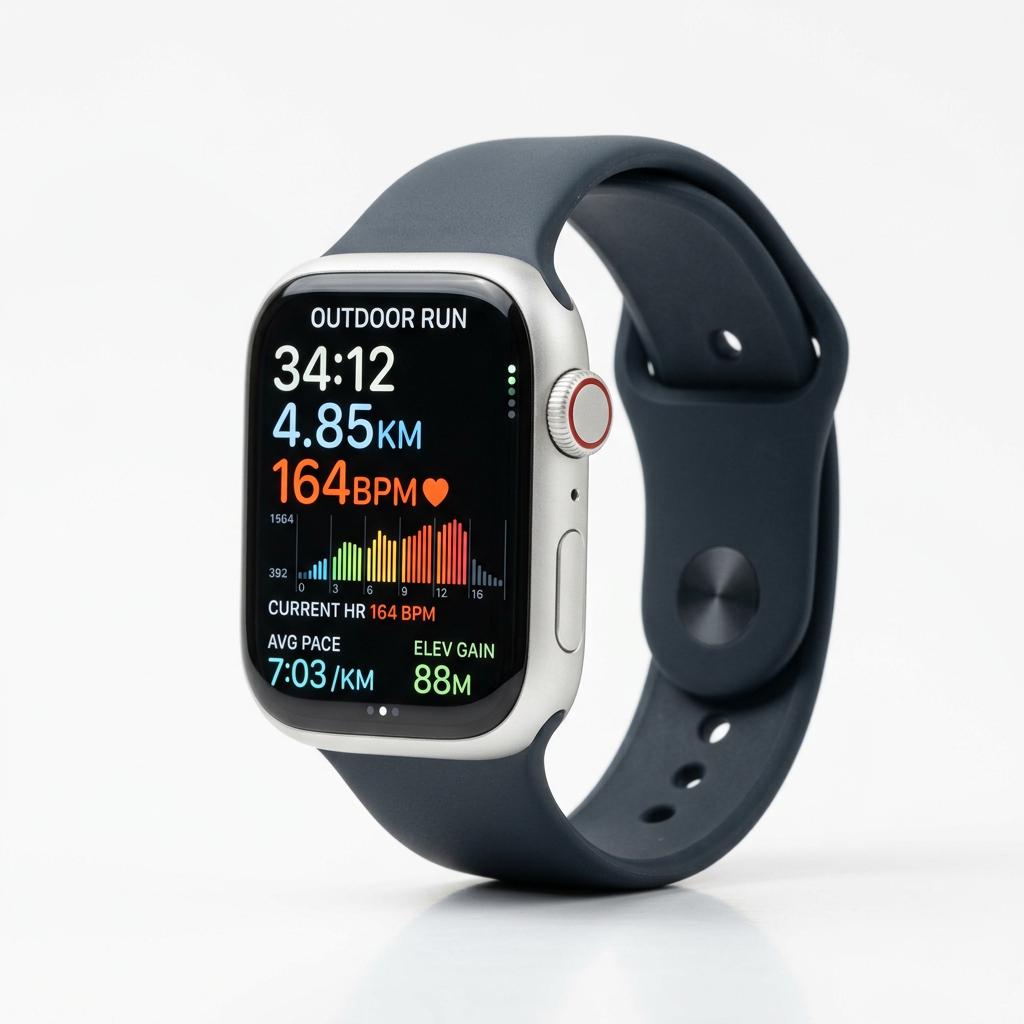
The Apple Watch Series 9 is the most capable smartwatch for fitness tracking, but its wrist-based optical heart rate sensor has inherent limitations for strength training. During steady-state cardio like treadmill running, cycling, and rowing, accuracy is good. However, a 2023 meta-analysis in BMJ Open Sport & Exercise Medicine found that wrist-worn optical sensors show mean absolute percentage errors of 5-13% during resistance exercise compared to 1-3% for chest straps. Heavy grip work like deadlifts, pull-ups, and farmer's carries disrupts the PPG signal significantly. Where the Apple Watch shines is as an overall health and fitness platform: the ECG app, blood oxygen monitoring, sleep tracking, and deep Apple Health integration create a comprehensive wellness picture. For users whose training is 80% or more steady-state cardio, the Apple Watch provides acceptable heart rate accuracy with unmatched smartwatch capabilities. Serious strength trainers should pair it with a chest strap for accurate HRM data.
Check Price on Amazon
The Fitbit Charge 6 occupies a sweet spot for home gym users who want accurate heart rate tracking for cardio sessions without the complexity and price of a full smartwatch. Its 7-day battery life means you can track sleep, workouts, and daily activity without daily charging anxiety. The built-in GPS enables outdoor run and ride tracking without carrying a phone. During steady-state cardio, the Charge 6 provides adequate accuracy for zone training and calorie estimation. However, like all wrist-based optical sensors, it struggles during heavy strength training where grip tension and wrist flexion disrupt the PPG signal. The sleep tracking and recovery insights are genuinely useful for home gym users monitoring training load. Google integration adds smart features like turn-by-turn navigation and contactless payments. For users who primarily do steady-state cardio with light strength work, the Charge 6 delivers excellent value.
Check Price on Amazon