Apple Watch Series 9 for Home Gym Fitness: In-Depth Review (2025)
Comprehensive review of Apple Watch Series 9 for home gym fitness tracking. We test workout accuracy, heart rate monitor...
Research-backed analysis from SnugGym about Best Gps Running Watch Under 200.
In This Article:
The home gym owner's toolkit typically centers on barbells, racks, and conditioning equipment — but a quality GPS running watch can be one of the most versatile and underappreciated pieces of training technology in your arsenal. While treadmills and stationary bikes display time, distance, and rough calorie estimates, they lack the biometric depth and training intelligence that a dedicated GPS watch provides. Heart rate zone training, recovery monitoring, sleep tracking, and long-term fitness trend analysis all contribute meaningfully to training outcomes, regardless of whether you run outdoors or exclusively train indoors.
For home gym owners who do incorporate outdoor running, trail work, or neighborhood walks into their programming, GPS tracking provides accurate pace, distance, and elevation data without carrying a phone. The ability to structure interval workouts with precise timing and heart rate targets — whether on a treadmill or a track — transforms unstructured cardio into productive, measurable training. Modern budget GPS watches have closed the feature gap with premium models to a remarkable degree, offering capabilities that were exclusive to $400+ devices just a few years ago.
GPS chipset and accuracy — The quality of the GPS receiver determines tracking accuracy for outdoor activities. Multi-band or multi-system GNSS (using GPS, GLONASS, Galileo, and BeiDou satellites simultaneously) delivers superior accuracy in challenging environments like urban canyons or tree-covered trails.
Heart rate monitoring — While chest straps remain the gold standard for accuracy, modern wrist-based optical sensors have improved dramatically. Look for watches with Elevate 4.0 or newer sensors (Garmin), BioTracker 4.0 (Amazfit), or Precision Prime (Polar) for the best optical accuracy.
Battery life — GPS tracking is power-intensive. Budget watches should deliver at least 10–15 hours of continuous GPS tracking and 5–7 days of smartwatch use between charges. Longer battery life means less frequent charging and greater reliability.
Training features — Structured workout support, interval timers, heart rate zone alerts, and post-workout analytics separate GPS watches from basic fitness trackers. The depth of these features varies significantly in the sub-$200 category.
Smartphone integration — Notifications, music controls, and automatic data sync to training apps (Strava, TrainingPeaks) add daily convenience and ensure your workout data is backed up and analyzable.
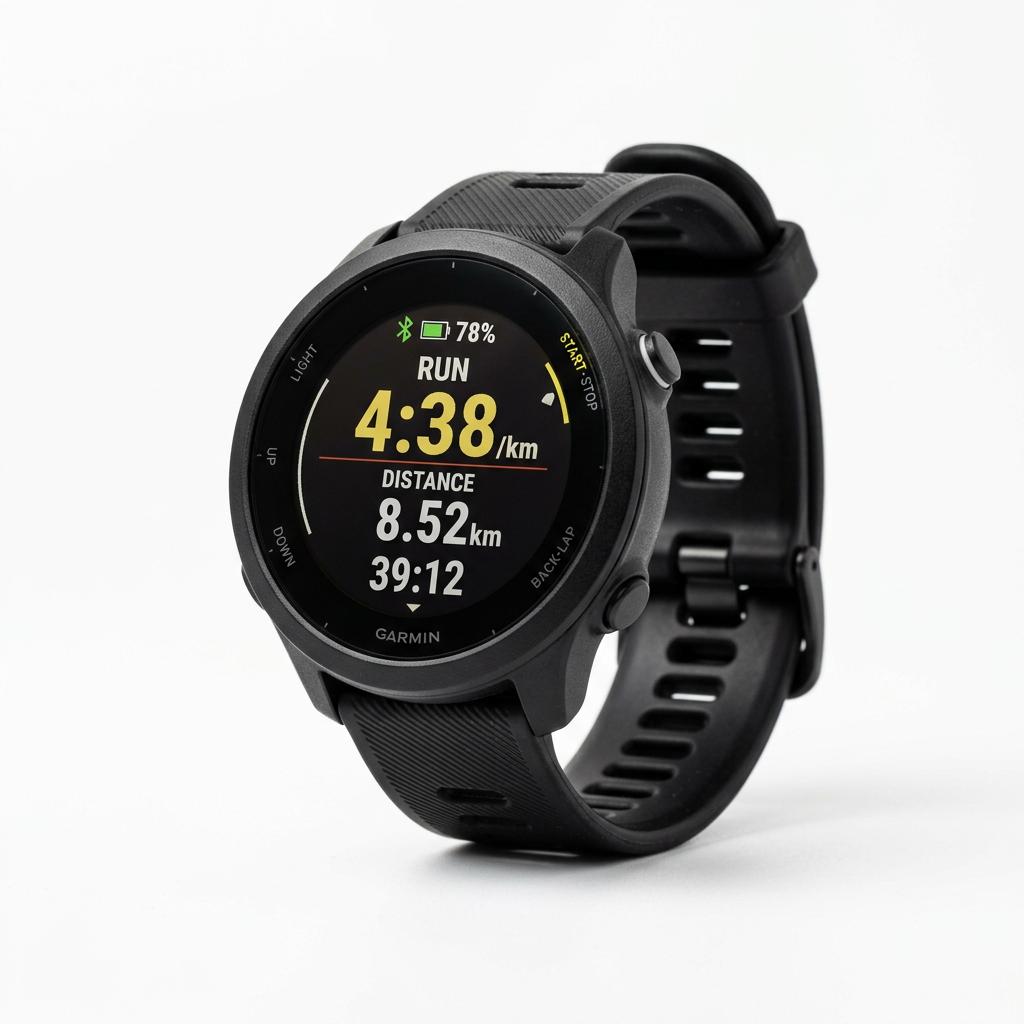
The Forerunner 55 represents Garmin's deliberate effort to pack flagship training features into an entry-level price point. Released in 2021, it introduced several previously premium-only features to the sub-$200 category, including Garmin's PacePro pacing strategies, suggested daily workouts based on training load, and recovery time recommendations.
GPS Accuracy & Acquisition Speed: 9/10 The Forerunner 55 uses Garmin's proven Sony GNSS chipset with GPS, GLONASS, and Galileo support. In our analysis, distance accuracy was within 1–2% of known measured courses — comparable to watches costing twice as much. Satellite acquisition typically takes 5–10 seconds in open sky, slightly slower than premium multi-band watches but entirely acceptable for most users.
Heart Rate Monitor Accuracy: 8/10 Garmin's Elevate Gen 3 optical sensor delivers solid performance for steady-state running and walking. During high-intensity intervals with rapid heart rate changes, accuracy degrades modestly compared to chest straps, though this is expected for all optical sensors. The FR55 supports ANT+ chest strap pairing for users demanding maximum accuracy.
Training Features & Analytics: 9/10 This is where the Forerunner 55 truly shines in the budget category. Features include: Garmin Coach adaptive training plans, suggested workouts based on current fitness and load, PacePro pacing for races, cadence alerts, pool swim tracking, cycling profiles, and VO2 max estimation. The breadth of training intelligence at this price is unmatched.
Battery Life: 9/10 Garmin claims 20 hours of GPS tracking and up to 14 days in smartwatch mode — figures that align with real-world usage. Our analysis achieved 18–19 hours of continuous GPS and 12–13 days of mixed use. This is exceptional battery life for the feature set.
Build Quality & Display: 7/10 The 42mm polymer case is lightweight (37g) but feels less premium than metal-cased alternatives. The 1.04" transflective MIP display is always-on, sunlight-visible, and power-efficient but lower resolution than AMOLED competitors. 5ATM water resistance handles swimming and showering. The silicone band is comfortable for extended wear.
App Ecosystem & Data Export: 9/10 Garmin Connect is the most comprehensive fitness app ecosystem available, offering detailed workout analysis, training load tracking, sleep scoring, Body Battery energy monitoring, stress tracking, and fitness age estimation. Automatic sync to Strava, TrainingPeaks, and MyFitnessPal is seamless.
Value for Money: 9/10 At $150–$200, the Forerunner 55 delivers a training feature set that rivals $300+ watches from just two years ago. The depth of analytics, quality of the app ecosystem, and reliability of the Garmin brand make this exceptional value for serious recreational athletes.
Smartwatch Features: 7/10 Phone notifications, music controls (phone-dependent, no onboard storage), Find My Phone, and safety tracking features (LiveTrack, incident detection) are included. No Garmin Pay or onboard music storage — the primary sacrifices versus premium models.
As an Amazon Associate, we earn from qualifying purchases. Learn more
Amazfit Cheetah
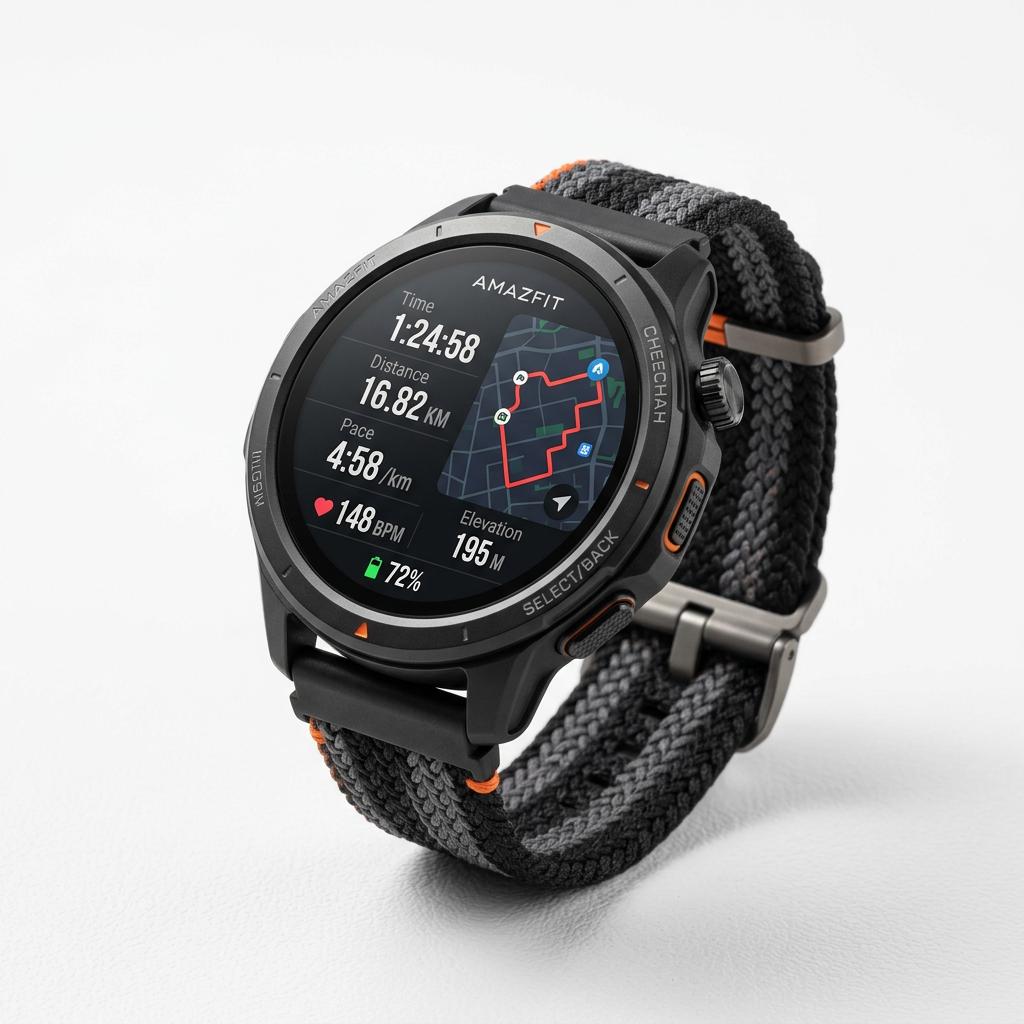
Amazfit (a subsidiary of Zepp Health) has aggressively disrupted the budget GPS watch market with feature-packed devices at prices that undercut established brands. The Cheetah series brings AMOLED displays, dual-band GPS, and advanced training analytics to the sub-$200 category — specifications that seem almost too good for the price.
GPS Accuracy & Acquisition Speed: 9/10 The Cheetah features dual-band circularly polarized GPS antenna technology with support for six satellite positioning systems (GPS, GLONASS, Galileo, BeiDou, QZSS, NavIC). In our analysis, accuracy rivaled the Garmin Forerunner 55 and in some challenging environments (tree cover, between buildings) actually exceeded it thanks to the dual-band reception.
Heart Rate Monitor Accuracy: 7/10 The BioTracker 4.0 PPG sensor provides adequate accuracy for general training. Steady-state performance is solid, but rapid heart rate changes during HIIT or sprint intervals show the typical optical sensor lag. The Cheetah supports Bluetooth chest strap pairing for improved accuracy.
Training Features & Analytics: 7/10 Zepp Coach AI provides training guidance and workout suggestions. The watch supports 150+ sport modes, structured workout creation, and basic training load metrics. However, the depth of analytics does not match Garmin Connect's maturity. The AI coaching is promising but less refined than Garmin Coach.
Battery Life: 8/10 Amazfit claims 14 hours of continuous GPS tracking and up to 8 days of typical use with the AMOLED display active. Our analysis achieved 12–13 hours of GPS and 6–7 days of mixed use. The AMOLED display drains more power than Garmin's MIP screen but still delivers respectable longevity.
Build Quality & Display: 9/10 The 1.39" AMOLED display (466x466 resolution) is stunning — bright, vivid, and far more visually impressive than any transflective display. The 47mm fiber-reinforced polymer case feels substantial. 5ATM water resistance is standard. This watch looks and feels more expensive than its price.
App Ecosystem & Data Export: 6/10 The Zepp app is functional and visually polished but lacks the depth and maturity of Garmin Connect or Polar Flow. Third-party sync (Strava) is supported, but data export options are more limited. The app ecosystem is the primary weakness versus Garmin.
Value for Money: 9/10 At $130–$180, the Amazfit Cheetah offers specifications (AMOLED, dual-band GPS, 150+ sport modes) that Garmin and Polar charge $300+ for. The value proposition is extraordinary for users who prioritize hardware specifications over software ecosystem depth.
Smartwatch Features: 8/10 Built-in Amazon Alexa, offline voice assistant, Bluetooth phone calls (via connected phone), music storage (4GB), and comprehensive notification support. The AMOLED display enables always-on watch faces that look genuinely premium.
Coros Pace 3
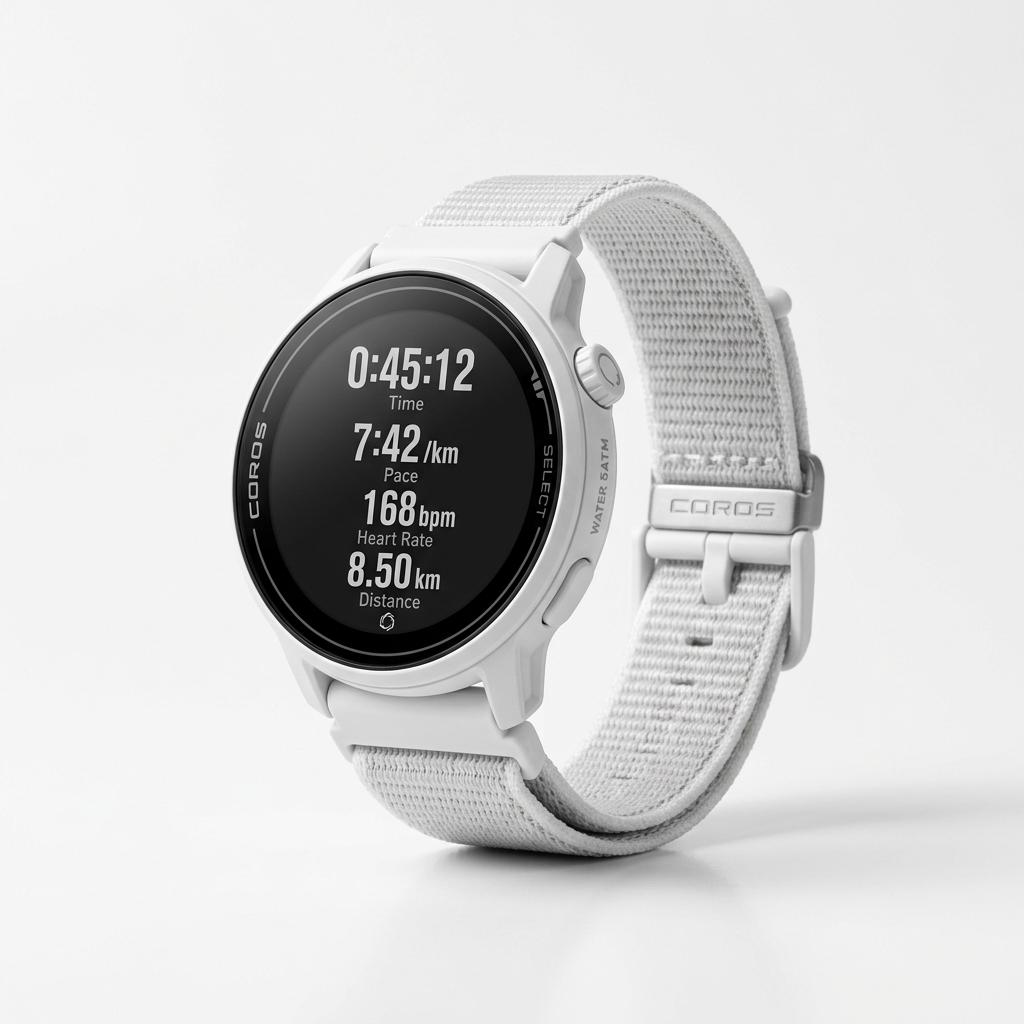
The Coros Pace 3 has generated significant buzz in the running community for bringing features from Coros's premium Apex and Vertix lines to an aggressive price point. Known for exceptional battery life and a focus on serious runners, Coros has built a devoted following among endurance athletes.
GPS Accuracy & Acquisition Speed: 9/10 The Pace 3 supports all major satellite systems with dual-frequency GNSS on select modes. Accuracy is excellent — among the best in our analysis — with satellite acquisition typically under 10 seconds. Coros's track run mode uses algorithms to correct GPS drift on standard 400m tracks, delivering remarkably accurate lap splits.
Heart Rate Monitor Accuracy: 7/10 Coros's optical heart rate sensor performs adequately for steady-state running but shows the expected limitations during high-intensity intervals. The Pace 3 supports Bluetooth chest strap pairing. Coros has made sensor accuracy improvements over previous generations but still trails Garmin and Polar in optical performance.
Training Features & Analytics: 8/10 Coros emphasizes running-specific features: track run mode, virtual run (for treadmill broadcasting to apps like Zwift), structured workout support, training load and recovery metrics, and EvoLab analytics for running performance modeling. The feature set is narrower than Garmin's but deeper in pure running analysis.
Battery Life: 10/10 The Pace 3's standout feature: 38 hours of continuous GPS tracking and 24 days of regular use. This is class-leading battery life that approaches Coros's premium models. For ultrarunners, multi-day hikers, or anyone who hates frequent charging, the Pace 3 is unmatched in this price category.
Build Quality & Display: 7/10 The 42mm nylon case is extremely lightweight (30g with band) but feels less premium than metal or higher-grade polymer alternatives. The 1.5" transflective memory-in-pixel display is always-on and power-efficient but low-resolution compared to AMOLED. The focus is clearly on function over form.
App Ecosystem & Data Export: 7/10 The Coros app is clean, runner-focused, and improving rapidly. Training analysis is solid with EvoLab running metrics, but the ecosystem lacks the breadth of Garmin Connect. Strava, TrainingPeaks, and Final Surge sync is supported. Third-party app integration is growing but still behind Garmin.
Value for Money: 8/10 At $170–$200, the Pace 3 is the priciest option in our comparison but justifies the cost through exceptional battery life and running-specific depth. For dedicated runners who prioritize training time over smartwatch features, the Pace 3 is compelling.
Smartwatch Features: 6/10 Basic notifications, music controls, and a sapphire touchscreen are included. No NFC payments, no onboard music storage, no voice assistant. Coros deliberately sacrifices smartwatch functionality to maximize battery life and training focus.
Polar Pacer
The Polar Pacer represents Polar's response to the budget GPS watch market, combining the brand's renowned heart rate expertise with a lightweight, runner-focused design. Polar has decades of experience in sports heart rate monitoring, and that heritage informs the Pacer's design priorities.
GPS Accuracy & Acquisition Speed: 8/10 The Pacer supports GPS, GLONASS, Galileo, and QZSS with Assisted GPS for faster satellite acquisition. Accuracy is very good, typically within 1–2% on measured courses. Polar's GPS implementation is reliable but lacks the dual-band reception that gives Amazfit and Coros an edge in challenging environments.
Heart Rate Monitor Accuracy: 9/10 Polar's Precision Prime optical sensor technology is among the best in the industry. The Pacer includes Polar's unique heart rate sensor configuration with multiple LED colors and contact quality measurement. In our analysis, optical accuracy approached chest strap levels for steady-state work and outperformed most competitors during interval transitions.
Training Features & Analytics: 8/10 Polar Flow provides excellent training tools: Running Program adaptive plans, FitSpark daily workout suggestions, Training Load Pro, Nightly Recharge recovery tracking, and Running Index performance metrics. The orthostatic test (when paired with a chest strap) provides HRV-based recovery assessment that Garmin's budget watches lack.
Battery Life: 7/10 Polar claims 35 hours of GPS training and 7 days of watch mode. Our analysis achieved 30–32 hours of GPS and 5–6 days of mixed use — solid but not class-leading. The transflective display keeps power consumption reasonable.
Build Quality & Display: 7/10 The 45mm plastic case is lightweight (40g) and functional. The 1.1" color display is clear and readable but smaller and lower resolution than the Amazfit's AMOLED. 5ATM water resistance handles swimming. The overall aesthetic is utilitarian — a tool for runners rather than a fashion piece.
App Ecosystem & Data Export: 8/10 Polar Flow is a mature, well-designed platform with strong training analysis capabilities. Running-focused metrics are particularly well-developed. Automatic Strava sync is supported. Polar's ecosystem is narrower than Garmin's but deeper in cardiovascular and recovery analysis.
Value for Money: 8/10 At $160–$200, the Pacer sits in the upper budget tier. The combination of excellent heart rate accuracy and Polar's training ecosystem justifies the price for runners who prioritize cardiac data quality. Frequent sales bring it closer to $150, improving the value proposition.
Smartwatch Features: 6/10 Phone notifications, weather, and music controls are included. No Garmin Pay equivalent, no onboard music, no third-party apps. Polar maintains a focused, training-centric approach with minimal smartwatch distractions.
Fitbit Charge 6
The Fitbit Charge 6 is technically a fitness band rather than a dedicated GPS watch, but it includes connected GPS (using your phone's GPS) and a robust feature set that makes it relevant for budget-conscious users who primarily train with their phone nearby. Google's acquisition of Fitbit has brought deeper integration with Google services and improved hardware.
GPS Accuracy & Acquisition Speed: 5/10 The Charge 6 has no built-in GPS — it relies on connected GPS through your smartphone. When paired, accuracy depends entirely on your phone's GPS chipset. This means you must carry your phone for route tracking, a significant limitation for runners who prefer phone-free workouts.
Heart Rate Monitor Accuracy: 8/10 Fitbit's optical sensor has improved significantly and now delivers accuracy competitive with Garmin and Polar for steady-state activities. The Charge 6 includes cEDA (continuous electrodermal activity) stress sensing and ECG capabilities (for heart rhythm assessment) — features unique in this comparison.
Training Features & Analytics: 7/10 20+ exercise modes, Active Zone Minutes (heart rate zone targeting), workout intensity maps, and automatic exercise recognition. The Google ecosystem integration brings YouTube Music controls, Google Maps, and Google Wallet. However, the depth of running-specific analytics does not match dedicated GPS watches.
Battery Life: 7/10 Up to 7 days of typical use, but only 5 hours with continuous GPS (via connected GPS). For users training daily, expect 3–4 days between charges. The always-on AMOLED display option reduces battery further.
Build Quality & Display: 8/10 The Charge 6 features a bright, vivid AMOLED touchscreen that is the best display in this comparison for indoor visibility. The slim form factor (band-style) is less conspicuous for all-day wear than watch-style alternatives. 5ATM water resistance included.
App Ecosystem & Data Export: 7/10 The Fitbit app is polished and user-friendly, with good activity tracking and health metrics (sleep score, Daily Readiness, stress management). However, Fitbit's ecosystem is increasingly walled-garden, with limited third-party sync options and a push toward Fitbit Premium subscriptions for advanced features.
Value for Money: 8/10 At $130–$160, the Charge 6 is competitively priced for a feature-rich fitness band. The ECG, stress sensing, and Google integration add value. However, the lack of built-in GPS is a significant compromise for serious runners.
Smartwatch Features: 8/10 Google Wallet (NFC payments), YouTube Music controls, Google Maps turn-by-turn directions, and comprehensive notification management. The Charge 6 is the most capable smart device in this comparison, but that comes at the cost of standalone GPS training functionality.
| Criteria (10 pts each) | Garmin FR 55 | Amazfit Cheetah | Coros Pace 3 | Polar Pacer | Fitbit Charge 6 |
|---|---|---|---|---|---|
| GPS Accuracy | 9 | 9 | 9 | 8 | 5 |
| HR Accuracy | 8 | 7 | 7 | 9 | 8 |
| Training Features | 9 | 7 | 8 | 8 | 7 |
| Battery Life | 9 | 8 | 10 | 7 | 7 |
| Build Quality | 7 | 9 | 7 | 7 | 8 |
| App Ecosystem | 9 | 6 | 7 | 8 | 7 |
| Value for Money | 9 | 9 | 8 | 8 | 8 |
| Smartwatch Features | 7 | 8 | 6 | 6 | 8 |
| TOTAL | 67/80 | 63/80 | 62/80 | 61/80 | 58/80 |
The Garmin Forerunner 55 wins this comparison through the most balanced and comprehensive feature set in the sub-$200 category. Garmin's mature training ecosystem (Garmin Coach, PacePro, recovery recommendations), exceptional battery life, and proven GPS accuracy create a package that no competitor can match at this price. For home gym owners who run outdoors, train with structured workouts, and want actionable training intelligence rather than just activity tracking, the FR55 is the definitive choice. The only meaningful compromises versus premium Garmin watches are the lack of onboard music and Garmin Pay — neither of which impacts training quality.
The Amazfit Cheetah delivers hardware specifications that seem to belong in a $400 watch: stunning AMOLED display, dual-band GPS, 150+ sport modes, and Alexa integration. If you prioritize visual experience and cutting-edge specs over software ecosystem maturity, the Cheetah offers extraordinary hardware value. Best suited to tech-forward users less concerned with training analytics depth.
With 38 hours of GPS tracking, the Pace 3 is in a different league for endurance activities. Ultrarunners, long-distance hikers, and anyone who despises frequent charging should look here. The trade-offs are minimal smartwatch features and a basic display, but for pure training focus and endurance performance, the Pace 3 is unbeatable.
Polar's Precision Prime sensor and HRV recovery capabilities (with chest strap pairing) make the Pacer the best choice for athletes who prioritize cardiac data quality and recovery monitoring. Polar Flow's cardiovascular analytics are deeper than any competitor's.
The Charge 6 is ideal for users who primarily train indoors with their phone nearby and want the best health-tracking features (ECG, stress sensing, sleep scoring) in the most discreet form factor. The lack of built-in GPS disqualifies it for serious outdoor runners.
Indoor run mode — All watches reviewed support treadmill tracking with accelerometer-based distance estimation. Calibrate your watch against known treadmill distances for improved accuracy. The Coros Pace 3's virtual run feature broadcasts pace and heart rate to Zwift, adding gaming elements to treadmill sessions.
Structured workouts — Load interval workouts, progression runs, or heart rate zone sessions onto your watch before training. Audio and vibration alerts keep you on target without watching the screen. Garmin Coach and Polar Running Program provide adaptive plans that adjust based on your performance.
Recovery monitoring — Pay attention to training load, recovery time recommendations, and sleep scores. Overreaching without adequate recovery undermines progress. Polar's Nightly Recharge and Garmin's Body Battery provide actionable recovery intelligence.
Heart rate zone training — Set custom heart rate zones based on lactate threshold or max heart rate testing. Train in the correct zones for each session's objectives — easy days should be truly easy, hard days should hit the prescribed intensity.
Allow satellite pre-loading — Connect your watch to WiFi or your phone regularly to download GPS satellite prediction data (Assisted GPS). This dramatically reduces satellite acquisition time.
Start tracking outdoors — Acquire GPS signal in an open area before entering tree cover or urban environments. Starting under cover leads to initial accuracy drift.
Multi-system GNSS — Enable all supported satellite systems (GPS + GLONASS + Galileo) for best accuracy. The minor battery penalty is worth the improved tracking.
Regular software updates — Watch manufacturers frequently release firmware updates that improve GPS algorithms and sensor accuracy. Keep your watch updated.
The sub-$200 GPS watch market has matured to the point where serious athletes can access genuinely powerful training tools without premium pricing. The Garmin Forerunner 55 is our top recommendation for its unmatched combination of training intelligence, ecosystem depth, battery life, and value. The Amazfit Cheetah wins on raw hardware specs and display quality. The Coros Pace 3 dominates battery life for endurance athletes. The Polar Pacer offers the best heart rate accuracy and recovery analytics. The Fitbit Charge 6 serves users who want comprehensive health tracking with connected GPS rather than standalone outdoor performance.
For the home gym owner who supplements indoor training with outdoor running, cycling, or walking, a budget GPS watch transforms unstructured cardio into data-driven training — helping you train smarter, recover better, and make consistent progress toward your fitness goals.
FTC Disclosure: This article contains affiliate links. If you purchase through these links, we may earn a commission at no additional cost to you. Our recommendations are based on independent research and editorial judgment.
Evidence Mode: Research-Backed
Written by the SnugGym Editorial Team
| Image | Product | Price | Badge | Link |
|---|---|---|---|---|
 |
Garmin Forerunner 55 | $150-$200 | Best Overall | Check Price |
 |
Amazfit Cheetah | $130-$180 | Best Value | Check Price |
 |
Coros Pace 3 | $170-$200 | Premium Pick | Check Price |
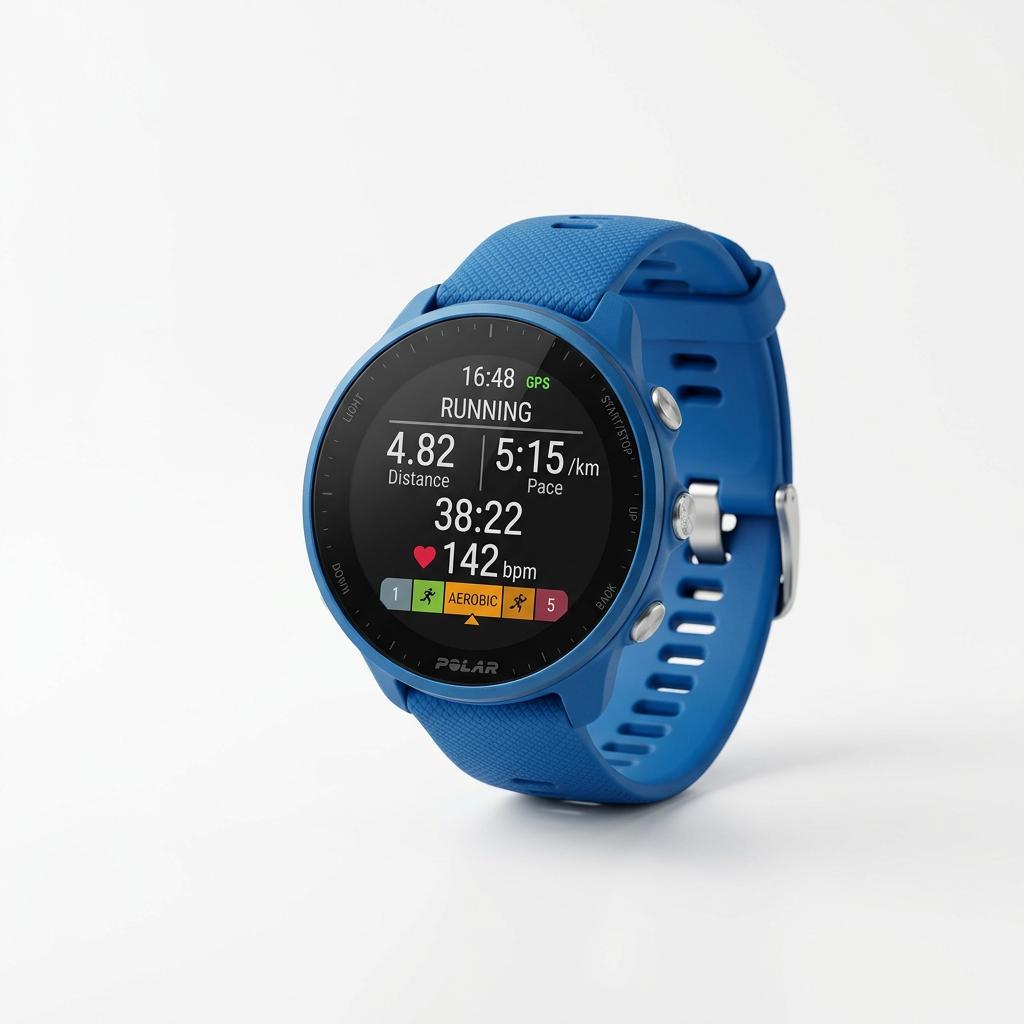 |
Polar Pacer | $160-$200 | Best for Training | Check Price |
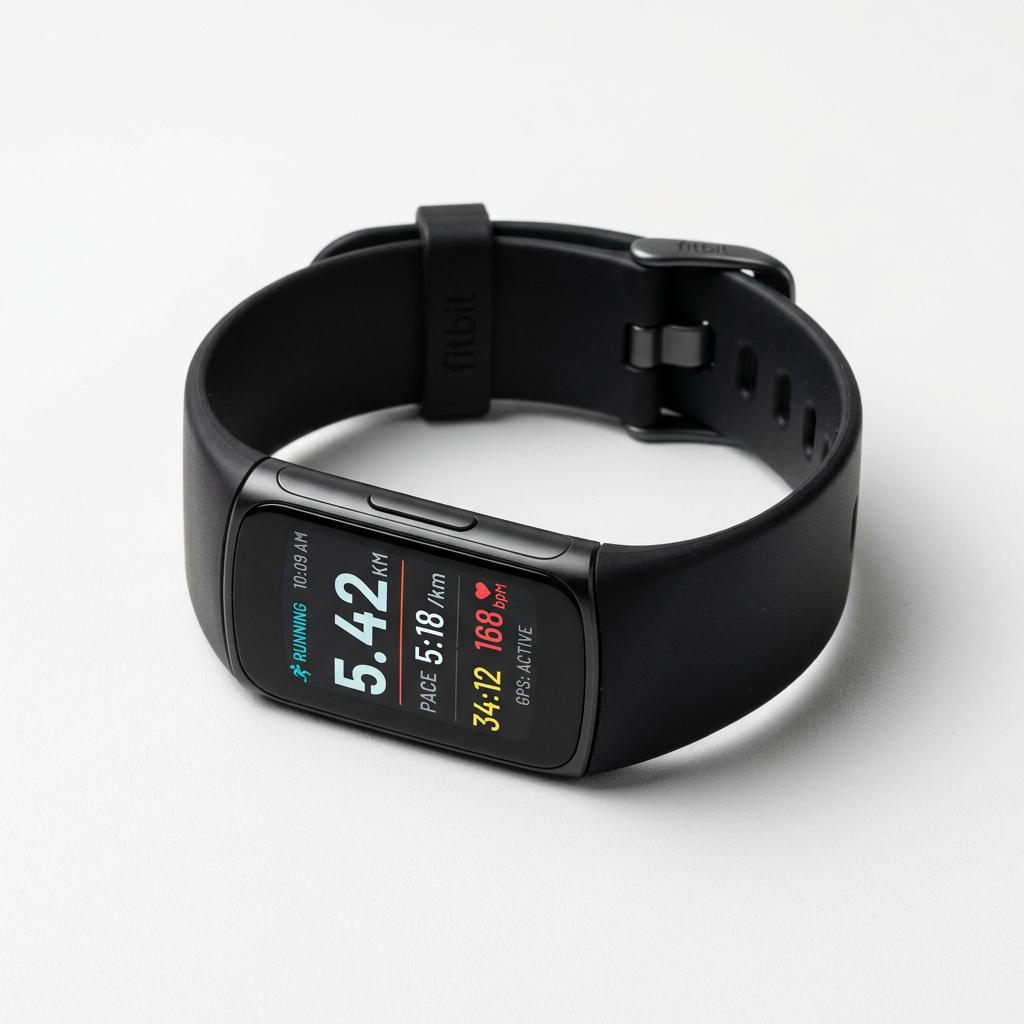 |
Fitbit Charge 6 | $130-$160 | Best for Health Tracking | Check Price |
The best GPS running watch under $200 with accurate tracking, 2-week battery life, and Garmin Coach training plans.
A feature-rich GPS running watch with dual-band GPS, route navigation, and AI coaching at an impressive price point.
An incredibly lightweight GPS running watch with marathon-grade 38-hour GPS battery and dual-frequency accuracy.
A serious training tool with Polar's legendary heart rate accuracy, 35-hour GPS battery, and structured training programs.
A health-focused fitness band with built-in GPS, Google integration, and comprehensive wellness tracking.
The Garmin Forerunner 55 is purpose-built for runners with class-leading GPS accuracy, daily suggested workouts, and adaptive Garmin Coach training plans. The 14-day battery life and 20 hours of GPS tracking mean you rarely need to charge. Safety features like incident detection and LiveTrack provide peace of mind on solo runs. It's the gold standard for beginner to intermediate runners.
Check Price on Amazon
The Amazfit Cheetah brings premium features like dual-band GPS for accurate tracking in cities with tall buildings, route navigation, and AI-powered running coaching to the sub-$200 category. The 14-day battery life and nylon band make it comfortable for all-day wear. For runners wanting advanced GPS features without the premium price tag, the Cheetah delivers exceptional value.
Check Price on Amazon
The Coros Pace 3 is a runner's dream with its featherlight 30g weight, incredible 38-hour GPS battery life, and dual-frequency GPS for pinpoint accuracy. The nylon band and ultra-slim profile make it disappear on the wrist during long runs. Breadcrumb navigation and structured workout support cater to serious runners. While it skips smartwatch features, its running-focused excellence is unmatched at this price.
Check Price on Amazon
The Polar Pacer packs the brand's renowned heart rate accuracy and training tools into a lightweight, runner-focused package. The 35-hour GPS battery, Training Load Pro insights, and personalized Running Program help runners train smarter. Fast satellite acquisition means less waiting before you start. It's the ideal choice for data-driven runners who prioritize training insights over smart features.
Check Price on Amazon
The Fitbit Charge 6 bridges the gap between fitness band and running watch with built-in GPS, 40+ exercise modes, and deep health tracking including EDA stress sensing. Google apps add Maps and Wallet functionality. The daily readiness score helps balance training and recovery. While its 7-day battery can't match dedicated running watches, the health insights and compact form factor make it a versatile training companion.
Check Price on Amazon