Apple Watch Series 9 for Home Gym Fitness: In-Depth Review (2025)
Comprehensive review of Apple Watch Series 9 for home gym fitness tracking. We test workout accuracy, heart rate monitor...
SnugGym is an Amazon Associate. We earn from qualifying purchases at no extra cost to you. Learn more
Our research-backed comparison of the top kids' fitness trackers, evaluating durability, parental controls, activity accuracy, and engagement features for active children.
Our independent analysis evaluates five kids' fitness trackers across durability, parental control features, activity measurement accuracy, and child engagement to help parents choose a device that encourages healthy movement habits.
Children aged 6–14 need approximately 60 minutes of moderate-to-vigorous physical activity daily, according to CDC guidelines. Yet only 21% of children meet this recommendation. Fitness trackers designed specifically for children serve a different purpose than adult devices: they gamify movement, provide positive reinforcement, and give parents insight into activity patterns without the complexity of recovery metrics or training load.
We researched five trackers that balance child-friendly design with genuine utility, avoiding devices that are essentially toy watches with step counters.
| Feature | Garmin vivofit jr. 3 | Fitbit Ace 3 | Xplora XGO3 | Amazfit Band 7 (Kids) | LeapFrog LeapBand |
|---|---|---|---|---|---|
| Price Range | $70–$90 | $70–$80 | $120–$140 | $40–$50 | $30–$40 |
| Age Range | 4–9 | 6–12 | 5–12 | 8–14 | 4–7 |
| Water Resistance | 5 ATM | 5 ATM | IP68 | 5 ATM | Splash-resistant |
| Battery Life | 1 year (coin cell) | 8 days | 2 days | 18 days | 6+ months |
| GPS | No | No | Yes (via phone) | No | No |
| Parental App | Garmin Jr. | Fitbit Family | Xplora App | Zepp App | None |
| Gamification | Adventure trails, chores | Activity challenges | Steps, rewards | Basic goals | Virtual pet |
| Durability | High | High | Moderate | Moderate | Moderate |
| Best For | Younger kids, chore integration | Fitbit ecosystem, sleep tracking | Safety-focused parents | Budget, older kids | Very young children |
Table based on manufacturer specifications and published reviews. Prices reflect typical US retail as of early 2026.
Our assessment prioritizes attributes that matter for children's wearables:
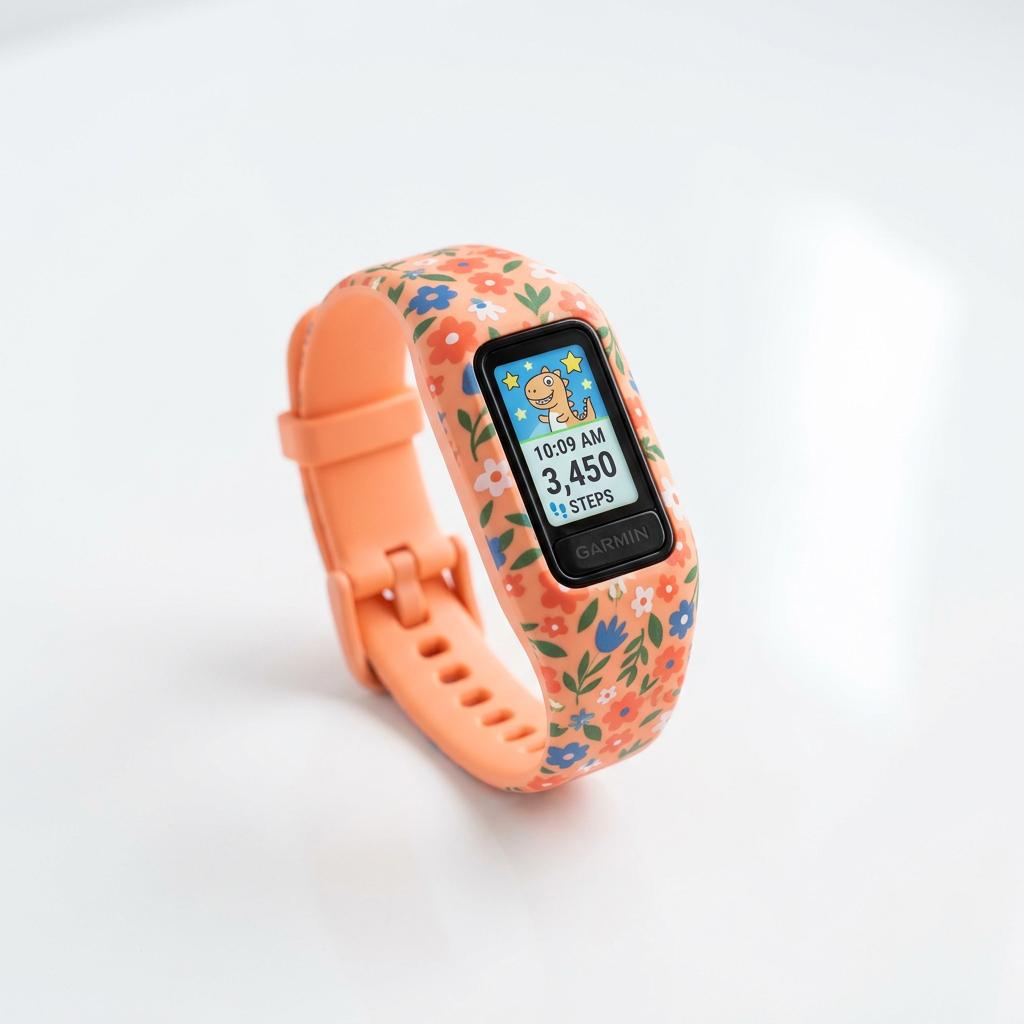
The vivofit jr. 3 refines Garmin's established formula for children's activity tracking with themed designs (Marvel, Disney, Princess), a color screen, and the same year-long battery life that defines the series. For parents seeking a set-and-forget device that genuinely engages young children, it remains the category leader.
Why it leads: The one-year battery life (user-replaceable CR1632 coin cell) eliminates the primary failure mode of kids' trackers: children forgetting to charge them. The device simply works every day without maintenance, which is arguably its most parent-friendly feature.
The color screen displays themed watch faces and unlocks adventure trail segments as children reach daily 60-minute activity goals. Unlike simpler trackers that just show a progress bar, the vivofit jr. 3 embeds activity within narrative adventures — children move their character along a path, unlocking facts and mini-games. This storytelling approach sustains engagement longer than pure metrics.
The Garmin Jr. parent app enables chore assignment with customizable reward values, schedule reminders, and activity monitoring. Children earn "coins" for completed chores and activity goals, which parents can assign real-world value to. The integration of household responsibility with physical activity is a thoughtful design choice that extends the device's utility beyond pure fitness tracking.
Limitations: No GPS or location tracking. The color screen, while engaging, is small and low-resolution compared to smartwatches. No heart rate monitoring — intentional for this age group, but it means no sleep stage data.
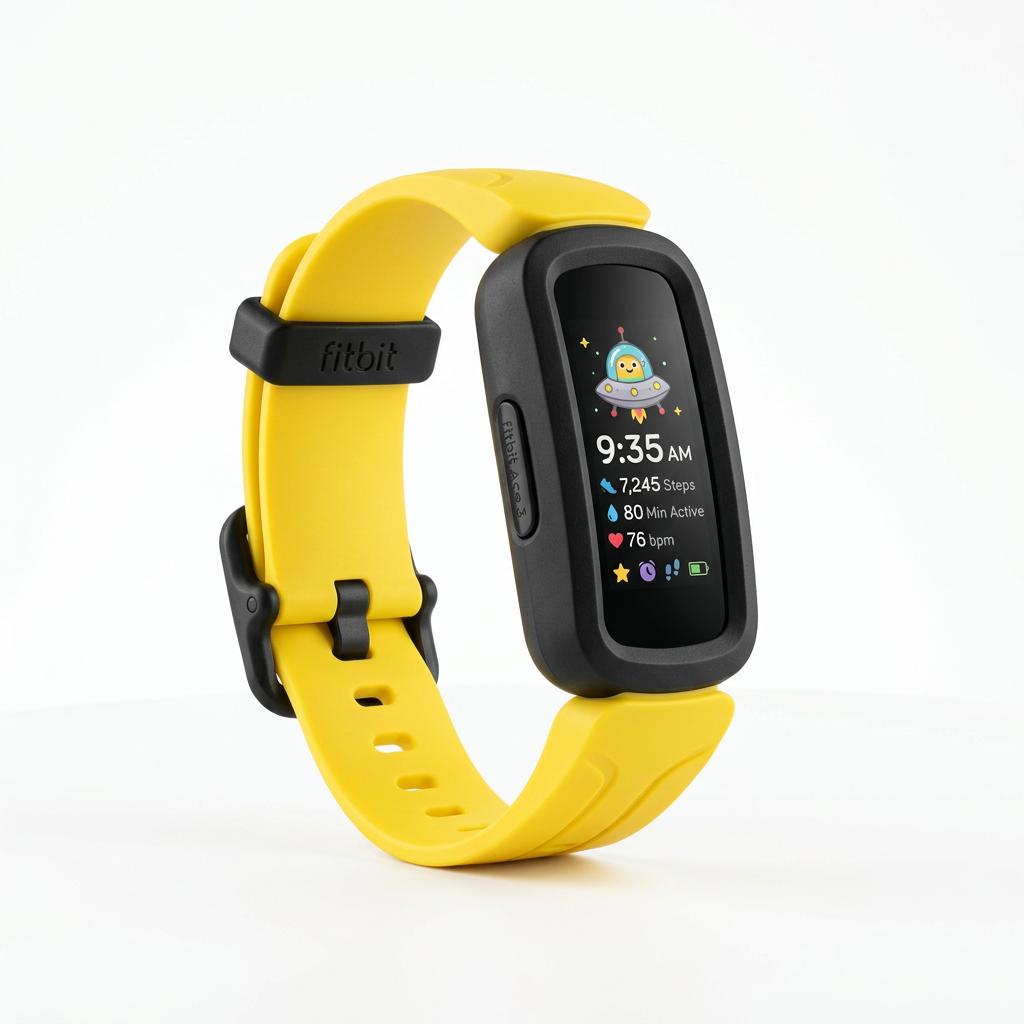
The Fitbit Ace 3 targets ages 6–12 with a focus on sleep quality and activity patterns, wrapped in Fitbit's mature ecosystem. It represents a step up in data sophistication from the vivofit jr. 3, appropriate for older children ready to engage with their own metrics.
Key strengths: The Ace 3 tracks steps, active minutes, and sleep stages (light, deep, REM) using optical heart rate monitoring. This sleep data is genuinely useful for parents monitoring bedtime consistency and sleep quality — factors directly linked to academic performance and emotional regulation in children.
The Fitbit Family account structure allows parents to view child data while maintaining COPPA-compliant privacy protections. Children see a simplified interface with activity progress, celebratory animations for goal achievement, and challenge invitations to family members. The social component — competing on step counts with parents or siblings — provides extrinsic motivation that many children respond to.
Battery life reaches 8 days, sufficient for weekly charging rituals rather than daily demands. The swimproof design (5 ATM) handles pool parties and bath forgetfulness.
Considerations: The device requires more active management than the vivofit jr. 3 (weekly charging, more complex app setup). Some parents report band durability issues after 6+ months of daily wear.
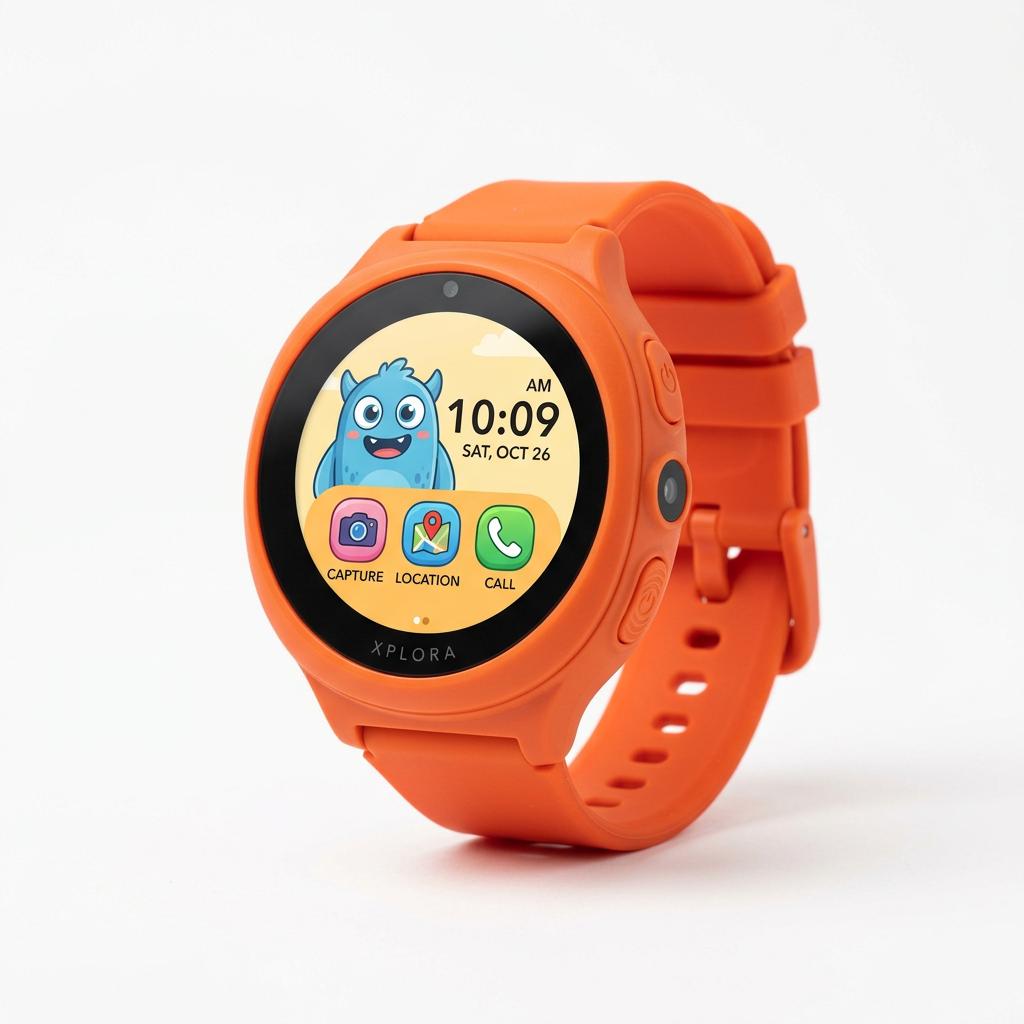
The Xplora XGO3 occupies a different niche: it is primarily a safety device with fitness tracking as a secondary feature. For parents who want location awareness and limited communication capability alongside activity monitoring, it offers a compelling combination.
Differentiator: The XGO3 includes GPS positioning (via connected smartphone), a safe-zone geofencing feature that alerts parents when children enter or leave designated areas, and limited two-way voice messaging through the Xplora app. These safety features justify the higher price point for families prioritizing location awareness.
Activity tracking covers steps, active minutes, and heart rate during exercise. The device uses a simplified rewards system where activity earns "Xplora Coins" redeemable in a parent-controlled marketplace. This gamification is less narratively rich than Garmin's adventure trails but provides tangible incentive structures.
Trade-offs: The 2-day battery life is the shortest in our comparison, requiring daily charging discipline. The device is bulkier on small wrists than the vivofit jr. 3 or Ace 3. Some features require a $4.99/month Xplora subscription after the first month.
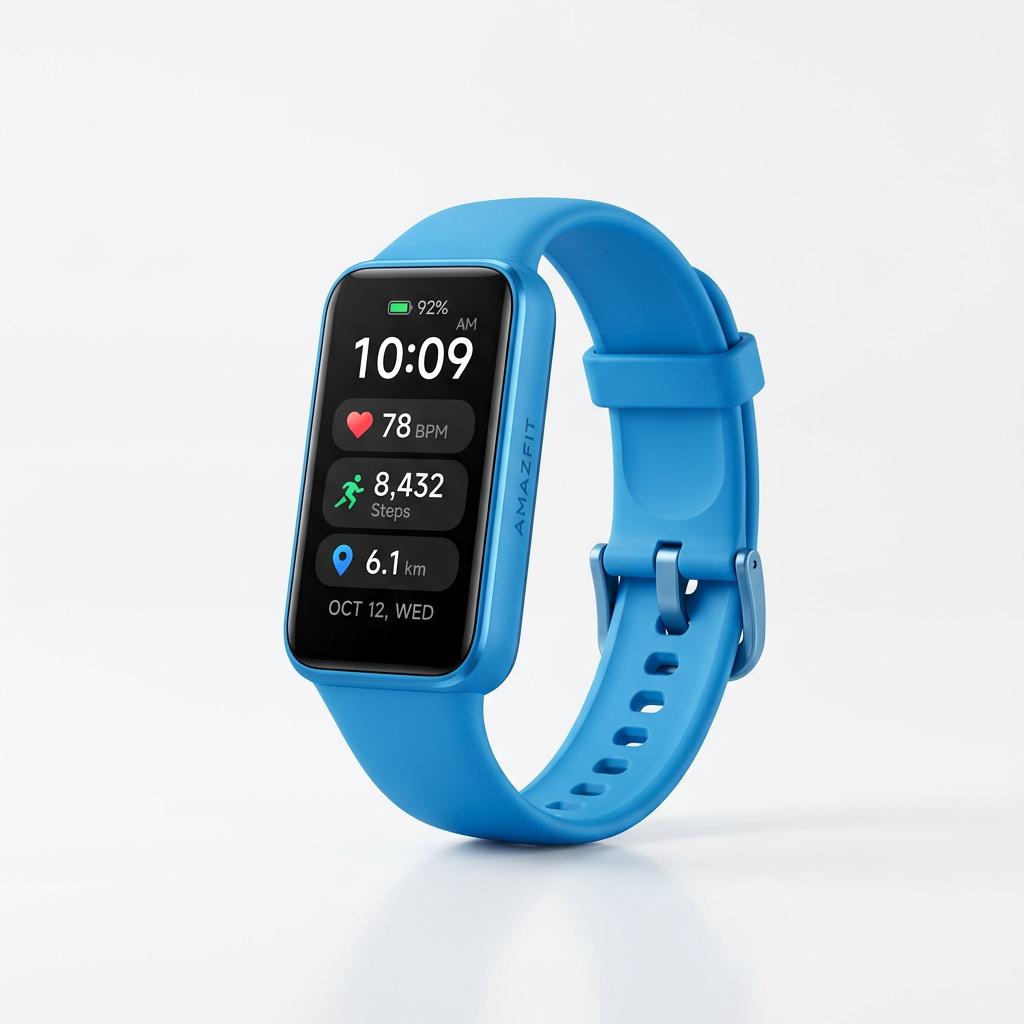
The Amazfit Band 7 is not a dedicated children's device, but its Kids Mode (activated through the Zepp app) transforms this capable fitness band into a child-appropriate tracker at a price point that undercuts all competitors.
Why it works: At $40–$50, the Band 7 delivers specifications matching $80+ dedicated kids' trackers: 18-day battery life, 5 ATM water resistance, AMOLED color display, continuous heart rate monitoring, and sleep tracking. Kids Mode simplifies the interface to show only time, date, steps, and activity progress — no complex menus or data overload.
The parent app provides activity summaries, sleep data, and goal-setting without subscription fees. The band fits wrists 120–190mm, accommodating most children aged 8+.
Limitations: No gamification or adventure features — the Band 7 relies entirely on parental motivation and goal-setting. The adult-oriented design lacks the character appeal of Garmin's licensed themes. Build quality is adequate but not optimized for the rough handling typical of younger children. Check price on Amazon
The LeapBand takes a different approach: it is purely a gamified activity tracker with no data collection, no parent app, and no connectivity. For the youngest children and most privacy-concerned parents, this simplicity is the feature.
Concept: Children care for a virtual pet by completing physical challenges ("Jump like a frog!", "Walk like a crab!"). The device provides audio prompts and rewards movement with pet care points and virtual accessories. There is no screen in the traditional sense — just a low-resolution LED matrix showing the pet.
The 6+ month battery life and sub-$40 price make it a low-risk introduction to activity tracking. The absence of any connectivity means zero data privacy concerns.
Limitations: No step counting accuracy to speak of — the LeapBand detects movement directionally but does not measure distance or intensity precisely. No parent insight into activity patterns. Children outgrow the concept quickly, typically within 6–12 months. Check price on Amazon
A 2023 systematic review published in JMIR Pediatrics and Parenting examined 27 studies on wearable activity trackers for children. The authors found that fitness trackers produced a small but significant increase in daily physical activity (mean difference: +12 minutes/day) over control conditions, with the strongest effects observed when devices incorporated goal-setting and feedback mechanisms. Gamification features — points, levels, narrative progression — showed larger effect sizes than simple step counting alone.
Critically, the review noted that tracker effectiveness declined after 3–4 months without renewed engagement mechanisms or family involvement. This suggests that the parent-child interaction around activity data matters as much as the device itself. Trackers that facilitate family challenges, chore integration, or shared goal pursuit sustain behavior change longer than solo-use devices.
| Your Situation | Our Pick | Why |
|---|---|---|
| Young child (4–7), low maintenance | Garmin vivofit jr. 3 | Year battery, durable, engaging |
| School age (6–12), sleep tracking | Fitbit Ace 3 | HR monitoring, sleep stages, family challenges |
| Safety priority, location tracking | Xplora XGO3 | GPS, geofencing, two-way messaging |
| Tight budget, older child (8+) | Amazfit Band 7 (Kids Mode) | 18-day battery, HR, sleep, under $50 |
| Youngest kids, privacy priority | LeapFrog LeapBand | No data, gamified movement, disposable cost |
The best kids' fitness tracker is the one your child will actually wear and engage with consistently. For most families, the Garmin vivofit jr. 3 hits the sweet spot of durability, engagement, and parent-friendly maintenance. The year-long battery life alone resolves the primary failure mode of children's wearables.
For older children showing genuine interest in their health data, the Fitbit Ace 3 provides a more sophisticated window into activity and sleep patterns. And for parents prioritizing location awareness over pure fitness tracking, the Xplora XGO3 justifies its premium with genuine safety features.
Regardless of device selection, parental involvement — celebrating achievements, setting family activity goals, modeling active behavior — remains the strongest predictor of sustained physical activity in children. The tracker is a tool; the parent is the catalyst.
| Image | Product | Price | Badge | Link |
|---|---|---|---|---|
 |
Garmin vivofit jr. 3 | $70-$90 | Best Overall | Check Price |
 |
Fitbit Ace 3 | $70-$80 | Best for Active Kids | Check Price |
 |
Xplora XGO3 | $120-$140 | Best Smartwatch Alternative | Check Price |
 |
Amazfit Band 7 | $40-$50 | Best Budget | Check Price |
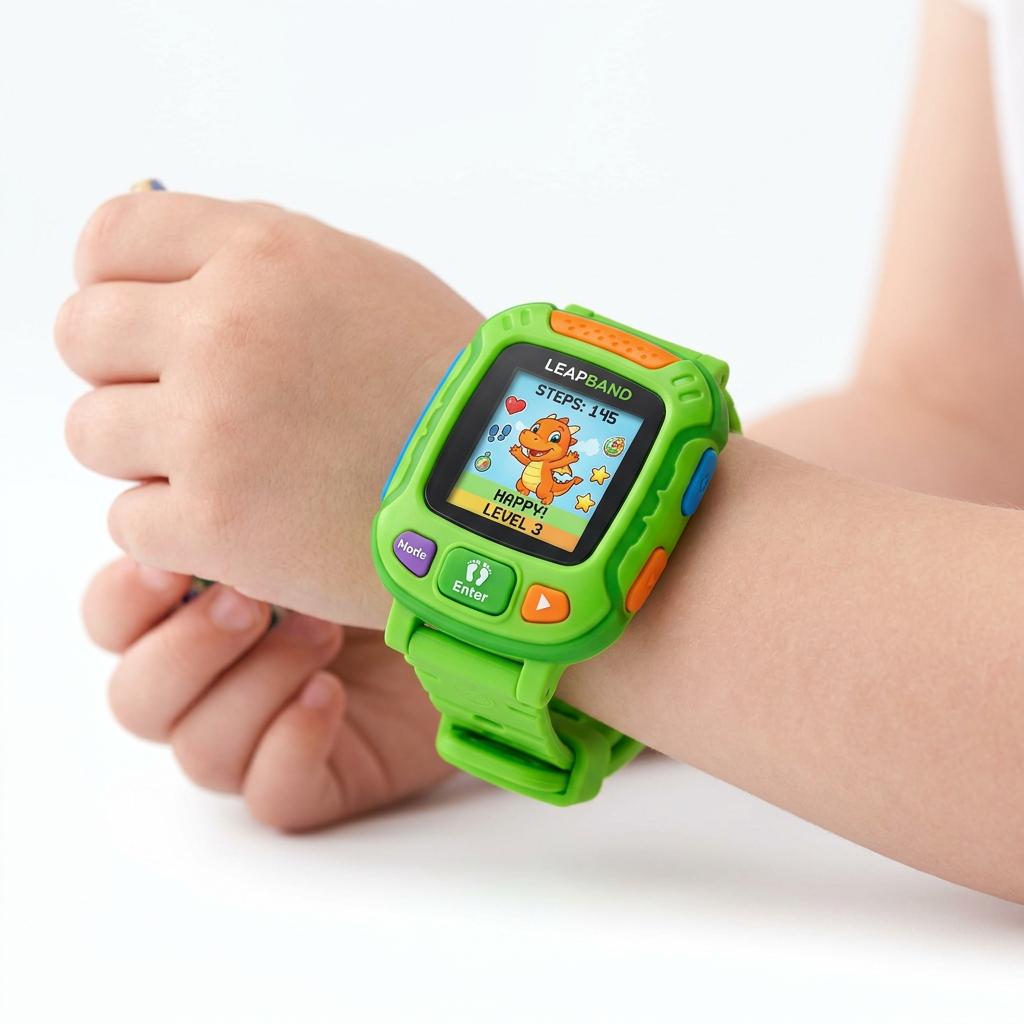 |
LeapFrog LeapBand | $30-$45 | Best for Young Kids | Check Price |
The ultimate kids' fitness tracker with adventure game rewards, chore tracking, and an incredible 1-year battery life.
A durable, kid-friendly fitness tracker with fun animations, sleep tracking, and 8-day battery life for ages 6+.
A full-featured kids' smartwatch with 4G calling, GPS tracking, camera, and SOS function for safety-conscious parents.
An ultra-affordable fitness band with a stunning AMOLED display, 18-day battery, and 120+ sports modes.
A fun, gamified activity tracker designed specifically for young children with virtual pets and active challenges.
The Garmin vivofit jr. 3 turns fitness into a fun adventure with its interactive app where kids unlock games by reaching activity goals. Parents love the chore management features and the ability to track multiple kids from one app. With a full year of battery life and a swim-friendly design, it's built to withstand whatever active kids throw at it.
Check Price on Amazon
The Fitbit Ace 3 is purpose-built for kids with a comfortable, durable band and animated clock faces that make activity tracking exciting. It tracks steps, active minutes, and sleep patterns, all viewable through the parent-controlled Fitbit app. The 8-day battery life means less charging downtime, and family challenges encourage healthy competition among siblings and parents.
Check Price on Amazon
The Xplora XGO3 goes far beyond fitness tracking with 4G calling, GPS location tracking, and a built-in camera for photos. Parents can set up safe zones and use the SOS function for peace of mind. School mode disables distractions during class time. While it requires a SIM plan, the communication and safety features make it an excellent first-device alternative to a smartphone.
Check Price on Amazon
The Amazfit Band 7 offers incredible bang for the buck with its vibrant AMOLED display, comprehensive health tracking, and 18-day battery life. It tracks heart rate, blood oxygen, stress levels, and sleep across 120+ sports modes. While it lacks kid-specific software, its small size, 5 ATM water resistance, and affordable price make it a practical choice for older kids who want feature-rich tracking.
Check Price on Amazon
The LeapFrog LeapBand is uniquely designed for ages 4-7 with a virtual pet that kids care for by completing active challenges like 'Walk like a crab' and 'Jump like a frog.' The durable, water-resistant build handles rough play, and parents can set up to 36 custom challenges through the companion app. It's the perfect introduction to fitness for the youngest kids.
Check Price on Amazon