Apartment Gym Essentials Checklist: Everything You Need for Small Spaces
A comprehensive checklist of apartment gym essentials. Covers equipment, storage, and organization items for building th...
Discover practical solutions for storing exercise bikes in apartments. From folding bikes to vertical storage, we cover strategies for spin bikes, upright bikes, and recumbent bikes in small spaces.
Stationary bikes are the most popular cardio machine for home gyms — they're low-impact, suitable for all fitness levels, and generally more compact than treadmills or ellipticals. But in an apartment, even a "compact" exercise bike can dominate a room.
This guide provides storage strategies for every exercise bike type and apartment configuration, from studios where every inch matters to one-bedrooms with dedicated fitness corners.
Exercise bikes present three specific storage challenges in apartments:
Floor space consumption: Even compact upright bikes require roughly 18-24 inches of width and 40-50 inches of length. In a 300-square-foot studio, that's 5-8% of your total living area for a single piece of equipment.
Weight and mobility: Quality exercise bikes weigh 40-100 pounds. Moving them for storage requires either substantial effort or wheels — and not all bikes have transport wheels.
Visual impact: A stationary bike is unmistakably exercise equipment. Unlike a bench that might pass as seating, or dumbbells that store discretely, a bike dominates the visual field of any room it's in.
The storage solution begins with selecting the right bike type. Your choice here determines your storage options.
Folding bikes are purpose-built for space-constrained environments. They collapse to roughly 50% of their operating footprint.
Best models for apartments:
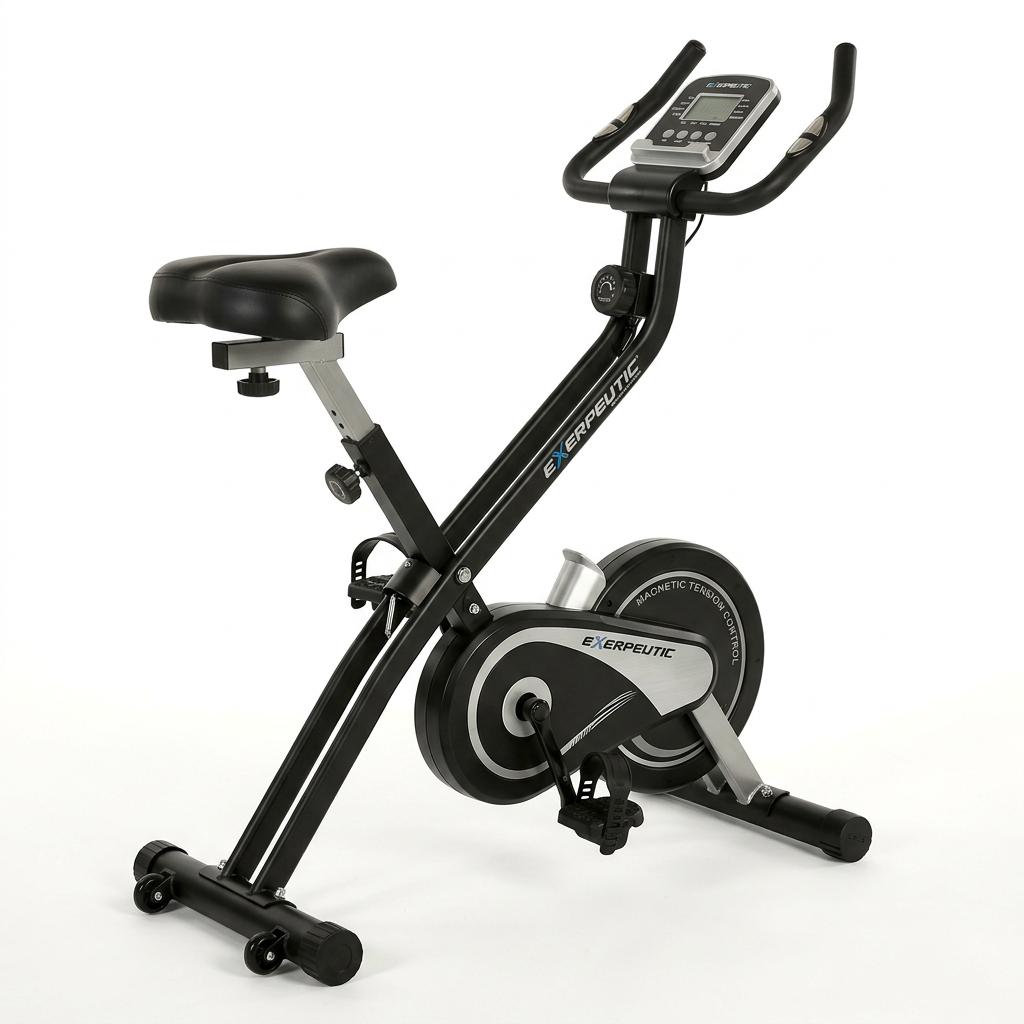
Exerpeutic Folding Magnetic Upright Bike
The Exerpeutic is the reference standard for folding bikes. The folded form is genuinely compact — roughly the size of a large suitcase. Transport wheels make moving it to a closet or corner trivial. The 39-pound weight is manageable for most users.
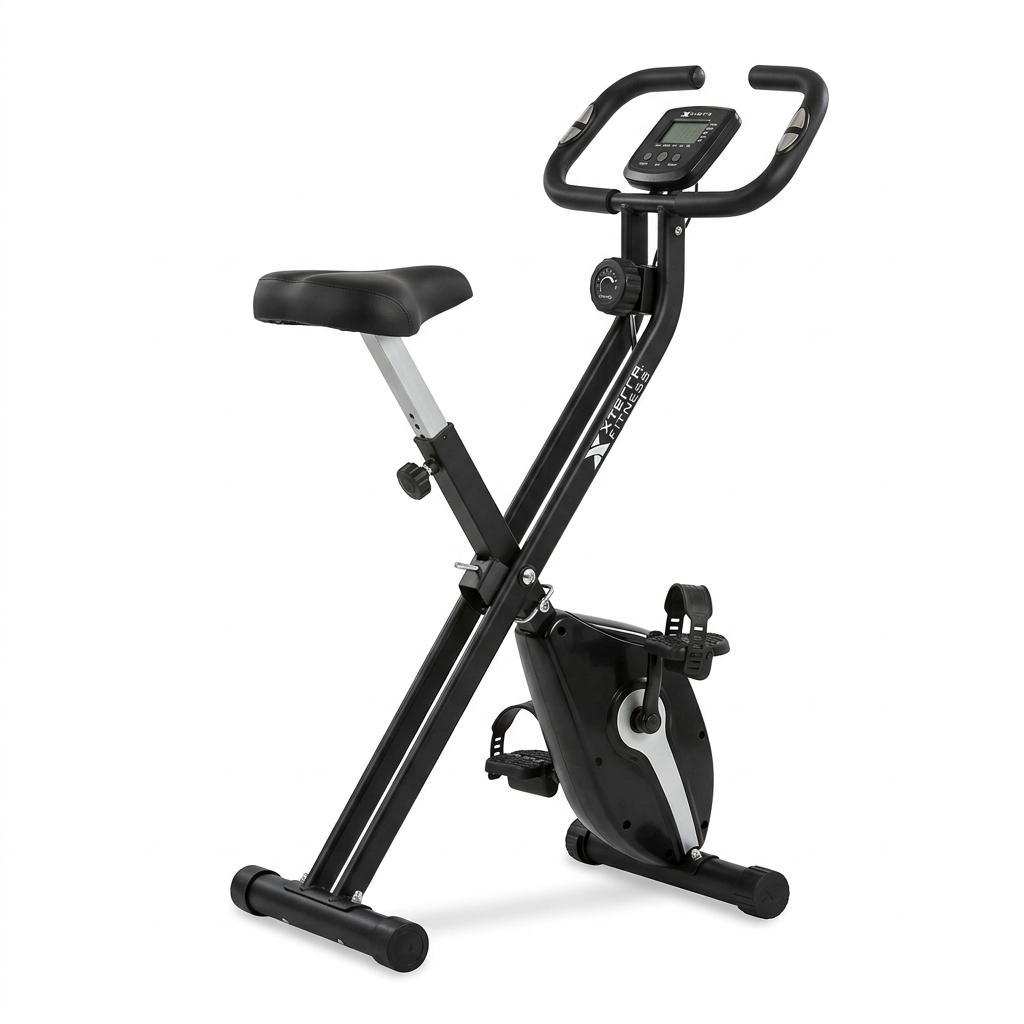
XTERRA Fitness FB150 Folding Bike
The XTERRA FB150 trades some sturdiness for lighter weight and lower price. At 32 pounds, it's among the lightest functional exercise bikes available. The 225-pound capacity limits it to lighter users.
Some non-folding bikes achieve compact footprints through design rather than collapsibility.
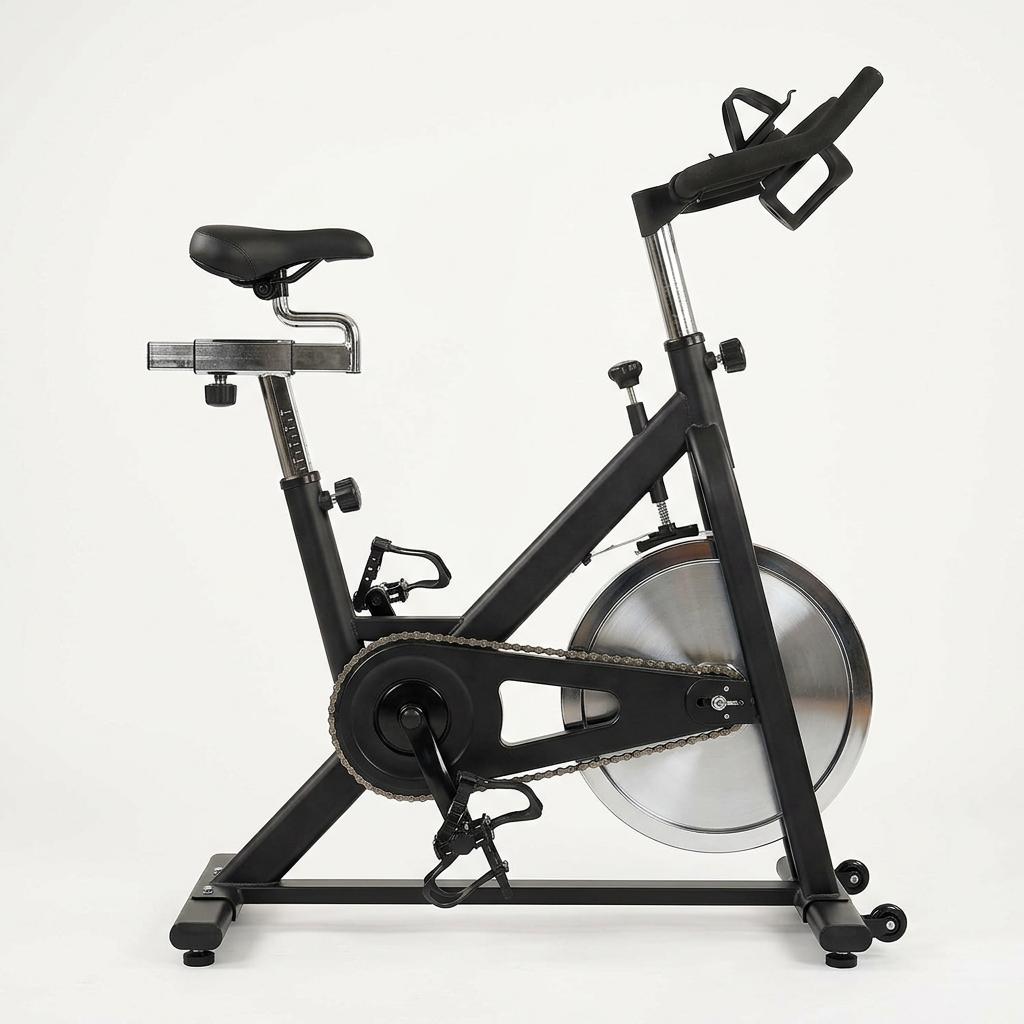
Sunny Health & Fitness SF-B1203
At 19 inches wide, this bike fits through narrow doorways and tucks into tight spaces. The non-folding design provides more stability than folding alternatives but requires a permanent footprint commitment.
Spin bikes are the bulkiest option, typically measuring 40-50 inches long and 20-24 inches wide. They weigh 80-125 pounds. Storage requires either dedicated space or creative solutions.
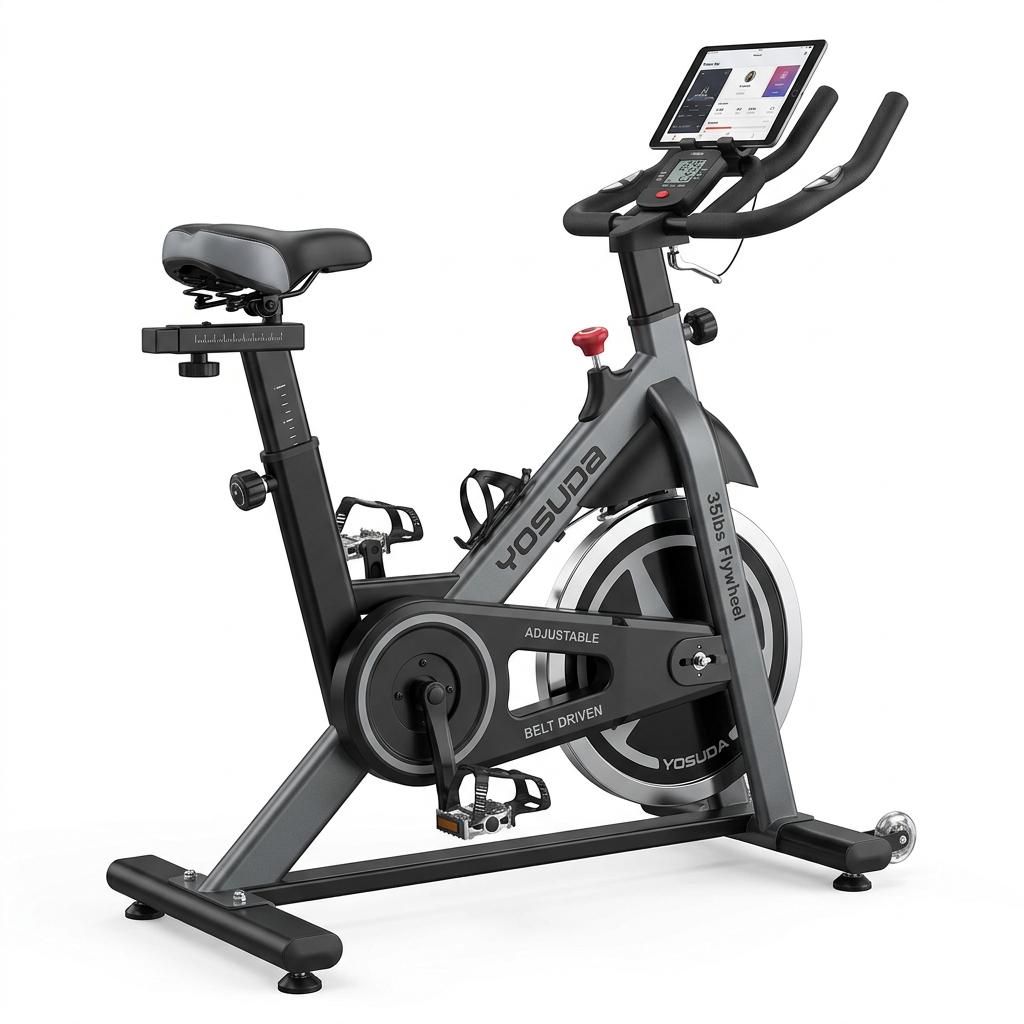
The YOSUDA Indoor Cycling Bike offers a relatively compact spin option:
While not small, the YOSUDA includes transport wheels and a manageable weight for repositioning within an apartment.
Recumbent bikes are generally the largest exercise bike type due to their extended seating position. Most recumbents measure 50-60 inches long, making them poor candidates for small apartments unless you have dedicated space. Folding recumbent options exist but are rare and expensive.
Verdict for apartments: Choose a folding upright bike unless you have dedicated space or a specific training reason for a spin bike or recumbent.
A folded Exerpeutic or XTERRA bike fits in most standard closets standing vertically or lying horizontally on the floor.
Vertical closet storage:
Horizontal closet storage:
Walk-in closet advantage: Walk-in closets often accommodate an unfolded bike along a wall without significantly impacting clothing storage. This eliminates the daily fold/unfold routine.
The corner is the most space-efficient location for a non-folding bike. Two walls provide natural boundaries, and the diagonal sightline from room entry is less visually dominant than center placement.
Corner setup:
Visual mitigation: Place a folding screen, tall plant, or shelving unit adjacent to the bike to break up the visual mass. The bike becomes one element in a composition rather than the dominant feature.
When corner placement isn't possible, positioning the bike against a wall preserves central floor space for other activities.
Best walls: Choose the wall least visible from the room's primary entry point and seating area. The wall behind a sofa, for example, hides the bike from normal viewing angles.
Wall protection: Exercise bikes can mark walls during intense sessions — sweat spray, handlebar contact during mounting, or the bike shifting slightly. Install clear plastic wall protectors (inexpensive and nearly invisible) behind the bike at handlebar height.
Some ultra-compact folding bikes fit under elevated beds. This is the ultimate space-saving solution but requires specific conditions.
Requirements:
The Exerpeutic folding bike at 19″ × 19″ × 51″ folded fits under many queen and king beds with 12-14 inch clearance. It does not fit under standard 7-inch bed frames.
Retrieval workflow: Keep a clear path to the bed side. Store the bike on a rolling platform or furniture slider for easier retrieval. The 60-second setup rule applies — if retrieval takes longer, you won't do it consistently.
For apartments with balconies in mild climates, outdoor bike storage is viable with precautions.
Climate considerations: Only appropriate for dry climates without temperature extremes. Humidity rusts chains and flywheels. Extreme heat degrades plastics and electronics. Freezing temperatures can damage LCD displays.
Protection: Use a weather-resistant equipment cover. Secure the bike to prevent wind tipping. Check for rust monthly if humidity exceeds 60%.
Security: Balcony bikes are visible to neighbors and potential thieves. Ground-floor balconies are especially vulnerable. Consider this only if your balcony isn't easily accessible from outside.
Exercise bikes generate two noise types: mechanical noise from the bike itself and impact noise transmitted through the floor.
Magnetic resistance vs. friction resistance: Magnetic resistance systems are significantly quieter than felt pad or strap resistance. If noise is a concern, prioritize magnetic bikes.
Belt drive vs. chain drive: Belt drives operate silently; chain drives produce clicking and whirring. The premium for belt drive is worth paying in shared-wall situations.
Maintenance: Regularly tighten bolts, lubricate chains (if applicable), and check pedal straps. Loose components amplify noise.
Equipment mat: A 3/8-inch or thicker rubber mat beneath the bike dampens vibration transmission through the floor. This is the single most effective noise reduction step.
Check equipment mats on Amazon
Additional padding: For extreme noise sensitivity, add a layer of dense foam (like a folded yoga mat) beneath the rubber mat. Test this setup — too much cushioning can create instability.
Time-of-use consideration: Even with noise reduction, intense cycling sessions transmit some vibration. Schedule hard efforts during reasonable hours (typically 8 AM to 9 PM) to maintain neighbor relations.
Most exercise bikes are black. If your apartment features black furniture, accent pieces, or fixtures, the bike blends more naturally. If your decor is predominantly light colors, the bike becomes a visual anchor that draws attention.
Mitigation: Add light-colored elements near the bike — a white towel draped over the seat, light wall art above, or a light-colored mat beneath. These elements balance the visual weight.
Some apartment dwellers use their bike as a design element:
The strongest visual integration strategy is removing the bike entirely when not in use. Folding bikes that store in closets or under beds eliminate visual impact during non-training hours. This psychological separation between workout mode and living mode is valuable in small spaces.
Exercise bikes ship in boxes measuring 40-50 inches on the longest dimension and weighing 50-100 pounds. Before ordering:
When moving apartments, exercise bikes present a challenge:
Keep the box: If you have storage space,保留 the original packaging for relocation. Disassembled bikes pack more compactly and are better protected.
Moving blankets: Without original packaging, wrap the bike in moving blankets and secure with stretch wrap. This protects both the bike and walls/doorways during transport.
Professional movers: For spin bikes and heavier models, professional movers handle the weight and awkward dimensions more safely than DIY attempts, especially with stairs.
Can I use a regular bicycle wall mount for a stationary bike?
No. Stationary bikes are heavier and have different weight distributions than regular bicycles. Standard bike wall mounts aren't rated for 60-100 pound stationary bikes and will fail dangerously. Use only storage solutions designed for the specific weight and geometry of exercise bikes.
Will an exercise bike damage my apartment floor?
Without protection, yes. The concentrated weight of a bike (especially during intense riding with body weight shifts) can dent hardwood, compress carpet padding, and crack tile. Always use a rubber equipment mat beneath the bike. For extra protection on hardwood, add a plywood sheet beneath the mat to distribute load.
How much space do I need around the bike for safe use?
Maintain at least 24 inches of clearance on the mount/dismount side (typically the left side for standard bikes). Allow 12 inches behind the seat for adjustment and ventilation. Front clearance matters less — 6 inches is adequate unless your bike has a front flywheel that extends forward significantly.
Can I store a spin bike vertically?
Some spin bikes can be tilted onto their front stabilizer to reduce floor footprint by approximately 40%. This requires a stable bike design and a secure method to prevent tipping. Check your specific bike's manual — not all spin bikes are designed for vertical storage. Use a wall strap or furniture anchor if attempting this.
Is a pedal exerciser (under-desk bike) a viable alternative?
Pedal exercisers provide low-intensity movement but don't replace a stationary bike for cardiovascular training. They're significantly less stable, have minimal resistance, and poor ergonomics. Consider them only if absolutely no space exists for even a folding bike and your goals are limited to light activity rather than fitness improvement.
Storing an exercise bike in an apartment requires compromise between fitness goals and spatial reality. Folding upright bikes represent the best balance for most apartment dwellers — genuine cardio capability with genuine storability. The daily discipline of folding and storing the bike after use creates a small friction point, but it's far smaller than the friction of driving to a gym.
The ideal apartment bike setup is one you use consistently. A $200 folding bike used five times weekly outperforms a $2,000 spin bike that dominates your living room and creates resentment. Choose the bike that fits your space, your budget, and your willingness to fold and unfold.
Last updated: April 2025. We research and update our guides quarterly based on product availability and reader feedback.
| Image | Product | Price | Badge | Link |
|---|---|---|---|---|
 |
Exerpeutic Folding Magnetic Upright Exercise Bike | $120-$170 | Best Overall | Check Price |
 |
XTERRA Fitness FB150 Folding Exercise Bike | $110-$150 | Best Budget | Check Price |
 |
Sunny Health & Fitness SF-B1203 Indoor Cycling Bike | $180-$240 | Best Slim Profile | Check Price |
 |
YOSUDA Indoor Cycling Bike | $230-$300 | Best Spin Bike | Check Price |
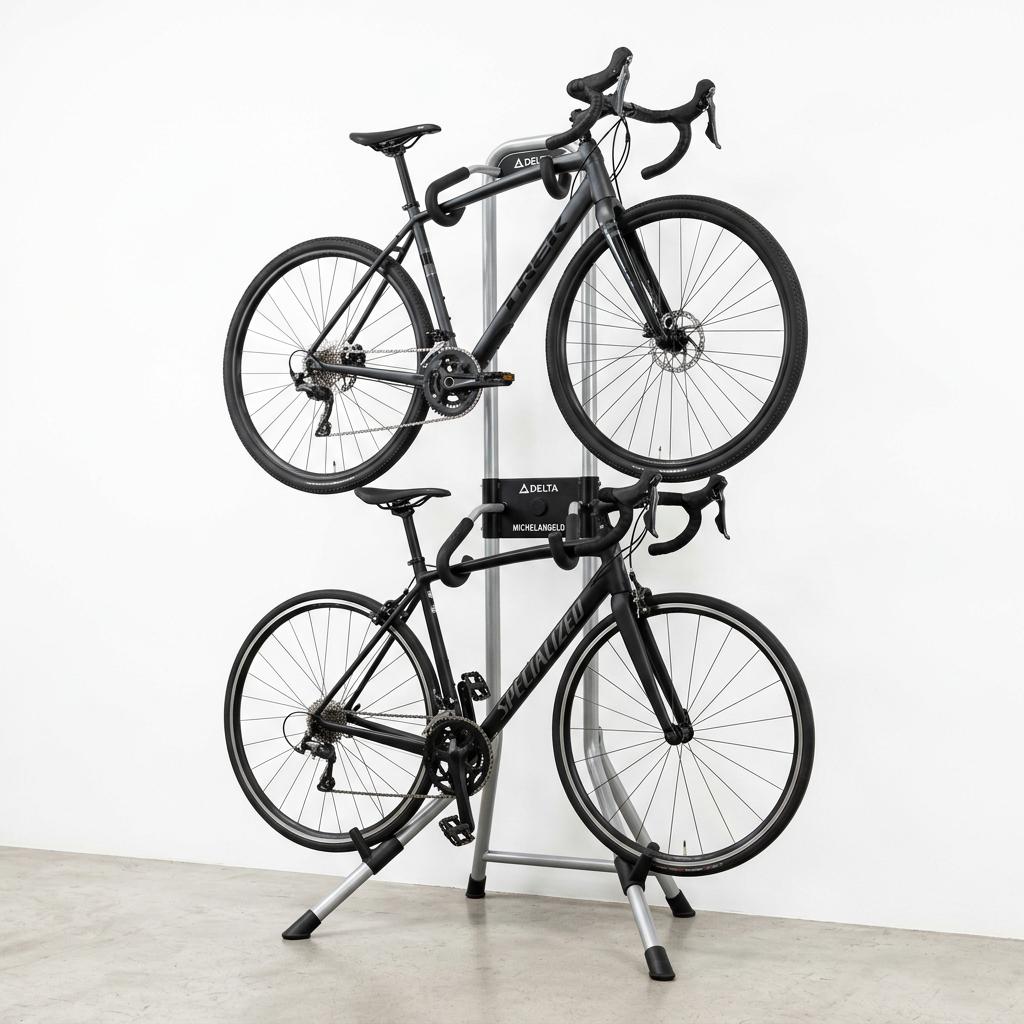 |
Delta Cycle Michelangelo Two-Bike Gravity Stand | $60-$90 | Best Storage Solution | Check Price |
The Exerpeutic is the reference standard for folding bikes, with a folded form genuinely compact enough for apartment living.
The XTERRA FB150 trades some sturdiness for lighter weight and lower price, making it ideal for beginners in small spaces.
The Sunny Health SF-B1203 achieves compact footprint through design rather than collapsibility, offering superior stability.
The YOSUDA offers a relatively compact spin option that doesn't sacrifice the authentic indoor cycling experience.
The Delta Michelangelo is the perfect renter-friendly bike storage solution that requires zero installation.
The Exerpeutic Folding Magnetic Upright Bike is the reference standard for folding bikes. The folded form is genuinely compact — roughly the size of a large suitcase. Transport wheels make moving it to a closet or corner trivial, and the 39-pound weight is manageable for most users. With 8 levels of magnetic resistance, a 300-pound capacity, and a large padded seat, it delivers genuine cardio capability with genuine storability.
Check Price on Amazon
The XTERRA Fitness FB150 trades some sturdiness for lighter weight and lower price. At 32 pounds, it's among the lightest functional exercise bikes available, making it exceptionally easy to move and store. The 225-pound capacity limits it to lighter users, but for beginners and casual exercisers in small apartments, the combination of compact folding design and affordable pricing is hard to beat.
Check Price on Amazon
The Sunny Health & Fitness SF-B1203 achieves a compact footprint through intelligent design rather than collapsibility. At just 19 inches wide, it fits through narrow doorways and tucks into tight spaces. The non-folding design provides significantly more stability than folding alternatives, and the chain drive with felt pad resistance offers a smooth, quiet ride. For apartment dwellers who can dedicate a small footprint to a permanent bike placement, this is an excellent compromise.
Check Price on Amazon
The YOSUDA Indoor Cycling Bike offers a relatively compact spin bike option that brings the studio experience home. The 35-pound flywheel and belt-driven system provide a smooth, nearly silent ride that's ideal for apartment living. The integrated tablet mount lets you stream cycling classes, and transport wheels make repositioning manageable despite the 73-pound weight. For apartment dwellers who want authentic spin classes at home, this is the most space-efficient option available.
Check Price on Amazon
The Delta Cycle Michelangelo gravity bike stand is the ultimate apartment-friendly bike storage solution. Its gravity-based leaning design requires no wall mounting, no drilling, and no permanent installation — perfect for renters. The stand holds two bicycles vertically against any wall with rubber-coated arms that protect frames. When not needed, it folds flat for storage. For apartment dwellers who need to store regular bicycles alongside their exercise equipment, this is an essential space-saving tool.
Check Price on Amazon