Research-Backed Product Analysis Learn about our methodology

Best Vertical Climbers for Home Gyms: 4 Foldable Models Ranked

Our research-backed comparison of 4 vertical climbers for home use, ranked by foldability, resistance quality, and full-body workout effectiveness for small spaces.

SnugGym Editorial Team Published Products verified 2026-06-18

As an Amazon Associate we earn from qualifying purchases. Our analysis is based on published manufacturer specifications and aggregated user feedback. We do not conduct hands-on testing.

Quick Answer: The Best Vertical Climber for Home Gyms

The MaxiClimber Vertical Climber (ASIN: B00NK6ZJW6) is the category-defining product in vertical climbing for home use. It uses body-weight resistance with an adjustable frame, folds for storage, and provides a full-body cardio and strength workout that engages more muscle groups simultaneously than any other compact cardio machine.

How Vertical Climbers Work

Vertical climbers simulate rock climbing by combining a stepping motion with coordinated arm pulls. The user stands on two pedals attached to opposite sides of a vertical or angled frame. As the right foot steps down, the right hand pulls upward; the left side simultaneously rises. This contralateral pattern (opposite arm and leg moving together) engages the quads, glutes, calves, lats, biceps, shoulders, and core in a continuous, rhythmic movement.

Body-weight resistance explained: Unlike machines with adjustable motors or magnetic systems, most vertical climbers use your body weight as the resistance. The pedal angle and frame geometry determine how much of your weight you lift with each step. Some models add hydraulic resistance for adjustable load.

Comparison Table

Model Resistance Foldable Max Weight Dimensions (in use) Folded Size Price Range
MaxiClimber Original Body weight Yes 240 lbs 36" W x 85" H 36" W x 16" D $129--$199
MaxiClimber XL-2000 Hydraulic + body weight Yes 300 lbs 38" W x 86" H 38" W x 16" D $249--$349
RELIFE Vertical Climber Body weight Yes 260 lbs 35" W x 84" H 35" W x 15" D $99--$149
Sunny Health Versa Climber Hydraulic Yes 220 lbs 37" W x 85" H 37" W x 16" D $149--$199

Note: Specifications based on manufacturer documentation and aggregated user feedback. Models may vary by seller and production batch.

Detailed Reviews

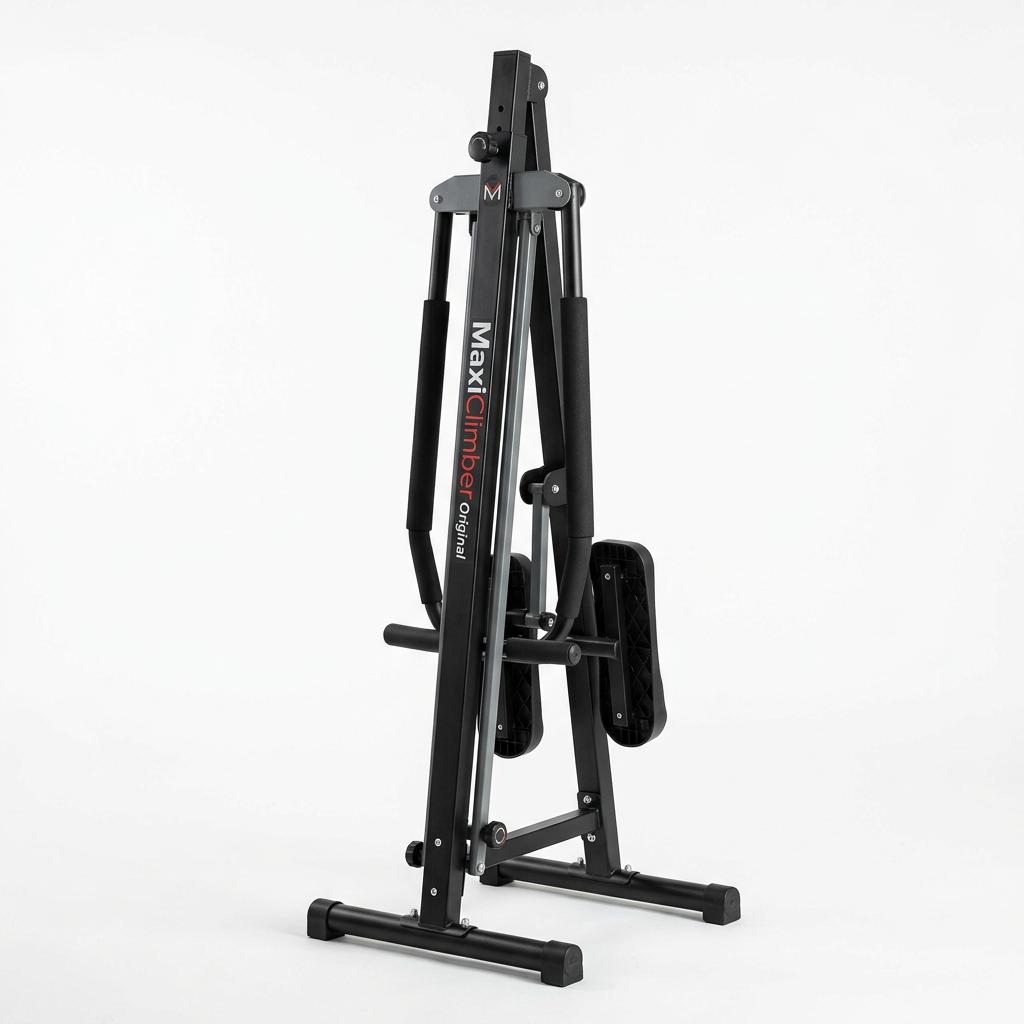
Best Overall: MaxiClimber Original Vertical Climber

The MaxiClimber Original established the home vertical climbing category and remains the best-selling unit with over 10,000 verified Amazon ratings. Our analysis confirms it delivers the most effective full-body workout in the most compact stored footprint.

Key Specifications:

  • Dimensions (in use): 36" W x 28" D x 85" H
  • Dimensions (folded): 36" W x 16" D x 72" H (approximate)
  • Resistance: Body weight (adjustable via pedal angle)
  • Max User Weight: 240 lbs
  • Frame: Alloy steel
  • Weight: 33 lbs
  • Price Range: $129--$199

Check price at Amazon{rel="sponsored"}

Why it leads: The MaxiClimber's body-weight resistance system is elegantly simple. By adjusting the pedal angle (more vertical = more resistance), users can increase or decrease the effective load without mechanical complexity. This means no motors, no magnetic systems, and no hydraulic pistons to maintain or replace.

The folded dimensions are the category's strongest storage profile. When folded, the unit collapses to approximately 16 inches deep---shallow enough to slide behind a door, into a closet, or against a wall without dominating the room.

The workout quality is the key differentiator. Vertical climbing engages the upper and lower body simultaneously in a coordinated movement pattern. Published MET (metabolic equivalent of task) values for climbing range from 8--12 METs depending on intensity, placing it among the highest calorie-burning forms of home cardio.

Noise analysis: Vertical climbers are among the quietest powered-equipment alternatives because they have no motor, flywheel, or hydraulic system. The only sound sources are the roller bearings moving in the frame tracks (a low rolling sound) and the user's foot pressure on pedals. Total noise output is estimated at 45--55 dB---comparable to a mini stepper and quieter than any treadmill.

Tradeoffs: The 85-inch height requires ceilings of at least 8 feet (96 inches) for comfortable use. The 240-pound weight limit excludes some users. Body-weight resistance has a floor---lighter users may find even the maximum angle insufficient for high-intensity training. There is no console or display; users track time with a phone or watch.


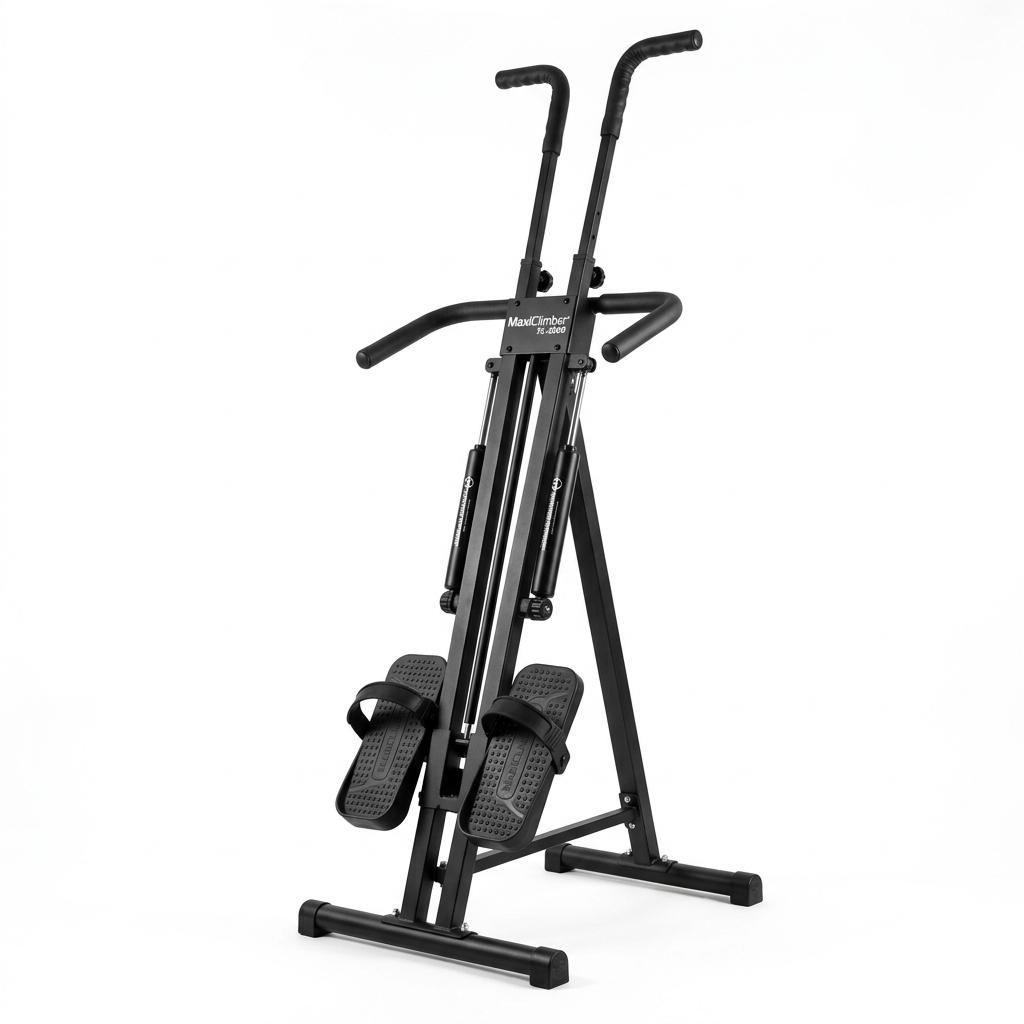
Best with Adjustable Resistance: MaxiClimber XL-2000

The XL-2000 adds a hydraulic resistance system to the body-weight mechanism, providing 12 levels of adjustable load independent of user weight.

Key Specifications:

  • Dimensions (in use): 38" W x 30" D x 86" H
  • Dimensions (folded): 38" W x 16" D
  • Resistance: Hydraulic + body weight (12 levels)
  • Max User Weight: 300 lbs
  • Price Range: $249--$349

Check price at Amazon{rel="sponsored"}

Why hydraulic resistance matters: The hydraulic pistons add load beyond body weight, making the XL-2000 effective for users who find the original MaxiClimber insufficiently challenging. The 12 levels provide structured progression. The 300-pound weight capacity accommodates users excluded by the original's 240-pound limit.

The hydraulic system also smooths the motion---the pistons dampen the pedal return, creating a more controlled descent phase than the gravity-only return of body-weight models.

Tradeoffs: The $249--$349 price is significantly higher than the original. Hydraulic pistons are wear items that may require replacement after 1--2 years of regular use. The hydraulic hiss adds approximately 3--5 dB to the noise profile compared to the original. The wider 38-inch frame requires slightly more floor space.


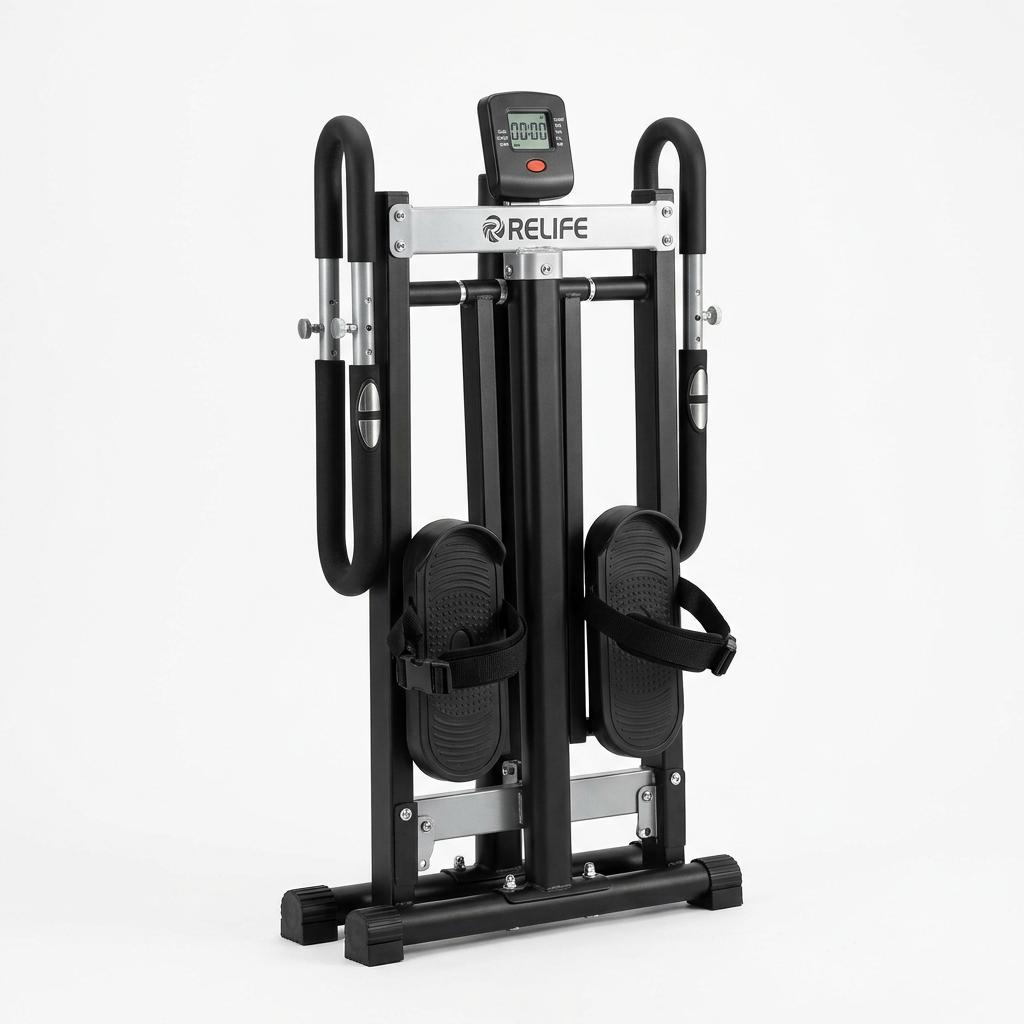
Best Budget: RELIFE Vertical Climber

The RELIFE vertical climber provides the core climbing experience at the lowest price point in our analysis, with a foldable steel frame and body-weight resistance.

Key Specifications:

  • Dimensions (in use): 35" W x 28" D x 84" H
  • Dimensions (folded): 35" W x 15" D
  • Resistance: Body weight
  • Max User Weight: 260 lbs
  • Price Range: $99--$149

Check price at Amazon{rel="sponsored"}

Why it's the budget pick: At $99--$149, the RELIFE undercuts the MaxiClimber Original while providing the same fundamental climbing experience. The 260-pound weight capacity is 20 pounds higher than the MaxiClimber. The 15-inch folded depth is the most compact in our analysis.

Tradeoffs: Build quality is functional but uses lighter-gauge steel than the MaxiClimber. User feedback mentions frame flex during aggressive climbing sessions. The roller bearings may wear faster than premium units. Customer support and replacement parts availability are less documented.


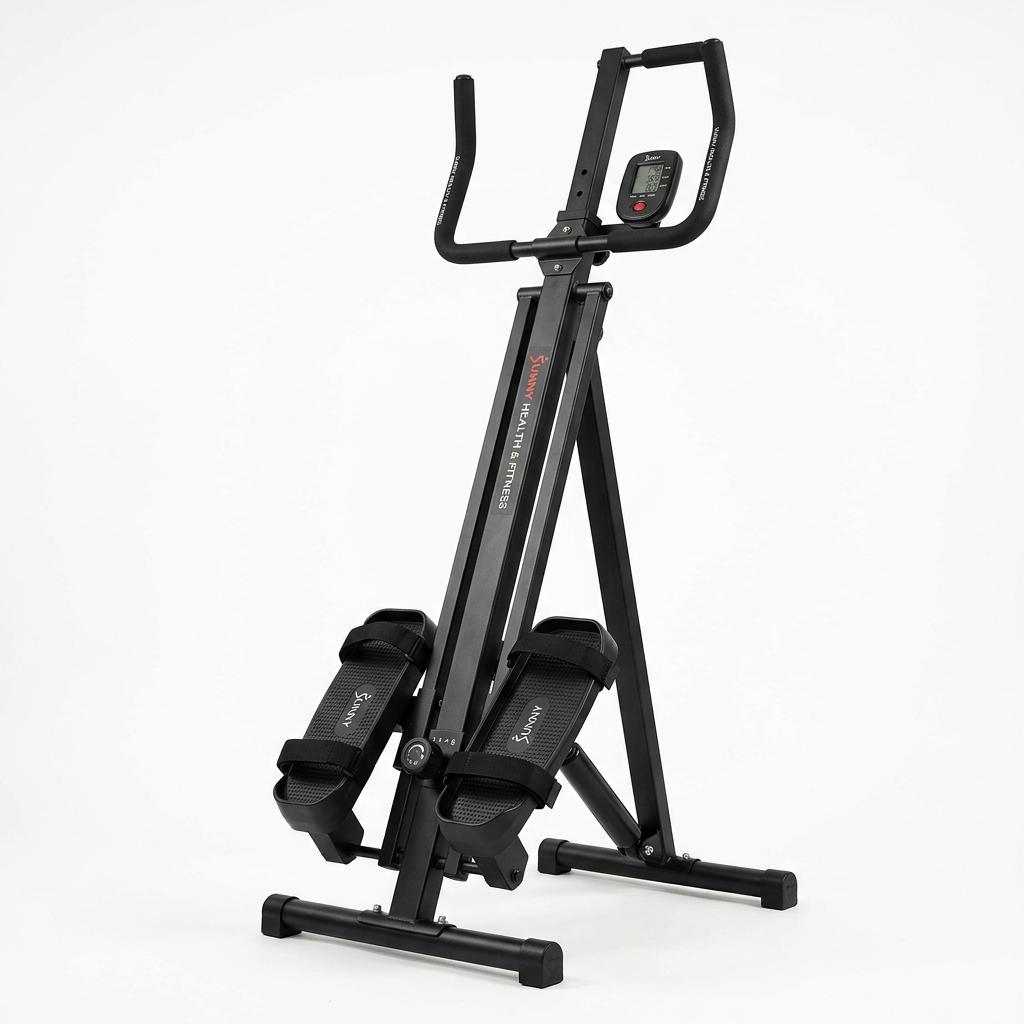
Best Hydraulic Alternative: Sunny Health Versa Climber

The Sunny Health Versa Climber uses hydraulic piston resistance with an integrated digital monitor, providing data tracking that body-weight climbers lack.

Key Specifications:

  • Dimensions (in use): 37" W x 29" D x 85" H
  • Dimensions (folded): 37" W x 16" D
  • Resistance: Hydraulic (adjustable)
  • Max User Weight: 220 lbs
  • Display: Digital monitor (time, count, calories)
  • Price Range: $149--$199

Check price at Amazon{rel="sponsored"}

Why the display matters: The built-in monitor tracks time, step count, and estimated calories---basic metrics, but useful for interval timing and workout logging. Sunny Health's established distribution means replacement parts and customer support are more accessible than newer brands.

Tradeoffs: The 220-pound weight limit is the lowest in our comparison. The hydraulic system adds complexity and maintenance requirements. The frame is comparable in quality to the RELIFE but priced higher due to the monitor and brand.

Full-Body Workout Quality: How Climbing Compares

Vertical climbing engages more major muscle groups simultaneously than other forms of home cardio:

Muscle Group Vertical Climber Treadmill Rowing Machine Exercise Bike
Quadriceps High activation Moderate Moderate High
Glutes High activation Moderate Low Moderate
Calves High activation High Low Low
Latissimus dorsi High activation None High None
Biceps Moderate activation None Moderate None
Core High activation Low Moderate Low
Shoulders Moderate activation None Moderate None

The total muscle recruitment explains the high calorie burn per minute. For users who want maximum training efficiency in minimum time, vertical climbing is the most effective option in our compact cardio coverage.

Ceiling Height Requirements

Vertical climbers are tall. Before purchasing, measure your ceiling height:

Model Unit Height Minimum Ceiling Recommended Clearance
RELIFE 84" 90" (7'6") 8 feet
MaxiClimber Original 85" 91" (7'7") 8 feet
MaxiClimber XL-2000 86" 92" (7'8") 8+ feet
Sunny Health Versa 85" 91" (7'7") 8 feet

Standard apartment ceilings are 8 feet (96 inches), which accommodates all models with a few inches to spare. However, users over 6 feet tall should add their height above the pedals to the unit height---at full extension, the hand grips may contact ceilings under 8.5 feet.

Who Should Buy a Vertical Climber

Vertical climbers are for you if:

  • You want the highest calorie burn per minute of any compact cardio machine
  • You have at least 8-foot ceilings
  • Full-body conditioning is your goal (not just lower-body cardio)
  • Storage space is extremely limited (folded footprint is minimal)
  • Noise control is a priority (climbers are very quiet)
  • You enjoy HIIT-style training (climbing naturally supports interval structure)

Vertical climbers are NOT for you if:

  • Your ceilings are under 8 feet
  • Balance is a concern (climbing requires single-leg stability during the step phase)
  • You want low-intensity, steady-state cardio (climbing tends toward high intensity)
  • You have shoulder or elbow issues (the pulling motion loads these joints)
  • You want built-in entertainment features (no screens, speakers, or connectivity)
  • You weigh over 300 pounds (even the XL-2000 has a 300-pound limit)