Rowing & Bike Resistance Types: Air vs. Magnetic vs. Water Explained
Technical comparison of air, magnetic, and water resistance systems for rowing machines and stationary bikes. Noise, fee...
Master Zone 2 cardio training at home. Learn the science behind mitochondrial health, fat oxidation, programming guidelines, equipment options, and how to combine Zone 2 with strength training.
FTC Disclosure: This article contains affiliate links. We may earn a commission if you purchase through these links at no additional cost to you. This helps support our independent research and testing.
Zone 2 cardio has emerged from exercise physiology laboratories into mainstream fitness consciousness, driven by compelling research on longevity, metabolic health, and athletic performance. Popularized by figures like Dr. Iñigo San Millán and Dr. Peter Attia, Zone 2 training represents a fundamental shift in how we approach cardiovascular exercise—away from the "no pain, no gain" mentality and toward a more nuanced, physiology-driven approach. For home gym users, Zone 2 is particularly valuable: it requires minimal equipment, produces minimal noise, and can be performed while reading, watching content, or taking calls. This guide covers everything you need to implement effective Zone 2 training in your home.
Zone 2 refers to exercise performed at an intensity where your body primarily relies on aerobic metabolism with significant fat oxidation. It corresponds to approximately 60-70% of your maximum heart rate or the intensity where blood lactate remains at or near baseline levels (typically 1.0-2.0 mmol/L if measured).
| Zone | Percentage of Max HR | Primary Fuel Source | Physiological Adaptation |
|---|---|---|---|
| Zone 1 | 50-60% | Fat | Recovery, basic aerobic development |
| Zone 2 | 60-70% | Fat + some carbs | Mitochondrial development, fat oxidation |
| Zone 3 | 70-80% | Mixed | Glycolytic and aerobic mixed; less specific |
| Zone 4 | 80-90% | Carbohydrates | Lactate threshold development |
| Zone 5 | 90-100% | Carbohydrates | Anaerobic capacity, maximal effort |
Zone 2 sits at a critical metabolic inflection point. Below Zone 2, you're primarily burning fat but the absolute energy expenditure is low. Above Zone 2, you begin recruiting significant glycolytic metabolism, which shifts fuel preference toward carbohydrates and produces lactate that must be cleared. Zone 2 is where you maximize fat oxidation rates while maintaining sufficient intensity to drive meaningful physiological adaptation.
The natural question is why you would train at a moderate intensity when higher intensities burn more calories per minute. The answer lies in specific adaptation: different exercise intensities produce different physiological responses, and Zone 2 targets adaptations that higher intensities do not.
Key Zone 2 adaptations include:
Research by Dr. Iñigo San Millán has demonstrated that elite endurance athletes in sports like cycling spend 70-80% of their total training time in Zone 2 specifically to develop these adaptations. Their high-intensity sessions—the remaining 20-30%—are only effective because the aerobic foundation supports them.
Zone 2 training directly addresses several hallmarks of aging and chronic disease:
Metabolic Health: Improved insulin sensitivity and glucose disposal reduce the risk of type 2 diabetes. Zone 2 specifically enhances the ability of muscles to uptake glucose without requiring high insulin levels.
Mitochondrial Function: Declining mitochondrial quality is a central mechanism of aging. Zone 2 training stimulates mitochondrial biogenesis (creation of new mitochondria) and mitophagy (clearance of damaged mitochondria), effectively rejuvenating your cellular energy production.
Cardiovascular Health: Zone 2 develops the parasympathetic nervous system, improves heart rate variability, and enhances vascular function—all associated with reduced cardiovascular disease risk.
Cognitive Protection: Emerging research links aerobic exercise, particularly Zone 2 intensity, to neuroplasticity, reduced neuroinflammation, and protection against cognitive decline.
Endurance Foundation: Zone 2 develops the aerobic engine that supports all prolonged physical activity. Whether your goal is a 5K run or a marathon weight training session, Zone 2 builds the foundation.
Recovery Enhancement: Improved aerobic capacity speeds recovery between high-intensity training sessions by enhancing blood flow, oxygen delivery, and metabolic waste clearance.
Fat Loss Support: While Zone 2 doesn't burn the most calories per minute, it maximizes fat oxidation and can be sustained for long durations (45-90+ minutes), producing substantial total energy expenditure with minimal recovery cost.
Lactate Clearance: Training in Zone 2 improves your body's ability to clear lactate, which translates to better performance in higher-intensity efforts.
Accurate Zone 2 identification is critical for effective training. Several methods exist, ranging from precise physiological testing to practical estimation techniques.
The simplest and most reliable home method uses a heart rate monitor.
Step 1: Estimate Your Maximum Heart Rate Use the formula: 220 - your age = estimated max HR
For a more personalized estimate: 208 - (0.7 x your age)
Step 2: Calculate Zone 2 Range
Example for a 35-year-old:
Important note: Max HR formulas provide estimates with significant individual variation (±10-15 bpm). Use the calculated range as a starting point and refine with the methods below.
As an Amazon Associate, we earn from qualifying purchases. Learn more
As an Amazon Associate, we earn from qualifying purchases. Learn more
The talk test provides a surprisingly accurate Zone 2 assessment without any equipment:
How to use it: During your session, try speaking aloud every few minutes. If you can speak comfortably in full sentences, you're likely in Zone 2. If you're gasping, you've crossed the threshold.
Breathing exclusively through your nose provides a natural intensity governor:
This method works because nasal breathing creates mechanical resistance that naturally limits ventilation rate, keeping you in an aerobic-dominant metabolic state.
On a 1-10 exertion scale, Zone 2 corresponds to approximately RPE 4-5/10: comfortable but not effortless, sustainable for extended periods without significant discomfort.
The definitive Zone 2 determination requires blood lactate testing, typically performed in a sports physiology laboratory. Zone 2 corresponds to the intensity where blood lactate is approximately 1.7-2.0 mmol/L—just above resting levels but well below the lactate threshold.
For most home gym users, this level of precision isn't necessary. Heart rate monitoring combined with the talk test provides sufficient accuracy.
Zone 2 can be performed with virtually any cardio equipment—or none at all. Here are the best options for home use, ranked by effectiveness and practicality:
A stationary bike is arguably the best Zone 2 tool for home use:
Pros: Low impact on joints; minimal noise (especially magnetic resistance bikes); allows reading/watching; easily controlled intensity; works for all fitness levels; compact options available
Cons: Only works lower body; can be uncomfortable for extended sessions
Recommended approach: Maintain 60-70 RPM at moderate resistance; heart rate should stay in Zone 2 range
for quiet magnetic resistance bikes
Rowing provides a full-body cardio option that works upper and lower body simultaneously:
Pros: Full-body engagement; excellent for posture and back health; low impact; smooth motion; good calorie burn
Cons: Learning curve for proper technique; can be hard on the lower back if form is poor; requires more space than a bike
Recommended approach: Focus on stroke rate of 18-22 strokes per minute at moderate intensity; prioritize long, powerful strokes over rapid strokes
As an Amazon Associate, we earn from qualifying purchases. Learn more
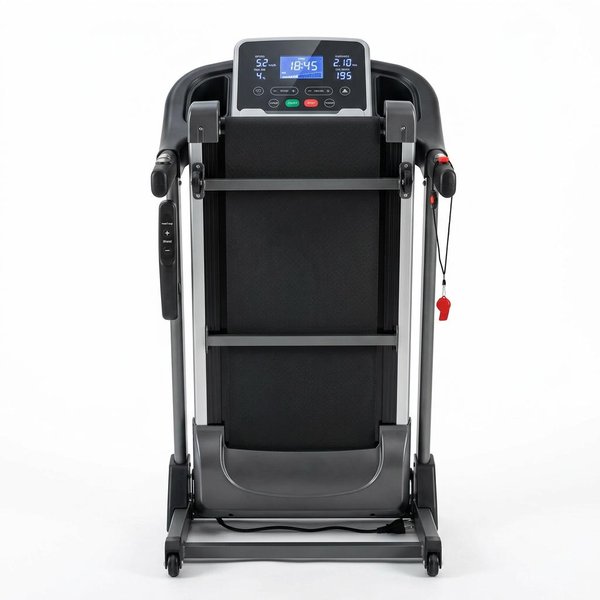
Walking on a treadmill at an incline is an effective Zone 2 modality:
Pros: Weight-bearing (bone health benefits); natural movement pattern; adjustable incline increases intensity without increasing speed
Cons: Higher impact than cycling or rowing; can be monotonous; quality home treadmills are expensive and bulky
Recommended approach: Set incline to 3-8% and walk at 3.0-4.0 mph; adjust incline to maintain heart rate in Zone 2 without needing to jog
The simplest and most accessible Zone 2 option:
Pros: Free; requires no equipment; can be done anywhere; exposure to natural light and fresh air; easily combined with other activities (walking meetings, walking with family)
Cons: Weather dependent; harder to control precise intensity; may require very fast walking or hills to reach Zone 2 for fit individuals
Recommended approach: Find routes with hills or walk at a brisk pace; use a heart rate monitor to verify you're in Zone 2
An elliptical provides a low-impact, full-body option:
Pros: Low joint impact; works arms and legs; smooth motion; widely available
Cons: Less natural movement pattern; can feel unnatural; often expensive for quality units
The optimal Zone 2 volume depends on your goals, training history, and current fitness level. Here are evidence-based guidelines:
| Parameter | Recommendation |
|---|---|
| Minimum effective dose | 150 minutes per week (spread across 3-5 sessions) |
| Optimal dose | 180-240 minutes per week |
| Session duration | 30-60 minutes |
| Frequency | 3-5 days per week |
| Parameter | Recommendation |
|---|---|
| Maintenance dose | 90-120 minutes per week |
| Performance dose | 150-180 minutes per week |
| Session duration | 30-45 minutes |
| Timing | Away from heavy lower body sessions (24+ hours) |
| Parameter | Recommendation |
|---|---|
| Minimum dose | 180 minutes per week |
| Optimal dose | 240-300+ minutes per week |
| Session duration | 45-90 minutes |
| Long session weekly | 1 session of 60-90 minutes |
For athletes combining Zone 2 with higher-intensity training, the 80/20 principle applies: approximately 80% of your total cardio training time should be at Zone 2 intensity or lower, with only 20% at higher intensities. This distribution maximizes aerobic development while providing sufficient high-intensity stimulus.
| Day | Activity | Duration | Target HR |
|---|---|---|---|
| Monday | Stationary bike | 30 min | Zone 2 |
| Wednesday | Brisk walk | 30 min | Zone 2 |
| Friday | Stationary bike | 30 min | Zone 2 |
| Saturday | Long walk | 45 min | Zone 2 |
| Weekly total | 135 min |
| Day | Activity | Duration | Target HR |
|---|---|---|---|
| Monday | Stationary bike | 40 min | Zone 2 |
| Tuesday | Rowing | 30 min | Zone 2 |
| Thursday | Stationary bike | 45 min | Zone 2 |
| Saturday | Long bike session | 60 min | Zone 2 |
| Weekly total | 175 min |
| Day | Training | Duration |
|---|---|---|
| Monday | Upper body strength | 45 min |
| Tuesday | Zone 2 (bike) | 30 min |
| Wednesday | Lower body strength | 60 min |
| Thursday | Zone 2 (walk) | 30 min |
| Friday | Full body strength | 45 min |
| Saturday | Zone 2 (long bike) | 45 min |
| Sunday | Rest | — |
As your aerobic fitness improves, you'll need to increase the challenge to maintain Zone 2 stimulus:
| Variable | How to Progress | Notes |
|---|---|---|
| Duration | Add 5-10 minutes per session every 2-3 weeks | Most important variable for beginners |
| Frequency | Add a session per week | Progress from 3 to 4 to 5 days |
| Intensity | Slight increases within Zone 2 range | Move from 60% to 65% to 70% of max HR over time |
| Modality | Use more demanding equipment | Progress from walking to cycling to rowing |
| Week | Sessions/Week | Session Duration | Weekly Total | Focus |
|---|---|---|---|---|
| 1-2 | 3 | 20 min | 60 min | Establishing habit |
| 3-4 | 3 | 30 min | 90 min | Building base |
| 5-6 | 4 | 30 min | 120 min | Adding frequency |
| 7-8 | 4 | 35 min | 140 min | Extending duration |
| 9-10 | 4 | 40 min | 160 min | Approaching target |
| 11-12 | 4-5 | 40-45 min | 180+ min | At recommended volume |
The interaction between Zone 2 cardio and strength training is a common concern. Properly implemented, they complement each other. Poorly implemented, cardio can interfere with strength gains.
Research on the "interference effect"—where cardio reduces strength adaptations—shows that:
| Scenario | Recommendation |
|---|---|
| Cardio and strength on same day | Perform strength first, cardio second; or separate by 6+ hours |
| Cardio and strength on alternate days | No special considerations; ideal arrangement |
| Heavy lower body day | Avoid lower body cardio within 24 hours before; light upper body cardio acceptable |
| Upper body strength day | Lower body cardio is fine; timing less critical |
If you must combine cardio and strength in one session:
This sequence prioritizes strength performance (when you're freshest) while adding Zone 2 work when fatigue is less detrimental. The post-strength cardio may actually enhance recovery by increasing blood flow to worked muscles.
The most common Zone 2 error is exceeding the intensity threshold. Many trainees, accustomed to high-intensity workouts, find Zone 2 "too easy" and unconsciously increase their pace. This pushes them into Zone 3, which produces different (and less desirable) adaptations.
Solution: Strictly adhere to heart rate limits. If your heart rate drifts above Zone 2, reduce intensity immediately regardless of how easy it feels. Trust the physiology.
Conversely, some trainees stay well below Zone 2, essentially performing active recovery rather than productive aerobic training.
Solution: Use a heart rate monitor to ensure you're at least at 60% of max HR. You should feel slightly challenged—able to sustain indefinitely but not truly effortless.
Zone 2 adaptations require consistent stimulus. Occasional long sessions separated by days of inactivity produce inferior results compared to shorter, more frequent sessions.
Solution: Prioritize frequency over session duration. Four 30-minute sessions produce better results than two 60-minute sessions.
Once you establish a baseline, continued improvement requires progressive overload—just like strength training.
Solution: Gradually increase duration, frequency, or intensity (within Zone 2) every 2-3 weeks.
Zone 2 sessions are long. Without strategies to manage boredom, adherence suffers.
Solutions:
Monitor these metrics to assess your Zone 2 development:
| Metric | What It Tells You | How to Track |
|---|---|---|
| Resting heart rate | Cardiovascular fitness improvement | Measure first thing in morning; should decrease over time |
| Heart rate at fixed workload | Aerobic efficiency; lower HR = better fitness | Note HR at specific bike resistance/speed; should decrease |
| Pace at fixed heart rate | Speed or power output at Zone 2 improves | Note speed/watts at upper Zone 2 limit; should increase |
| Session RPE at fixed intensity | Subjective ease of maintaining Zone 2 | Rate perceived effort 1-10; should decrease |
Zone 2 training is not glamorous. It doesn't produce the immediate endorphin rush of a HIIT session or the satisfying fatigue of a heavy lifting day. What it does produce—over weeks and months—is a fundamentally improved aerobic engine that supports every other aspect of your physical life. Better recovery between sets. Faster recuperation between training days. Improved metabolic health that compounds over decades. And for home gym users specifically, it offers a quiet, low-equipment cardio option that fits seamlessly into a strength-focused lifestyle.
Start with 20-30 minutes three times per week. Use a heart rate monitor or the talk test to stay in your Zone 2 range. Progress gradually. Track your metrics. And trust that the boring work produces extraordinary results.
For strength training programs to pair with your Zone 2 work, explore our Programming Workouts guides.