Rowing & Bike Resistance Types: Air vs. Magnetic vs. Water Explained
Technical comparison of air, magnetic, and water resistance systems for rowing machines and stationary bikes. Noise, fee...
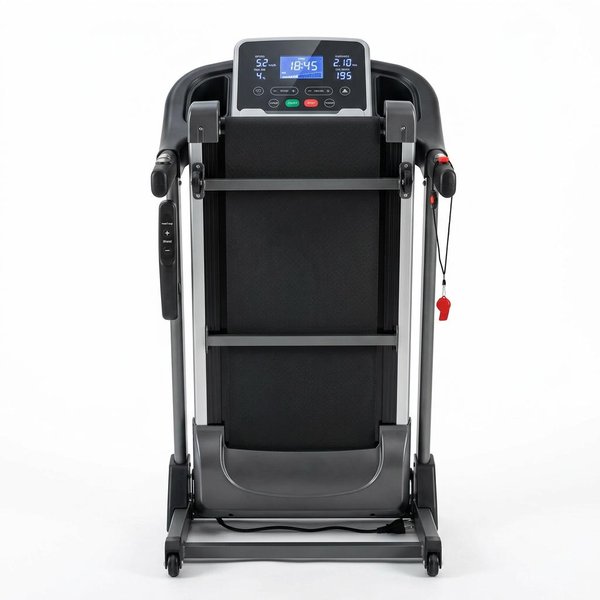
Research-backed guide to what is met value for small-space home gyms.
By SnugGym Editorial Team | Evidence Mode: Research-Backed
MET stands for Metabolic Equivalent of Task — a standardized unit used to express the energy cost of physical activities. One MET is defined as the rate of energy expenditure while sitting quietly at rest, equivalent to approximately 3.5 milliliters of oxygen consumed per kilogram of body weight per minute (3.5 mL O₂/kg/min). MET values quantify how many times more energy an activity requires compared to this resting baseline. A 5-MET activity burns 5 times the calories of sitting still. This simple, research-backed system enables accurate calorie estimation, exercise prescription, and activity comparison across different movements and intensities.
| Attribute | Description |
|---|---|
| Stands For | Metabolic Equivalent of Task |
| 1 MET Equals | Resting energy expenditure (~3.5 mL O₂/kg/min) |
| Caloric Equivalent | ~1 kcal/kg/hour at rest |
| Use | Quantify and compare exercise intensity |
| Developed By | Exercise physiologists for standardized activity classification |
| Primary Applications | Calorie estimation, exercise prescription, health screening |
MET values are rooted in indirect calorimetry — the measurement of oxygen consumption during activity. Because oxygen is required to metabolize carbohydrates and fats for energy, measuring oxygen uptake directly quantifies energy expenditure.
The relationship works as follows:
This linear scaling makes MET values intuitive: a 10-MET activity requires exactly twice the energy of a 5-MET activity.
The practical formula for estimating calorie burn from MET values:
Calories per minute = (MET value × 3.5 × body weight in kg) ÷ 200
Or, simplified for pounds:
Calories per minute = (MET value × body weight in lbs) ÷ 126
Example calculation: A 180 lb (82 kg) person cycling at 8 METs:
The standard MET system assumes a 70 kg (154 lb), healthy, young adult male. Individual variation means actual energy expenditure may differ:
| Adjustment Factor | Effect on Calorie Burn |
|---|---|
| Body weight | Heavier individuals burn more calories at the same MET value |
| Fitness level | Trained individuals may burn slightly fewer calories (improved efficiency) |
| Age | Older adults may burn slightly fewer calories at same MET |
| Sex | Women typically burn 5–10% fewer calories than men at same MET |
| Body composition | More muscular individuals may burn slightly more (higher metabolic rate) |
For greater accuracy, multiply the calculated calorie burn by these correction factors:
| Individual | Correction Factor |
|---|---|
| Trained male | 0.95 |
| Trained female | 0.90 |
| Untrained male | 1.0 |
| Untrained female | 0.95 |
| Older adult (60+) | 0.90–0.95 |
| Activity | MET Value | Calories/30 min (180 lb person) | Intensity |
|---|---|---|---|
| Stationary cycling (moderate) | 7.5 | 321 | Moderate |
| Stationary cycling (vigorous) | 10.5 | 450 | Vigorous |
| Rowing machine (moderate) | 7.0 | 300 | Moderate |
| Rowing machine (vigorous) | 12.0 | 514 | Vigorous |
| Elliptical trainer (moderate) | 5.5 | 236 | Light-moderate |
| Elliptical trainer (vigorous) | 9.0 | 386 | Vigorous |
| Treadmill walking (3.5 mph) | 4.3 | 184 | Light |
| Treadmill running (6 mph) | 9.8 | 419 | Vigorous |
| Treadmill running (8 mph) | 11.8 | 505 | Very vigorous |
| Stair climber machine | 8.0 | 343 | Moderate-vigorous |
| Air bike (moderate) | 8.5 | 364 | Moderate-vigorous |
| Air bike (vigorous) | 12.0 | 514 | Vigorous |
| Activity | MET Value | Calories/30 min (180 lb person) | Intensity |
|---|---|---|---|
| Calisthenics (moderate) | 4.0 | 171 | Light |
| Calisthenics (vigorous) | 8.0 | 343 | Vigorous |
| Circuit training | 8.0 | 343 | Moderate-vigorous |
| Weight lifting (moderate) | 3.5 | 150 | Light-moderate |
| Weight lifting (vigorous) | 6.0 | 257 | Moderate |
| Jumping rope (moderate) | 10.0 | 429 | Vigorous |
| Jumping rope (fast) | 12.0 | 514 | Very vigorous |
| Boxing (punching bag) | 6.5 | 279 | Moderate |
| Kettlebell swings | 9.8 | 419 | Vigorous |
| Burpees | 8.0 | 343 | Vigorous |
| Mountain climbers | 8.0 | 343 | Vigorous |
| Activity | MET Value | Calories/30 min (180 lb person) |
|---|---|---|
| Sitting quietly | 1.0 | 43 |
| Standing | 1.3 | 56 |
| Walking (2 mph) | 2.5 | 107 |
| Walking (3 mph) | 3.5 | 150 |
| Walking (4 mph, brisk) | 5.0 | 214 |
| House cleaning | 3.5 | 150 |
| Gardening | 4.0 | 171 |
| Playing with children | 4.0 | 171 |
| Hiking | 6.0 | 257 |
| Swimming (moderate) | 6.0 | 257 |
| Swimming (vigorous) | 10.0 | 429 |
| Basketball game | 8.0 | 343 |
| Skiing (downhill) | 7.0 | 300 |
Formula: Calories = MET value × body weight (lbs) × duration (hours) × 0.454
Example: 180 lb person, rowing at 7 METs for 45 minutes Calories = 7 × 180 × 0.75 × 0.454 = 428 calories
Formula: Calories/minute = (MET × 3.5 × weight in kg) ÷ 200
Example: 82 kg person, cycling at 8.5 METs for 30 minutes Calories/minute = (8.5 × 3.5 × 82) ÷ 200 = 12.2 cal/min Total = 12.2 × 30 = 366 calories
| Weekly Activity | Duration | MET | Weekly Calories |
|---|---|---|---|
| Cycling (vigorous) | 3× 30 min | 10.5 | 1,350 |
| Weight training | 3× 45 min | 5.0 | 964 |
| Walking | 5× 30 min | 3.5 | 750 |
| Total exercise | 5.75 hours | 3,064 |
Add BMR (~12,000 cal/week for 180 lb male) = ~15,000 calories total weekly expenditure
For home gym users deciding which cardio equipment to purchase, MET values provide objective comparison data:
| Machine | Peak MET | Notes |
|---|---|---|
| Air bike (fan bike) | 12–14 | Resistance increases with effort |
| Rowing machine | 12–14 | Full-body engagement |
| Treadmill (sprinting) | 12–15 | High impact |
| Spin bike | 10–14 | Leg-dominant |
| Elliptical | 9–11 | Lower impact alternative |
| Stair climber | 8–12 | Glute emphasis |
| Machine | Consistency | Notes |
|---|---|---|
| Rowing machine | Excellent | Smooth, controllable resistance |
| Air bike | Excellent | Self-limiting — max effort always possible |
| Spin bike | Excellent | Precise resistance adjustment |
| Elliptical | Good | May drift lower without attention |
| Treadmill | Good | Speed presets maintain pace |
| Stair climber | Good | Steady state once rhythm established |
| Machine | Low MET | Moderate MET | High MET | Verdict |
|---|---|---|---|---|
| Air bike | 4–5 | 7–9 | 12–14 | Most versatile |
| Rowing machine | 4–5 | 7–9 | 12–14 | Most versatile |
| Spin bike | 3–4 | 6–8 | 10–14 | Excellent |
| Elliptical | 3–4 | 5–7 | 9–11 | Good |
| Treadmill | 3–4 (walk) | 5–8 (jog) | 12–15 (sprint) | Excellent* |
| Stair climber | 4–5 | 6–8 | 8–12 | Moderate |
*Impact concerns may limit high-MET use for some individuals
— Air bike with the highest MET versatility for home gyms.
The standard MET value of 3.5 mL O₂/kg/min for resting metabolism is an average. Individual resting metabolic rates vary 15–25% from this baseline due to:
Highly trained individuals may consume less oxygen at a given workload due to improved movement efficiency and cardiovascular adaptation. This means:
| Factor | Impact |
|---|---|
| Afterburn (EPOC) | HIIT creates elevated calorie burn post-exercise not captured in MET calculations |
| Skill level | Poor technique increases energy expenditure |
| Environmental conditions | Heat, cold, altitude affect energy cost |
| Body composition | More muscle = higher burn at same MET |
| Simultaneous tasks | Holding conversation, listening to music (minimal effect) |
The Compendium of Physical Activities — the primary MET reference — was last substantially updated in 2011. New exercise modalities (certain fitness classes, modern equipment) may not have established MET values. Additionally, many listed METs are estimates rather than directly measured.
Step 1: Calculate BMR (e.g., 1,800 calories for 180 lb male) Step 2: Estimate TDEE from activity Step 3: Determine exercise calorie contribution from MET values Step 4: Create appropriate deficit
Example weekly plan:
| Day | Activity | Duration | MET | Calories Burned |
|---|---|---|---|---|
| Monday | Rowing | 30 min | 8.0 | 343 |
| Tuesday | Weight training | 45 min | 5.0 | 321 |
| Wednesday | Air bike HIIT | 20 min | 11.0 | 314 |
| Thursday | Walking | 40 min | 3.5 | 200 |
| Friday | Rowing | 30 min | 8.0 | 343 |
| Saturday | Weight training | 45 min | 5.0 | 321 |
| Sunday | Rest | — | — | — |
| Total exercise calories | 3.5 hours | 1,842 |
Add to BMR-based TDEE (~2,600) = Total weekly expenditure: ~20,042 calories For 1 lb/week fat loss: Target 15,042 calories (4,500 cal deficit)
| Fitness Level | Sustained MET Capacity | Example Activity |
|---|---|---|
| Poor | < 5 METs | Walking 3 mph |
| Below average | 5–7 METs | Brisk walking, light cycling |
| Average | 7–9 METs | Moderate cycling, jogging |
| Above average | 9–11 METs | Running 6 mph, vigorous cycling |
| Excellent | 11–13 METs | Running 8 mph, vigorous rowing |
| Athlete | > 13 METs | Sprinting, competitive rowing |
The ability to sustain 8+ METs during exercise is associated with significantly reduced cardiovascular disease risk and improved longevity.
Health organizations use MET values to prescribe exercise:
| Organization | Recommendation | MET-Equivalent |
|---|---|---|
| WHO | 150–300 min moderate OR 75–150 min vigorous weekly | 3–6 METs moderate; >6 METs vigorous |
| ACSM | 500–1000 MET-minutes weekly | Example: 100 min at 5 METs = 500 MET-min |
| AHA | At least 150 min moderate intensity | Sustained 3–6 MET activity |
Calculating MET-minutes: MET-minutes = MET value × duration in minutes
Example: 30 minutes at 7 METs = 210 MET-minutes To reach 500 MET-min/week: Could achieve with 3 sessions of 24 minutes at 7 METs
Are MET values accurate for calorie counting? MET values provide reasonable estimates (±10–20%) for most individuals. They're more accurate for steady-state cardio than for interval training or activities with high EPOC. Use them as guidelines rather than precise measurements.
Why do different sources list different METs for the same activity? MET values vary based on measurement conditions, population studied, and intensity specification. The Compendium of Physical Activities is the most authoritative source, but even it provides ranges for many activities.
Do fitness trackers use MET values? Most fitness trackers estimate calorie burn using proprietary algorithms that may incorporate MET values along with heart rate, accelerometer data, and personal information. They're generally more accurate than MET calculations alone but still have ±10–20% error.
Can I use MET values for strength training? MET values for strength training are less accurate than for cardio due to intermittent effort, rest periods, and variable load. The listed values (3.5–6.0 METs for general weight lifting) are rough averages. Heart rate monitoring or RPE-based estimates may be more useful for strength work.
What's the difference between METs and watts? Watts measure power output (work per unit time), commonly used on rowing machines and bikes. METs measure energy expenditure relative to rest. They're related but not interchangeable — watts describe what you're producing; METs describe what you're consuming.
MET values provide a standardized, research-backed framework for understanding and comparing exercise intensity and energy expenditure. For home gym users, they enable informed equipment purchasing decisions, accurate calorie estimation for weight management goals, and fitness benchmarking against population norms. While individual variation means MET-based calorie estimates have margins of error, the system's simplicity and scientific foundation make it an invaluable tool for programming cardio sessions, setting weekly activity targets, and understanding the true energy demands of your training.
FTC Disclosure: This article contains affiliate links to Amazon products. If you purchase through these links, SnugGym may earn a commission at no additional cost to you. This helps support our independent research and content creation.
Last updated: June 2025