Rowing & Bike Resistance Types: Air vs. Magnetic vs. Water Explained
Technical comparison of air, magnetic, and water resistance systems for rowing machines and stationary bikes. Noise, fee...
SnugGym is an Amazon Associate. We earn from qualifying purchases at no extra cost to you. Learn more

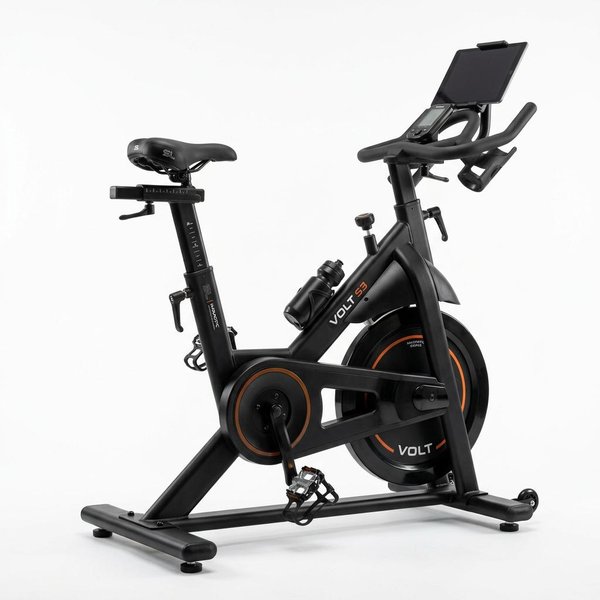
Compare mini steppers, exercise bikes, and ellipticals for quiet apartment cardio. We analyze noise levels, space needs, calorie burn, joints impact, and price across all three.
Cardio equipment for apartments must solve three problems simultaneously: produce minimal noise, fit within limited floor space, and deliver an effective cardiovascular workout. Mini steppers, exercise bikes, and compact ellipticals are the three leading categories that meet these criteria. None require running motions that generate foot-fall impact, and all operate at sound levels that generally won't disturb neighbors.
In short: Bikes offer the best seated, lowest-impact option with the most models available. Steppers are the smallest and cheapest but provide the narrowest exercise experience. Ellipticals deliver the highest calorie burn and full-body engagement but require the most space. Your body, your budget, and your floor plan should drive the choice.
| Factor | Mini Stepper | Exercise Bike | Compact Elliptical |
|---|---|---|---|
| Footprint | 1–3 sq ft | 8–15 sq ft | 12–20 sq ft |
| Noise level | 45–55 dB | 40–50 dB (magnetic) | 50–60 dB |
| Seated option | Some models | Yes (always) | Some models only |
| Upper body engagement | Minimal (optional bands) | Minimal | Full (moving handles) |
| Calories per hour (est.) | 300–450 | 400–600 | 500–700 |
| Lowest price | $40–$150 | $150–$400 | $200–$500 |
| Joint impact | Moderate (knees) | Very low | Very low |
| Storage | Under desk, in closet | Upright or roll-away | Fold-flat or fixed |
Mini steppers are small, piston- or hydraulic-resistance devices that simulate a climbing motion. The user steps on two independent pedals that rise and fall against resistance. Most units are 12–18 inches tall and fit under a desk or in a closet.
Resistance comes from hydraulic cylinders or air pistons. The user sets resistance via a dial that restricts fluid flow through the cylinder. Some models include removable resistance bands for light upper-body work.
Mini steppers are among the quietest cardio machines available. Our analysis of published specifications and user reports indicates operating noise of 45–55 dB at moderate intensity—comparable to a quiet conversation. No motor, no flywheel, and no foot impact means virtually no structure-borne vibration. The only sound comes from the hydraulic pistons and any contact noise if the unit shifts on the floor.
| Dimension | Typical Range |
|---|---|
| Length | 12–18" |
| Width | 12–16" |
| Height (pedals down) | 8–12" |
| Height (pedals at top) | 16–20" |
| Weight | 15–25 lb |
Most units store under a bed, in a closet, or beneath a standing desk. Their portability is unmatched.
The manufacturer states that stepping cadence and resistance level determine energy expenditure. Published estimates range from 200–300 calories per 30 minutes for a 155 lb person at moderate effort. This is lower than biking or elliptical training for the same duration because steppers recruit fewer muscle groups and typically operate at lower cadences.
Limitations: The range of motion is small compared to real stair climbing. The fixed pattern can feel repetitive. Maximum resistance on budget units is modest and may not challenge conditioned users. No seat option on most models means standing-only exercise.
Stationary exercise bikes simulate outdoor cycling with a flywheel, pedal system, and resistance mechanism. Three subtypes matter for apartments: upright bikes (traditional cycling position), recumbent bikes (seated with back support), and indoor cycling bikes (spin-style, aggressive positioning).
Magnetic resistance bikes use eddy current braking—the most common and quietest mechanism. A magnetic field creates resistance against the spinning flywheel without physical contact. This eliminates friction noise and reduces maintenance. Friction-resistance bikes (felt pads contacting the flywheel) exist at lower price points but are louder and require pad replacement.
Magnetic resistance bikes operate at 40–50 dB—roughly the sound level of a quiet library or refrigerator. No foot impact, no structural vibration. The only noise sources are the flywheel spinning through air and any slight mechanical sound from the drive system (belt drive is quieter than chain drive).
Based on published specifications, the quietest category is recumbent magnetic bikes, followed by upright magnetic bikes, then friction-resistance spin bikes.
| Bike Type | Footprint (L × W) | Foldable Options |
|---|---|---|
| Upright magnetic | 30" × 18" | Yes (some models) |
| Recumbent | 50" × 24" | Rare |
| Indoor cycling (spin) | 40" × 20" | No |
| Under-desk pedal exerciser | 20" × 14" | Some |
Foldable upright bikes reduce to roughly 20" × 18" when folded and can roll into a closet. Indoor cycling bikes do not fold but often have transport wheels.
A 155 lb person cycling at moderate resistance (12–14 mph equivalent) burns approximately 400–500 calories per hour according to published metabolic equivalents (METs). Indoor cycling at high intensity (spin class effort) can reach 600+ calories per hour.
Bikes enable both steady-state cardio and high-intensity interval training (HIIT) through resistance and cadence manipulation. Heart rate-controlled programming is common on mid-range and above models.
Ellipticals combine a stepping motion with an elliptical (oval) foot path and moving handlebars for upper-body engagement. "Compact" models have shorter stride lengths (11–18") and smaller footprints than commercial gym machines. Some are designed for seated use under desks.
Most home ellipticals use magnetic resistance with a front or rear flywheel. The pedals travel along an elliptical path driven by the flywheel. Moving handlebars connect to the pedal mechanism via linkage arms, creating coordinated upper-lower body movement.
Ellipticals generate 50–60 dB of operating noise—still quiet enough for apartment use but the loudest of the three categories. The sound sources are: flywheel rotation, pedal arm linkage movement, and any slight wobble if the unit is not level. Higher-end models with heavier flywheels tend to run smoother and quieter.
The lack of foot impact means no structure-borne noise transmission to neighbors below. The sound is airborne and generally contained within the room.
| Elliptical Type | Footprint (L × W) | Stride Length |
|---|---|---|
| Compact standing | 40" × 24" | 13–16" |
| Full-size home | 60" × 28" | 18–20" |
| Seated/under-desk | 24" × 18" | 7–11" |
| Fold-up compact | 36" × 24" (folds to ~24" × 24") | 13–16" |
Even compact standing ellipticals require significantly more space than steppers or bikes. Seated ellipticals (often called "elliptical machines" or "seated steppers") bridge the gap but offer a different exercise experience.
The elliptical's full-body recruitment produces the highest calorie burn of the three categories. Published MET values suggest 500–700 calories per hour at moderate-to-vigorous effort for a 155 lb person. The moving handlebars engage chest, back, and arm muscles alongside the lower body.
The stride length limitation on compact models is real. A 14" stride feels constrained to users over 5'8". Taller users should prioritize 18–20" stride models, which pushes the machine into full-size territory.
| Your Goal | Best Option | Why |
|---|---|---|
| Absolute minimum space | Mini stepper | Fits under desks and beds |
| Lowest noise | Exercise bike (magnetic) | 40–50 dB, no impact |
| Highest calorie burn | Elliptical | Full-body recruitment |
| Best for knee pain | Recumbent bike | Seated, zero load on joints |
| Under-desk exercise | Mini stepper or pedal bike | Fits in seated workstation |
| Lowest price | Mini stepper | Entry at $40–$80 |
| Best for standing desk users | Mini stepper | Designed for this use case |
| Interval/HIIT training | Indoor cycling bike | Rapid resistance changes |
| Full-body workout | Elliptical | Arms + legs simultaneously |
| Recovery/light cardio | Recumbent bike or stepper | Low intensity, low impact |
All three categories are low-impact compared to running or jumping. But differences exist:
Our analysis: Users with diagnosed knee or hip conditions should consult a physical therapist. As a general guideline, recumbent bikes present the lowest risk profile, followed by ellipticals, upright bikes, and steppers.
| Machine Type | Expected Lifespan (home use) | Maintenance Needs |
|---|---|---|
| Mini stepper (budget) | 1–3 years | Hydraulic cylinder replacement |
| Mini stepper (quality) | 3–5 years | Occasional lubrication |
| Magnetic exercise bike | 5–10 years | Belt tension check, occasional console battery |
| Indoor cycling bike | 5–10+ years | Brake pad replacement (friction), belt/chain tension |
| Compact elliptical | 5–8 years | Roller and rail cleaning, bolt tightening |
Budget steppers have the shortest lifespan due to hydraulic cylinder wear. Magnetic bikes and ellipticals from established manufacturers typically last 5+ years with minimal maintenance.
For: Desk workers wanting movement during calls, minimal-space dwellers, budget buyers, those adding light cardio to a strength-focused routine. Not for: Primary cardio for conditioned athletes, anyone wanting upper-body engagement, users seeking seated exercise.
For: The widest range of users. Knee-sensitive trainees, HIIT enthusiasts (spin bikes), long-duration cardio, multi-user households. Not for: Those wanting standing or weight-bearing cardio, users wanting arm engagement (unless adding separate upper-body work).
For: Calorie-maximizers wanting full-body work, users with space for a 4+ sq ft machine, those who prefer standing exercise. Not for: Tightest-space situations, budget buyers, users over 5'10" on compact-stride models.
Q: Will any of these disturb my downstairs neighbors?
Generally no. None produce foot-fall impact. Bikes are the quietest, followed by steppers, then ellipticals. Placing any machine on a rubber mat or exercise mat further reduces residual noise.
Q: Can I get a good workout on a mini stepper?
Yes, for light-to-moderate cardio. A stepper can elevate heart rate into the target zone and burn 200–400 calories per session. However, the limited resistance range and small muscle-group recruitment mean conditioned athletes may outgrow budget units quickly.
Q: Are seated ellipticals the same as recumbent bikes?
No. Seated ellipticals (pedal exercisers) use an elliptical foot path while seated. Recumbent bikes use a circular pedaling motion. The elliptical path engages more muscle groups and may feel more natural for some users.
Q: How do I choose resistance level?
Start at a level that allows 15–20 minutes of continuous movement at a conversational pace. Gradually increase resistance or duration. For HIIT, use a resistance that makes 30-second hard efforts genuinely challenging.
The three quiet cardio categories solve different problems. Mini steppers win on space and price but lose on workout depth. Exercise bikes offer the best combination of low noise, workout quality, and price. Compact ellipticals deliver the most comprehensive workout but demand the most floor space.
For most apartment dwellers, a magnetic exercise bike represents the optimal starting point. It operates silently, occupies a manageable footprint, supports all fitness levels, and enables both steady-state and interval training. Add a mini stepper for under-desk movement, or upgrade to an elliptical if space and budget allow.
As an Amazon Associate we earn from qualifying purchases.