Rowing & Bike Resistance Types: Air vs. Magnetic vs. Water Explained
Technical comparison of air, magnetic, and water resistance systems for rowing machines and stationary bikes. Noise, fee...
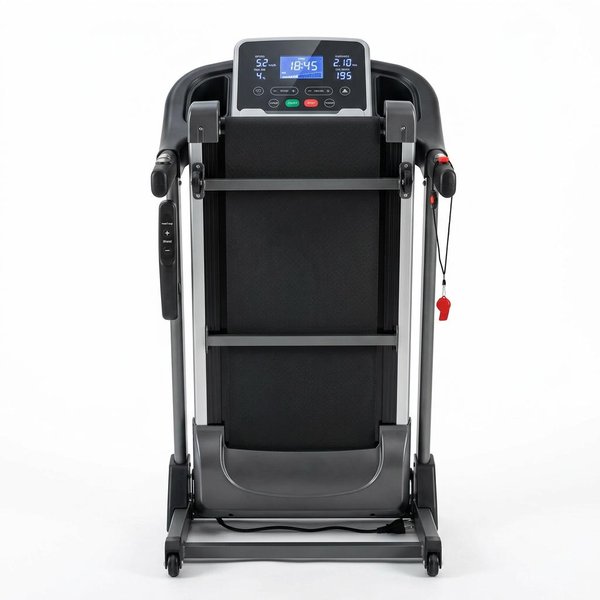
Build an effective, quiet cardio routine at home with research-backed protocols for machines, bodyweight exercises, and schedule optimization. Perfect for apartments and shared spaces.
The constraint of noise—neighbors below, shared walls, sleeping family members—eliminates many traditional cardio modalities from home use. Running, jumping rope, burpees, and high-impact plyometrics generate structure-borne vibration and airborne noise that create conflict in multi-unit dwellings. This is not a fitness preference issue; it is a genuine architectural limitation that requires strategic adaptation.
This guide presents a comprehensive framework for constructing effective cardiovascular training routines using exclusively low-noise modalities. The protocols are derived from peer-reviewed exercise science and adapted for the constraints of apartment living, early-morning schedules, and shared spaces. No machine? No problem. The final section covers effective zero-equipment options.
Cardiovascular adaptation responds to three primary stimuli: intensity (how hard), duration (how long), and frequency (how often). The modality—the specific movement pattern—is a distant fourth in determining physiological outcomes. Meta-analyses in the Journal of Applied Physiology consistently demonstrate that matched heart rate training across modalities (cycling, rowing, swimming, elliptical) produces statistically indistinguishable improvements in VO₂ max, stroke volume, and mitochondrial density.
Translation: A quiet magnetic resistance bike session at 75% max heart rate produces the same cardiovascular benefit as a loud running session at 75% max heart rate. The adaptation is in the physiology, not the movement pattern.
Understanding relative noise output enables intelligent exercise selection:
| Modality | Typical dB range* | Primary noise source | Structural vibration |
|---|---|---|---|
| Jumping rope | 75–90 dB | Footstrike | High |
| Running in place | 70–85 dB | Footstrike | High |
| Air rower (sprint) | 72–82 dB | Fan | Moderate |
| Treadmill running | 65–78 dB | Motor + footfall | Moderate-high |
| Upright cycling (moderate) | 52–58 dB | Flywheel | Low |
| Recumbent cycling | 48–54 dB | Flywheel | Very low |
| Elliptical | 55–62 dB | Linkage motion | Low |
| Magnetic rowing | 46–52 dB | Seat movement | Very low |
| Bodyweight circuits (low-impact) | 40–55 dB | Controlled movement | Minimal |
| Yoga/flow movement | 35–45 dB | None | None |
*Measured at 24" distance, moderate intensity on typical residential flooring.
The 55 dB threshold: Housing regulations and community standards typically define "quiet hours" noise limits at 55 dB for adjacent units. All modalities below this line can be performed without acoustic mitigation during non-quiet-hours periods. Modalities above this line require either structural modifications (mats, isolation platforms) or temporal restrictions (daytime-only use).
Equipment needed: Any magnetic resistance upright or recumbent bike Time: 25 minutes Noise output: 50–55 dB (below apartment complaint threshold)
| Phase | Duration | Protocol | RPE* |
|---|---|---|---|
| Warm-up | 5 min | Low resistance, 70–80 RPM | 3–4 |
| Work interval 1 | 2 min | Resistance 8–12/20, 85–95 RPM | 7–8 |
| Recovery 1 | 2 min | Resistance 3–4, 70 RPM | 4–5 |
| Work interval 2 | 2 min | Resistance 10–14/20, 80–90 RPM | 7–8 |
| Recovery 2 | 2 min | Resistance 3–4, 70 RPM | 4–5 |
| Work interval 3 | 3 min | Resistance 8–12, 85–95 RPM | 7–8 |
| Recovery 3 | 2 min | Resistance 3–4, 70 RPM | 4–5 |
| Work interval 4 | 2 min | Resistance 12–16/20, 75–85 RPM | 8–9 |
| Recovery 4 | 1 min | Resistance 3–4, 70 RPM | 4–5 |
| Cool-down | 4 min | Low resistance, 60–70 RPM | 3–4 |
*RPE = Rating of Perceived Exertion, 1–10 scale. RPE 7–8 = hard but sustainable; complete sentences difficult. RPE 8–9 = very hard; speaking limited to single words.
Research basis: High-intensity interval training (HIIT) on cycle ergometers has among the strongest evidence bases in exercise science. A landmark 2006 study by Gibala et al. at McMaster University demonstrated that 6 sessions of Wingate-based cycle HIIT (similar in structure to the above, though more intense) produced equivalent muscle oxidative capacity improvements to 6 sessions of traditional endurance training, despite 90% lower time commitment. The protocol above scales this approach to home-accessible intensities.
Equipment needed: Magnetic resistance rowing machine (e.g., Niceday, budget magnetic rowers) Time: 30 minutes Noise output: 46–52 dB (functionally silent)
| Phase | Duration | Protocol | Target metrics |
|---|---|---|---|
| Warm-up | 5 min | Easy pace, focus on technique | 18–20 spm |
| Ladder up | 10 min | Every 2 min: increase pace target by 2 sec/500m | 20→18→16→14→12 spm increasing |
| Peak hold | 5 min | Maintain fastest sustainable pace | Consistent split |
| Ladder down | 5 min | Every 1 min: decrease pace target by 2 sec/500m | Gradual slowing |
| Cool-down | 5 min | Easy technique-focused rowing | 18 spm |
Technique priority: Rowing rewards precision. The catch (forward position) requires shins vertical, torso hinged forward from hips, arms straight. The drive extends legs first, then hinges torso back, then pulls arms to lower ribs. The recovery reverses this sequence. Poor form reduces efficiency and increases lower-back strain. At low noise levels, you can hear the seat and handle movement—use this auditory feedback to maintain smooth, continuous motion without jerky transitions.
Equipment needed: Elliptical with adjustable incline (Sole E25 or equivalent) Time: 40 minutes Noise output: 55–60 dB (requires some acoustic consideration)
| Phase | Duration | Protocol | Incline |
|---|---|---|---|
| Warm-up | 5 min | Easy stride, 60 SPM | 0% |
| Steady state 1 | 10 min | Moderate, 65–70 SPM | 5% |
| Incline climb 1 | 5 min | Maintain cadence, increased resistance | 10% |
| Recovery | 3 min | Easy, 60 SPM | 0% |
| Steady state 2 | 10 min | Moderate-hard, 70–75 SPM | 5% |
| Incline climb 2 | 4 min | Maintain cadence, increased resistance | 15% |
| Cool-down | 3 min | Easy, 55–60 SPM | 0% |
*SPM = strides per minute
Research basis: Incline walking and elliptical training at 10–15% grade produce gluteal activation levels comparable to squat exercises at 40–60% 1RM, per electromyography research in the Journal of Strength and Conditioning Research. This protocol delivers cardiovascular conditioning with meaningful lower-body strength maintenance—particularly valuable for populations who cannot perform loaded squatting due to joint constraints.
No equipment eliminates noise from machines entirely, though bodyweight movements still generate some footfall and contact noise. The protocols below minimize even these outputs.
Equipment: None (barefoot or socks on carpet/rug recommended) Time: 20 minutes Noise output: 40–48 dB (essentially silent)
This protocol uses controlled alternating step-ups onto a stable elevated surface (stair bottom step, sturdy low bench, aerobic step if available). The key noise-reduction technique: controlled eccentric descent. Lower the trailing foot slowly rather than dropping it. This eliminates the footstrike sound while simultaneously increasing muscular work (eccentric loading produces greater muscle damage and subsequent adaptation than concentric work alone).
| Phase | Duration | Protocol | Intensity cue |
|---|---|---|---|
| Warm-up | 3 min | Marching in place, high knees | Easy |
| Work block 1 | 4 min | Alternating step-ups, controlled descent | RPE 6–7 |
| Recovery | 1 min | Marching in place | RPE 3–4 |
| Work block 2 | 4 min | Alternating step-ups, faster pace | RPE 7–8 |
| Recovery | 1 min | Marching in place | RPE 3–4 |
| Work block 3 | 4 min | Lateral step-overs (side-to-side) | RPE 6–7 |
| Cool-down | 3 min | Walking in place, deep breathing | RPE 2–3 |
Space requirement: Approximately 3' × 4' with access to a stable 6–8" elevated surface.
Equipment: Exercise mat (optional, reduces contact noise) Time: 25 minutes Noise output: 40–50 dB
This continuous-movement circuit combines yoga-inspired transitions with bodyweight strength elements to maintain elevated heart rate without impact. Research in the Journal of Alternative and Complementary Medicine demonstrates that vigorous vinyasa-style yoga produces average heart rates of 60–70% HR max in experienced practitioners—squarely in the moderate-intensity cardiovascular training zone.
The sequence (perform each movement for 60 seconds, transition without rest):
Repeat the 6-minute sequence 4 times with 60-second standing recovery between rounds. Total time: ~25 minutes.
Noise minimization technique: Perform on a carpeted surface or exercise mat. Place a folded towel under hands and feet to dampen contact noise. Move slowly and deliberately—speed increases impact force quadratically.
Consistency produces fitness outcomes, not individual session impressiveness. Research on exercise adherence consistently identifies schedule integration as the strongest predictor of long-term maintenance. The weekly template below balances intensity, recovery, and noise management.
| Day | Session | Duration | Equipment | Noise level |
|---|---|---|---|---|
| Monday | Protocol A (Bike HIIT) | 25 min | Magnetic bike | Low |
| Tuesday | Protocol D (Stepping) or Protocol E (Flow) | 20–25 min | None | Minimal |
| Wednesday | Protocol C (Elliptical endurance) | 40 min | Elliptical | Moderate* |
| Thursday | Active recovery | 20 min | Walking (outdoor if possible) or gentle cycling | Minimal |
| Friday | Protocol B (Rowing ladder) | 30 min | Magnetic rower | Minimal |
| Saturday | Protocol A (Bike HIIT) or longer steady-state | 25–45 min | Magnetic bike | Low |
| Sunday | Rest or gentle yoga | 20–30 min | Mat | None |
*Schedule Wednesday's elliptical session during daytime hours when moderate noise is more acceptable. If noise constraints are severe, substitute Protocol C with an extended bike session at Protocol A's resistance levels but steady-state pacing.
Weekly totals: 160–215 minutes of structured cardiovascular activity, meeting and exceeding CDC guidelines (150 minutes moderate or 75 minutes vigorous weekly). The distribution includes two HIIT sessions (M, F/Sa), one endurance session (W), one bodyweight session (Tu), and active recovery—aligning with periodization principles that prevent overtraining while maximizing adaptation.
Cardiovascular adaptation follows the principle of progressive overload: to continue improving, you must gradually increase the training stimulus. In quiet home environments, progression follows these variables:
Research suggests that beginners experience meaningful cardiovascular improvement with as little as 8 weeks of consistent moderate training. Advanced exercisers require greater stimulus variation—including interval structure changes, resistance increases, and session duration extension—to continue progressing. The protocols above include sufficient variability to support multi-year progression without equipment changes.
Quiet cardio is not a compromised alternative to gym-based training. It is a strategically adapted approach that acknowledges real environmental constraints while delivering physiologically equivalent outcomes. The key differentiator between effective and ineffective home cardio is not equipment price or noise level—it is consistency. A 25-minute bike session performed 5 days weekly for a year produces cardiovascular adaptations that eclipse sporadic gym attendance, regardless of the gym's equipment quality.
Select protocols that fit your schedule, your space, and your noise environment. Execute them consistently. Track heart rate or RPE to ensure genuine intensity rather than passive movement. The fitness outcomes will follow.