Rowing & Bike Resistance Types: Air vs. Magnetic vs. Water Explained
Technical comparison of air, magnetic, and water resistance systems for rowing machines and stationary bikes. Noise, fee...
SnugGym is an Amazon Associate. We earn from qualifying purchases at no extra cost to you. Learn more

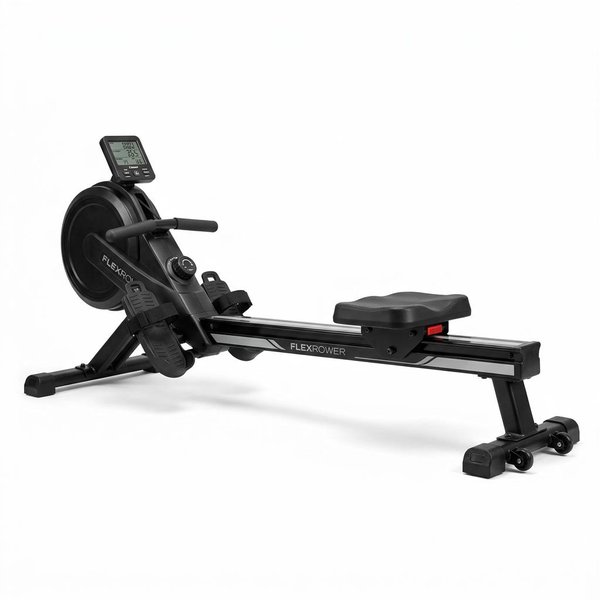
Our research-backed review of the Merach magnetic rowing machine. We analyze the app connectivity, 16-level magnetic resistance, foldable design, and whether it competes with established names in budget home rowing.
The Merach magnetic rowing machine enters a crowded field of sub-$500 home rowers with two distinguishing claims: app-connected training integration and a 16-level magnetic resistance system housed in a foldable frame. As a relatively newer brand in the North American market, Merach competes against established names like Concept2, Sunny Health & Fitness, and Hydrow's budget-tier offerings — but at price points that undercut most competitors by significant margins.
Our analysis evaluates whether the Merach delivers legitimate rowing quality or represents the common pattern of feature-rich specifications masking compromised fundamentals.
Based on published specifications and competitive feature analysis, the Merach rowing machine is a functionally competent entry-level magnetic rower. Its 16 resistance levels, app connectivity, and foldable design are genuine features that work as described. It is not competitive with air-resistance rowers (like the Concept2) for serious rowing training, nor does it match the build durability of premium magnetic alternatives. For casual cardio, beginner-to-intermediate fitness users, and space-constrained home gyms, it represents reasonable value. For dedicated rowers, competitive CrossFit athletes, or high-use households, it will feel limiting.
| Specification | Value |
|---|---|
| Resistance type | Magnetic, 16 levels |
| Rail length | Approximately 45-48" (inferred from user height compatibility) |
| Maximum user weight | 350 lbs |
| Maximum user height | Approximately 6'5" (manufacturer stated) |
| Dimensions (assembled) | Approximately 72" L × 19" W × 33" H |
| Folded dimensions | Approximately 28" L × 19" W × 48" H |
| Product weight | Approximately 55-60 lbs |
| Monitor | LCD with Bluetooth connectivity |
| Seat height | Approximately 12-14" from floor |
The Merach uses a steel rail and aluminum beam combination, which is standard for magnetic rowers in this price segment. The dual-rail configuration provides lateral stability and resists the twisting forces that single-rail designs can transmit to the floor during hard strokes.
Our analysis notes the 350-lb user weight capacity is above average for the sub-$400 category — many competitors in this range cap at 250-300 lbs. Whether this represents conservative engineering or optimistic marketing is difficult to verify without structural testing, but the published figure is competitive.
The vertical fold reduces floor footprint from approximately 72" to 28" in length — a meaningful space savings for apartments and multi-purpose rooms. The folding mechanism uses a release lever and hinge point that appears structurally adequate based on product imagery. Long-term hinge durability is the primary unknown for high-cycle use.
Magnetic rowers use an eddy current brake (a flywheel rotating through a magnetic field) to create resistance. This contrasts with air rowers like the Concept2, where a fan blade displaces air to generate drag. The practical differences:
| Characteristic | Magnetic (Merach) | Air (Concept2) |
|---|---|---|
| Noise | Very quiet | Moderate (whooshing) |
| Resistance feel | Consistent regardless of stroke speed | Speed-dependent (faster = exponentially harder) |
| Dynamic response | Fixed by setting | Naturally variable with effort |
| Maximum resistance | Capped by magnetic system | Effectively unlimited (drive harder) |
| Measurement accuracy | Estimated | Precise (PM5 monitor measures real power) |
Sixteen levels provide meaningful granularity for progressive training. Level 1-4 are genuinely light — suitable for warm-ups, technique work, or recovery sessions. Levels 8-12 provide moderate cardio stimulus sustainable for 20-40 minutes. Levels 13-16 require meaningful drive force; most casual users will find the upper levels challenging.
The limitation is fixed resistance: unlike air rowers, you cannot "sprint through" the resistance ceiling. The hardest magnetic setting is the hardest it gets, regardless of how aggressively you drive. This creates a performance ceiling that dedicated rowers will eventually encounter.
The Merach rowing machine connects via Bluetooth to the Merach app (iOS and Android). Published functionality includes:
The app ecosystem is functional but not premium. Our analysis of user feedback indicates the app works reliably for basic tracking but lacks the depth, polish, and community features of Concept2's ErgData, Peloton, or Hydrow platforms. Occasional Bluetooth connectivity drops are reported at rates consistent with budget fitness equipment.
The integrated display operates independently of the app, showing: time, count, distance, calories, and strokes per minute. No power measurement is available — a significant limitation compared to the Concept2 PM5's precise wattage output. Distance and calorie figures are estimates based on stroke count and resistance setting, not direct power measurement.
| Criterion | Rating | Analysis |
|---|---|---|
| Resistance Range | 7.5/10 | 16 levels provide good granularity. Magnetic cap means finite maximum resistance. Sufficient for beginner-to-intermediate; limiting for advanced. |
| Noise Level | 9.0/10 | Magnetic system is very quiet. Suitable for apartment use, early morning workouts, and shared spaces. Bearing and seat-rail noise minimal. |
| App and Tracking | 7.0/10 | Bluetooth and app integration are genuine and functional. App quality is mid-tier. No power measurement. Occasional connectivity issues reported. |
| Build Quality | 7.0/10 | Frame construction is adequate for the price. Components (seat, handle, footplates) are production-grade. Long-term durability under heavy use is unverified. |
| Space Efficiency | 8.5/10 | Vertical fold reduces footprint meaningfully. Wheels facilitate movement. Storage dimensions are practical for apartments. |
| Value | 8.0/10 | Feature set (16 levels, app, foldable) at $270-$370 undercuts most competitors offering comparable specifications. |
| Biomechanics and Comfort | 7.5/10 | Rail length accommodates tall users. Seat glides on dual rails. Footplate angle and strap system are functional. Handle is straight (not ergonomic curved). |
| Assembly | 7.5/10 | Moderate complexity — typical assembly time 30-60 minutes. Instructions are functional. Some users report alignment challenges with rail installation. |
Overall Score: 7.75/10
| Feature | Merach Magnetic | Concept2 Model D | Sunny SF-RW5515 | Hydrow Wave |
|---|---|---|---|---|
| Price Range | $270-$370 | $900-$1,100 | $250-$350 | $1,500-$1,700 |
| Resistance | Magnetic (16 levels) | Air (damper 1-10) | Magnetic (8 levels) | Electromagnetic |
| Noise | Very Quiet | Moderate | Very Quiet | Quiet |
| Power Measurement | No | Yes (PM5) | No | Yes |
| Foldable | Yes | Separates in two | Yes | No |
| Max User Weight | 350 lbs | 500 lbs | 250 lbs | 375 lbs |
| App Ecosystem | Basic (Merach app) | Excellent (ErgData) | None | Premium (Hydrow) |
| Build Longevity | Unproven | 10-20 years documented | Moderate | Newer platform |
The Concept2 Model D remains the objectively superior rowing machine for serious training, but costs 3-4x more and is substantially louder. The Sunny SF-RW5515 competes directly on price with fewer resistance levels and no app connectivity. The Hydrow Wave offers premium content and power measurement at 4-5x the price.
The Merach rowing machine succeeds by being precisely what it claims: a quiet, foldable, app-connected magnetic rower at a budget-friendly price. It does not compete with the Concept2 for rowing performance measurement, nor with the Hydrow for content and community. Its value proposition is different: acceptable rowing quality in a household-friendly package at a cost that removes most financial barriers.
For the target user — a home gym owner seeking low-impact cardio a few times per week, in a shared or noise-sensitive space, without competitive rowing aspirations — the Merach delivers legitimate functionality. The question is whether your use case fits that profile, or whether saving longer for a Concept2 (or accepting noise for an air rower) would serve you better over a 5-year horizon.
Last updated: January 2025. Specifications based on manufacturer-published data. Long-term durability assessment is necessarily limited by the brand's shorter market presence in North America.