Rowing & Bike Resistance Types: Air vs. Magnetic vs. Water Explained
Technical comparison of air, magnetic, and water resistance systems for rowing machines and stationary bikes. Noise, fee...
SnugGym is an Amazon Associate. We earn from qualifying purchases at no extra cost to you. Learn more

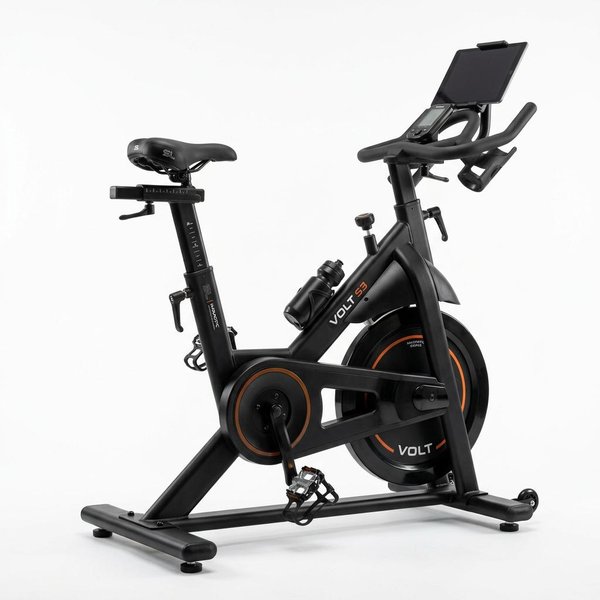
Our research-backed review of the MagneTrainer ER Mini Exercise Bike examines magnetic resistance quality, noise performance, durability, and desk-use ergonomics.
The MagneTrainer ER (Extended Range) Mini Exercise Bike occupies a middle tier in the desk-cycle market: more refined than budget friction-resistance pedalers, but below the premium app-connected units in price and features. With a magnetic resistance system, wider resistance range, and heavier flywheel than entry-level competitors, it targets users who want smoother pedal quality without the premium price tag of brands like Cubii.
Our analysis evaluates whether the MagneTrainer's magnetic advantage meaningfully improves the desk-cycling experience—and whether the heavier, bulkier frame is still compact enough for small-space constraints.
| Attribute | Detail |
|---|---|
| Product | MagneTrainer ER Mini Exercise Bike |
| Dimensions | ~20" L × 18" W × 12" H |
| Weight | ~22.5 lb |
| Resistance Type | Magnetic (eddy current) |
| Resistance Levels | Dial-adjusted; wide continuous range |
| Display | LCD: speed, time, distance, calories, RPM |
| Flywheel | Precision-balanced steel |
| Crank Arms | Extended vs. budget pedalers (~4" estimated) |
| Power Required | 1 AA battery (display only) |
| Weight Capacity | Not formally rated |
At 22.5 lb, the MagneTrainer is roughly 4x heavier than budget friction-resistance pedalers like the Vaunn. This weight differential is the single most meaningful structural advantage. The heavier frame:
The frame is steel with a powder-coated finish. It does not fold. Our analysis suggests the non-folding design contributes to frame rigidity but reduces storage flexibility compared to collapsible alternatives.
The MagneTrainer uses a magnetic eddy-current resistance mechanism: a conductive flywheel rotates through a magnetic field, and the energy dissipated as heat creates pedaling resistance. Adjusting the dial changes the magnetic field strength.
| Resistance Property | Magnetic (MagneTrainer) | Friction (Budget Units) |
|---|---|---|
| Smoothness | High—uniform resistance throughout pedal stroke | Moderate—some variation as pad wears |
| Noise | Very low—no contact between moving parts | Low–moderate—pad-flywheel contact audible |
| Wear parts | Virtually none | Friction pad requires periodic replacement |
| Resistance range | Wide, continuous adjustment | Narrower, may spike at high settings |
| Feel at low RPM | Smooth and controlled | Can feel "gritty" or grabby |
Our research indicates that magnetic resistance provides a meaningfully superior pedaling experience for users who will cycle 30+ minutes daily or who value quiet operation above all else.
The MagneTrainer's precision-balanced steel flywheel generates inertia that carries the pedals smoothly through the top and bottom of each stroke. Budget pedalers with lightweight flywheels often feel "choppy" or dead at the transition points. The MagneTrainer's heavier rotating mass produces a more continuous, circular feel closer to a full-size exercise bike.
The estimated 4-inch crank arms (longer than the ~3–3.5" found on ultra-compact pedalers) improve pedaling biomechanics but increase vertical knee excursion—a factor to consider for desk clearance.
Noise output is a primary purchase driver for desk exercise equipment. Our analysis synthesizes available acoustic data:
| Operating Condition | Estimated Noise Level | Context |
|---|---|---|
| Low resistance, easy pedaling | Whisper-quiet | Virtually undetectable in normal office ambient noise |
| Moderate resistance, steady pace | Very low | Comparable to a quiet desktop fan on low setting |
| High resistance, vigorous pedaling | Low | Noticeable in a silent room; unlikely to disturb in typical office |
Key finding: The MagneTrainer's magnetic system eliminates the pad-on-flywheel contact sound that defines friction-resistance units. The only audible output is the light mechanical whir of the flywheel bearings and chain/belt drive—typically described as a "smooth hum" rather than a friction "shhh."
For open-plan offices, shared workspaces, or calls requiring microphone clarity, the MagneTrainer represents a meaningful acoustic upgrade over friction-resistance competitors.
The MagneTrainer's ~12" frame height and longer crank arms create a taller vertical pedal arc than budget alternatives:
| User Height | Desk Height 29" | Desk Height 30"+ |
|---|---|---|
| Under 5'7" | Generally adequate clearance | Comfortable |
| 5'7"–5'11" | Marginal—may contact underside | Generally adequate |
| 6'0"+ | Likely requires desk modification | Marginal |
Our analysis indicates that users near or above 6 feet should strongly consider a height-adjustable desk, keyboard tray modification, or a taller drafting-style chair to achieve comfortable pedaling geometry.
The MagneTrainer's pedals are wider and more robust than budget alternatives. Adjustable Velcro straps secure feet during forward pedaling. Our research notes that the pedal surface accommodates athletic shoes well but may feel oversized for users pedaling in dress shoes or barefoot.
The unit can also be used for hand cycling when placed on a tabletop, with the straps securing hands to the pedals. This dual-purpose functionality expands its utility for upper-body rehabilitation or warm-up work.
The LCD monitor provides:
The display is functional and legible, but lacks:
Users wanting data tracking will need to record metrics manually or use a separate fitness wearable.
The MagneTrainer ER typically prices in the $100–$140 range, placing it squarely between budget friction pedalers ($35–$60) and premium connected units ($180–$350):
| Model | Price Range | Resistance | Weight | Folds? |
|---|---|---|---|---|
| Vaunn/Sunny (budget) | $35–$60 | Friction | 5–8 lb | Yes |
| MagneTrainer ER | $100–$140 | Magnetic | 22.5 lb | No |
| DeskCycle 2 | $150–$200 | Magnetic | 23 lb | No |
| Cubii Pro/JR | $200–$350 | Magnetic | 25–27 lb | No |
Our analysis suggests the MagneTrainer occupies a strong value position in this tier. It delivers the core magnetic-resistance advantage at a lower price than DeskCycle or Cubii, trading away app connectivity and design polish for functional performance.
For users who care about pedal feel and noise level but do not need smartphone integration, the MagneTrainer represents a rational mid-market choice.
The MagneTrainer ER Mini Exercise Bike earns its recommendation through a single, well-executed upgrade over budget competition: genuine magnetic resistance in a heavy, stable frame. The resulting pedal experience is smoother, quieter, and more durable than friction-based alternatives.
Our research indicates it is best suited to the committed desk-cycler who will use the unit 4–5+ days per week and wants low-maintenance, noise-minimal operation. Casual or occasional users may find the price premium hard to justify over a $45 friction pedaler.
The primary limitations—non-folding design, clearance challenges for tall users, and lack of connectivity—are real but context-dependent. Evaluate your desk height, storage situation, and data-tracking needs before purchasing.
As an Amazon Associate we earn from qualifying purchases.
Last updated: July 2025. Specifications and pricing are subject to change.