Rowing & Bike Resistance Types: Air vs. Magnetic vs. Water Explained
Technical comparison of air, magnetic, and water resistance systems for rowing machines and stationary bikes. Noise, fee...
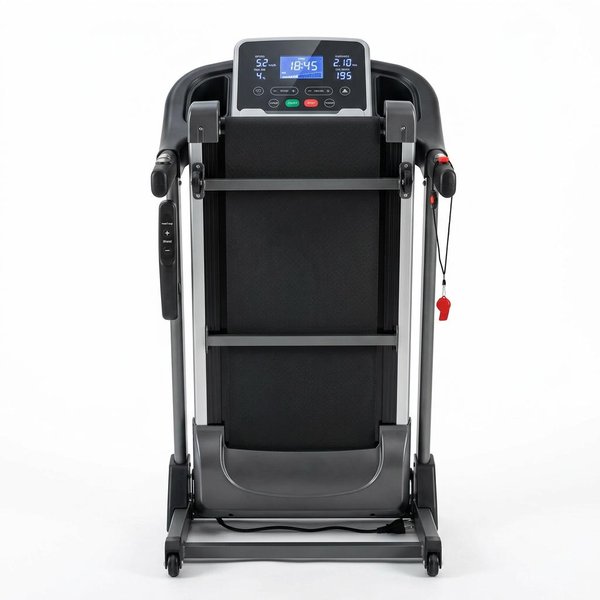
Evidence-based guide to low-impact cardiovascular training for beginners. Learn effective modalities, intensity guidelines, progression strategies, and equipment recommendations for sustainable home fitness.
Starting a cardiovascular training program presents unique challenges for beginners: joint sensitivity, low fitness baseline, uncertainty about proper intensity, and concerns about exercise safety. Low-impact cardio — movement that keeps at least one foot in contact with the ground or eliminates ground impact entirely — provides the ideal entry point. Our evidence-based guide covers the physiological principles, practical protocols, equipment options, and progression strategies for sustainable low-impact training at home.
Key Principle: Low-impact does not mean low-intensity. Effective cardiovascular training depends on elevating heart rate to appropriate zones, which is entirely achievable without running, jumping, or high-impact movement. Beginners can achieve substantial fitness improvements — improved VO2 max, reduced blood pressure, enhanced insulin sensitivity, and body composition changes — through well-designed low-impact protocols.
Impact force refers to the ground reaction force generated when the body contacts a surface during movement. Higher forces create greater mechanical stress on joints, connective tissue, and bone.
| Activity Category | Ground Contact | Peak Vertical Force | Joint Stress Level |
|---|---|---|---|
| Non-weight-bearing | None (seated or supported) | 0× body weight | Minimal |
| Low-impact | Continuous (one foot always on ground) | 1.0–1.5× body weight | Low |
| Moderate-impact | Brief aerial phase (both feet off ground < 0.1 sec) | 1.5–2.5× body weight | Moderate |
| High-impact | Extended aerial phase with hard landing | 2.5–5.0× body weight | High |
| Non-Weight-Bearing | Low-Impact | Moderate-Impact | High-Impact |
|---|---|---|---|
| Stationary cycling | Walking (flat) | Jogging | Running |
| Swimming | Walking (incline) | Power walking | Sprinting |
| Seated rowing | Elliptical trainer | Low box step-ups | Jumping jacks |
| Seated aerobics | Recumbent stepping | Light dancing | Jump rope |
| Arm ergometer | Stair climbing (slow) | Marching in place | Burpees |
| Water aerobics | Nordic walking (with poles) | Step aerobics (low height) | Plyometrics |
Low-impact training at appropriate intensity produces the same fundamental cardiovascular adaptations as high-impact exercise:
| Adaptation | Mechanism | Timeline |
|---|---|---|
| Increased stroke volume | Heart muscle hypertrophy; improved contractility | 4–8 weeks |
| Lower resting heart rate | Enhanced parasympathetic tone; improved stroke volume | 2–4 weeks |
| Reduced blood pressure | Improved vascular compliance; reduced peripheral resistance | 4–12 weeks |
| Increased capillary density | Angiogenesis in trained muscles | 4–8 weeks |
| Improved VO2 max | Central (cardiac) and peripheral (muscular) adaptations | 4–12 weeks |
Research evidence: A 2010 meta-analysis in Medicine & Science in Sports & Exercise found no significant difference in VO2 max improvement between walking, cycling, and running when total exercise volume (calories expended) was matched. The intensity and duration matter; the impact level does not.
| Outcome | Low-Impact Effect | Supporting Evidence |
|---|---|---|
| Fat oxidation during exercise | Higher proportion of fat used at moderate intensities | Achten & Jeukendrup (2004) J Physiol |
| Total calorie expenditure | Equivalent to high-impact at matched heart rate | Swain & Franklin (2006) Curr Cardiol Rep |
| Insulin sensitivity improvement | Significant; dose-dependent on total volume | Colberg et al. (2010) Diabetes Care |
| Post-exercise calorie burn (EPOC) | Present but lower than high-intensity intervals | LaForgia et al. (2006) J Sports Sci |
Low-impact cardio offers specific advantages for beginners with existing joint concerns:
| Condition | Low-Impact Recommendation | Rationale |
|---|---|---|
| Knee osteoarthritis | Cycling, walking, pool exercise | Reduces patellofemoral stress; maintains range of motion |
| Hip osteoarthritis | Recumbent bike, swimming | Minimizes weight-bearing through hip joint |
| Plantar fasciitis | Cycling, rowing, pool exercise | Eliminates heel strike impact |
| Obesity (BMI > 30) | Cycling, walking, water exercise | Reduces joint load proportional to body weight |
| Pregnancy (low-risk) | Walking, swimming, stationary cycling | Safe; reduces fall risk; avoids supine positions after first trimester |
| Post-injury rehabilitation | Progress from non-weight-bearing to low-impact | Gradual tissue loading without excessive stress |
For beginners with no contraindications, low-impact cardio should primarily occur in Zone 2 — the aerobic base building zone.
| Zone | Name | % of HRmax | % of HRR | Perceived Effort | Recommended for Beginners |
|---|---|---|---|---|---|
| Zone 1 | Active Recovery | 50–60% | 30–40% | Very easy; can sing | Yes — rest days, warm-up, cool-down |
| Zone 2 | Aerobic Base | 60–70% | 40–50% | Easy; can hold conversation | Primary training zone |
| Zone 3 | Tempo | 70–80% | 50–60% | Moderate; short sentences | Occasional; after 4+ weeks base |
| Zone 4 | Threshold | 80–90% | 60–75% | Hard; few words only | Not initially; after 8+ weeks |
| Zone 5 | VO2 Max | 90–100% | 75–90% | Maximum; unsustainable | Not recommended for beginners |
HRmax estimation: Use the Tanaka equation for better accuracy: HRmax = 208 − (0.7 × age). A 40-year-old beginner would have an estimated HRmax of 180 bpm, making Zone 2 = 108–126 bpm.
For beginners without heart rate monitors, the talk test provides effective intensity guidance:
| Level | Description | Application |
|---|---|---|
| Can sing comfortably | Too easy for training stimulus | Warm-up, recovery intervals |
| Can speak in full sentences | Correct Zone 2 intensity | Primary training target |
| Can speak only short phrases | Approaching Zone 3 | Occasional brief intervals after base established |
| Can only say single words | Too intense for beginner low-impact | Reduce intensity immediately |
The 6–20 Borg scale provides another intensity option:
| RPE | Description | Beginner Target |
|---|---|---|
| 9–10 | Very light | Warm-up only |
| 11–12 | Light | Recovery intervals |
| 13–14 | Somewhat hard (comfortably challenging) | Primary target |
| 15–16 | Hard | Brief intervals after 4+ weeks |
| 17–18 | Very hard | Not for beginners |
| Parameter | Specification |
|---|---|
| Frequency | 3 sessions per week, non-consecutive days |
| Duration | 20–25 minutes per session |
| Modality | Single consistent exercise (e.g., stationary bike) |
| Intensity | Zone 2 (RPE 12–13); talk test: full sentences |
| Structure | 5 min warm-up → 15 min steady state → 5 min cool-down |
| Weekly volume | 60–75 minutes |
Goal: Establish exercise habit; learn proper form on chosen equipment; develop aerobic base without excessive fatigue.
| Parameter | Specification |
|---|---|
| Frequency | 3–4 sessions per week |
| Duration | 25–35 minutes per session |
| Modality | Primary modality + one alternative introduced |
| Intensity | Zone 2, with 2–3 brief periods at RPE 14 |
| Structure | 5 min warm-up → 20–25 min with 3× 2-min "brisk" intervals → 5 min cool-down |
| Weekly volume | 100–140 minutes |
Goal: Extend aerobic endurance; introduce mild intensity variation; begin exploring equipment options.
| Parameter | Specification |
|---|---|
| Frequency | 4 sessions per week |
| Duration | 30–40 minutes per session |
| Modality | 2 modalities rotating (e.g., bike and walking) |
| Intensity | Primarily Zone 2; one session includes 4× 3-min tempo intervals (Zone 3) |
| Structure | Varied; include one longer steady-state session (40 min) |
| Weekly volume | 150–180 minutes |
Goal: Build substantial aerobic base; improve lactate threshold; prepare for more structured training.
| Parameter | Specification |
|---|---|
| Frequency | 4 sessions per week |
| Duration | 35–45 minutes per session |
| Modality | 2–3 modalities; user preference-driven |
| Intensity | Mix of Zone 2 base and structured Zone 3 intervals |
| Structure | One long session (45 min), two moderate (35 min), one interval (35 min) |
| Weekly volume | 180–200 minutes |
Goal: Establish sustainable, enjoyable long-term training pattern; prepare for intermediate programming if desired.
| Subtype | Noise Level | Space Required | Price Range | Best For |
|---|---|---|---|---|
| Upright magnetic bike | Very quiet (40–50 dB) | 4–5 sq ft | $150–$500 | General fitness; small spaces |
| Recumbent bike | Very quiet (40–50 dB) | 5–7 sq ft | $200–$600 | Back support; seniors; heavier users |
| Spin/indoor cycling bike | Quiet (42–55 dB) | 4–5 sq ft | $300–$2,000 | Intense training; standing climbs |
| Under-desk bike | Very quiet (25–35 dB) | 2–3 sq ft | $40–$250 | Multi-tasking; office integration |
| Air bike (fan resistance) | Loud (65–85 dB) | 5–6 sq ft | $300–$900 | HIIT; full-body engagement |
Recommendation for beginners: Magnetic resistance upright or recumbent bikes offer the best combination of quiet operation, low maintenance, appropriate intensity range, and affordability.
| Subtype | Stride Length | Space Required | Price Range | Best For |
|---|---|---|---|---|
| Compact/front-drive | 14–16" | 6–8 sq ft | $200–$500 | Small spaces; shorter users |
| Full-size front-drive | 18–20" | 8–10 sq ft | $400–$1,200 | General fitness; natural stride feel |
| Rear-drive | 18–20" | 8–12 sq ft | $600–$2,000 | Smooth motion; gym-quality feel |
| Center-drive | 18–20" | 6–8 sq ft | $800–$2,500 | Most compact for stride length; lateral stability |
Stride length note: Users under 5'4" are comfortable with 16–18" stride. Users 5'4"–6'0" need 18–20". Taller users may prefer 20–22" stride lengths found on premium models.
Check price at Amazon — compact home ellipticals
| Resistance Type | Noise Level | Space Required | Price Range | Characteristics |
|---|---|---|---|---|
| Air (fan) | Loud (60–75 dB) | 9 sq ft | $300–$1,200 | Resistance increases with effort; gym standard |
| Magnetic | Quiet (40–50 dB) | 9 sq ft | $250–$800 | Consistent resistance; beginner-friendly |
| Water | Moderate (50–60 dB) | 9 sq ft | $500–$1,500 | Smooth feel; aesthetic appeal; maintenance required |
| Hydraulic | Quiet (35–45 dB) | 6–8 sq ft | $100–$300 | Compact; limited resistance; less natural feel |
Beginner consideration: Rowing is low-impact but technically demanding. Poor form (excessive lower back flexion) can cause injury. Beginners should study proper technique (legs-drive, hip-hinge, arms-pull sequence) before increasing intensity.
| Option | Equipment Needed | Advantages | Considerations |
|---|---|---|---|
| Outdoor walking | Quality walking shoes | Free; fresh air; mental health benefits | Weather-dependent; safety in dark |
| Treadmill walking | Folding or compact treadmill | Weather-independent; pace control; incline options | Higher impact than cycling; more expensive |
| Walking in place | None | Zero equipment; any space; immediate start | Monotonous; lower intensity ceiling |
| Indoor walking videos | Screen/device | Guided; varied; entertaining | Requires following along; space for arm movements |
| Mistake | Why It Happens | Consequence | Correction |
|---|---|---|---|
| Starting too intensely | Enthusiasm; "no pain, no gain" mentality | Burnout; injury; exercise aversion | Strict Zone 2 adherence for first month |
| Inconsistent frequency | Busy schedule; no habit established | Minimal fitness adaptation | Schedule workouts like appointments; minimum 3×/week |
| Ignoring warm-up | Time pressure; underestimating importance | Increased injury risk; poor performance | Minimum 5-minute gradual intensity buildup |
| Same modality always | Equipment limitation; comfort zone | Overuse injuries; boredom; plateau | Rotate 2+ modalities weekly |
| Comparing to others | Social media; gym environments | Discouragement; unrealistic expectations | Focus on personal progression metrics only |
| Neglecting recovery | Enthusiasm; impatience | Overtraining; illness; regression | Rest days are training days; sleep 7–9 hours |
Track these metrics to confirm improvement and maintain motivation:
| Metric | How to Measure | Expected 12-Week Improvement |
|---|---|---|
| Resting heart rate | Morning measurement before rising | 5–10 bpm decrease |
| Submaximal exercise heart rate | HR at fixed workload (e.g., 50W cycling) | 10–20 bpm decrease at same workload |
| Duration at target intensity | Minutes maintaining Zone 2 before fatigue | 20 min → 45 min |
| Recovery heart rate | HR drop 1 minute after stopping exercise | Faster drop (e.g., 30 bpm in 60 sec) |
Low-impact cardio remains appropriate indefinitely — many elite endurance athletes complete the majority of their training walking, cycling, or swimming. However, beginners may eventually want to incorporate moderate-impact options:
| Indicator | Next Step |
|---|---|
| 4+ weeks consistent Zone 2 training | Introduce brief power walking intervals |
| No joint discomfort during or after sessions | Gradual jogging intervals on soft surfaces |
| Resting HR decreased 8+ bpm | Intensity can increase while maintaining low impact |
| Desire for time efficiency | Interval training within low-impact modalities |
| Specific goal requires impact (e.g., 5K race) | Structured walk-run progression program |
As an Amazon Associate we earn from qualifying purchases. Exercise guidelines based on ACSM position stands and peer-reviewed exercise science literature. Affiliate links on this page use the tag snuggym0626-20.