Amazon Basics Cast Iron Kettlebell Review: Budget Swing Training
Our research-backed review of the Amazon Basics Cast Iron Kettlebell examines casting quality, weight accuracy, and hand...
SnugGym is an Amazon Associate. We earn from qualifying purchases at no extra cost to you. Learn more
Complete guide to choosing adjustable dumbbells. Dial vs pin vs twist-lock mechanisms, weight range selection, footprint, and apartment-specific considerations.
Buying adjustable dumbbells requires understanding three mechanisms, four weight range considerations, and the floor-space reality of your apartment. This guide breaks down every factor to help you make the right choice the first time.
As an Amazon Associate we earn from qualifying purchases.
Adjustable dumbbells consolidate multiple fixed-weight dumbbells into a single unit with a selector mechanism. A pair of 5–52.5 lb adjustable dumbbells replaces 15 sets of traditional weights — saving approximately 10–15 square feet of rack space and $800–$1,200 in equivalent fixed-weight purchases.
There are three primary adjustment mechanisms, each with distinct tradeoffs:
Rotate a dial at each end of the dumbbell to select your desired weight. The internal mechanism engages only the plates needed; unused plates remain in the storage tray.
How it works: Turning the dial rotates a pinion gear that locks specific weight plates to the handle. When you lift the dumbbell from the tray, engaged plates lift with the handle; unengaged plates stay behind.
Examples: Bowflex SelectTech 552, Bowflex SelectTech 1090, ATIVAFIT, Amazon Basics
| Pros | Cons |
|---|---|
| Fastest changes (~3 seconds) | Premium pricing |
| No loose plates to store | Some polymer components |
| Intuitive operation | Not expandable (most models) |
| Enclosed plates (low noise) | Drop sensitivity |
Best for: Circuit training, P90X-style programs, users who change weight frequently between exercises.
Insert a magnetic or mechanical pin into the weight stack at the desired level. Lifting engages all plates below the pin.
How it works: A steel pin slides through the handle into the weight stack, locking all plates from that point downward. When lifted, those plates come with the handle; plates above the pin remain.
Examples: PowerBlock Elite EXP, PowerBlock Pro Series
| Pros | Cons |
|---|---|
| Most compact design | Slower than dial (~5–10 seconds) |
| All-steel construction (durable) | Rectangular shape feels different |
| Expandable systems available | Pin can be lost |
| Flat sides (won't roll) | Learning curve for shape |
| Lowest noise | Wrist band can restrict grip |
Best for: Small apartments with minimal space, lifters who want expansion capability, users prioritizing durability over speed.
Add or remove individual weight plates onto the handle, securing them with a threaded collar.
How it works: Plates slide onto a threaded handle; a spin-collar or twist-lock mechanism tightens to hold them in place. You manually add and remove plates for each weight change.
Examples: Yes4All Cast Iron, FEIERDUN DS2, Lifepro Quick-Adjust
| Pros | Cons |
|---|---|
| Lowest cost | Slowest changes (20–40 seconds) |
| Traditional dumbbell feel | Loose plates require storage |
| Expandable by adding plates | Metal-on-metal noise |
| Durable cast iron | Multiple pieces to manage |
Best for: Budget buyers, users who don't change weight frequently, those who want traditional iron feel.
The weight range you need depends on your training experience, goals, and body size.
| User Profile | Recommended Min | Recommended Max | Reasoning |
|---|---|---|---|
| Beginner (new to strength) | 5 lbs | 25–35 lbs | Learn form with light weights; limited by exercise selection |
| Intermediate (6+ months) | 5 lbs | 40–50 lbs | Progressive overload for most upper-body exercises |
| Advanced (2+ years) | 10 lbs | 50–70 lbs | Heavy pressing and single-leg lower-body work |
| Heavy lower-body focus | 10 lbs | 70–90 lbs | Romanian deadlifts, Bulgarian split squats, goblet squats |
For most apartment home gym users: A 5–50 lb range covers the vast majority of exercises. If you specifically train heavy lower-body movements, consider an expandable system (PowerBlock) or the Bowflex 1090.
Weight increments matter. Smaller increments (2.5 lbs) enable more precise progressive overload, particularly for upper-body isolation exercises like lateral raises and bicep curls where 5-lb jumps can be significant. Larger increments (5 lbs) are acceptable for compound movements.
Before purchasing, measure your intended storage location:
| Model | Storage Footprint (trays included) | Fits Under Most Beds? |
|---|---|---|
| PowerBlock Elite EXP | ~1.5 sq ft (no trays needed) | Yes — most compact |
| Bowflex SelectTech 552 | ~2.2 sq ft (with trays) | Yes |
| ATIVAFIT | ~2.0 sq ft (with trays) | Yes |
| Yes4All Cast Iron | ~3–4 sq ft (plates + handles) | Plates may need closet |
| Bowflex SelectTech 1090 | ~2.5 sq ft (with trays) | Marginal — larger trays |
Key measurements to take:
| Mechanism | Weight Change Noise | Exercise Noise | Neighbor Impact |
|---|---|---|---|
| Dial system | Low (click) | Low (enclosed plates) | Minimal with mat |
| Pin selector | Very Low (pin snap) | Very Low (solid steel) | Minimal with mat |
| Spin-lock | Moderate (metal-on-metal) | Moderate (plate rattle) | Use thick mat |
All adjustable dumbbell systems benefit from:
| Cost Factor | Dial System | Pin Selector | Spin-Lock |
|---|---|---|---|
| Initial purchase | $200–$800 | $180–$450 | $50–$200 |
| Expansion kits | N/A (most) | $50–$100 per stage | Individual plates |
| Replacement parts | Available (brand dependent) | Pins available | Collars, plates standard |
| Resale value | High (popular brands) | Moderate-High | Lower |
| Expected lifespan | 5–10 years | 10+ years (steel) | 10+ years (iron) |
Choose a DIAL SYSTEM if:
Choose a PIN SELECTOR if:
Choose SPIN-LOCK if:
For most apartment home gym users, we recommend starting with either a dial system (Bowflex 552 or ATIVAFIT) for speed and convenience, or a pin-selector system (PowerBlock Elite EXP) for space efficiency and expansion capability. Budget buyers should consider spin-lock cast iron (Yes4All) while accepting the tradeoff of slower weight changes.
Related reading: Best Adjustable Dumbbells Roundup | Bowflex SelectTech 552 Review | PowerBlock Elite EXP Review
| Image | Product | Price | Badge | Link |
|---|---|---|---|---|
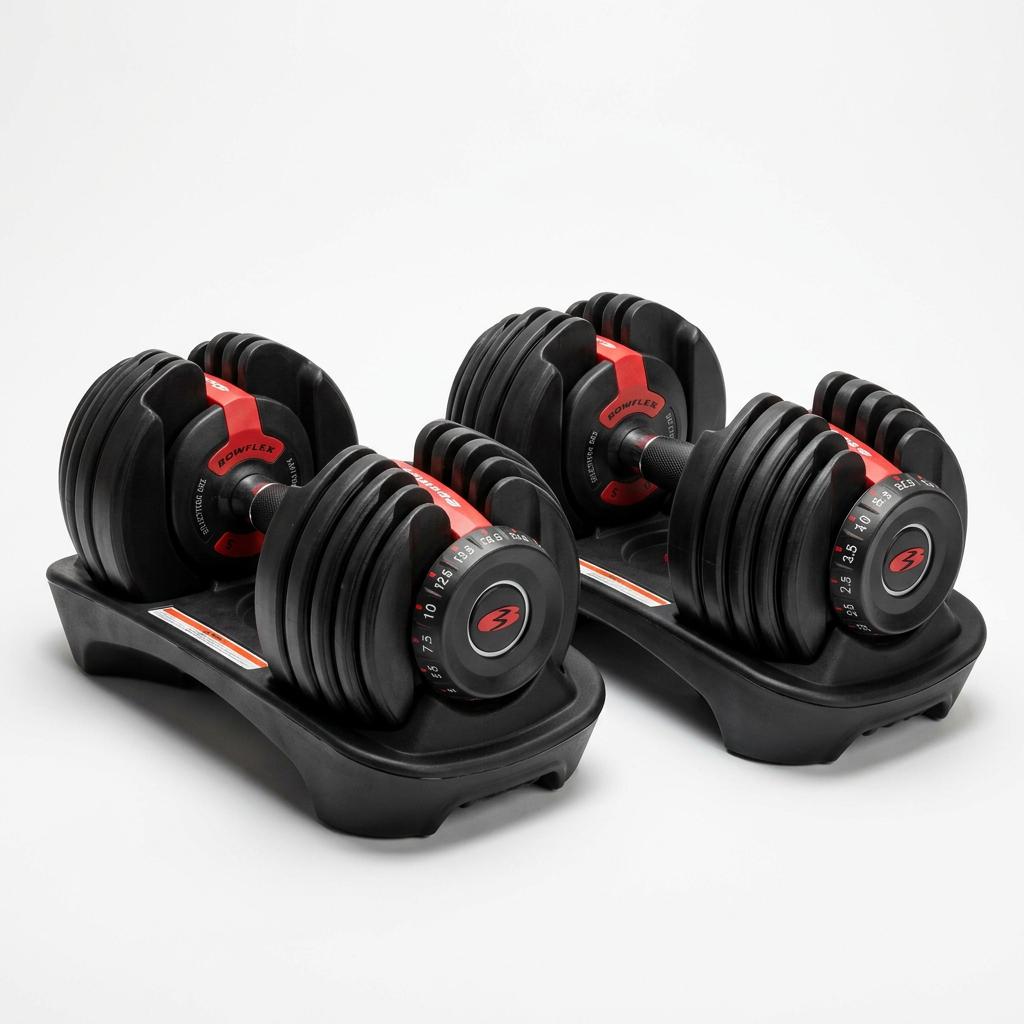 |
Bowflex SelectTech 552 | $349-$429 | Best Overall | Check Price |
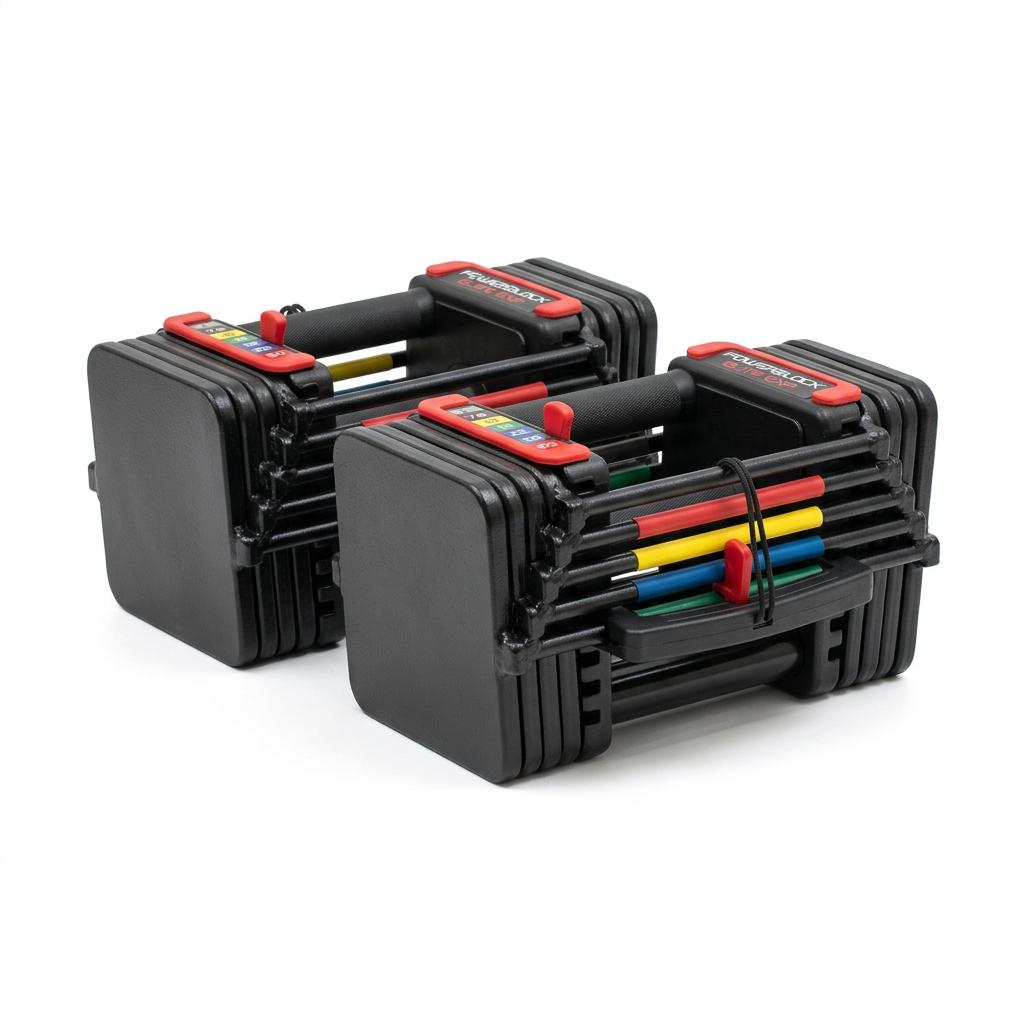 |
PowerBlock Elite EXP | $379-$449 | Most Compact | Check Price |
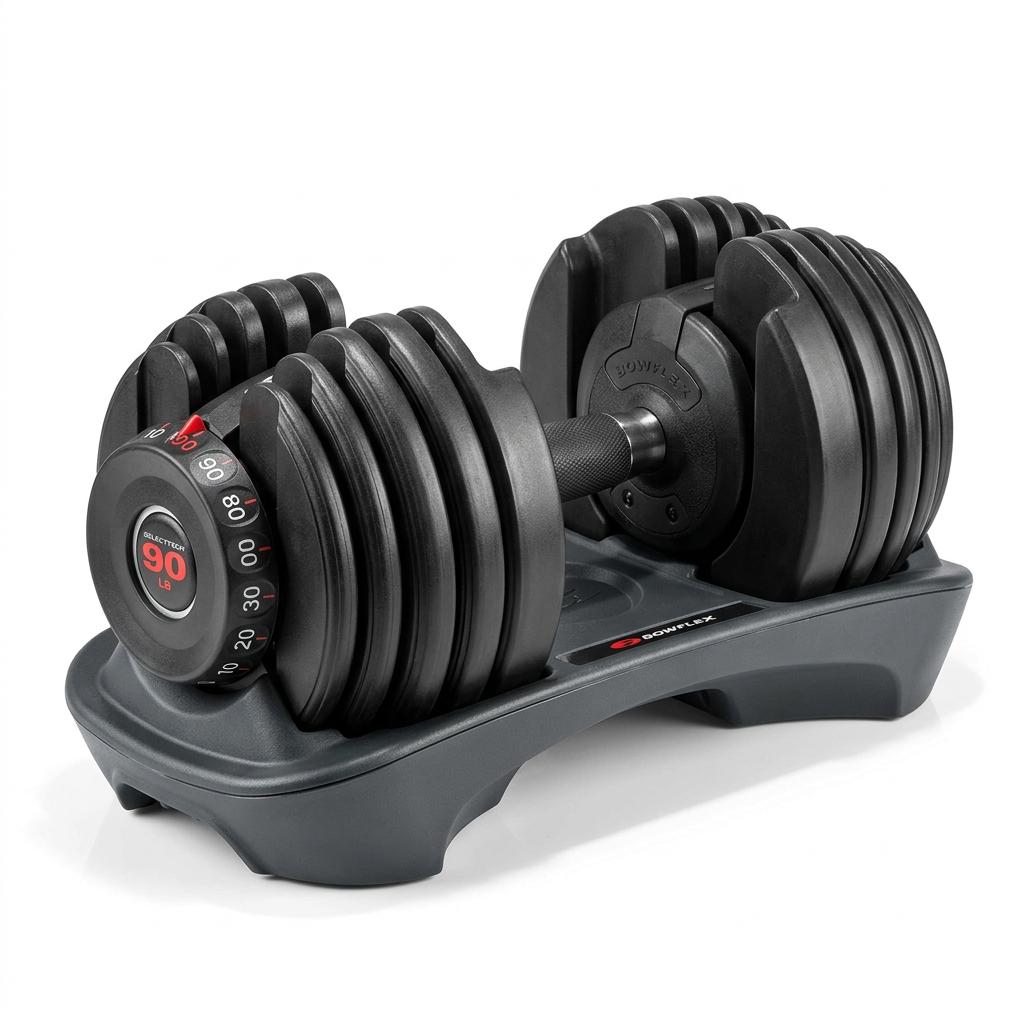 |
Bowflex SelectTech 1090 | $750-$850 | Premium Pick | Check Price |
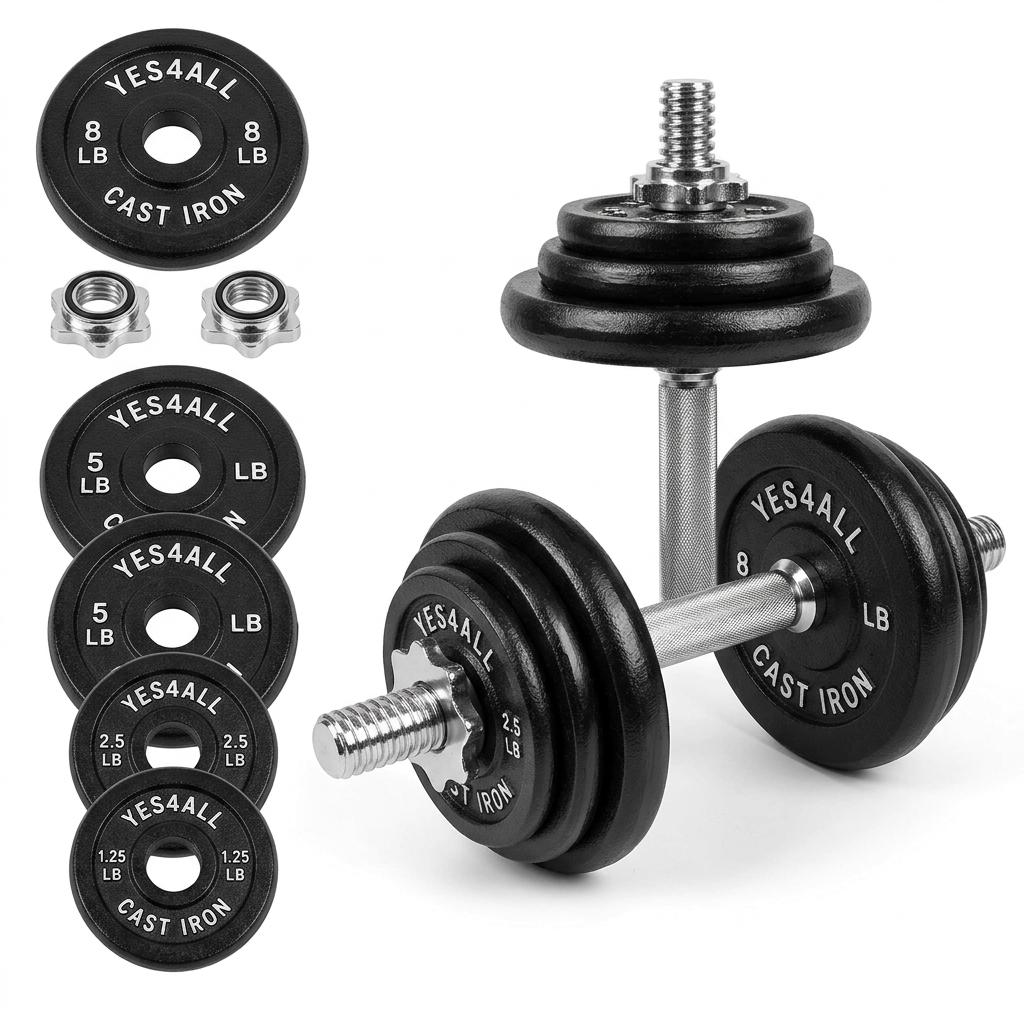 |
Yes4All Cast Iron Adjustable Dumbbells | $50-$150 | Best Budget | Check Price |
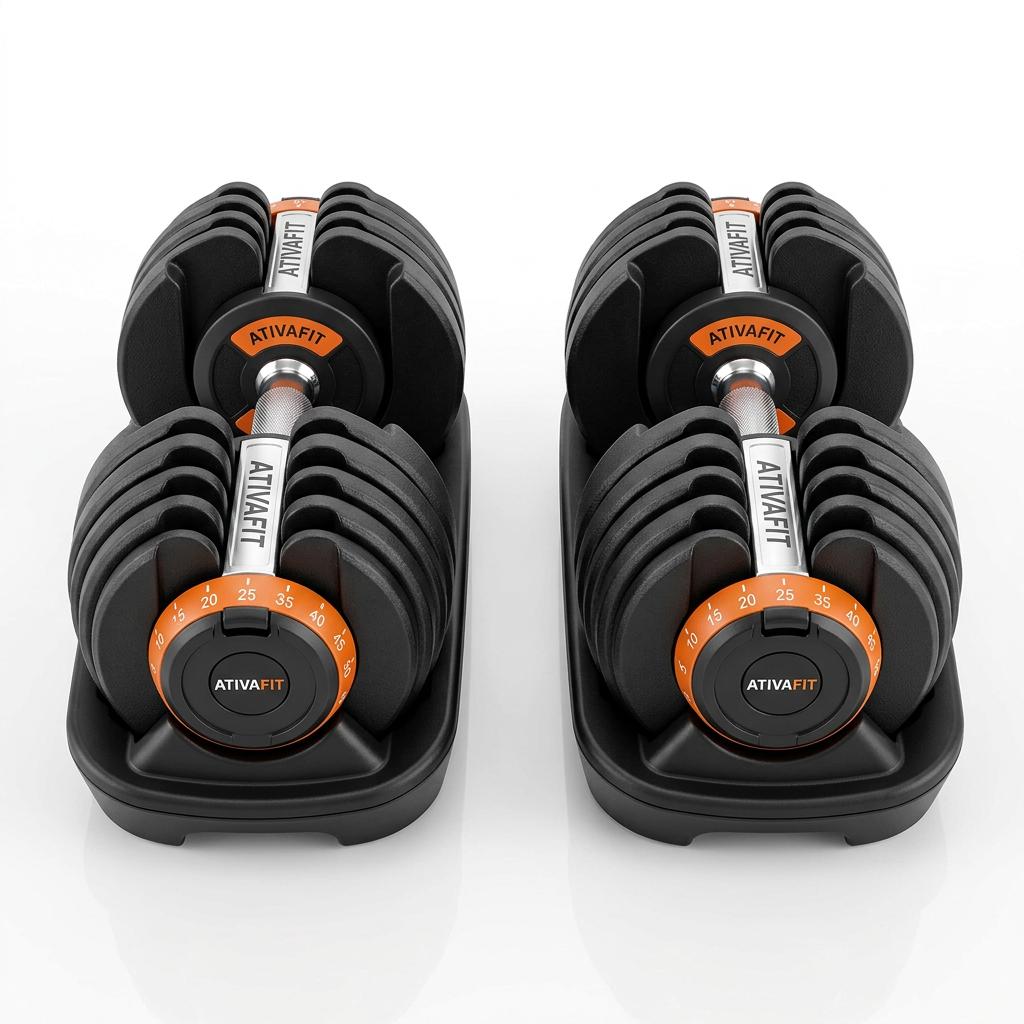 |
ATIVAFIT Adjustable Dumbbells | $199-$279 | Best for Beginners | Check Price |
The bestselling adjustable dumbbell for over 15 years, offering unmatched dial-adjust speed and a proven track record.
The most space-efficient adjustable dumbbell with all-steel construction and expandable weight range.
Heavy-duty dial dumbbells for advanced lifters who need 90 lb capacity without sacrificing adjustment speed.
The most affordable path to adjustable dumbbells using traditional cast iron spin-lock construction.
An affordable entry point into dial-select adjustable dumbbells with straightforward operation.
The Bowflex SelectTech 552 remains the gold standard for adjustable dumbbells with its intuitive dial system that lets you switch between 15 weight settings in seconds. The 5-52.5 lb range covers most upper-body exercises, and the 2.5 lb increments up to 25 lbs enable precise progressive overload. While the 52.5 lb ceiling is non-negotiable and the polymer dial housing may wear over time, the overall convenience, brand support, and strong resale value make this our top overall pick for most home gym users.
Check Price on Amazon
The PowerBlock Elite EXP earns our 'Most Compact' badge for its ingenious rectangular design that stores in just 1.5 sq ft of floor space. The welded steel frame and magnetic pin selector deliver exceptional durability backed by a best-in-class 5-year warranty. The expansion kits let you grow from 50 lbs to 90 lbs without replacing your initial investment. The unique shape has a brief learning curve but delivers a more traditional free-weight feel once adapted.
Check Price on Amazon
The Bowflex SelectTech 1090 occupies a specific niche: heavy adjustable dumbbells for space-constrained lifters who prioritize selection speed. The 10-90 lb range covers serious compound lifts like dumbbell bench press and Romanian deadlifts that the 552 simply cannot handle. The 5-lb-only increments can feel coarse for upper-body isolation work, and the extended length at full load requires some form adjustment. For lifters who genuinely need above-50-lb dumbbells, the 1090 is a defensible though expensive choice.
Check Price on Amazon
The Yes4All Cast Iron dumbbells represent the budget-friendly spin-lock approach, offering durable cast iron plates on a threaded chrome handle secured with spin-lock collars. Weight changes require manually adding and removing plates, which takes 20-40 seconds compared to 3 seconds for dial systems. However, the rock-solid durability, traditional dumbbell feel, and ability to add plates incrementally make this an excellent choice for budget buyers who do not change weight frequently between exercises.
Check Price on Amazon
ATIVAFIT delivers a dial-select adjustable dumbbell experience at roughly half the price of the Bowflex 552. The adjustment mechanism is intuitive, the storage trays keep things organized, and the weight range is sufficient for beginners and many intermediate lifters. The tradeoffs include a shorter warranty, less certain long-term parts availability, and a lower weight ceiling. For newcomers to strength training who want the convenience of dial adjustment without the premium price, ATIVAFIT offers solid value.
Check Price on Amazon