Amazon Basics vs Yes4All Fitness Equipment: Budget Gear Comparison
Comprehensive comparison of Amazon Basics vs Yes4All fitness equipment covering dumbbells, kettlebells, resistance bands...
Learn what qualifies as a true home gym essential versus optional equipment. Research-backed framework for prioritizing purchases based on training goals, space, and budget constraints.
Last updated: June 26, 2025 | Budget Builds Series
The term "essential" is among the most abused in fitness marketing. Equipment retailers classify nearly every product as essential, while minimalists argue that true fitness requires nothing more than floor space and determination. This guide defines a rigorous, evidence-based framework for distinguishing genuine home gym essentials from valuable-but-optional equipment — helping you prioritize purchases when budget, space, or both are constrained.
A home gym essential is defined by three simultaneous criteria:
| Criterion | Standard | Application |
|---|---|---|
| Functional necessity | The equipment enables movement patterns that cannot be replicated with equal effectiveness by bodyweight alone | Dumbbells enable loaded squatting for strong individuals; push-ups fail this test for advanced trainees |
| Frequency of use | Required in at least 70% of training sessions for the target population | Equipment used only in specialty workouts is not essential |
| Irreplaceability | No combination of owned or bodyweight alternatives produces equivalent stimulus | Unique equipment characteristics required for the target adaptation |
Equipment meeting all three criteria is essential. Equipment meeting two is high priority. Equipment meeting one is nice-to-have. Equipment meeting none is specialized/optional.
These items meet all three criteria for virtually every training goal and population. They form the foundation upon which all other equipment decisions are made.
Functional necessity: Provides cushioning for spinal and joint protection during floor work; prevents hand and foot slip during dynamic movements; protects flooring from sweat and equipment abrasion.
Frequency: Used in virtually every home training session, whether for yoga warm-ups, ab work, stretching, or plyometric cushioning.
Irreplaceability: Carpet is too compressible for balance work; hard flooring is too unforgiving for spinal contact positions. No true substitute exists.
Thickness guidance:
Recommended: — Gaiam Premium Thick Yoga Mat (6mm, non-slip, multiple colors)
Functional necessity: Enables pulling movements (rows, pull-aparts, face pulls) that are difficult to load effectively with bodyweight alone; provides accommodating resistance for joint-friendly loading; enables assistance and resistance for hundreds of movement variations.
Frequency: Used in warm-ups, strength training, mobility work, and rehabilitation across all training styles.
Irreplaceability: No bodyweight equivalent for horizontal pulling or lateral hip work. Water bottles or furniture cannot replicate band resistance profiles.
Recommended: Check price at Amazon — Fit Simplify Resistance Loop Set (5 bands, door anchor, handles, ankle straps)
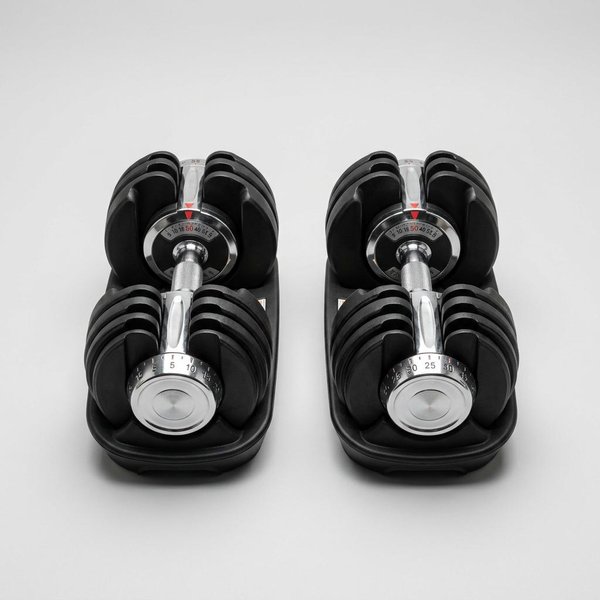
Functional necessity: Provides external loading for squat, hinge, push, pull, lunge, and carry movement patterns. Bodyweight training alone cannot provide sufficient load for strong individuals in lower-body movements.
Frequency: Used in 80%+ of resistance training sessions when available.
Irreplaceability: Backpacks filled with books, water jugs, and similar improvisations lack load granularity, grip security, and load progression precision. For systematic training, adjustable dumbbells are irreplaceable.
Weight range by training level:
Recommended: Check price at Amazon — Bowflex SelectTech 552 (5–52.5 lb, dial adjustment, space-efficient)
These items are essential for specific training goals but optional for others. Purchase based on your primary objective.
| Equipment | Essential For | Optional For | Why |
|---|---|---|---|
| Pull-up bar | Strength, hypertrophy, CrossFit | Yoga, senior fitness | Vertical pulling is fundamental movement pattern; irreplaceable stimulus |
| Adjustable bench | Bodybuilding, powerlifting, strength | Yoga, cardio-focused | Enables horizontal pressing, supported rows, hip thrusts; 15+ exercise unlock |
| Kettlebell | CrossFit, fat loss, posterior chain | Bodybuilding, yoga | Swing stimulus unique; but dumbbells can substitute for most movements |
| Jump rope | Cardio, CrossFit, fat loss | Powerlifting, yoga, senior | Highest calorie-per-minute portable tool; but running and walking substitute |
| Yoga blocks (2) | Yoga, seniors, beginners | Powerlifting, advanced strength | Alignment support; accessibility; reduces compensatory movement |
| Stationary bike or rower | Cardio, fat loss, endurance | Pure strength, powerlifting | Low-impact cardio; but walking, running, and jump rope substitute |
These items provide incremental benefit but fail the three-criteria test for essential status. Purchase after foundation and goal-specific tiers are complete.
| Equipment | Benefit | Why Not Essential | When to Purchase |
|---|---|---|---|
| Foam roller | Recovery; mobility | Stretching and movement achieve 70%+ of benefit | When training 4+ days/week |
| Weightlifting belt | Heavy lift safety | Only needed at 85%+ of one-rep max; many never reach this | When squatting/deadlifting 200+ lb |
| Lifting straps | Grip assistance | Grip strength should develop naturally first; straps create dependency | When grip limits back training |
| Battle ropes | Conditioning variety | Jump rope, running, and kettlebell swings provide equivalent stimulus | Space and budget surplus |
| Medicine ball | Throwing, rotational work | Limited exercise library; specialized populations benefit most | Sport-specific training |
| Suspension trainer (TRX) | Bodyweight leverage | Pull-up bar and bands provide 80%+ of functionality | Travel frequently; enjoy bodyweight focus |
| Plyo box | Jump training, step-ups | Chairs, stairs, and benches substitute | CrossFit or plyometric focus |
| Ab wheel or ab roller | Core anti-extension | Planks, dead bugs, and hanging knee raises provide equivalent stimulus | Core specialization |
| Wrist wraps | Joint support | Only needed for heavy pressing; most home trainees don't require | Bench press 150+ lb regularly |
| Goal | Tier 1 Essentials | Tier 2 Essentials | Total Entry Cost |
|---|---|---|---|
| General fitness/health | Mat, bands, dumbbells | Jump rope | $200–$395 |
| Muscle building/hypertrophy | Mat, bands, dumbbells | Bench, pull-up bar | $400–$700 |
| Fat loss | Mat, bands, dumbbells | Kettlebell, jump rope | $300–$550 |
| Strength/powerlifting | Mat, bands, dumbbells, barbell, rack | Bench, belt, fractional plates | $900–$1,800 |
| CrossFit/functional fitness | Mat, bands, dumbbells | Barbell, bumpers, rack, jump rope, kettlebell, pull-up bar | $1,200–$2,200 |
| Yoga/flexibility | Mat, blocks, strap, bolster | Blanket, wheel, meditation cushion | $100–$300 |
| Senior fitness | Mat, bands, light dumbbells | Stability ball, balance pad | $150–$350 |
When building a home gym from nothing with limited budget, follow this evidence-based purchase order:
Phase 1: Foundation ($50–$100)
Capability: Bodyweight training, mobility work, light resistance, rehabilitation
Phase 2: Loading ($150–$350)
Capability: Full-body resistance training with progressive overload
Phase 3: Goal-Specific Expansion ($100–$500)
Capability: Comprehensive goal-specific training
Phase 4: Optimization ($200+)
The concept of "essential" is context-dependent but not arbitrary. A home gym essential is equipment that enables fundamental movement patterns irreplaceably, is used in the majority of sessions, and has no practical substitute. For most trainees, this narrows to three items: an exercise mat, a resistance band set, and adjustable dumbbells. Everything else — benches, pull-up bars, kettlebells, cardio machines — is valuable but secondary, to be added based on specific training goals after the foundation is established.
True universal essentials cost: $200–$445 (mat + bands + dumbbells) Coverage: All fundamental movement patterns for 6–18 months of progressive training Upgrade path: Add goal-specific tier 2 items as budget and commitment confirm continued training
Affiliate disclosure: SnugGym participates in the Amazon Associates Program. Purchases made through links on this page may earn us a commission at no additional cost to you.