Outdoor Home Workout Equipment: Portable Gear for Balcony & Patio Training
An outdoor workout space — whether a balcony, patio, small deck, or courtyard — offers advantages that indoor gyms cannot replicate: fresh air, natural light, variable temperature exposure (which may enhance adaptation), and the psychological benefit of changing your environment. For apartment dwellers and those with limited indoor space, an outdoor workout area can effectively double available training space.
However, outdoor training introduces constraints: weather exposure, weight limits (for balconies), storage limitations, and noise considerations for shared outdoor spaces. This guide addresses equipment selection, setup considerations, and workout design specifically for compact outdoor training environments.
Assessing Your Outdoor Space
Before selecting equipment, evaluate your specific space against these criteria:
Balconies
| Factor |
Assessment |
Implications |
| Weight capacity |
Most residential balconies support 50–100 lb per square foot |
Total equipment weight must stay within structural limits |
| Floor surface |
Concrete, tile, wood decking, or composite |
Determines mat needs and equipment stability |
| Weather exposure |
Covered vs. uncovered; wind exposure |
Determines storage and material durability requirements |
| Railings |
Height and strength |
Safety during dynamic movement; potential anchor points |
| Noise to neighbors below |
Footstep and equipment impact |
Matting essential; jumping exercises may be problematic |
| Dimensions |
Typical apartment balcony: 4×6 ft to 6×10 ft |
Determines available movement space |
Key safety rule: Check your lease or building regulations regarding balcony use for exercise. Some buildings prohibit equipment storage or activity on balconies. Weight limits should be respected — a loaded barbell for deadlifts can exceed 300 lb concentrated on a small footprint.
Patios and Ground-Level Spaces
Patios eliminate the weight capacity and noise-to-below concerns of balconies but introduce others:
- Surface: Concrete patios are hard and unforgiving; grass or paver surfaces may be uneven
- Weather: Full sun exposure affects both equipment longevity and workout comfort
- Storage: Equipment may need to be moved indoors or covered when not in use
- Security: Ground-level equipment is more accessible to theft
Equipment Selection: Portable and Weather-Resistant
The ideal outdoor workout equipment is: lightweight (for portability), weather-resistant (for durability), compact (for storage), and versatile (to maximize exercise options in limited space).
Tier 1: Essential Outdoor Equipment
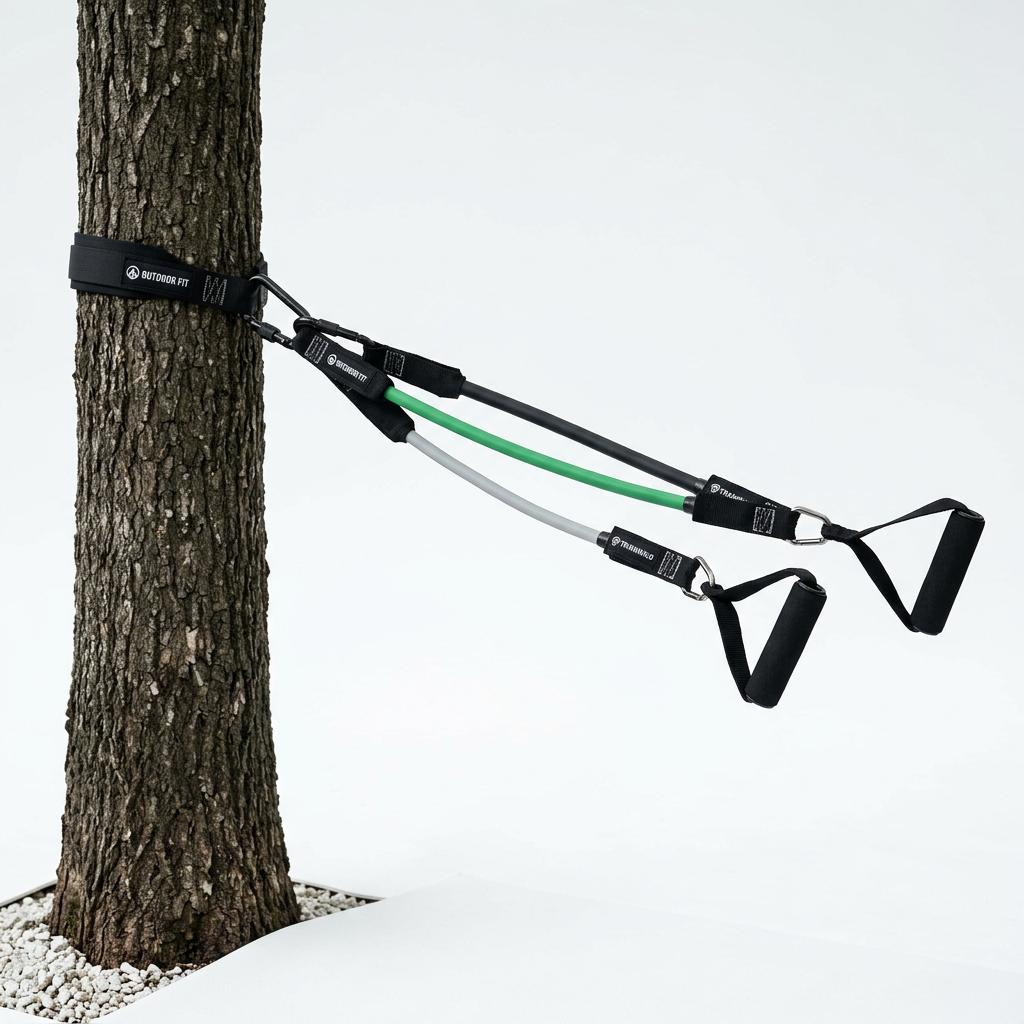
Resistance Bands
Resistance bands are arguably the single best outdoor workout tool. They weigh ounces, store in a drawer, cost little, and enable full-body training.
Outdoor-specific considerations:
- Avoid latex bands in direct sunlight — UV degrades latex rapidly. Use TPE (thermoplastic elastomer) bands for sunny spaces, or store bands indoors.
- Door anchors won't work on balconies without suitable anchor points. Loop bands and handled tube bands with independent anchoring are more versatile.
- Bands don't bounce or roll on uneven surfaces — an advantage over dumbbells on sloped balconies.
Recommended options:
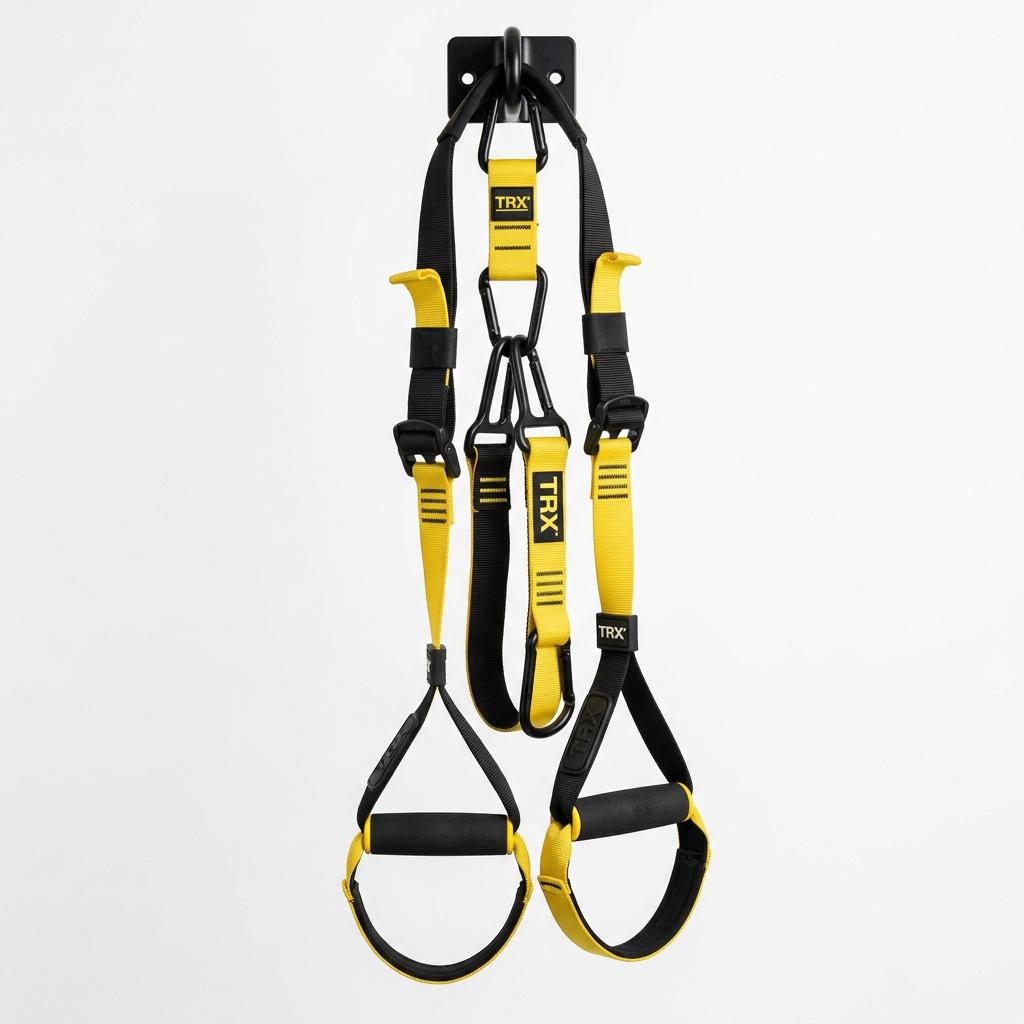
Suspension Trainer (TRX-Style)
Suspension trainers anchor to a fixed point and use bodyweight for resistance. For outdoor use, they require only a sturdy anchor — a solid balcony beam, sturdy tree branch, or dedicated wall mount.
Outdoor-specific considerations:
- Ensure the anchor point is structurally sound — a railing may not be adequate
- The anchor strap can wear from rubbing on rough surfaces; inspect regularly
- Body position can be adjusted to increase or decrease difficulty
- Completely silent operation — no neighbor noise concerns
Anchor options:
- Over-door anchor (for moving indoors)
- Wall/ceiling mount (permanent installation, check lease/building rules)
- Suspension anchor strap (wraps around sturdy posts/beams)
Yoga Mat (Outdoor-Specific)
Standard PVC yoga mats become slippery when wet and degrade in UV light. For outdoor use:
- Cork yoga mats: Naturally antimicrobial, grip improves with moisture, UV-resistant
- Natural rubber mats with closed-cell construction: Better outdoor durability than PVC
- Thickness: 5–6mm provides adequate cushioning on hard surfaces without instability
Recommended:
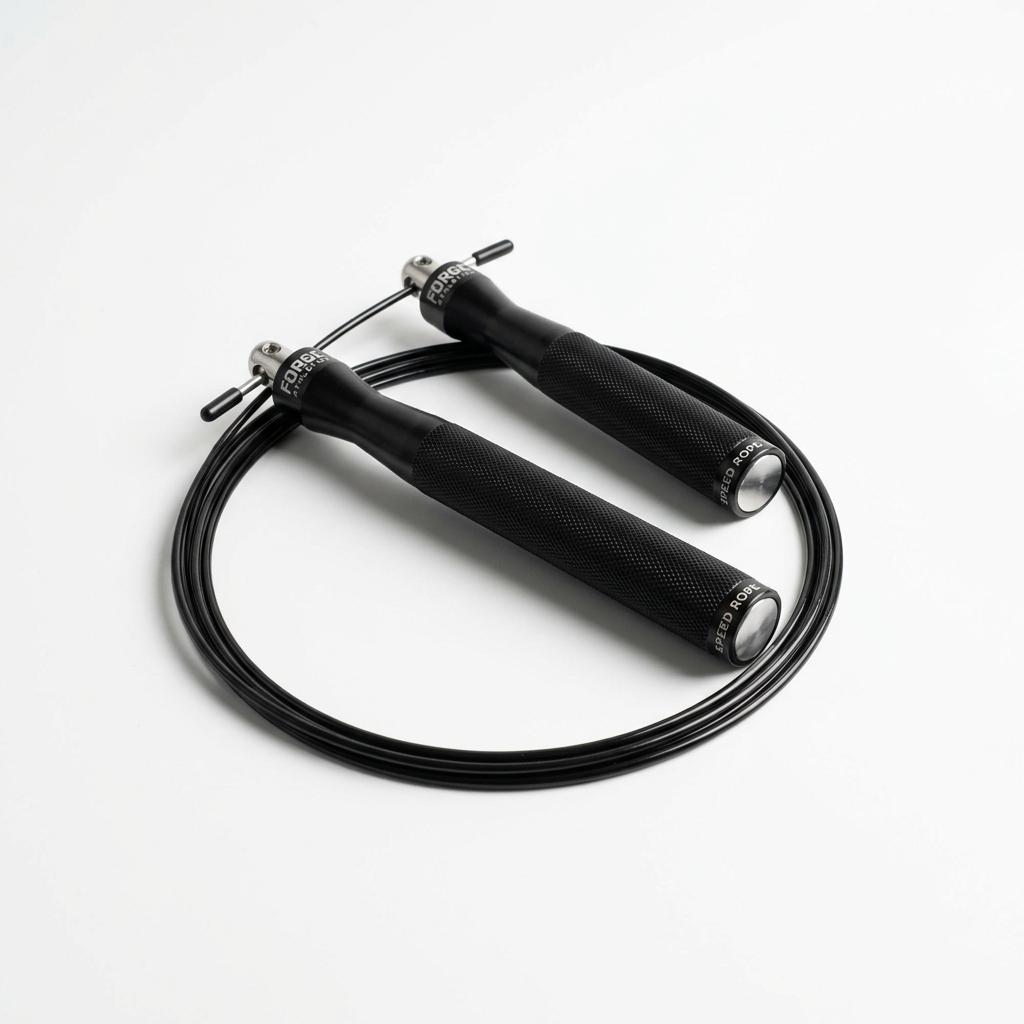
Jump Rope
The most space-efficient cardio tool available. For outdoor use on hard surfaces:
- PVC or beaded ropes: Better durability on concrete and rough surfaces than leather
- Weighted jump ropes (1–2 lb): Provide both cardio and upper body engagement
- Space requirement: A 6×6 foot area with 1 foot of clearance above head
Noise consideration: Jumping rope on a balcony may transmit noise to neighbors below. Use an exercise mat underneath to dampen impact, or jump rope on ground-level patios only.
Tier 2: Valuable Additions
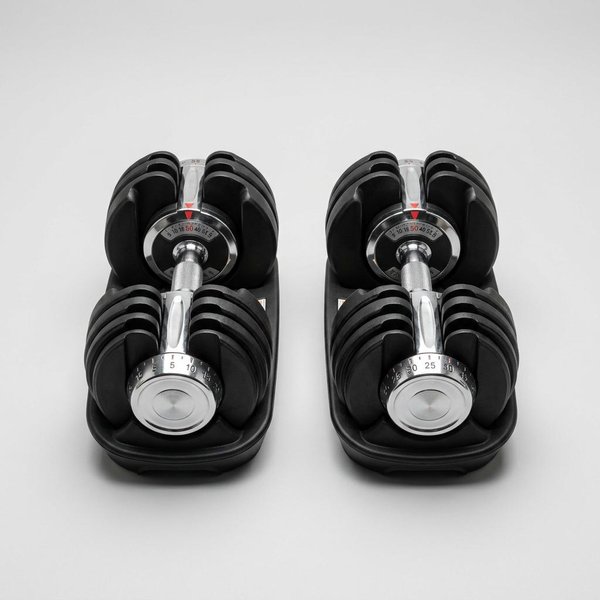
Adjustable Dumbbells
A single pair of adjustable dumbbells replaces an entire rack. For outdoor use:
- Selectorized systems (Bowflex, PowerBlock): Quick weight changes; enclosed mechanisms are more weather-resistant
- Rubber-coated or urethane plates: Better outdoor durability than raw iron
- Storage: Must be brought indoors or stored in a weatherproof container
Weight recommendation: A set adjustable from 5–50 lb covers most users for most exercises.
Kettlebells
Compact, versatile, and durable. Cast iron kettlebells are essentially weatherproof — a significant outdoor advantage.
- Cast iron: Virtually indestructible; surface rust is cosmetic and addressable
- Vinyl-coated: Adds some protection and reduces floor contact noise
- Weight range: A single 15–25 lb kettlebell enables swings, goblet squats, Turkish get-ups, rows, and presses
Storage note: Cast iron can rust if stored uncovered in rain. A light oil coat or covered storage solves this.
Pull-Up Bar (Doorway or Wall-Mounted)
For balconies or patios adjacent to an exterior wall, a wall-mounted pull-up bar provides vertical pulling capacity that bands can't fully replicate.
- Wall-mounted: Requires structural mounting into studs or masonry; check building rules
- Doorway: Portable option for moving between indoor and outdoor door frames
- Telescoping: Some models extend between structural elements without permanent mounting
Safety: Wall-mounted bars must be installed into structural members, not just drywall or siding. If you can't confirm structural attachment, don't install.
Tier 3: Weather-Resistant Storage Solutions
If equipment must remain outdoors:
| Solution |
Capacity |
Weather Protection |
Cost Range |
| Deck box (weatherproof) |
Medium — bands, ropes, small weights |
Good — UV and rain resistant |
$50–$150 |
| Equipment cover (tarp style) |
Covers rack or bench |
Moderate — rain, limited UV |
$20–$50 |
| Galvanized steel storage cabinet |
Large — full gym equipment |
Excellent — fully enclosed |
$150–$400 |
| Indoor/outdoor rolling cart |
Small — bands, mats, accessories |
Minimal — convenience focused |
$30–$80 |
Table: Outdoor equipment storage options
- Check price at Amazon — Weatherproof Deck Boxes for Equipment Storage
Setup Considerations by Space Type
Small Balcony (4×6 ft or smaller)
Equipment list:
- Resistance bands (set of 3–5)
- Yoga mat (can be rolled and stored indoors)
- Suspension trainer (if suitable anchor exists)
- Foam floor tiles (interlocking, for cushioning and noise reduction)
Workout approach:
- Band-based strength training
- Yoga and mobility flows
- Isometric holds
- No jumping or high-impact movements
Medium Balcony (6×8 ft to 6×10 ft)
Equipment additions:
- Jump rope (with mat underneath)
- Light dumbbells or kettlebell (1–2 items)
- Balance pad or board
Workout approach:
- Everything from small balcony list, plus:
- Light dumbbell circuits
- Jump rope cardio intervals (with noise-mitigating mat)
- Balance and single-leg work
Patio or Ground-Level Space
Expanded options:
- Multiple kettlebells or full adjustable dumbbell set
- Pull-up bar (if wall-mounting is feasible)
- Plyo box or step platform
- Larger cardio equipment (exercise bike, rowing machine) if covered storage available
Workout approach:
- Full range of strength, cardio, and mobility work
- Plyometric movements acceptable (no neighbors below)
- Heavier lifting feasible with proper flooring
Weather Adaptations
Hot Weather
- Exercise early morning or evening; avoid midday heat
- Hydration is critical — keep water accessible
- UV protection: hat, sunscreen, UV-blocking sunglasses
- Equipment surfaces (kettlebells, metal bars) can become hot enough to burn — check before gripping
Cold Weather
- Extended warm-up (10–15 minutes) in cold temperatures
- Layer clothing; remove as body temperature rises
- Equipment may be cold and less comfortable to grip — gloves help
- Some materials (rubber bands) become stiffer in cold — warm them in hands before stretching fully
Rain and Humidity
- Never exercise in active rain on balconies — slippery surfaces create fall risk
- Post-rain: ensure surfaces are dry before beginning
- Humidity accelerates equipment corrosion — dry equipment thoroughly and apply light oil to metal surfaces if stored outdoors
- Store bands and fabric items indoors to prevent mildew
Wind
- High winds make balance exercises unsafe on exposed balconies
- Secure all equipment — a light resistance band can become a projectile
- Consider wind direction if on a high floor — it affects perceived temperature and comfort
Sample Outdoor Balcony Workout (20 Minutes, No Equipment Except Bands)
| Exercise |
Reps/Duration |
Notes |
| Band squats |
15 |
Band under feet, held at shoulders |
| Band rows |
12 each arm |
Anchor band to sturdy railing post |
| Push-ups |
10–15 |
On yoga mat; modify on knees if needed |
| Band overhead press |
12 |
Stand on band, press overhead |
| Plank |
30 seconds |
On mat |
| Band lateral walks |
10 each direction |
Band around ankles |
| Glute bridge |
15 |
Bodyweight on mat |
| Band pallof press |
10 each side |
Anti-rotation core work |
Complete 2–3 rounds. Rest 30 seconds between exercises. Entire routine is silent — suitable for any hour.
Frequently Asked Questions
Can I do jumping exercises on my balcony? Only on ground-floor balconies or with explicit confirmation of structural capacity. Jumping creates significant impact force. Most apartment balconies are not designed for dynamic loading. Use caution and prioritize neighbor relations.
Will resistance bands degrade outdoors? Latex bands degrade rapidly in UV light — months instead of years. TPE (synthetic) bands resist UV better but still should not be stored in direct sun. Fabric loop bands are the most UV-resistant option. Best practice: store all bands indoors.
Can I leave a kettlebell outside? Cast iron kettlebells will develop surface rust if exposed to rain, but structural integrity is not immediately compromised. Wipe dry after use, apply a thin coat of oil periodically, and cover or store indoors for best longevity. Never leave rubber-coated equipment in direct sun — the coating degrades.
What's the minimum space needed for an effective outdoor workout? A 4×6 foot balcony is sufficient for band work, bodyweight exercises, yoga, and stretching. Cardio requires more space — a jump rope needs 6×6 feet minimum with overhead clearance. If your balcony is smaller than 4×6 feet, focus on resistance band and bodyweight work, or consider a nearby park for cardio.
Is outdoor exercise better than indoor? From a purely physiological standpoint, the exercise stimulus is what matters — location is secondary. However, research suggests outdoor exercise may provide additional psychological benefits: improved mood, reduced perceived exertion, and greater adherence. If outdoor space is available and weather permits, it can enhance the overall experience without compromising effectiveness.
As an Amazon Associate we earn from qualifying purchases. Product links on this page include our affiliate tag — purchases made through these links support our research at no additional cost to you.
Last updated: January 2025. Equipment recommendations based on manufacturer specifications for weather resistance, material science for outdoor durability, and structural engineering principles for residential balcony loading. Always verify your specific balcony's weight capacity and building regulations before installing equipment.
 Fit Simplify Resistance B
 WOD Nation Speed Jump Rop
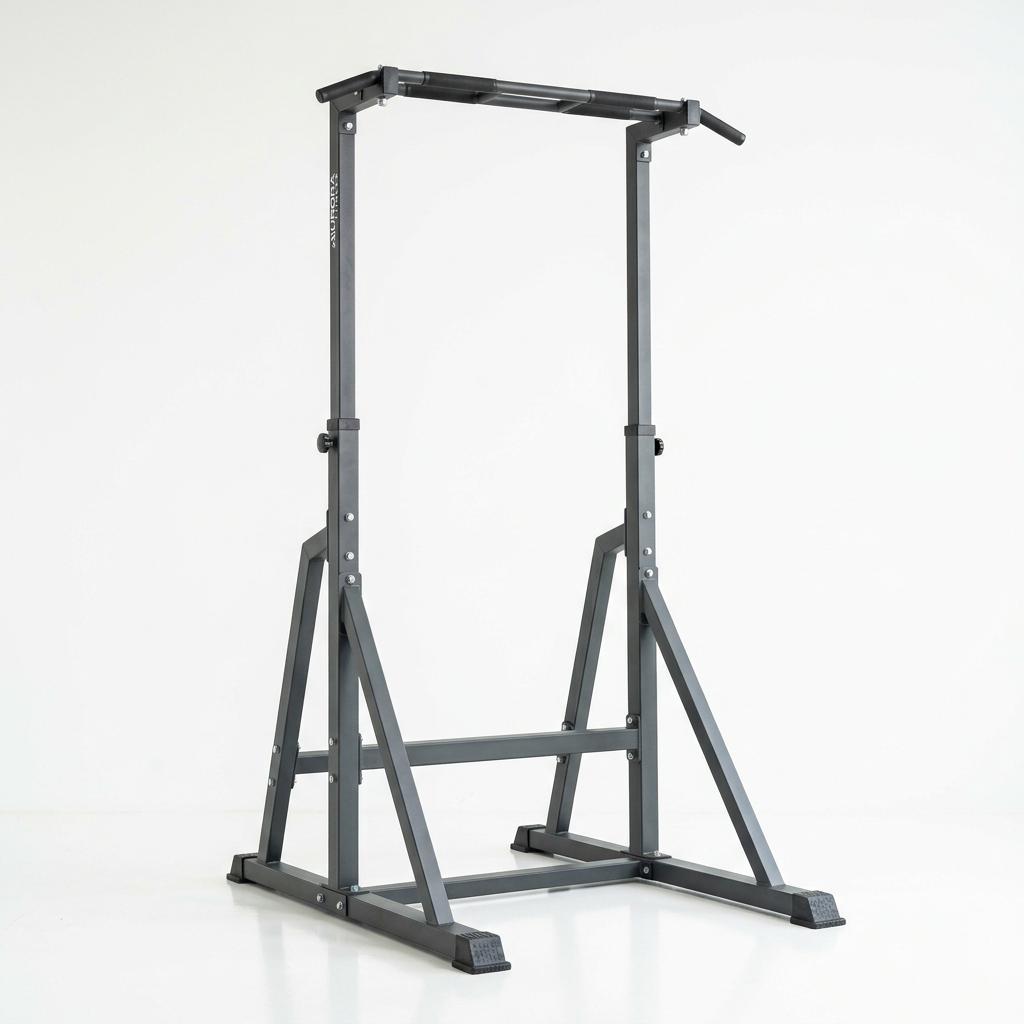 Perfect Fitness Multi-Gym
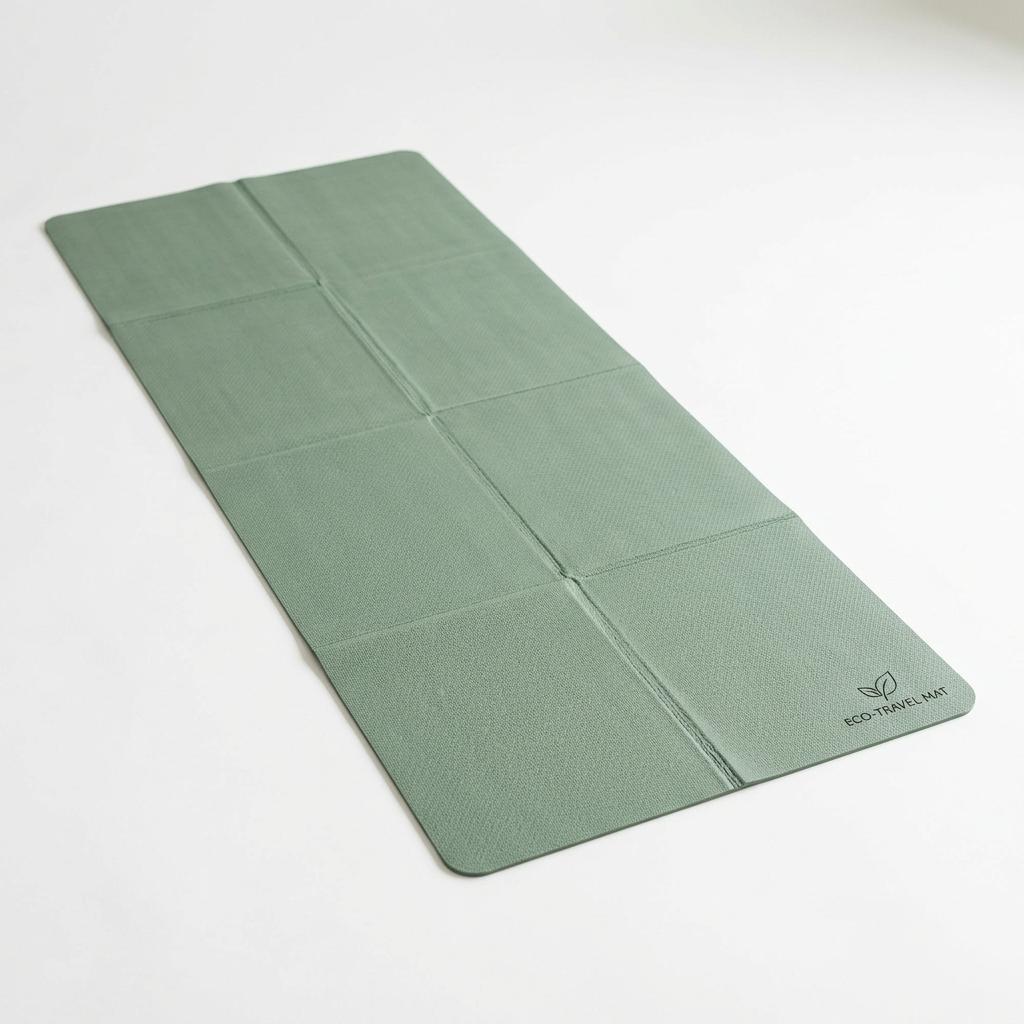 Gaiam Folding Travel Yoga