Amazon Basics vs Yes4All Fitness Equipment: Budget Gear Comparison
Comprehensive comparison of Amazon Basics vs Yes4All fitness equipment covering dumbbells, kettlebells, resistance bands...
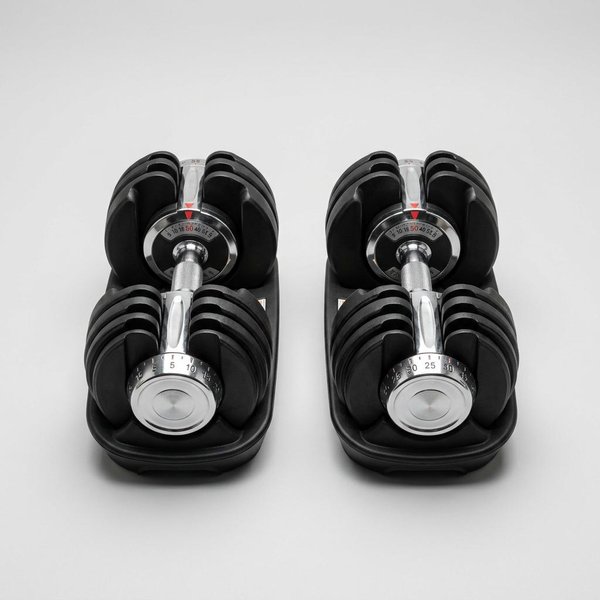
Research-backed guide to home gym for seniors guide for small-space home gyms.
This post contains affiliate links. As an Amazon Associate, SnugGym earns from qualifying purchases. All opinions remain our own.
The case for home fitness equipment among adults over 65 is overwhelmingly supported by medical evidence. Research published in the Journal of the American Geriatrics Society demonstrates that progressive resistance training in older adults produces significant improvements in muscle strength (average 25–35% increase over 6 months), functional capacity (gait speed, chair rise ability, stair climbing), bone mineral density, insulin sensitivity, and depression scores. The CDC's physical activity guidelines explicitly recommend that adults 65 and older engage in muscle-strengthening activities at least two days per week — guidance that remains unmet by approximately 80% of this population.
Home gyms offer particular advantages for older adults: eliminating transportation barriers, providing scheduling flexibility, allowing exercise at self-determined intensity without social comparison, and creating a controlled environment where fall risks can be minimized. However, equipment selection for seniors requires fundamentally different prioritization than for younger populations — emphasizing safety, accessibility, joint protection, and functional movement patterns over performance metrics.
This guide provides evidence-based recommendations for creating a senior-appropriate home gym, with equipment selections and programming strategies specifically designed for adults aged 60 and above.
Before purchasing equipment or beginning any exercise program, adults over 60 (earlier for those with chronic conditions) should obtain medical clearance. This evaluation should specifically address:
Never skip this step. Research from Circulation indicates that exercise-related cardiac events, while rare, occur predominantly in individuals with undiagnosed cardiovascular disease who begin vigorous activity without medical assessment.
Falls represent the leading cause of injury-related death among adults over 65. The home gym environment must be engineered to minimize this risk:
Flooring requirements:
Environmental controls:
Emergency preparedness:
All equipment must meet these criteria:
Resistance bands are the single most important piece of equipment for senior home gyms. They provide variable resistance that matches strength curves, eliminate the inertia and impact of free weights, enable exercises in any plane of motion, and are inherently safe (no risk of being trapped under weight or dropping heavy objects).
Recommended Set: Serious Steel Resistance Band Set — includes multiple resistance levels enabling progression from minimal to substantial resistance.
Key advantages for seniors:
Balance decline begins around age 40 and accelerates after 60. Equipment that challenges and improves balance is essential:
| Equipment | Purpose | Cost Range |
|---|---|---|
| Balance pad | Unstable surface for standing exercises | $20–$40 |
| Bosu ball | Dynamic balance, core stability | $80–$150 |
| Tai Chi balance board | Front-to-back and side-to-side balance | $20–$40 |
| Ankle/wrist weights | Added resistance for balance exercises | $15–$30 |
For seniors with mobility limitations, significant balance concerns, or during post-surgical rehabilitation, chair-based exercise provides effective training without standing requirements:
Essential seated equipment:
For seniors able to stand and walk safely, low-impact cardio equipment supports heart health without the joint stress of running or jumping:
Recumbent Exercise Bike — The seated, reclined position provides back support, eliminates balance requirements, and allows exercise at self-determined intensity. The Schwinn 270 Recumbent Bike ($500–$700) offers low step-through height, large readable display, and heart rate monitoring.
Elliptical Trainer — Weight-bearing but low-impact, ellipticals improve bone density while protecting joints. The Horizon EX-59 ($500–$600) provides 18-inch stride, easy-mount design, and stable frame.
Walking Treadmill — For seniors with adequate balance, a treadmill with safety rails enables indoor walking regardless of weather. Essential features: emergency stop clip, low minimum speed (0.5 mph), side rails for support, large stop button.
Maintaining range of motion prevents the functional decline that leads to dependence. Prioritize daily (not just training days):
| Exercise | Target Areas | Equipment |
|---|---|---|
| Seated spinal rotation | Thoracic spine, lower back | Chair |
| Standing calf stretch | Ankles, calves | Wall or counter for support |
| Hip flexor stretch | Hips, quadriceps | Chair for balance support |
| Shoulder pendulum | Shoulder mobility | Light dumbbell or bodyweight |
| Ankle circles | Ankle mobility, circulation | Chair or standing with support |
| Cat-cow stretch | Spinal flexion/extension | Floor mat or bed |
| Neck rotations | Cervical mobility | Chair |
Resistance training should target all major muscle groups 2–3 times per week:
Upper Body:
Lower Body:
Core:
Balance-specific training should occur 3+ times per week, integrated into strength work or performed separately:
| Progression Level | Exercise | Support Required |
|---|---|---|
| Level 1 | Tandem stance (one foot in front of other) | Counter or chair back |
| Level 2 | Single-leg stand (10–30 seconds) | Finger-touch on counter |
| Level 3 | Single-leg stand with eyes closed | Counter nearby |
| Level 4 | Tandem walking (heel-to-toe) | Wall or railing |
| Level 5 | Single-leg reach (tap object at varying distances) | Counter nearby |
| Level 6 | Balance pad standing exercises | Wall or counter initially |
Never progress to the next level until the current level is held comfortably for 30 seconds.
Rate of Perceived Exertion (RPE) Scale for Seniors:
| RPE | Description | Application |
|---|---|---|
| 1–2 | Very light | Warm-up, cool-down |
| 3–4 | Light | Technique practice, recovery days |
| 5–6 | Moderate | Primary training intensity — can maintain conversation |
| 7–8 | Somewhat hard | Occasional challenge sets — short phrases only |
| 9–10 | Hard | Rare for seniors — physician-guided only |
Seniors should train primarily at RPE 5–6, occasionally venturing to 7–8 for specific goals under supervision. Training above RPE 8 requires medical clearance and typically professional supervision.
Progression should be conservative compared to younger populations:
The ability to rise from a seated position without using hands predicts mortality risk more accurately than many medical tests. Every senior home gym program should include progressive sit-to-stand training:
Progression:
Target: 10 unassisted repetitions from standard chair height
| Item | Purpose | Estimated Cost |
|---|---|---|
| Resistance band set (5 levels) | Full-body strength | $30–$60 |
| Balance pad | Balance training | $20–$40 |
| Exercise mat | Floor exercises | $20–$30 |
| Sturdy chair | Seated exercises, sit-to-stand | $50–$100 (or existing) |
| Light dumbbells (3, 5, 8 lb pairs) | Arm exercises | $40–$80 |
| Foam roller | Self-massage, mobility | $20–$40 |
| Pedal exerciser | Seated cardio | $30–$60 |
All essential items plus:
| Item | Purpose | Estimated Cost |
|---|---|---|
| Recumbent exercise bike | Cardiovascular training | $300–$500 |
| Ankle/wrist weights | Added resistance | $20–$40 |
| Adjustable dumbbells | Progressive loading | $100–$200 |
| Yoga blocks and strap | Flexibility support | $20–$30 |
All enhanced items plus:
| Item | Purpose | Estimated Cost |
|---|---|---|
| Elliptical or treadmill | Weight-bearing cardio | $400–$700 |
| Bosu balance trainer | Advanced balance | $100–$150 |
| Full-length mirror | Form feedback | $50–$100 |
| Rubber flooring (6×8 ft) | Safety, equipment protection | $60–$100 |
Seniors should immediately cease exercise and seek medical evaluation if experiencing:
Q: Is it too late to start exercising at 70, 80, or older? A: Absolutely not. Research demonstrates that even adults in their 90s experience significant strength and functional gains from beginning resistance training. The rate of improvement may be slower than in younger individuals, but the relative benefits are often greater due to lower baseline function.
Q: Should seniors do high-intensity interval training (HIIT)? A: Under medical supervision and with gradual progression, modified HIIT can be appropriate and beneficial for healthy seniors. However, the risk-benefit ratio favors moderate-intensity continuous training for most older adults, particularly beginners.
Q: Can strength training worsen arthritis? A: No — properly executed strength training is one of the most effective non-pharmaceutical interventions for osteoarthritis. Strengthening muscles surrounding arthritic joints reduces joint stress and improves function. Work within pain-free ranges and consider aquatic exercise during flare-ups.
Q: How do I know if my parent is exercising safely at home? A: Consider hiring a certified personal trainer specializing in senior fitness for 2–3 initial sessions to establish safe technique and appropriate programming. Regular check-ins, visible emergency protocols, and medical alert devices provide additional safety layers.
Last updated: April 2026. Consult a physician before beginning any exercise program over age 60.