Amazon Basics vs Yes4All Fitness Equipment: Budget Gear Comparison
Comprehensive comparison of Amazon Basics vs Yes4All fitness equipment covering dumbbells, kettlebells, resistance bands...
SnugGym is an Amazon Associate. We earn from qualifying purchases at no extra cost to you. Learn more
Our research-backed comparison of the top workout mirrors for home gyms, covering smart fitness mirrors, wall-mounted gym mirrors, and budget installation options.
Our independent analysis compares four leading workout mirror solutions for home gyms, evaluating display quality, class content, form feedback accuracy, and value to help you decide whether a smart fitness mirror belongs in your training space.
Workout mirrors serve two distinct functions in home gyms. Traditional gym mirrors provide visual feedback for form correction, spatial awareness, and the psychological expansion of compact spaces. Smart fitness mirrors add interactive coaching, live and on-demand classes, and performance tracking to that reflective surface — essentially turning a wall-mounted mirror into a personal training portal.
We researched four solutions spanning both categories: two smart fitness mirrors and two traditional gym mirror installation approaches. The question we sought to answer: does the $1,000-1,500 smart mirror premium deliver training value beyond a $200 traditional mirror setup?
| Feature | Tonal Mirror | Mirror (lululemon) | Wall-Mounted Gym Mirror (DIY) | Mirrored Acrylic Sheets |
|---|---|---|---|---|
| Price Range | $3,000–$4,000 (with accessories) | $1,000–$1,500 | $150–$400 | $50–$150 |
| Type | Smart strength mirror | Smart fitness mirror | Traditional glass mirror | Lightweight acrylic |
| Display | Embedded touchscreen | Embedded touchscreen | None | None |
| Workout Modes | Strength, HIIT, cardio, yoga | Yoga, cardio, boxing, strength, meditation | Form feedback only | Form feedback only |
| Form Feedback | AI camera, rep counting | Camera-based, limited | Self-visual | Self-visual |
| Live Classes | No (on-demand only) | Yes (live + on-demand) | N/A | N/A |
| Installation | Wall-mounted, professional | Wall-mounted or stand | Wall-mounted or leaning | Wall-mounted, adhesive |
| Subscription | $49–$60/month (required) | $38/month (required) | None | None |
| Best For | Strength-focused smart training | Variety seekers, boutique fitness | Budget form correction | Renter-friendly, ultra-light |
Table based on manufacturer specifications and published reviews. Prices reflect typical US retail as of early 2026.
Our assessment prioritizes attributes relevant to home gym owners:
Tonal occupies a unique category: it is a wall-mounted cable machine with an integrated display that happens to include mirror functionality during non-workout periods. The 24-inch HD display shows exercise demonstrations, real-time data, and instructor guidance while electromagnetic resistance arms extend from the sides for actual strength training.
Why it leads for strength training: Tonal's electromagnetic resistance generates up to 200 pounds of load (100 pounds per arm) with dynamic modes that free weights cannot replicate. Eccentric Mode increases resistance during the lowering phase, matching the force-velocity curve of muscle contraction. Chains Mode simulates accommodating resistance popularized by Westside Barbell. Spotter Mode automatically reduces weight when you struggle — a safety feature impossible with iron.
The AI camera tracks movement patterns and counts reps with approximately 90% accuracy for standard movements (squats, presses, rows, lunges). It misses occasionally on complex compound movements but provides reliable data for progressive overload tracking. The Strength Score algorithm estimates your one-rep maximum across movement patterns and tracks improvement over time.
The mirror function activates when the display sleeps — a functional mirror for form checks during non-Tonal exercises, though smaller than dedicated gym mirrors.
Critical limitations: The $49-60/month subscription is mandatory — without it, Tonal functions as a very expensive wall decoration. Installation requires 7 feet of wall width, standard residential framing (16-inch studs), and a nearby electrical outlet. The $3,000-4,000 hardware cost plus subscription creates a significant financial commitment. At 21.5 x 50.9 x 5.25 inches and roughly 100 pounds, it is not renter-friendly.
Space consideration: When the resistance arms extend, Tonal requires approximately 7 x 4 feet of clear floor space. This is manageable in dedicated rooms but challenging in compact apartment gyms.
The Mirror (now owned by lululemon) is what most people picture when they hear "smart fitness mirror" — a sleek, nearly invisible reflective surface that transforms into an interactive display during workouts. At 52 x 22 x 1.4 inches and 70 pounds, it mounts more discreetly than Tonal and requires no floor space.
Where it excels: The class ecosystem spans 50+ workout categories including yoga, HIIT, boxing, barre, Pilates, strength, dance, and meditation. The variety genuinely exceeds what most users would access through a single boutique studio membership. Live classes provide real-time instructor interaction and social motivation that on-demand content cannot replicate.
The display disappears completely when off — from across the room, the Mirror looks like a framed full-length mirror. This aesthetic subtlety matters in shared living spaces where visible gym equipment creates visual clutter.
The companion app enables Bluetooth heart rate monitor pairing for zone-based training, and the class difficulty ratings (1-4 levels) help users select appropriately challenging content.
Where it falls short: The Mirror provides no genuine resistance — workouts rely on bodyweight, light dumbbells, resistance bands, or imagination. For strength-focused athletes, this fundamentally limits training stimulus. The camera-based form feedback is rudimentary compared to Tonal's AI: it can count reps for some movements but provides no technique correction.
The $38/month subscription (required for content access) adds $456/year to the hardware cost. Over three years, total ownership approaches $2,500-3,000 — significant for bodyweight and light dumbbell workouts. Check price on Amazon
Traditional gym mirrors provide the core functionality that mirrors offer: visual feedback for exercise form, spatial awareness during complex movements, and the psychological expansion of confined spaces. A properly installed 48 x 36-inch glass mirror costs $150-400 and requires no subscriptions, no Wi-Fi, and no software updates.
Installation options:
Option A: Professional mirror installation — $300-500 including materials. Mirror companies supply 1/4-inch tempered glass with polished edges and safety backing, professionally mounted with J-channels and mirror clips. This is the safest, cleanest approach for permanent installations.
Option B: DIY J-channel installation — $150-250. Purchase 1/4-inch mirror glass from a local glass shop, mount aluminum J-channel at the bottom and mirror clips at the top. Requires basic tools (level, drill, studs) and 2-3 hours. Follow local building codes — some jurisdictions require tempered glass for fitness applications.
Option C: Leaning mirror — $100-200. Purchase a large standing mirror and lean it against the wall at a slight angle. No installation required, renter-friendly, but occupies floor space and presents tip-over risk if not secured. Anti-tip kits ($10) are mandatory for safety.
Why it works: Visual feedback during strength training is invaluable. You confirm squat depth, bar path, spinal position, and symmetry in real-time — corrections that require video review without a mirror. Research in motor learning consistently shows that external feedback (visual, auditory) accelerates skill acquisition compared to intrinsic awareness alone.
The psychological benefit is equally real: mirrors double the perceived space in compact gyms, reducing the claustrophobia that small training areas can generate.
Our pick: Fab Glass and Mirror Gym Mirror, 36" x 48", 1/4" Thick — $120-160, safety-backed, flat polish edges. Pair with Gardner Bender Mirror Clips — $8-12 for secure mounting.
For renters who cannot mount glass or who need ultra-lightweight solutions, mirrored acrylic sheets provide 80% of the reflection quality at 50% of the weight and with damage-free installation options.
Advantages: Acrylic weighs approximately half of equivalent glass, enabling mounting with Command strips or Velcro rather than hardware. It is shatter-resistant — if dropped during installation or knocked during training, it cracks rather than shattering into dangerous shards. The lower weight permits larger single panels that would be unwieldy in glass.
Limitations: Acrylic scratches more easily than glass — aggressive barbell contact or dropped dumbbells can mark the surface. Reflection quality is slightly less crisp than glass, particularly at angles. Over time (3-5 years), acrylic can develop a subtle waviness that glass does not.
Installation: Use 3M Command Large Picture Hanging Strips (4-6 pairs per 24x36-inch sheet) for damage-free wall mounting. For larger installations, VELCRO Brand Heavy Duty Strips provide stronger hold with removability.
Our pick: Tap Plastics Mirrored Acrylic Sheet, 24" x 36", 1/8" Thick — $40-60 depending on quantity. Order with rounded corners for safety.
For the budget-conscious home gym owner, traditional mirrors provide 80% of the functional benefit at 10-20% of the cost. Visual form feedback, spatial expansion, and psychological benefit require no subscription and no Wi-Fi. The $1,500-4,000 smart mirror premium buys class content, workout tracking, and social features — valuable for some users, unnecessary for others.
Our recommendation: Start with a traditional wall-mounted gym mirror ($150-300 installed). If you consistently wish for guided classes, progress tracking, or training variety after 6+ months of use, then evaluate smart mirrors as upgrades. The traditional mirror retains value in any gym — even if you later add a smart mirror for content, you'll want the larger reflective surface for form checks.
Workout mirrors — smart or traditional — meaningfully enhance home gym training when chosen appropriately for your needs. The Tonal justifies its premium for strength-focused athletes who value dynamic resistance and progressive tracking. The Mirror suits variety-seekers who prioritize class diversity over strength training depth. And a well-installed traditional glass mirror delivers form feedback and spatial expansion that improves every workout, indefinitely, for the cost of a few months' smart mirror subscription.
Choose based on your training priorities, budget, and installation constraints. But choose — training without visual feedback is training with one less tool for improvement.
| Image | Product | Price | Badge | Link |
|---|---|---|---|---|
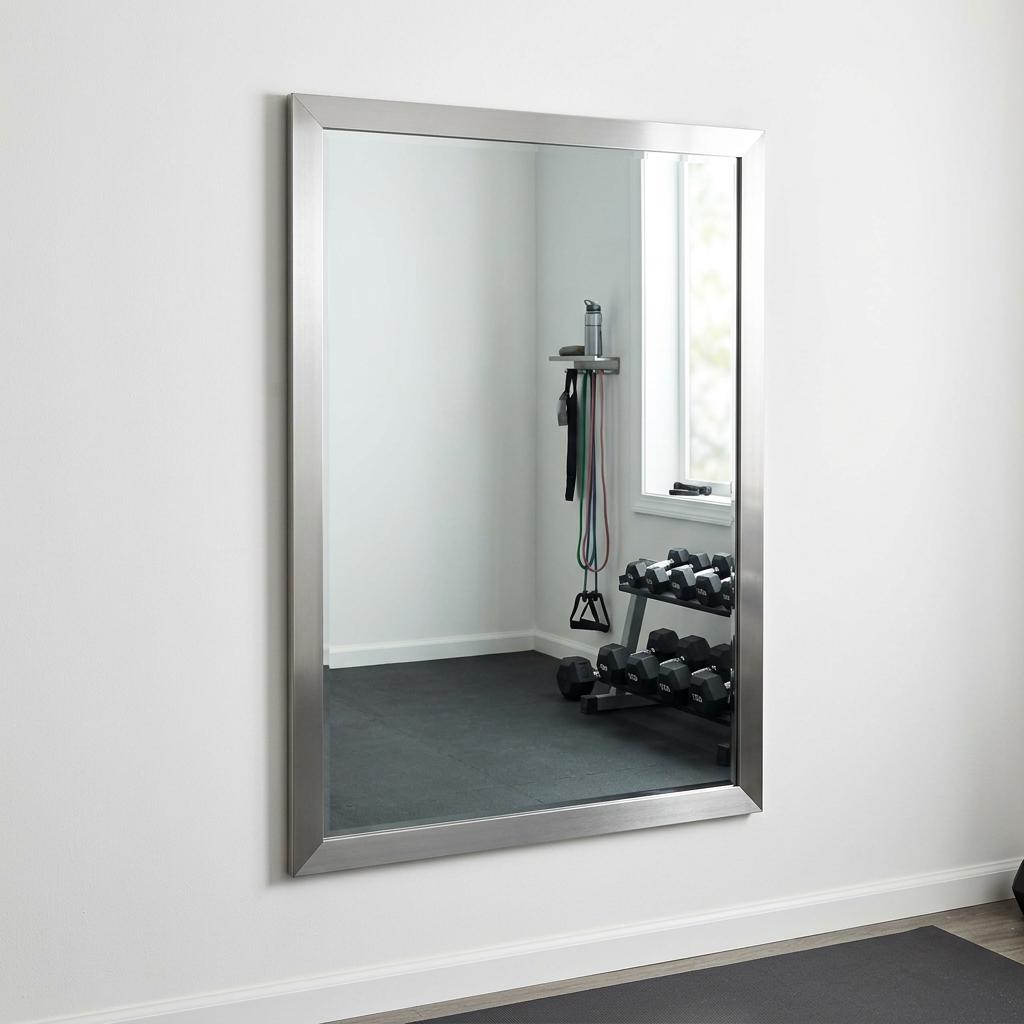 |
Fab Glass and Mirror 36"x48" Gym Mirror | $80-$130 | Best Budget Gym Mirror | Check Price |
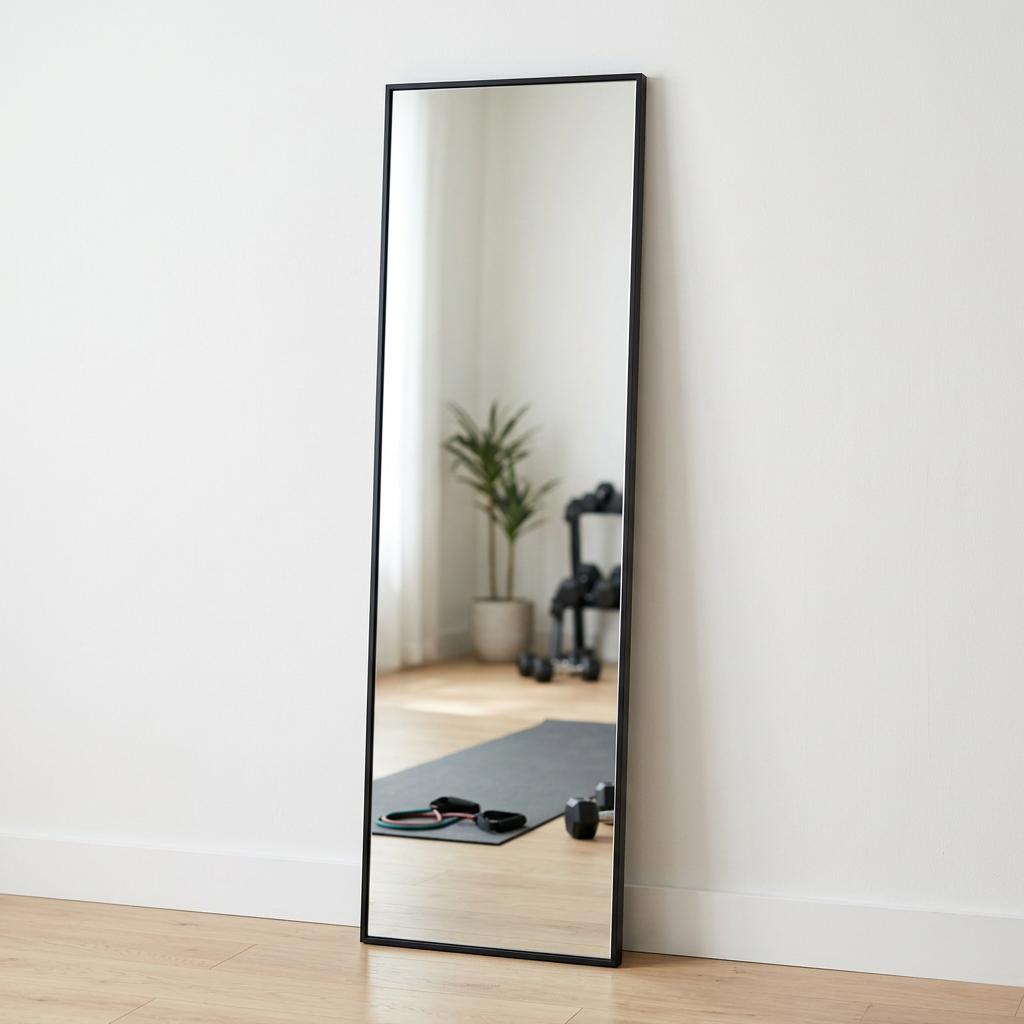 |
NeuType Full Length Wall Mirror | $60-$100 | Best Full-Length | Check Price |
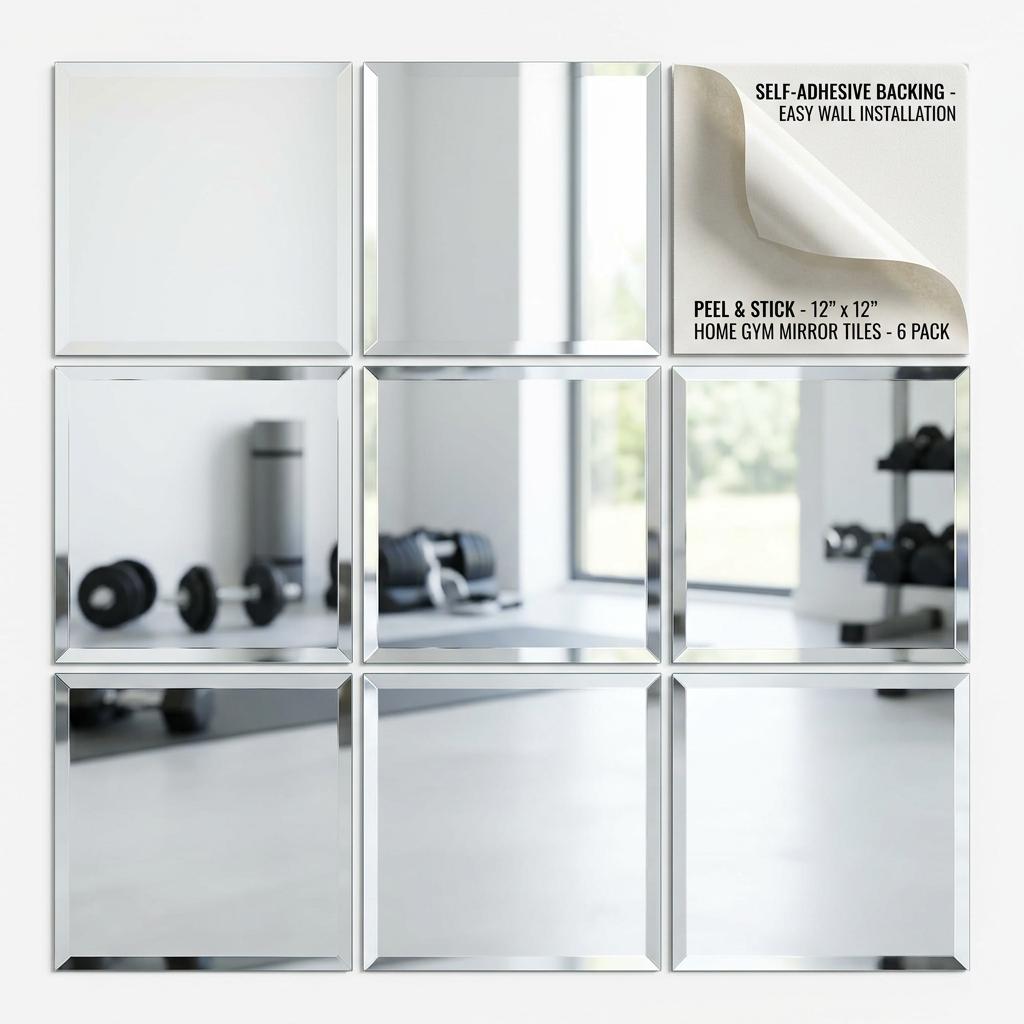 |
12x12 Mirror Tiles (6-Pack) | $30-$50 | Best Mirror Tiles | Check Price |
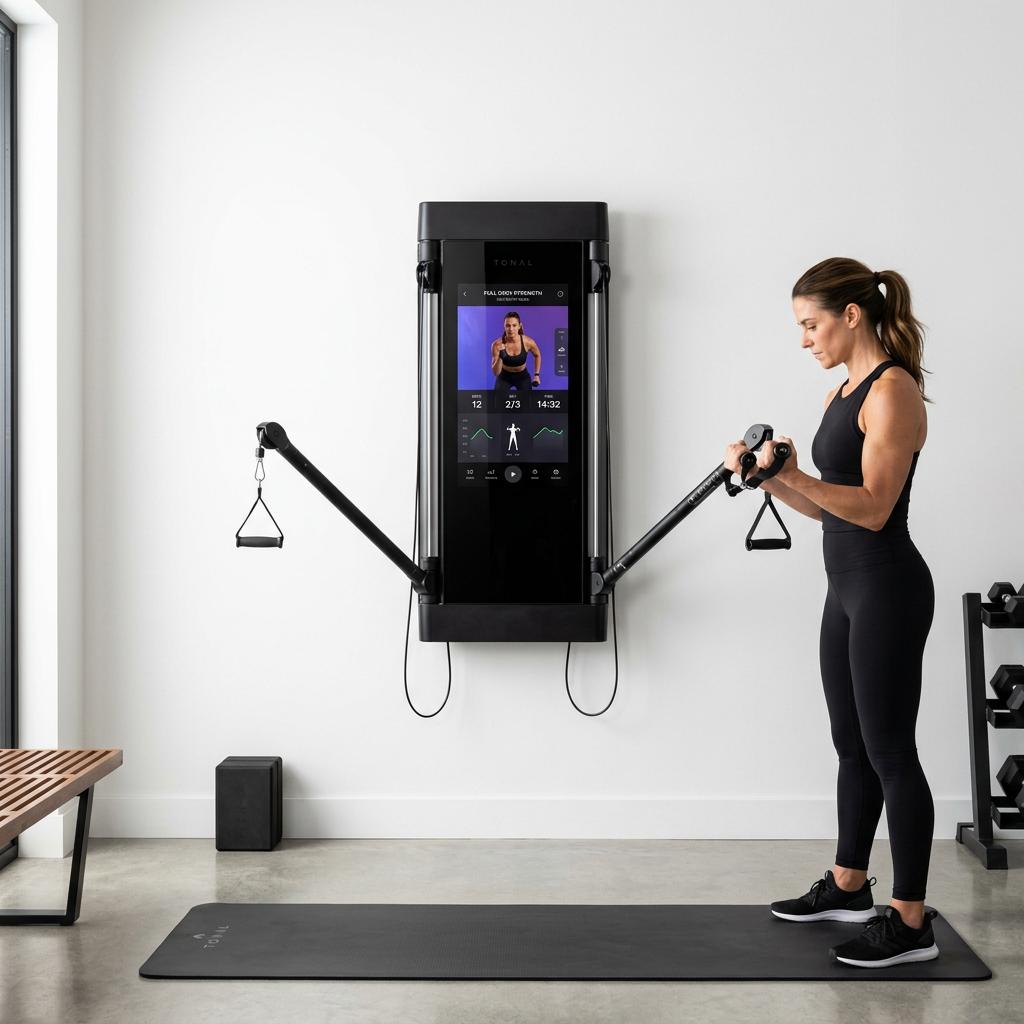 |
Tonal Smart Home Gym | $3,000-$4,000 | Premium Smart Mirror | Check Price |
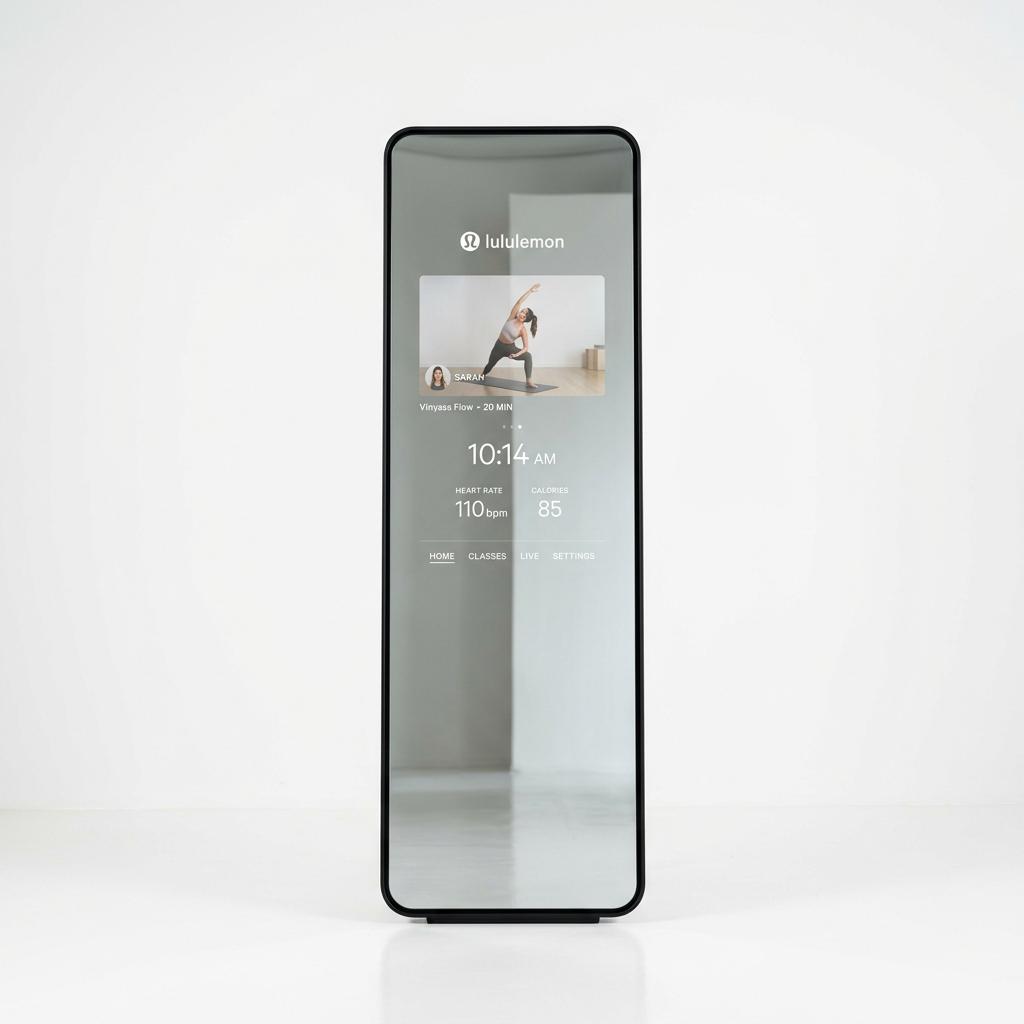 |
Lululemon Studio Mirror | $1,000-$1,500 | Best Class-Based Smart Mirror | Check Price |
The Fab Glass and Mirror 36x48 offers the best balance of size, quality, and affordability for dedicated home gym spaces.
The NeuType Full Length Mirror brings sleek modern style and full-body visibility to any home gym or workout corner.
12x12 mirror tiles offer the most flexible and affordable way to create a custom mirrored wall in any home gym space.
Tonal revolutionizes home fitness with electromagnetic resistance and AI coaching in a stunning wall-mounted smart mirror.
The Lululemon Studio Mirror combines elegant design with an extensive class library, making it the best choice for group fitness enthusiasts.
A quality gym mirror is essential for monitoring exercise form and preventing injury, and the Fab Glass and Mirror 36x48 is the best budget option that doesn't compromise on quality. At 36 inches by 48 inches, it's large enough to see your full body during squats, deadlifts, and overhead presses. The mirror can be mounted in either orientation to fit your wall space, and the polished edges are safe to handle during installation. Unlike smart fitness mirrors that cost thousands, this is a straightforward, distortion-free mirror that does exactly what you need at a fraction of the price.
Check Price on Amazon
The NeuType Full Length Wall Mirror is perfect for home gyms where aesthetics matter as much as functionality. At 47 inches tall and 14 inches wide, it provides a full view of your body during any exercise while its ultra-slim aluminum frame adds a touch of modern elegance. You can either mount it to the wall for a permanent setup or lean it against the wall for flexibility. The shatterproof glass and protective backing make it safer than standard mirrors for active spaces where accidental contact might occur.
Check Price on Amazon
For renters or anyone working with an awkward wall space, 12x12 mirror tiles are the ultimate flexible solution. Each pack typically covers six square feet of wall space, and the self-adhesive backing means no drilling or professional installation required. You can arrange them in a grid for a traditional gym mirror look, or create a custom pattern that works around windows, outlets, or equipment. While the seams between tiles are visible up close, they don't interfere with form checking during workouts. This is the most affordable way to add serious mirror coverage to your gym.
Check Price on Amazon
Tonal is the most advanced smart fitness mirror on the market, replacing traditional weights with electromagnetic resistance that delivers up to 200 pounds per arm. The 24-inch touchscreen display streams guided workouts across strength, HIIT, yoga, and mobility categories, while built-in sensors track your reps, range of motion, and power output in real time. The AI coaching feature automatically adjusts resistance during sets to optimize your training stimulus. While the upfront cost and required membership are significant, Tonal replaces an entire gym's worth of equipment in a device just 21 inches wide.
Check Price on Amazon
The Lululemon Studio Mirror (formerly Mirror) takes a different approach to smart fitness than Tonal. Rather than built-in resistance, it's a beautifully designed full-length mirror with an embedded display that streams live and on-demand classes across every fitness category imaginable. During workouts, your reflection overlays with the instructor and real-time metrics including heart rate and calories burned. When turned off, it looks like a premium decorative mirror. It's the best option for people who are motivated by group class energy and want a device that enhances their home decor rather than dominating it.
Check Price on Amazon