The 5 Best Ab Benches for Home Gyms in 2025: Decline & Adjustable Benches Tested
Research-backed guide to best ab benches home for small-space home gyms....
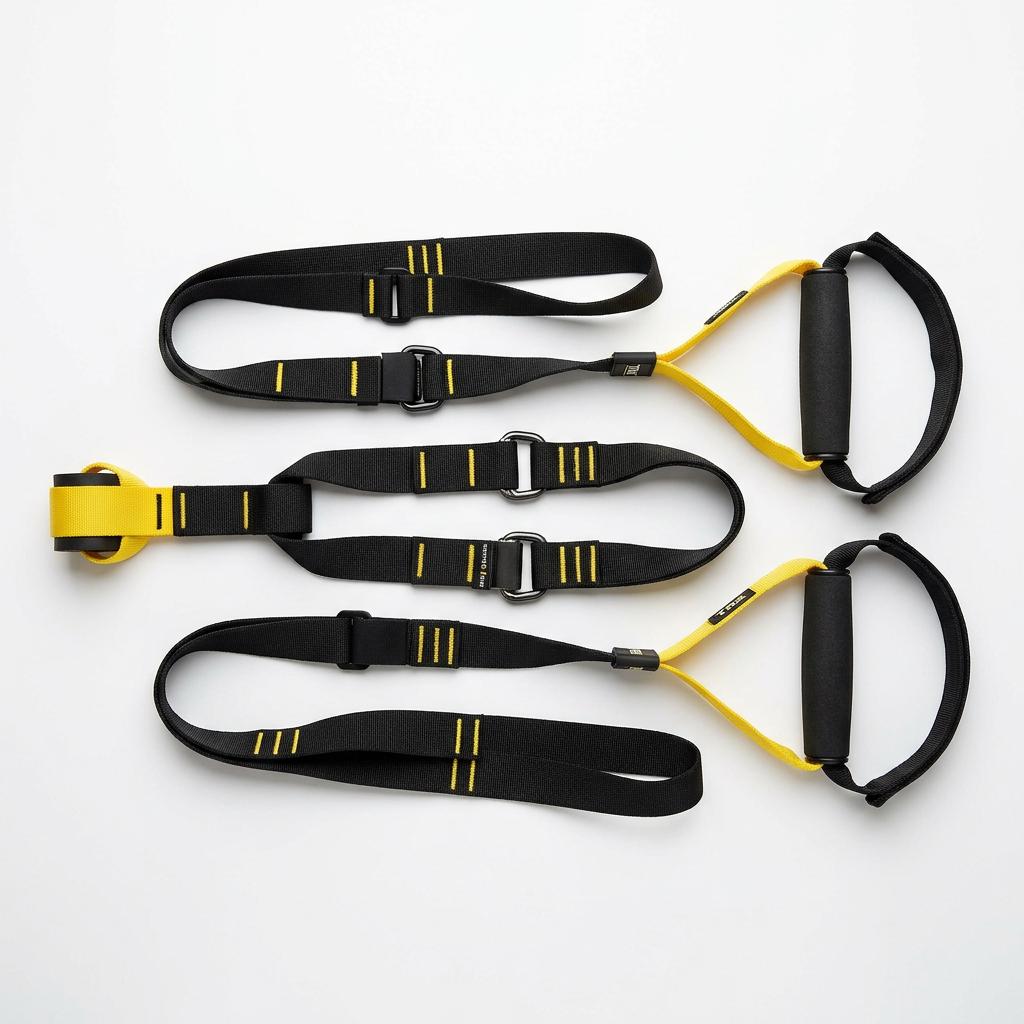
Master suspension training with this comprehensive guide covering setup, 40+ exercises, beginner to advanced programs, and form cues for TRX and all suspension trainers.
Suspension training transforms any door, beam, or sturdy overhead anchor into a complete gym. Originally developed by a U.S. Navy SEAL in the 1990s, suspension training has evolved into one of the most researched and validated forms of bodyweight resistance exercise.
This guide covers everything from equipment selection to advanced programming, with exercise demonstrations and science-backed protocols for building strength, muscle, and endurance in small spaces.
Suspension training uses a system of adjustable straps with handles that supports bodyweight exercises. By changing body angle relative to the anchor point, users increase or decrease resistance instantaneously — no weight plates required.
The resistance in suspension training is determined by body angle:
| Body Angle | Approximate Bodyweight Load | Best For |
|---|---|---|
| Standing vertical (upright row) | 15–20% | Beginners, warm-up |
| 45-degree angle | 35–45% | Endurance, high reps |
| Parallel to floor | 50–60% | Strength, hypertrophy |
| Feet elevated | 65–80% | Advanced strength |
| Full inversion | 80–95% | Elite bodyweight strength |
Research from the Journal of Strength and Conditioning Research (2020) confirmed that suspension training produces muscle activation levels comparable to machine-based resistance training when body angle is optimized for the target rep range.
Door Anchor (most common for apartments)
Wall/Ceiling Anchor
Beam/Post Anchor
| Budget | Recommended System | Key Features |
|---|---|---|
| Under $50 | PACEARTH Suspension Trainer | 400-lb capacity, extension strap |
| $50–$100 | Lifeline Jungle Gym XT | Split-anchor design, ergonomic handles |
| $100–$170 | TRX All-in-One | 5-year warranty, app integration |
Setup: Face anchor, straps shortened to mid-length. Walk feet in to appropriate angle.
Execution:
Progressions:
Muscles: Latissimus dorsi, rhomboids, middle trapezius, biceps, rear deltoids
Common Errors:
Setup: Face anchor, straps at face height, body at 45-degree angle.
Execution:
Muscles: Rear deltoids, rotator cuff, rhomboids
Why It Matters: Face pulls counteract the postural damage from desk work and phone use. Include in every upper-body session.
Setup: Face anchor, single handle mode (both straps through one handle).
Execution:
Muscles: Lats, rhomboids, obliques (anti-rotation)
Setup: Face away from anchor, handles at mid-calf height. Feet on floor behind you.
Execution:
Progressions:
Research Note: A 2014 Sports Biomechanics study found suspension push-ups produce 40% greater core activation than floor push-ups due to inherent instability.
Setup: Face away from anchor, straps lengthened. Body at 45-degree angle.
Execution:
Muscles: Pectoralis major, anterior deltoids, triceps
Setup: Face away from anchor, feet in strap cradles. Start in plank position.
Execution:
Muscles: Anterior deltoids, upper chest, triceps
Progression Target: Handstand push-up against wall
Setup: Face away from anchor, one foot in strap cradle.
Execution:
Muscles: Quadriceps, glutes, hamstrings, adductors
Benefits: The suspended rear leg eliminates balance limitations of standard lunges, allowing full focus on front-leg strength. Research confirms suspension lunges produce 15% greater quadriceps activation than bodyweight reverse lunges.
Setup: Face anchor, straps shortened, holding handles at chest height.
Execution:
Muscles: Quadriceps, glutes, core stability
Best For: Beginners learning squat mechanics; the arm assistance enables full depth without falling backward.
Setup: Face anchor, heels in strap cradles. Lie on back, hips elevated.
Execution:
Muscles: Hamstrings, glutes, core
Progression Target: Nordic hamstring curl (bodyweight gold standard)
Setup: Face away from anchor, feet in strap cradles. Support on forearms.
Execution:
Progressions:
Setup: Face away from anchor, feet in strap cradles. Plank position on hands.
Execution:
Muscles: Rectus abdominis, hip flexors, shoulders (isometric)
Setup: Same as suspension push-up, feet in straps.
Execution:
Muscles: Full upper body + core integration
Research Note: Produces 47% greater rectus abdominis activation than standard push-ups.
Frequency: 3 days per week (Monday, Wednesday, Friday)
| Exercise | Sets | Reps | Rest | Notes |
|---|---|---|---|---|
| Suspension Row | 3 | 8–12 | 60s | Upright angle |
| Suspension Push-Up | 3 | 6–10 | 60s | Comfortable angle |
| Suspension Lunge | 2 | 8/leg | 45s | Hold wall if needed |
| Suspension Squat | 2 | 10–12 | 45s | Use arms to assist |
| Plank | 3 | 20–30s | 60s | Knees on floor if needed |
Progression Rule: When you complete all sets at the top of the rep range, decrease body angle (move feet closer to anchor for rows/push-ups).
Frequency: 4 days per week (Upper/Lower split)
Day A — Upper Body:
| Exercise | Sets | Reps | Rest |
|---|---|---|---|
| Suspension Row (parallel) | 4 | 8–10 | 60s |
| Suspension Push-Up (parallel) | 4 | 8–12 | 60s |
| Face Pull | 3 | 12–15 | 45s |
| Pike Press | 3 | 6–8 | 75s |
| Bicep Curl | 3 | 10–12 | 45s |
Day B — Lower Body + Core:
| Exercise | Sets | Reps | Rest |
|---|---|---|---|
| Suspension Lunge | 3 | 10/leg | 60s |
| Hamstring Curl | 3 | 8–10 | 60s |
| Suspension Squat (deep) | 3 | 12–15 | 45s |
| Mountain Climber | 3 | 20 total | 45s |
| Atomic Push-Up | 3 | 6–8 | 75s |
Progression Rule: Add one set per exercise every 2 weeks, or advance body angle.
Frequency: 5 days per week (Push/Pull/Legs/Upper/Lower)
Advanced trainees utilize:
Sample Advanced Push Day:
| Exercise | Sets | Reps | Tempo | Rest |
|---|---|---|---|---|
| Feet-Elevated Push-Up | 4 | 6–8 | 3-1-1 | 90s |
| Pike Press | 4 | 6–8 | 2-1-2 | 90s |
| Chest Flye (split-anchor) | 3 | 10–12 | 2-0-2 | 60s |
| Atomic Push-Up | 3 | 8–10 | Normal | 60s |
To increase difficulty: Move feet toward anchor (more horizontal) To decrease difficulty: Move feet away from anchor (more vertical)
Always adjust angle before starting the set — never attempt to "walk" feet during an exercise.
Q: Can I build muscle with suspension training alone? A: Yes. Research confirms suspension training produces hypertrophy comparable to moderate-load resistance training. Advanced trainees may need weighted vests for continued progress.
Q: How does suspension training compare to weightlifting? See our detailed comparison: TRX vs. Calisthenics vs. Weights
Q: What if my door frame is too weak? A: Install a wall/ceiling anchor into a structural stud or joist. Alternatively, use an outdoor anchor point.
Q: Can suspension training replace my gym membership? A: For general fitness, strength, and body composition goals — yes. For specialized goals (powerlifting, Olympic lifting), no.
Last updated: June 18, 2026. As an Amazon Associate, SnugGym earns from qualifying purchases.