321 STRONG Foam Roller Review: Textured Myofascial Release for Home Recovery
Our research-backed review of the 321 STRONG Foam Roller examines texture pattern, foam density, durability, and pain-pr...
SnugGym is an Amazon Associate. We earn from qualifying purchases at no extra cost to you. Learn more
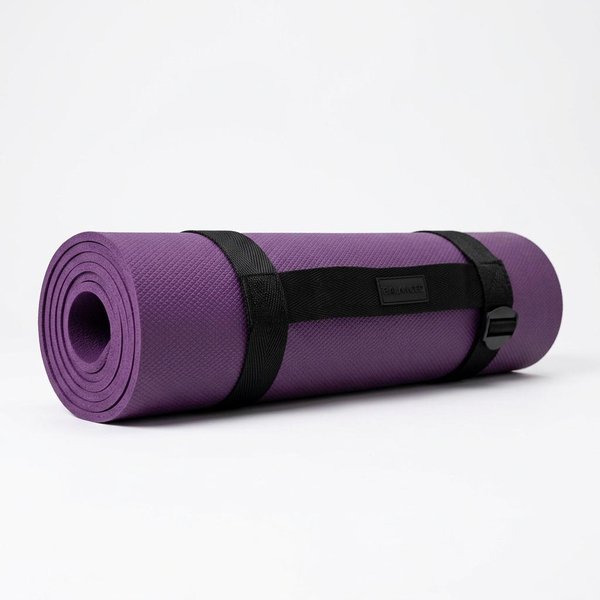
Comprehensive guide to static stretching: what it is, how it works, the research on benefits and limitations, proper technique, and when to use it in your training.
Static stretching is the most recognized form of flexibility training: assume a position that elongates a target muscle, then hold that position without movement for a defined duration. Despite its simplicity, static stretching generates surprising controversy in sports science—from debates about pre-exercise application to questions about optimal duration and frequency.
This guide synthesizes current research to provide evidence-based answers: what static stretching actually does, when it helps and when it hinders, and how to incorporate it effectively into your training.
Static stretching involves lengthening a muscle to the point of mild tension, then holding that position stationary for a period—typically 15 to 60 seconds. The stretch position does not change during the hold; the limb remains still.
Contrast with other stretching modalities:
| Type | Description | Example |
|---|---|---|
| Static | Hold position stationary | Standing hamstring stretch, held 30 seconds |
| Dynamic | Controlled movement through range | Leg swings, walking lunges with rotation |
| Ballistic | Bouncing or jerking movements | Bouncing toe touches (largely deprecated) |
| PNF | Contract-relax with partner | Partner-assisted hamstring contract-relax |
| Active Isolated | 2-second holds, repeated | Repeated 2-second quad stretches |
To understand static stretching's effects, you need to understand the neural mechanisms that regulate muscle length.
Embedded within muscle tissue, muscle spindles are stretch-sensitive receptors that detect changes in muscle length and rate of length change. When a muscle is rapidly stretched, spindles trigger a reflexive contraction (the stretch reflex) to prevent overstretching and potential injury.
During slow, gradual static stretching, the spindle response diminishes. The Golgi tendon organ (GTO)—a tension-sensitive receptor located at the muscle-tendon junction—begins to predominate. When tension becomes sufficient, GTO activation produces autogenic inhibition: a neural signal that reduces motor neuron excitability, allowing the muscle to relax and lengthen[^1].
This is why ballistic stretching fell from favor—the rapid bouncing triggers spindle-mediated contraction, working against the lengthening goal and potentially causing injury. Static stretching's slow application bypasses this protective reflex.
Beyond neural mechanisms, static stretching produces mechanical changes in muscle and connective tissue:
Viscous deformation: Muscle tissue exhibits viscoelastic properties—it responds to sustained loading with gradual lengthening that partially persists after load removal. Longer static holds (>60 seconds) produce greater viscous deformation[^2].
Fascial remodeling: Regular static stretching may stimulate fascial adaptation through mechanotransduction—cells within fascial tissue detect mechanical loading and alter tissue architecture in response. This process requires consistent application over weeks and months, not single sessions[^3].
The most robustly demonstrated benefit of static stretching is increased joint range of motion (ROM). A 2018 systematic review in the International Journal of Sports Physical Therapy confirmed that static stretching significantly increases flexibility acutely (single session) and chronically (regular practice over weeks)[^4].
Acute effects: Single static stretching sessions increase ROM by 4-8 degrees in the stretched joint. Effects last 10-120 minutes depending on hold duration and intensity.
Chronic effects: Regular static stretching (3-5 sessions per week, 4+ weeks) produces sustained ROM improvements of 8-20 degrees—changes that persist even 24-48 hours after the last stretching session.
Static stretching acutely reduces muscle-tendon unit stiffness—the resistance tissue offers to passive elongation. This explains the subjective sensation of "looseness" following stretching. For activities requiring end-range positions (overhead throwing, gymnastics, dance), reduced stiffness may improve performance capacity.
Slow, controlled static stretching with deliberate breathing stimulates vagal tone—the parasympathetic nervous system's primary regulatory pathway. Research demonstrates decreased heart rate, increased heart rate variability, and reduced cortisol following static stretching protocols[^5]. These changes support recovery and stress management beyond any mechanical tissue effects.
The evidence here is nuanced. Static stretching alone has not consistently demonstrated injury prevention benefits in large-scale studies. However, athletes with limited flexibility in specific joints appear to benefit from targeted stretching—tight hip flexors in runners, limited ankle dorsiflexion in squatters, restricted shoulder ROM in overhead athletes[^6].
Static stretching's role in injury prevention appears to be normalization—bringing restricted ranges up to functional minimums—rather than maximization—pushing flexibility beyond requirements.
The most significant and well-documented concern: acute static stretching before strength and power activities reduces maximal performance. Meta-analyses indicate:
Mechanism: Reduced muscle-tendon unit stiffness alters the length-tension relationship and rate of force development. The muscle operates less efficiently in its newly lengthened state until stiffness normalizes.
Practical implication: If you're preparing for heavy squats, sprints, or competition, avoid prolonged static stretching of the prime movers immediately beforehand. Save it for after training or separate sessions.
Research suggests a critical threshold: static stretching holds under 30 seconds produce ROM benefits without significant strength decrements[^7]. Holds over 60 seconds maximize ROM but produce measurable performance reduction lasting 10-30 minutes.
This dose-response relationship allows strategic application:
Warm tissue stretches better: Cold muscle resists elongation and injury risk increases. Perform static stretching after activity, after a warm shower, or following 5-10 minutes of light cardio.
Pain inhibits adaptation: Stretch to the point of mild tension—4-6/10 intensity. Sharp pain triggers protective muscle guarding that prevents lengthening and risks tissue damage.
Breathe deliberately: Slow nasal breathing prevents the sympathetic activation that maintains muscle tone. Exhale into the stretch; never hold your breath.
Be patient: Neural adaptation requires 15-30 seconds to engage. Quick 5-second stretches produce minimal benefit. Commit to meaningful hold durations.
Hamstrings:
Hip Flexors (Iliopsoas):
Quadriceps:
Chest/Pectorals:
Latissimus Dorsi:
Calves (Gastrocnemius):
Calves (Soleus):
Post-workout (optimal): After training, muscles are warm, sympathetic drive is already declining, and there's no performance concern. Hold stretches 30-60 seconds. Total time: 10-15 minutes.
Separate flexibility sessions: Dedicate 20-30 minutes to comprehensive stretching after a general warm-up. Hold stretches 45-90 seconds. Perform 2-3 rounds per muscle group.
Before bed: Gentle static stretching promotes parasympathetic activation that supports sleep onset. Keep intensity mild (3-4/10), holds 30 seconds.
Morning routine: If you wake stiff, brief stretching after a warm shower improves comfort. Don't force cold tissue.
Immediately before strength/power training: Limit to brief holds (<30 seconds) for specific restrictions only. Prioritize dynamic warm-up instead.
When injured: Acute muscle strains, ligament sprains, and joint inflammation contraindicate stretching the affected area. Consult a healthcare provider.
When hypermobile: Individuals with excessive joint laxity (double-jointed, Ehlers-Danlos) should emphasize stability training over stretching to prevent joint injury.
| Goal | Frequency | Hold Duration | Sets per Muscle | Total Weekly Time |
|---|---|---|---|---|
| General maintenance | 3x weekly | 30 sec | 1-2 | 15-20 min |
| Flexibility improvement | 5x weekly | 45-60 sec | 2-3 | 30-45 min |
| Specific restriction | Daily | 60-90 sec | 3-4 | 30-45 min |
| Post-workout recovery | After each session | 30-45 sec | 1-2 | 10-15 min |
Dynamic stretching (controlled movement through range) is superior before activity because it:
Static stretching excels after activity or in dedicated flexibility sessions because it:
Best practice: Use dynamic stretching before training, static stretching after.
These modalities complement rather than replace each other:
Research suggests combining both produces superior outcomes to either alone[^8]. Our recommended protocol: foam roll first to address fascial restrictions, then static stretch to capitalize on the improved tissue state.
For athletes with normal flexibility, static stretching alone hasn't demonstrated consistent injury prevention. For those with documented restrictions in movement-critical joints, targeted stretching to normalize range appears beneficial.
15-30 seconds for pre-activity warm-up; 30-60 seconds for post-workout or general maintenance; 60-90 seconds for dedicated flexibility improvement. Beyond 90 seconds, diminishing returns occur.
Yes. Excessive stretching can create joint instability, particularly in individuals with inherent laxity. If joints feel "loose" or painful after stretching, reduce volume and intensity. Balance stretching with strength training for joint stability.
Common causes: insufficient hold duration, inconsistent frequency, stretching cold tissue, neglecting adjacent restrictions (tight hip limiting hamstring stretch), or underlying joint/soft tissue pathology.
Yoga incorporates static stretching positions (asanas) but adds breath work, mindfulness, strength components, and dynamic sequences. The static stretches in yoga provide similar mechanical benefits with additional stress-reduction effects.
Static stretching remains a valuable tool when applied appropriately. It's not universally beneficial (pre-exercise prolonged holds hinder power), nor is it obsolete (post-exercise and dedicated sessions meaningfully improve range of motion and recovery).
The key is context: dynamic before, static after; brief for warm-up, extended for adaptation; gentle for daily maintenance, progressive for restriction resolution. Applied with this understanding, static stretching supports a lifetime of resilient, capable movement.
Sources: [^1]: Magnaris CN. "Implications of in vivo force-length characteristics for the production of maximum ankle joint moments." Eur J Appl Physiol, 2003. [^2]: Kay AD, Blazevich AJ. "Effect of acute static stretch on maximal muscle performance." Med Sci Sports Exerc, 2012. [^3]: Schleip R, Muller DG. "Training principles for fascial connective tissues." J Bodyw Mov Ther, 2013. [^4]: Thomas E, et al. "The Relation Between Stretching Typology and Stretching Duration." Int J Sports Phys Ther, 2018. [^5]: Frazier SF. "The effect of static stretching on heart rate variability." J Strength Cond Res, 2021. [^6]: McHugh MP, Cosgrave CH. "To stretch or not to stretch: the role of stretching in injury prevention." Br J Sports Med, 2010. [^7]: Kay AD, Blazevich AJ. "The effect of stretch duration on muscle performance." Eur J Appl Physiol, 2018. [^8]: Mohr AR, et al. "The effects of foam rolling and static stretching on flexibility." Athl Train Sports Health Care, 2014.